

Släbro Hällristningar, Narke Travel Guide
An exceptionally dense Bronze Age rock-art site beside Nyköpingsån, famed for its unique framed ‘Släbro figures’ and hundreds of cup marks.
Släbro Hällristningar is a Bronze Age rock-carving site on bedrock outcrops beside the Nyköpingsån in Släbro, just outside Nyköping, Sweden. The panels contain an exceptional and locally unique repertoire of carved ‘Släbro figures’ — framed motifs and dense patterns — together with hundreds of cup marks and other incisions that may total around 700 carved elements, making the site one of Södermanland’s richest hällristning locales.
A brief summary to Släbro Hällristningar
- Nyköping, SE
- Duration: 0.5 to 1.5 hours
- Free
-
 Outdoor
- Mobile reception: 4 out of 5

Know before you go
Hi, I'm Eve. Here are a few practical things to know before exploring Släbro Hällristningar.
- Wear sturdy, flat-soled shoes — the rock surfaces can be uneven and weathered.
- Bring a sketchbook or camera (no flash) to record subtle patterns; low-angle light reveals details.
- Respect ropes and information signs: the carvings are archaeologically sensitive and should not be touched.
- Visit in clear weather or gentle light near sunrise/sunset for the best visibility of shallow pecked motifs.
Do you manage this location?
Take control to get all the benefits, like improved information, better appearance, and stronger visibility across AI-powered discovery. Learn more about listing your business on Evendo
Activate your presenceOther nearby places you may find interesting
The closest places of the same kind, if this one is not quite what you had in mind.
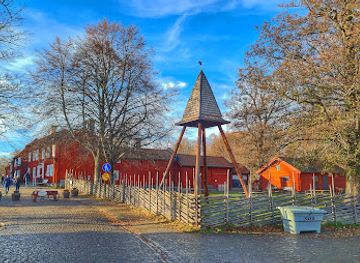
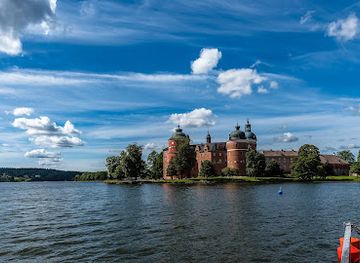
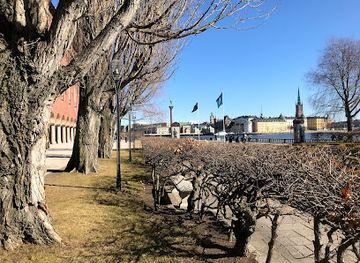
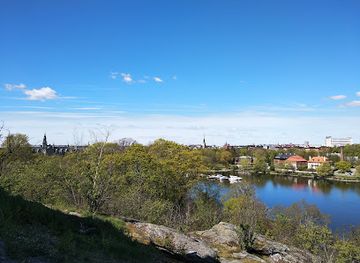
Explore Släbro Hällristningar on the Map
A handpicked selection of must-see spots near Släbro Hällristningar, mapped for you.
Getting There
-
Regional bus plus short walk
Regional bus from Nyköping town centre to a stop serving the Släbro area — typical journey time 10–20 minutes; service frequency varies with weekday and weekend timetables and may be reduced on public holidays. Expect a walk over uneven ground from the nearest stop to the carved panels (rough surface, 10–20 minutes); no special equipment required but firm shoes recommended. Fare range typically follows regional local-bus pricing (SEK 30–70 per adult single ticket depending on operator and ticket type).
-
Car access with short approach
Driving from Nyköping: travel time within the local area is usually under 15 minutes from the town centre; limited roadside parking close to the site or nearby lay-bys may be available and can be constrained at busy times. Terrain between parking and the rocks involves short stretches of natural paths and stone surfaces that are uneven; parking may be free but check local signs and avoid blocking narrow lanes.
-
Bicycle
Cycling from central Nyköping typically takes 20–35 minutes depending on route and pace. Most of the approach is on quiet local roads or mixed paths; bicycles can be left at the trail edge and the final approach requires walking over uneven ground. No specialized gear necessary but consider puncture-resistant tyres for comfort.
For the on-the-go comforts that matter to you
-
 Information Boards
-
 Seating Areas
-
 Trash Bins
Discover more about Släbro Hällristningar
Ancient panels carved into river-side bedrock
The Släbro Hällristningar sit on a series of exposed rock slabs beside the Nyköpingsån, where Bronze Age people chiselled images direct into the stone. The carvings were discovered in the 1980s during regional surveys and found to be unusually concentrated and varied; researchers recorded hundreds of separate elements across multiple adjacent rock faces. The position of the slabs, which during the Bronze Age would have been close to sea level, suggests the site lay on a shoreline or small headland where water and land met — a landscape that was likely meaningful for travel, trade and ritual.Motifs found here that appear nowhere else
Unlike many Scandinavian rock-art sites that emphasise ships, foot soles and animal forms, Släbro is characterised by a set of enigmatic framed motifs often called Släbro figures: ringed or rounded outlines filled with dots, lines and short radiating strokes. These complex, abstract patterns are present in many variations and appear in great numbers on the panels; alongside them are hundreds of cup marks (small hemispherical hollows) and other simple incisions. The combination and density of these motifs give the site an unusual visual identity among Swedish hällristningar.Archaeological traces and a buried human past
Excavations and survey work in the 1980s recovered charcoal, pottery sherds, burned bone and flint fragments in the nearby deposits, evidence that people visited, used and perhaps maintained the place several thousand years ago. The material finds place the carvings broadly within the Bronze Age — several thousand years old — though precise dating of rock art is inherently difficult. Field researchers and regional museum staff have treated the location as a protected cultural environment and document the carvings as an important part of Södermanland’s prehistoric landscape.The site as a landscape of work and meaning
Looking at the panels, it’s easy to imagine a sequence of repeated visits across many generations: people approaching by water, making marks on the same flat surfaces, perhaps filling grooves with pigment in later recording campaigns. The motifs’ repeated frames and fillings hint at symbolic systems, memory practices, or social markers whose original meanings are lost but whose presence still structures the local landscape. The carved rocks are integrated with other ancient features in the area — runestones, burial mounds and traces of old pathways — which together map a long-term human presence along the river.What to notice as you move around the slabs
When you study Släbro’s surfaces, move slowly across the rock panels and pay attention to scale and technique: many motifs are small, executed through repeated pecking rather than single deep cuts; cup marks cluster in groups; and faint weathered lines reveal multiple episodes of reworking or additional incisions. Light at different times of day plays across the shallow carvings, bringing certain patterns into relief. The surrounding trees, the river murmuring nearby and the exposed stone together create a quiet, reflective atmosphere that foregrounds the antiquity of the place.Conservation and continuing study
The panels are treated as an archaeological resource and managed by regional heritage bodies and museum staff who monitor their condition and interpret them for the public. Conservation choices — such as whether to paint grooves for visibility in the past — have changed over time as methods and ethics evolved. Ongoing documentation and careful site stewardship aim to protect the fragile carvings while allowing visitors to experience one of Södermanland’s most distinctive prehistoric sites.












Your all‑in‑one travel companion app
Explore expert travel guides, compare and book tours, experiences, hotels, and more—all from the palm of your hand. Download now for seamless trip planning wherever your wanderlust takes you.


Explore More of Narke
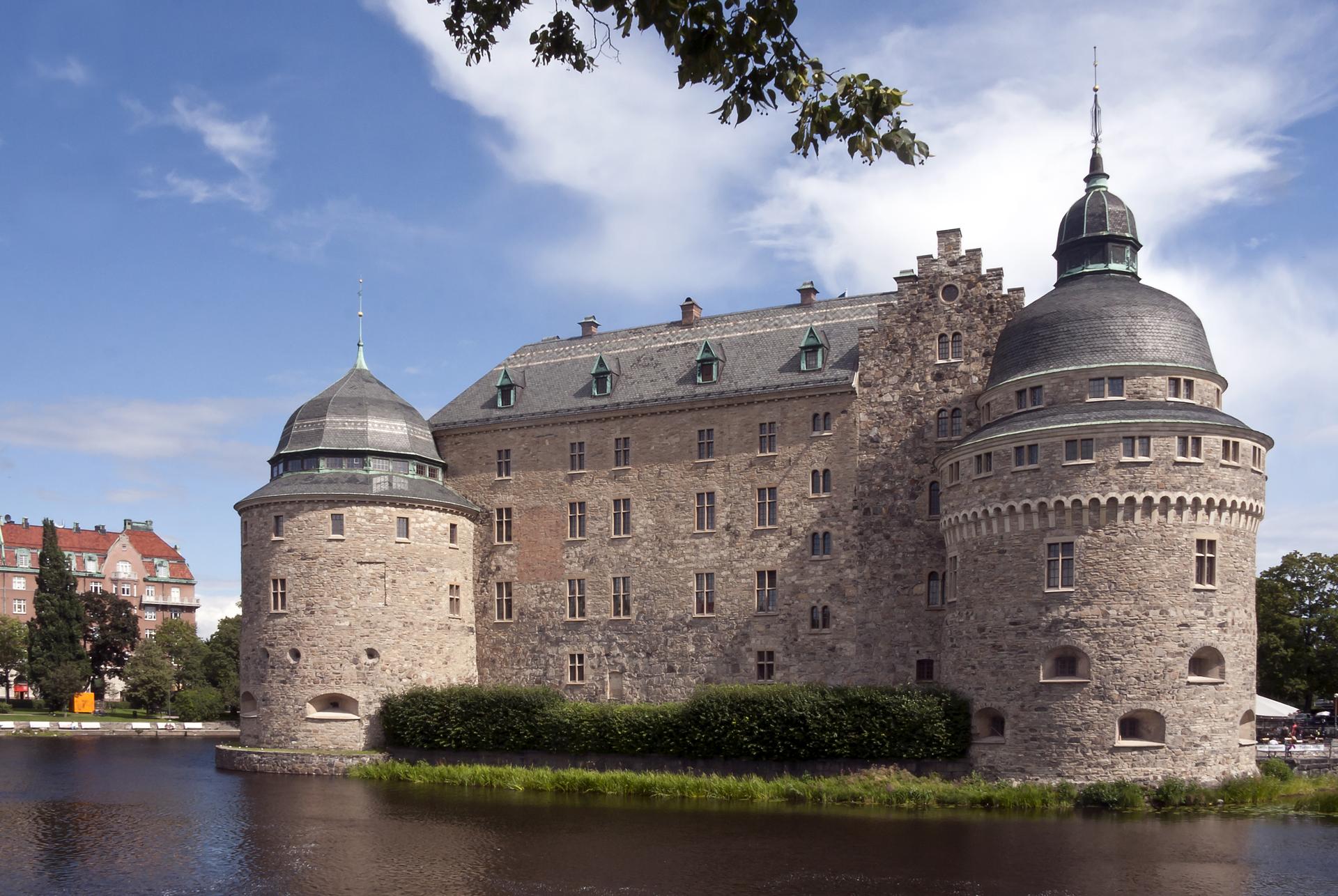
Looking beyond Släbro Hällristningar? Discover Narke for broader travel guides, local hot-spots, and regional highlights.
Explore Narke