Stegeholm Castle Ruin, Ostergotland Travel Guide
Wind-burnished medieval stones on a tiny island—Stegeholm’s ruined walls frame Västervik’s harbour and centuries of coastal history.
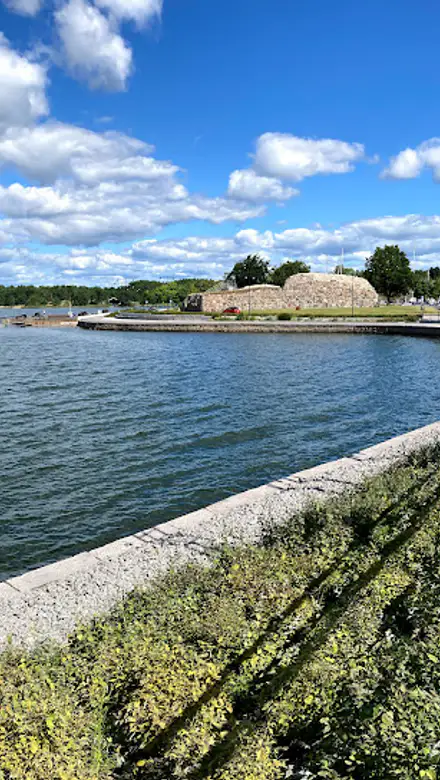
Perched on the small island of Slottsholmen beside Västervik’s waterfront, Stegeholm Castle Ruin preserves fragments of a medieval fortress that guided the town’s history for centuries. Weathered stone walls, low foundations and grassy mounds mark where towers and halls once stood; the site now forms a quiet, windswept stage for summer gatherings and a striking vantage over Gamlebyviken bay.
A brief summary to Stegeholm Castle Ruin
- Slottsholmsvägen, Västervik, 593 38, SE
- Duration: 0.5 to 1.5 hours
- Free
-
 Outdoor
- Mobile reception: 4 out of 5

Know before you go
Hi, I'm Eve. Here are a few practical things to know before exploring Stegeholm Castle Ruin.
- Bring a light windproof layer — the exposed island location feels considerably cooler than the town, especially outside summer.
- Respect fenced-off sections and fragile masonry; much of the ruin is un-restored and surfaces can be unstable.
- Visit at golden hour for warm light on the stone and quieter views across Gamlebyviken.
Do you manage this location?
Take control to get all the benefits, like improved information, better appearance, and stronger visibility across AI-powered discovery. Learn more about listing your business on Evendo
Activate your presenceOther nearby places you may find interesting
The closest places of the same kind, if this one is not quite what you had in mind.

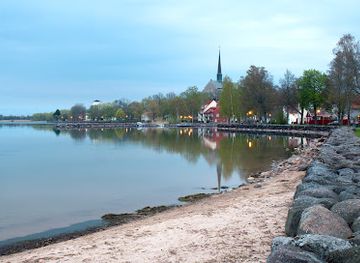
Explore Stegeholm Castle Ruin on the Map
A handpicked selection of must-see spots near Stegeholm Castle Ruin, mapped for you.
Getting There
-
Local Bus + Short Walk
Public bus from Västervik central stops near the museum beside the waterfront; travel time is typically 10–15 minutes with services every 20–60 minutes depending on season, fares usually around 20–40 SEK per person; final approach includes a short walk across level, paved streets and a ramped footpath — check seasonal timetables as frequency drops in winter.
-
Ferry / Boat Approach
Small passenger boats and local ferries operate across the harbour in summer; crossing time is typically 5–10 minutes, fares commonly 30–80 SEK depending on operator and route; service is seasonal and weather-dependent, and vessels may have limited capacity during events.
-
Taxi or Rideshare
Taxi from Västervik town centre takes about 5–10 minutes depending on traffic; expect a fare in the range of 100–180 SEK within the municipality; note that drop-off and pick-up points are on firm ground near the waterfront rather than on the island itself.
For the on-the-go comforts that matter to you
-
 Seating Areas
-
 Information Boards
-
 Trash Bins
Discover more about Stegeholm Castle Ruin
Origins at the waterfront
Stegeholm began as a medieval stronghold built to control and defend the shallow waters of Gamlebyviken and the harbour that grew into Västervik. Foundations and early records suggest the fortress dates to the later Middle Ages, established to protect shipping, collect tolls and anchor the town’s strategic position on the Baltic coast. Remnants you see now are the physical trace of successive building phases, fires and reconstructions that unfolded here over centuries.Architectural echoes in ruin
What remains is a horizontal archaeology of masonry: low curtain walls, scattered dressed stones and the footprint of rooms where timber and roof once rose. The surviving fabric hints at a complex that evolved from a compact medieval castle toward later, grander ambitions during the 17th century. Vegetation softens the stonework, and coastal weathering has rounder edges and a silvered patina that emphasises the site’s age and maritime exposure.War, transformation and decline
Stegeholm’s story is shaped by conflict and adaptation. It endured attacks and at least one major burning that altered its role in the town’s defence. In the 1600s, plans to remodel sections into more baroque forms were never fully realised before further destruction left the castle derelict. The ruin today is the outcome of that layered history: defensive plans, noble ambitions and the changing fortunes of a coastal town visible in broken stone and sporadic masonry repairs.A cultural stage on a small island
Though compact, the island setting gives the ruin a strong presence in Västervik’s cultural life. Sheltered in summer and exposed in winter, the site hosts open-air events and has long been a focal point for music and community gatherings. The open fragments of wall create natural acoustic niches and simple platforms where audiences and performers meet beneath sky and sea breeze.Sensory details and landscape setting
From the ruin you face Gamlebyviken; the sea’s low swell and passing boats set a steady, maritime rhythm. Salt-scented air, the cry of seabirds, and the tactile coolness of sun-warmed stone are immediate. Underfoot the ground is a mixture of compacted paths, short grass and occasional exposed cobbles; in spring and summer wildflowers sprout between joints, softening the ruins’ silhouette against the water.Why the ruin matters today
Stegeholm stands as a visible link between Västervik’s medieval origins and its modern harbour life. The remains offer a concentrated way to read the town’s past—defensive priorities, maritime economy and later cultural reuse—without extensive reconstruction. For the visitor the site is compact but resonant: a place to sense continuity in landscape, to picture vanished buildings, and to appreciate how coastal communities repurpose historic fragments as settings for present-day life.












Your all‑in‑one travel companion app
Explore expert travel guides, compare and book tours, experiences, hotels, and more—all from the palm of your hand. Download now for seamless trip planning wherever your wanderlust takes you.


Explore More of Ostergotland
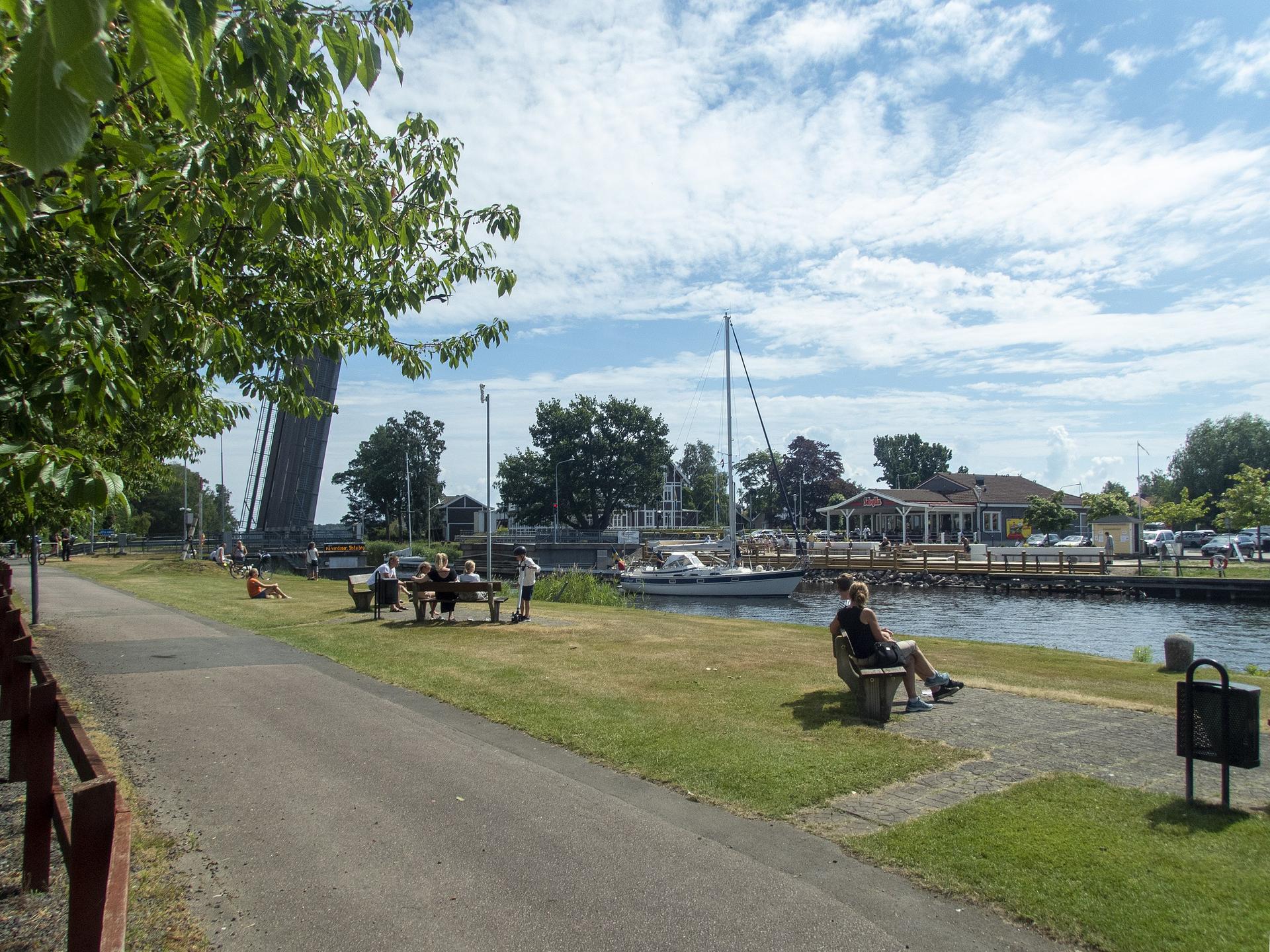
Looking beyond Stegeholm Castle Ruin? Discover Ostergotland for broader travel guides, local hot-spots, and regional highlights.
Explore Ostergotland
A quiet, pastoral lake on Bestorp’s edge — reed-fringed bays, attentive birdlife and intimate Scandinavian waterscapes.
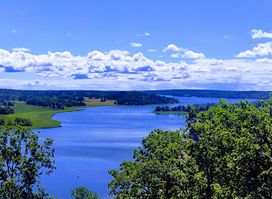
A short, story-filled woodland climb on Garpedansberget where eighty or so sculpted trolls, giants and mythic figures nestle among rocks and trees.