Lugnarohögen Travel Guide
Free Guide: A rare Bronze Age ship-grave you can view from inside — a small, atmospheric mound where stone and ritual meet the landscape.


A brief summary of Lugnarohögen
A rare Bronze Age ship-grave you can view from inside — a small, atmospheric mound where stone and ritual meet the landscape.
Lugnarohögen is a remarkably preserved Bronze Age burial mound near Hasslöv, Laholm, dating to c. 800–600 BCE. Excavated in 1926–27, it revealed an internal stone ship setting and burial finds that prompted the construction of an underground viewing chamber and protective dome so visitors can peer into the ancient monument from within. The mound and adjacent cottage were restored in 2020 and are interpreted as a rare, tangible link to southern Sweden’s seafaring-influenced prehistoric ritual landscape.
On-site amenities
 Information boards
 Seating areas
Opening hours
- MonClosed
- TueClosed
- Wed11 am–3 pm
- Thu11 am–3 pm
- Fri11 am–3 pm
- Sat11 am–3 pm
- Sun11 am–3 pm
Opening hours as listed on the venue’s Google Business Profile. Hours can change for services and special events, so check with the venue before you go.
- Address
- Lugnarovägen 2, 312 97 Laholm
- Phone
Getting there
Car
Regional bus + short walk
Discover more about Lugnarohögen
Origins and archaeological significance
Lugnarohögen was created during the later Bronze Age (roughly 800–600 BCE) and stands as one of southern Sweden’s clearest examples of a ship-associated grave monument. When the mound was excavated in 1926–27 archaeologists uncovered a stone-built ship setting and internal features that spoke to symbolic seafaring rituals and complex social structures in the region. The layout and finds in the burial—an arrangement of stones forming a ship and inhumation traces inside containers—placed Lugnarohögen among the most noteworthy prehistoric discoveries in Halland and helped shape early 20th-century understanding of Bronze Age burial practices.
What you see on arrival
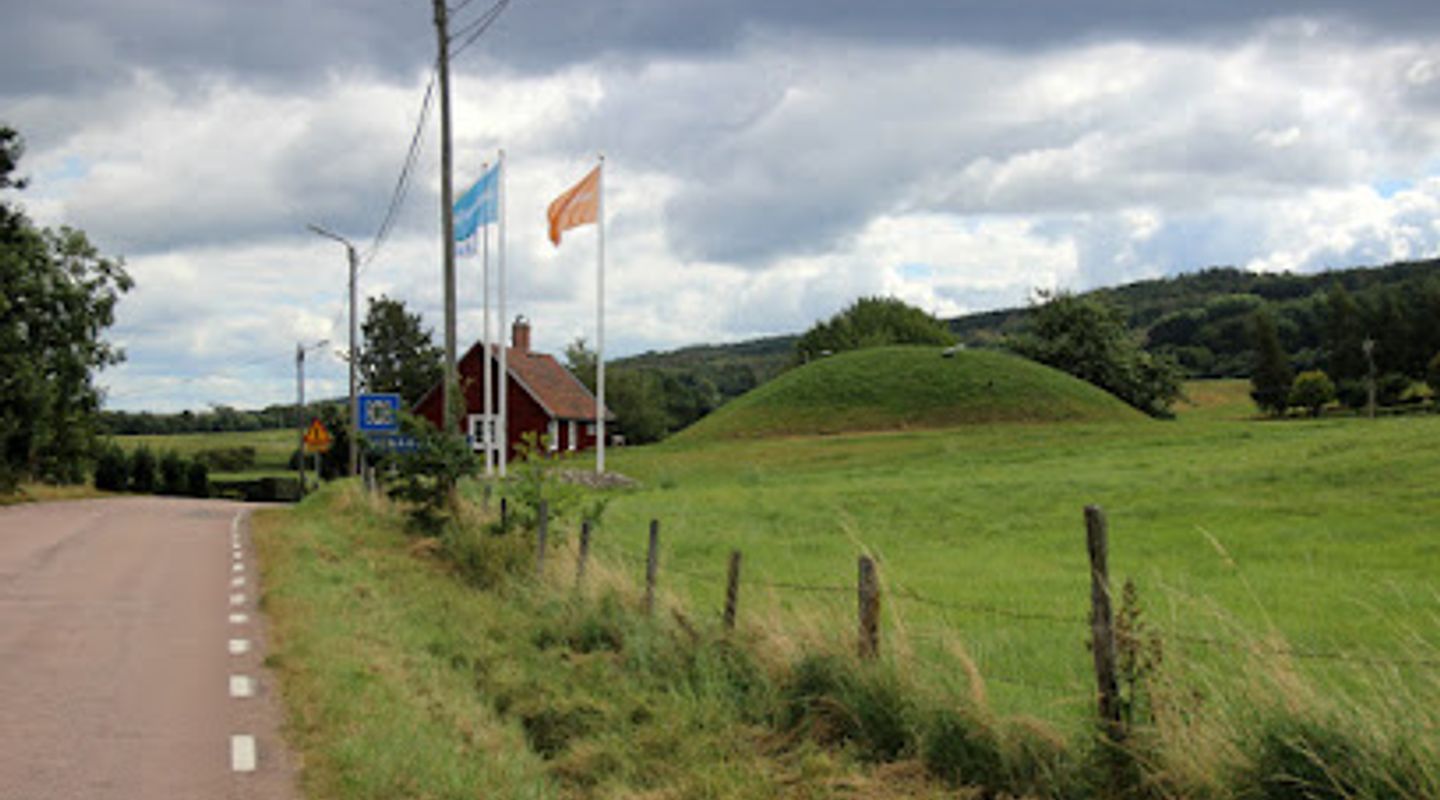
At surface level the site reads as a low, grass-covered tumulus set beside a small, historic cottage. Descend into the site’s protected interior through the purpose-built access and you enter a carefully conserved viewing chamber where the stone ship and surrounding features are visible under a protective dome. The contained atmosphere is dim and hushed: cool stone underfoot, the earthy scent of packed turf and a sense of enclosure that focuses attention on the stony ship pattern and the central burial features. The mound’s stones, deliberately placed and preserved, outline a silhouette that once symbolised voyage and transition.
Restoration, presentation and museum context
In the decades after its excavation the grave was conserved for public interpretation; a concrete dome and an underground passageway linked the nearby cottage to the chamber so visitors could see inside without disturbing the fragile context. A major renovation completed in 2020 refreshed the structural protection and visitor facilities while preserving the original excavation’s archaeological fabric. The adjacent cottage and information panels place the grave in a local cultural-historical framework, explaining regional Bronze Age customs and the reasons archaeologists think ship imagery mattered to coastal and inland communities.
Stories, finds and interpretations
Material recovered from the burial and recorded during early excavations suggests a ritual complexity: skeletal remains placed in ceramic containers, paired deposits, and the concentric stone arrangement that frames the ship motif. Interpretations link these elements to seafaring cosmology and myths about the sea and its deities; some narratives connect the burial’s arrangement to motifs of a sea-goddess and to notions of a journey to the afterlife. While specific individuals and exact ritual meanings remain debated by specialists, the monument’s architecture clearly communicates a maritime symbolic vocabulary that resonated with Bronze Age communities in Halland.
The sensory character of the place today
On-site the mound feels intimate rather than monumental: close hedgerows, a quiet rural road nearby and the modest scale of the cottage create a small heritage enclave. Light filters through the dome into the chamber, throwing soft shadows across the stone outlines; outside, birdsong and the smell of cut grass remind you that this is a lived landscape with deep continuity. The combination of subterranean viewing and surface mound gives visitors two complementary perspectives—an archaeological interior where the grave can be inspected up close, and the grassy exterior where the monument sits in the same field patterns visible to Bronze Age people.
Significance for today’s landscape
Lugnarohögen functions as both an archaeological treasure and a cultural touchstone for the Laholm area. It preserves ancient craft in stone-setting and funerary design, offers a tangible connection to prehistoric ritual life, and anchors local heritage projects and interpretation. The mound’s conservation demonstrates a long-term effort to let contemporary audiences experience prehistoric monumentality without compromising the burial’s physical integrity—an approach that balances access with protection and that keeps the past legible within a modern rural setting.
Evendo Review Centre
 Google
Guest reviews
Best time to go
Quietest: Jan, Feb & Dec · before 7am or from 7pm
Busy times are Evendo estimates for a typical year, to help you plan. Actual crowds vary with events, school holidays and the weather.
Explore Lugnarohögen on the map
A handpicked selection of must-see spots near Lugnarohögen, mapped for you.
Get your free copy of our complete guide to Lugnarohögen, delivered straight to you.
Everything on this page, from opening hours and how to get there to Eve’s tips and the best time to go, in one PDF you can read offline, print or share.
Already have an account? Sign in
Your Lugnarohögen guide is ready.
We'll send it to · Not you? Sign out

Getting your guide ready…
We are putting together a fresh copy of the Lugnarohögen guide. This can take up to a minute.
This can take a few moments. If your browser asks, choose Allow so the download can start. You'll find the guide in your Downloads folder.
Nothing happened? Download it again
Sorry, the guide is taking longer than usual. Please try again in a minute, or get it by email instead.
Other nearby places you may find interesting
The closest places of the same kind, if this one is not quite what you had in mind.
-
-
-
-
-


Swipe for more places
More to explore near Lugnarohögen

 Best experiences near Lugnarohögen
 Best hotels near Lugnarohögen
 Best landmarks near Lugnarohögen
 Best attractions near Lugnarohögen
 Best shops near Lugnarohögen
 Best restaurants near Lugnarohögen
 Best bars near Lugnarohögen
Do you manage this location?
Take control to get all the benefits, like improved information, better appearance, and stronger visibility across AI-powered discovery.
Explore more

Explore more of Skåne
Discover Skåne, Sweden's southern gem, where stunning landscapes, rich history, and vibrant culture come together to create an unforgettable travel experience.
Explore Skåne
Explore more of Sweden
Discover Sweden's breathtaking landscapes, vibrant cities, and rich cultural heritage. From the Northern Lights to historic castles, experience the essence of Scandinavia.
Explore Sweden