
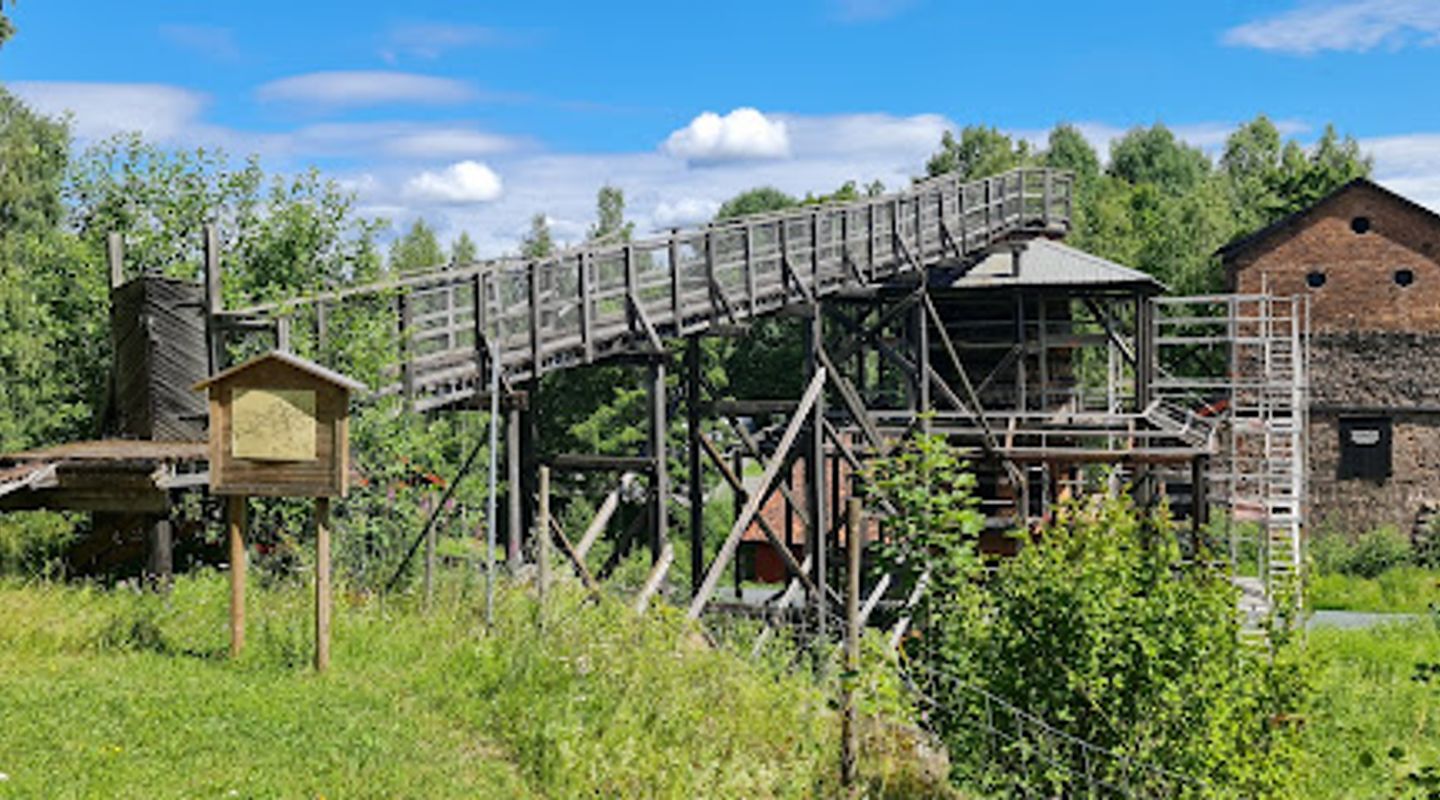
Flatenbergs hytta, Smaland Travel Guide
A compact, well-preserved bergsmanshytta with a blast furnace, slag monuments and a photo trail that maps the labour of historic ironmaking.
Flatenbergs hytta is a well-preserved 19th-century bergsmanshytta (ironworks site) near Smedjebacken in Dalarna, Sweden, featuring a masugn (blast furnace), rostugn (roasting furnace), malmback and slag heaps that illustrate local iron production techniques. The site is part of Ekomuseum Bergslagen and sits amid a short walking trail with historic photographs and picnic spots, where summer guided visits are arranged by the local cultural office.
A brief summary to Flatenbergs hytta
- Flatenbergsvägen 37, Smedjebacken, 777 91, SE
- Click to display
- Click to display
- Duration: 0.75 to 2 hours
- Free
-
 Outdoor
- Mobile reception: 3 out of 5

Know before you go
Hi, I'm Eve. Here are a few practical things to know before exploring Flatenbergs hytta.
- Wear sturdy shoes: pathways are uneven and pass close to stone and slag surfaces.
- Bring a picnic: benches and grassy clearings make this a pleasant spot for a packed lunch.
- Check with Smedjebacken cultural office for summer guided visits and group bookings.
- Allow 45–75 minutes to walk the interpretive loop and examine panels and historic photographs.
Do you manage this location?
Take control to get all the benefits, like improved information, better appearance, and stronger visibility across AI-powered discovery. Learn more about listing your business on Evendo
Activate your presenceOther nearby places you may find interesting
The closest places of the same kind, if this one is not quite what you had in mind.


Explore Flatenbergs hytta on the Map
A handpicked selection of must-see spots near Flatenbergs hytta, mapped for you.
Getting There
-
Car
Private car from Smedjebacken town centre: allow 10–15 minutes travel time; vehicle access ends near a small parking area—parking capacity is limited and uneven surfaces mean low-clearance cars should take care; no parking fee is normally charged.
-
Local bus + walk
Regional bus service from Smedjebacken to a nearby stop typically takes 15–25 minutes depending on schedule; expect a 10–20 minute walk on rural tracks from the bus stop to the site—service frequency is limited outside peak season and timetables should be checked in advance; fares are regional-zone priced (expect local currency single-journey fares).
-
Guided transfer
Organised cultural-office transfer or guided visit: available seasonally by arrangement with the municipal cultural office; duration depends on the program (30–90 minutes on-site is common); fees vary by group size and are quoted on booking—advance reservation is recommended for guided tours.
For the on-the-go comforts that matter to you
-
 Seating Areas
-
 Picnic Areas
-
 Information Boards
Discover more about Flatenbergs hytta
Surviving ironworks and visible industry
Flatenbergs hytta preserves structural traces of a working iron operation: a blast furnace and a roasting furnace stand alongside a malmback where ore was stored and a large slag heap that marks decades of production. Those stone and slag remains are the material record of local bergsmans (miner-farmers) who produced pig iron for local use and wider trade; the complex visible today reflects building phases from the 1600s through the 1800s when the hytta was owned and run by village miners. These tangible, often rough-textured surfaces—pillars of slag, blackened hearth walls and compacted earth—make the industrial process legible at a glance.Landscape, traces and the walking route
The site sits within a lightly wooded, gently undulating rural landscape; a short interpretive walking trail known locally as "Blickpunkten" loops the hyttområder and displays historic photographs from around 1925 at a series of viewpoints. The trail threads between the ruined industrial features and grouped farm buildings, offering repeated encounters with the same materials viewed from different angles—stonework, compacted ore banks and the hulking silhouette of the furnace. Benches and picnic clearings are placed near the main features, making the site comfortable for a quiet stop with a packed lunch.Human stories in the brick and slag
Flatenberg as a settlement is documented far back in time and the hytta itself sits within that long continuum: local bergsmän organized mining and smelting on a household scale, and their combined labour produced the iron that shaped everyday life in the region. The site still carries these human imprints—work surfaces, storage banks and the traces of small outbuildings used for charcoal and fuel. Occasional photographs and written notes displayed on the trail help connect the built remains to the lives and seasonal rhythms of miners and their families.Heritage context and stewardship
Flatenbergs hytta is included in Ekomuseum Bergslagen and is managed locally as a cultural-historical environment; the municipality cultural office is the contact for guided visits and events. Management has emphasised conserving visible structures and presenting interpretation outdoors rather than reconstructing industrial buildings, so the experience is one of archaeological remains and landscape rather than restored interiors. Seasonal guided tours are arranged by agreement, and the site functions as an open-air museum and educational resource.Visitor experience and sensory notes
On site you encounter a palette of textures and sounds: the cool, slightly metallic tang of old slag, the crumbling surface of stonework underfoot, and birdsong in adjacent trees. In summer the atmosphere is warm and sunlit across the slag heaps; in shoulder seasons the site feels quieter and more elemental. Informational panels and the photo sequence of Blickpunkten guide attention to particular elements, allowing visitors to piece together the technical steps—roasting, smelting and casting—by which iron emerged from local ore.Practical character and nearby connections
Flatenbergs hytta reads as a small, focused heritage stop rather than a large museum complex: its value is in the preserved outdoor industrial landscape, the interpretive trail and the immediacy of the surviving features. The site encourages slow exploration, taking time at the photos and interpretation panels to follow the working logic of a bergsmanshytta. Nearby municipal information resources provide contact details for arranged guided visits and occasional cultural events hosted at the hytta.












Your all‑in‑one travel companion app
Explore expert travel guides, compare and book tours, experiences, hotels, and more—all from the palm of your hand. Download now for seamless trip planning wherever your wanderlust takes you.


Explore More of Smaland
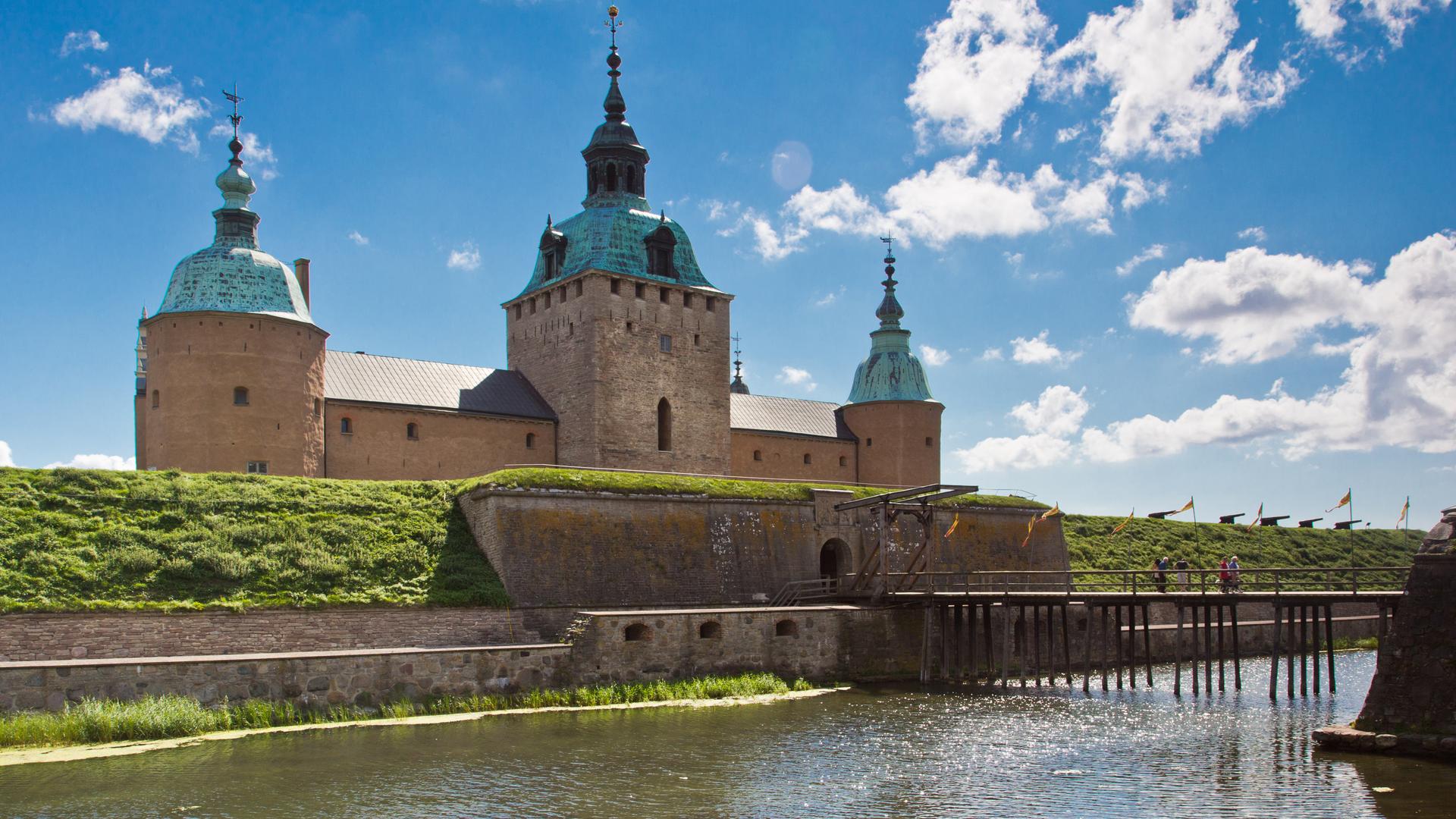
Looking beyond Flatenbergs hytta? Discover Smaland for broader travel guides, local hot-spots, and regional highlights.
Explore Smaland
A scenic ravine and lively folkpark where woodland trails, a summer fäbod and community concerts meet family-friendly play and picnic spots.
Discover Sweden's first industrial open-air museum: a 16th-century bergsmansgård meets pioneering mining relics in Ludvika's historic heart.
