
Forsby-Köping Limestone Cableway, Smaland Travel Guide
A landscape-scale relic of Swedish industrial ingenuity — a linear trail of trestles and stations that once carried limestone across 40+ kilometres.
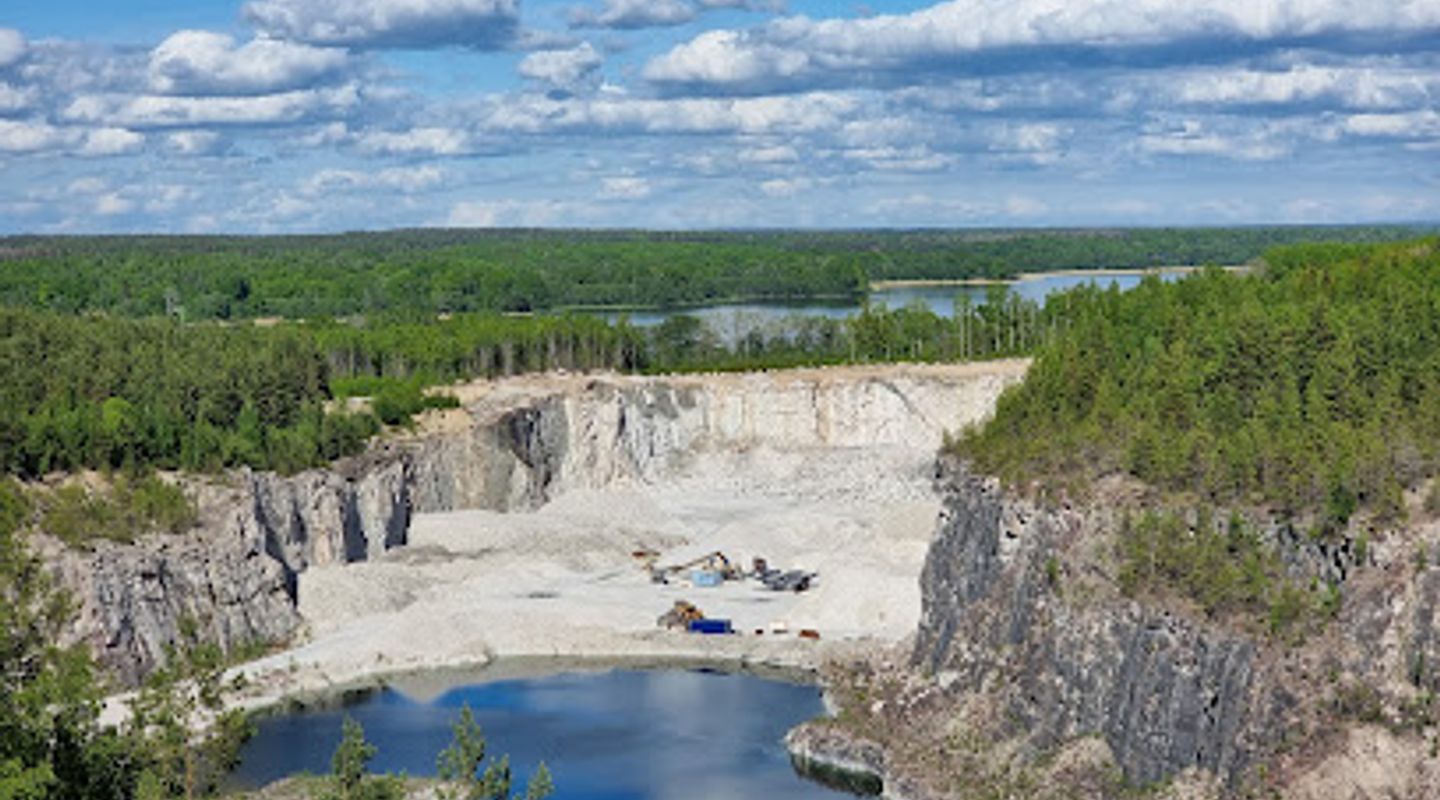
A remarkable remnant of Sweden’s industrial past, the Forsby–Köping Limestone Cableway (Kalklinbanan) traces a 40–42 km route that once carried crushed limestone in a continuous string of bucket cars from the Forsby quarry to the cement works in Köping. Today fragments of the concrete trestles, angle stations and service structures punctuate fields and forests around Vingåker, giving a sense of the scale and ingenuity of mid-20th-century industrial transport.
A brief summary to Forsby-Köping Limestone Cableway
- Vingåker, 643 95, SE
- Click to display
- Click to display
- Duration: 0.5 to 3 hours
- Free
-
 Outdoor
- Mobile reception: 4 out of 5

Know before you go
Hi, I'm Eve. Here are a few practical things to know before exploring Forsby-Köping Limestone Cableway.
- Wear sturdy shoes: many surviving trestles and features sit on uneven ground and through grassy fields.
- Respect private land and any fenced-off areas — the remains can include unstable concrete and metal.
- Bring a camera with a telephoto or zoom: long views along the former alignment compress distance and reveal repeating structures.
- Visit in clear weather for best visibility; low sun casts strong shadows that emphasise trestle geometry.
Do you manage this location?
Take control to get all the benefits, like improved information, better appearance, and stronger visibility across AI-powered discovery. Learn more about listing your business on Evendo
Activate your presenceOther nearby places you may find interesting
The closest places of the same kind, if this one is not quite what you had in mind.


Explore Forsby-Köping Limestone Cableway on the Map
A handpicked selection of must-see spots near Forsby-Köping Limestone Cableway, mapped for you.
Getting There
-
By car
Drive from Vingåker town centre to nearby observation points or lay-bys; typical travel time is 10–25 minutes depending on which fragment you aim for. Note that many trestles sit beside minor country roads with limited formal parking; use designated lay-bys only and avoid obstructing farm access. No tolls apply but roadside parking can be informal.
-
Regional bus plus walk
Take a regional bus service serving Vingåker (journey times from nearby regional hubs typically 30–70 minutes), then walk 20–60 minutes on farm tracks to reach visible remains. Bus frequencies vary by season and are less frequent on weekends; check the current timetable and allow extra time for the final walking section over uneven terrain.
-
Cycling
Cycle from Vingåker or surrounding villages for an active way to follow the corridor; typical cycling times range from 20–90 minutes depending on start point. Rural roads and gravel tracks are common; cyclists should be prepared for mixed surfaces and bring lights if planning low-light returns.
For the on-the-go comforts that matter to you
-
 Seating Areas
-
 Information Boards
-
 Trash Bins
Discover more about Forsby-Köping Limestone Cableway
Origins and industrial ambition
Built in the early 1940s to solve the logistics of moving heavy raw material across lowland Sweden, the Forsby–Köping cableway was conceived as a high-capacity aerial conveyor linking a working quarry with a cement factory many kilometres away. The route combined long straight runs with purpose-built angle and power stations; the engineering solution favoured continuous bucket cars running on suspended cables, supported by hundreds of concrete trestles that turned fields and woodland into an elevated transport corridor.Scale expressed in landscape
At full length the system stretched for roughly forty kilometres, crossing lakes, roads and river valleys and slicing a measurable line through the rural landscape. Support trestles of varying heights — some substantial where the line crossed waterways or roads — gave the cableway a punctuated skyline. Even where the cables and buckets have been removed, clusters of trestles, bases and ancillary buildings mark the former alignment and hint at the enormous material flow that once moved above this countryside.How it worked: buckets, stations and capacity
The operation relied on a long chain of bucket-shaped hoppers, each designed to carry hefty loads of crushed limestone. Power stations along the route drove the moving cable and angle stations altered the line’s direction where topography demanded it. The system was designed for continuous operation and considerable hourly throughput, a mechanical rhythm of loading, transit and unloading that linked quarry face to factory floor without reliance on roads or heavy trucks.Decline, partial removal and surviving traces
As trucking and road improvements reduced the economic case for an exclusive aerial conveyor, sections of the cableway were taken out of service and much of the hardware removed over time. Dismantling has left a fragmented heritage: some trestles and power-house shells remain, while other elements have been recycled or scrapped. The surviving pieces read as industrial archaeology — tangible, often stark reminders of a once-continuous system and the shifting economics that determine which infrastructure endures.Character for the curious visitor
On the ground the experience is elemental: concrete and steel rising above fields, occasional angle stations standing like machines paused mid-task, and the long empty line of the corridor cutting across trees. The site’s atmosphere mixes pastoral quiet with the faintly uncanny presence of leftover industry, where scale and silence combine to make the remains feel both monumental and melancholy. Photographers, history-minded walkers and those interested in engineering heritage will find details in the textures of concrete, rusting fixings and the spatial logic of the route.Legacy and cultural context
While the cableway no longer functions as an industrial artery, its story is woven into the region’s manufacturing history and the wider narrative of 20th-century transport innovation. The route demonstrates an era when specialised, large-scale mechanical systems were favoured to solve specific logistical challenges. The surviving infrastructure functions as a landscape-scale artefact that continues to prompt questions about preservation, reuse and the visible traces left by industry on rural environments.More to explore near Forsby-Köping Limestone Cableway
-

Best experiences near Forsby-Köping Limestone Cableway
-

Best hotels near Forsby-Köping Limestone Cableway
-

Best landmarks near Forsby-Köping Limestone Cableway
-

Best shops near Forsby-Köping Limestone Cableway
-

Best restaurants near Forsby-Köping Limestone Cableway
-

Best bars near Forsby-Köping Limestone Cableway







Your all‑in‑one travel companion app
Explore expert travel guides, compare and book tours, experiences, hotels, and more—all from the palm of your hand. Download now for seamless trip planning wherever your wanderlust takes you.


Explore More of Smaland
Looking beyond Forsby-Köping Limestone Cableway? Discover Smaland for broader travel guides, local hot-spots, and regional highlights.
Explore Smaland
A compact, protected farmstead in Flen—modest 18th–19th‑century buildings that keep a bit of the town’s rural origins alive.

An evocative industrial relic: remnants of the once 40+ km aerial limestone conveyor that stitched Forsby to Köping through Sweden’s lowlands.
