

Anundshög Travel Guide
Free Guide: Sweden’s largest burial mound and a layered ceremonial landscape of ship-settings, runestone and medieval assembly ground.


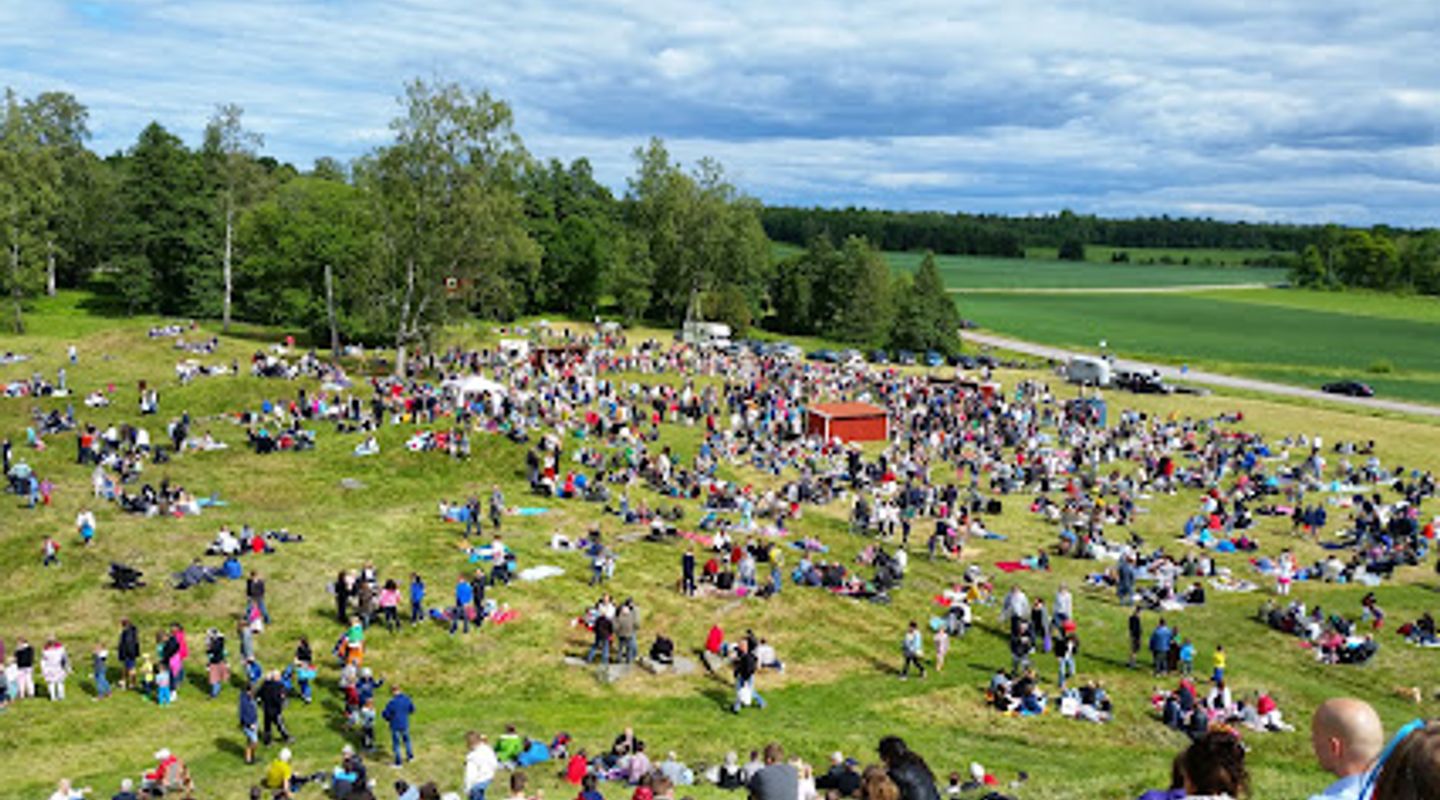
A brief summary of Anundshög
Sweden’s largest burial mound and a layered ceremonial landscape of ship-settings, runestone and medieval assembly ground.
Anundshög is Sweden’s largest burial mound set within a vast Iron Age and Viking Age monument complex near Västerås, with ship settings, standing stones and a prominent 11th-century runestone. The landscape reads like a layered history: prehistoric graves, medieval assembly remnants and the echoes of ancient roads and processions. A visitor centre, café and year-round access make it a contemplative but engaging place to explore on foot.
On-site amenities
 Restrooms
 Drink options
 Food options
 Seating areas
 Information boards
 Visitor centre
 Trash bins
Opening hours
- Every dayOpen 24 hours
Opening hours as listed on the venue’s Google Business Profile. Hours can change for services and special events, so check with the venue before you go.
- Address
- Anundshög 5, 725 96 Västerås
- Phone
- Website
Getting there
By car
Regional bus + short walk
Cycling
Discover more about Anundshög
A monumental silhouette across the plain
Anundshög is dominated by a turf-covered tumulus so broad that it reads as a low hill from a distance; it is the largest known burial mound in Sweden and the visual anchor for a much larger funerary landscape. Around the mound lie several round stone settings, multiple smaller barrows and the striking outlines of five ship-settings — stone constructions laid out in the proportions of a vessel — that together create a deliberate pattern of memory and display across the Badelunda ridge.
Time layers: from Iron Age burials to medieval assemblies
This place was used across many centuries. Radiocarbon dates and archaeological work tie activity here to the late Iron Age and Viking Age (roughly the first millennium CE), while documentary traces show Anundshög’s continued role as a meeting place in the Middle Ages. The flat summit of the great mound and adjacent open ground served social and ceremonial functions long after burials ceased, turning the site into a durable focus for regional power and justice gatherings.
Runestones, avenue marks and the path of kings
Near the mound stands a high runestone and rows of standing stones that mark what used to be an important route across the landscape. The runestone, raised in the early second millennium, and the line of posts or stones that once flanked the track hint at processional approaches: caravans, newly elected rulers on ceremonial rides, and travellers moving along an artery that connected central Sweden to broader networks. Those alignments transform the area from an isolated cemetery into a designed ceremonial landscape.
Archaeological traces and visible repairs
Excavations, geophysical surveys and conservation work have revealed traces of earlier constructions beneath and beside the mound — hearths, filled pits and the outlines of timber settings — while conservation interventions over the centuries have reshaped the topography. Damage from earlier plundering is part of the mound’s story, and modern archaeological methods have both clarified its chronology and informed careful restoration that preserves the mound’s silhouette while keeping the site legible for visitors.
How the site feels on the ground
Walking the short trails across the turf and gravel, you move between the low rise of the mound, open grassland and scattered stones. The air often carries the subtle scent of pine and cut grass; on clear days the plain opens to distant treelines and a sense of exposure that would have magnified any ritual or public gathering. The ship-settings’ arcs and the vertical runestone create visual punctuation, so that each pause offers a different compositional view of stones, mound and sky.
Visitor facilities and living heritage
Anundshög is presented to the public with a visitor centre and amenities set close to the monument area, and the site is accessible year-round for self-guided exploration. In summer months educational programmes and guided archaeology-led tours bring practical demonstrations of Iron Age crafts and runic writing; the site thus functions both as a preserved archaeological landscape and a place where ancient practices are interpreted and sometimes recreated for learning and engagement.
Evendo Review Centre
 Google
Guest reviews
Best time to go
Quietest: Jan, Feb & Dec · before 6am or at 9pm
Busy times are Evendo estimates for a typical year, to help you plan. Actual crowds vary with events, school holidays and the weather.
Explore Anundshög on the map
A handpicked selection of must-see spots near Anundshög, mapped for you.
Get your free copy of our complete guide to Anundshög, delivered straight to you.
Everything on this page, from opening hours and how to get there to Eve’s tips and the best time to go, in one PDF you can read offline, print or share.
Already have an account? Sign in
Your Anundshög guide is ready.
We'll send it to · Not you? Sign out

Getting your guide ready…
We are putting together a fresh copy of the Anundshög guide. This can take up to a minute.
This can take a few moments. If your browser asks, choose Allow so the download can start. You'll find the guide in your Downloads folder.
Nothing happened? Download it again
Sorry, the guide is taking longer than usual. Please try again in a minute, or get it by email instead.
Other nearby places you may find interesting
The closest places of the same kind, if this one is not quite what you had in mind.
-
-
-
-
-


Swipe for more places
More to explore near Anundshög

 Best experiences near Anundshög
 Best hotels near Anundshög
 Best landmarks near Anundshög
 Best attractions near Anundshög
 Best shops near Anundshög
 Best restaurants near Anundshög
 Best bars near Anundshög
Do you manage this location?
Take control to get all the benefits, like improved information, better appearance, and stronger visibility across AI-powered discovery.
Explore more

Explore more of Svealand
Experience the essence of Sweden in Svealand: a region of historic cities, stunning archipelagos, and rich cultural heritage perfect for every traveler.
Explore Svealand
Explore more of Sweden
Discover Sweden's breathtaking landscapes, vibrant cities, and rich cultural heritage. From the Northern Lights to historic castles, experience the essence of Scandinavia.
Explore Sweden
