

Håga mound Travel Guide
Free Guide: A turf-capped Bronze Age barrow on the outskirts of Uppsala—one of Scandinavia’s richest ancient graves and a landscape of long-lived ritual.


A brief summary of Håga mound
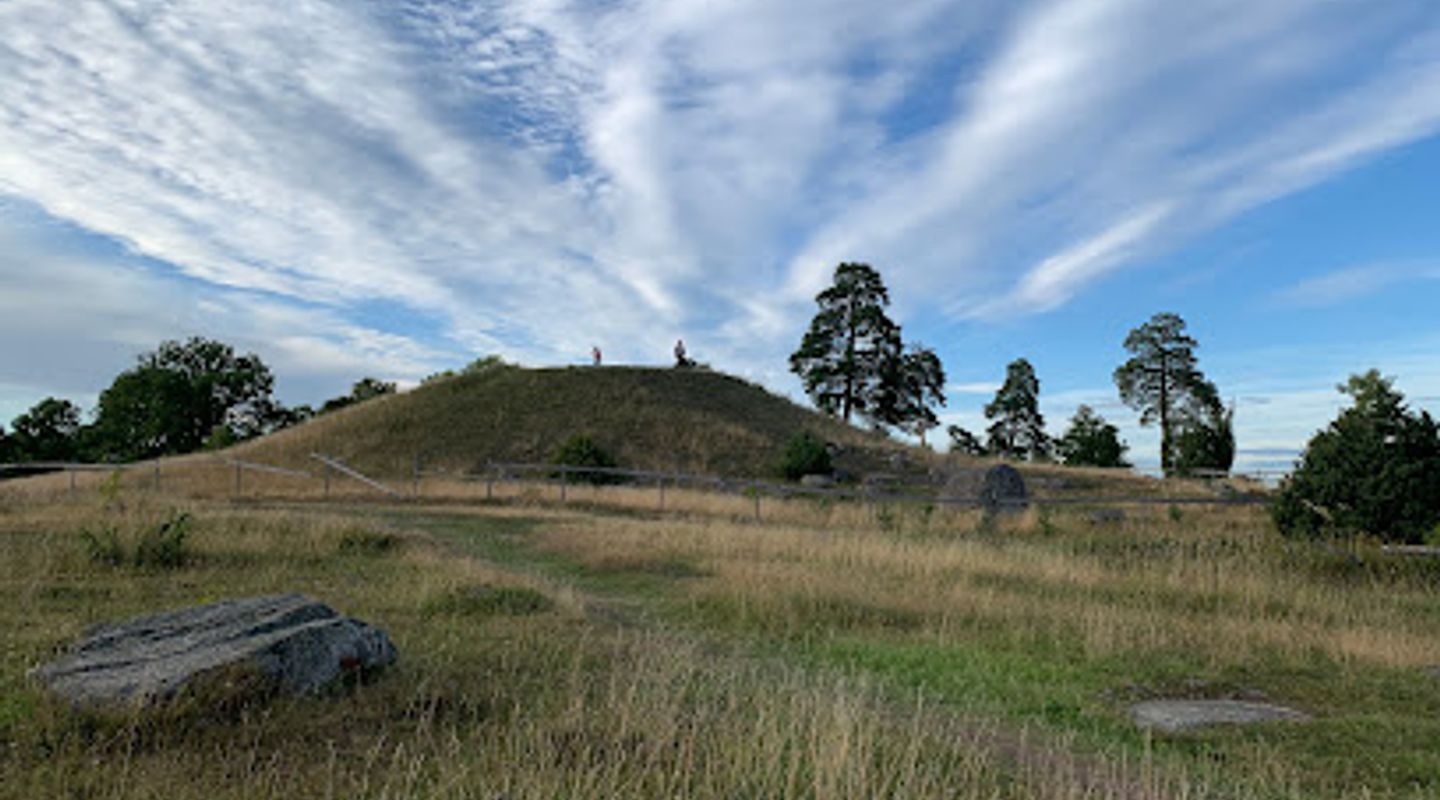
A turf-capped Bronze Age barrow on the outskirts of Uppsala—one of Scandinavia’s richest ancient graves and a landscape of long-lived ritual.
Håga Mound (Hågahögen), commonly called King Björn’s Mound, is a monumental Bronze Age burial tumulus on the western outskirts of Uppsala. Rising roughly 7 metres and some 45–50 metres across, this turf-capped barrow crowns a ritual landscape of house remains, cultic enclosures and burial grounds dating to around 1100–1000 BCE. The mound’s spectacular grave goods—many now in Stockholm—mark it as one of Scandinavia’s richest Bronze Age burials, and the site remains an evocative mix of archaeology, open meadow and centuries of mythic association.
On-site amenities
 Seating areas
 Information boards
 Trash bins
Opening hours
- Every dayOpen 24 hours
Opening hours as listed on the venue’s Google Business Profile. Hours can change for services and special events, so check with the venue before you go.
- Address
- Hågavägen 51, 752 63 Uppsala
- Phone
- Website
Getting there
Local bus
Bicycle
Taxi or rideshare
Discover more about Håga mound
Ancient grave, living landscape
Håga Mound is a Bronze Age tumulus constructed roughly three millennia ago; its compact, rounded silhouette—originally taller when built at the edge of a sea inlet—still dominates the low meadow where it sits. The mound was created by laying turfs over a cairn and a wooden burial chamber that contained a hollow oak coffin with cremated human remains and exceptionally rich metalwork. The combination of monumental earthwork, internal chamber and ritual deposits places Håga among the most significant burial constructions of its era.
Archaeology and spectacular finds
When excavated in the early 20th century, the mound yielded a remarkable assemblage of bronze and gold-adorned objects: a sword with a gilded hilt, razors, tweezers, gilt buttons and a distinctive ornamented brooch—many artifacts now conserved in national collections. The finds indicate long-distance contacts and skilled metalwork production in southern Scandinavia, and they imply a burial of high status—likely a chieftain or important local leader whose funeral rites tied community, craft and ritual practice together.
Ritual architecture around the barrow
Håga is more than a single mound: the surrounding landscape preserves traces of burial grounds, settlement features and two so-called cultic enclosures—rectilinear earthworks interpreted as symbolic or ritual buildings. These enclosures, used over long stretches of time, underline the site’s prolonged ceremonial significance and suggest structured ritual performance in association with the mound itself.
Continuity, place-name and legend
The place name Håga derives from an old word for mound, and later medieval sources tether the location to royal figures—hence the popular name King Björn’s Mound. That layering of Bronze Age ritual importance, Viking-Age memory and later folklore gives the site an enduring presence in both the archaeological record and the region’s cultural imagination.
Landscape and visitor impression
Today the mound sits amid open meadow and mixed trees on Uppsala’s western fringe, its grassy slopes inviting close viewing while protecting the underlying archaeology. From the turf you can sense the mound’s scale: modest from a distance yet physically impressive on approach. Seasonal changes—snow smoothing contours in winter, wildflowers and buzzing insects in summer—alter the mood but never obscure the sense of an ancient monument marking the land.
What the mound tells us
Håga Mound is an emblem of power, craft and ritual from the Nordic Bronze Age. Its rich grave assemblage speaks to social inequality and long-distance exchange; its prominent position in the landscape and the associated ritual structures show institutionalised ceremonial practices. As both archaeological source and local landmark, Håga bridges prehistory and later historical memory, offering a compact but profound encounter with northern Bronze Age life and belief.
Evendo Review Centre
 Google
Guest reviews
Best time to go
Quietest: Jan, Feb & Dec · before 6am
Busy times are Evendo estimates for a typical year, to help you plan. Actual crowds vary with events, school holidays and the weather.
Explore Håga mound on the map
A handpicked selection of must-see spots near Håga mound, mapped for you.
Get your free copy of our complete guide to Håga mound, delivered straight to you.
Everything on this page, from opening hours and how to get there to Eve’s tips and the best time to go, in one PDF you can read offline, print or share.
Already have an account? Sign in
Your Håga mound guide is ready.
We'll send it to · Not you? Sign out

Getting your guide ready…
We are putting together a fresh copy of the Håga mound guide. This can take up to a minute.
This can take a few moments. If your browser asks, choose Allow so the download can start. You'll find the guide in your Downloads folder.
Nothing happened? Download it again
Sorry, the guide is taking longer than usual. Please try again in a minute, or get it by email instead.
Other nearby places you may find interesting
The closest places of the same kind, if this one is not quite what you had in mind.
-
-
-
-
-


Swipe for more places
More to explore near Håga mound

 Best experiences near Håga mound
 Best hotels near Håga mound
 Best landmarks near Håga mound
 Best attractions near Håga mound
 Best shops near Håga mound
 Best restaurants near Håga mound
 Best bars near Håga mound
Do you manage this location?
Take control to get all the benefits, like improved information, better appearance, and stronger visibility across AI-powered discovery.
Explore more

Explore more of Uppland
Discover Uppland, Sweden's historic province, with its mix of vibrant cities, serene countryside, ancient Viking sites, and rich cultural heritage.
Explore Uppland
Explore more of Sweden
Discover Sweden's breathtaking landscapes, vibrant cities, and rich cultural heritage. From the Northern Lights to historic castles, experience the essence of Scandinavia.
Explore Sweden
