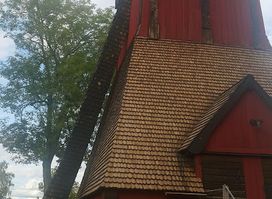
Old Uppsala Archaeological Park, Uppland Travel Guide
A ridge of royal burial mounds, living mythology and archaeology—Old Uppsala ties Viking‑age power to a landscape you can still walk today.
Old Uppsala Archaeological Park (Gamla Uppsala) is a vast, atmospheric landscape of ancient burial mounds, medieval churchyard and museum that marks one of Scandinavia’s most important early-power centres. The park’s grass‑covered royal mounds—built in the 6th–7th centuries—sit on a gently rising ridge framed by open fields and copses, offering a tangible link to Vendel- and Viking-age kings, pagan rites and centuries of Swedish myth and ritual.
A brief summary to Old Uppsala Archaeological Park
- Disavägen, Uppsala, 754 40, SE
- Duration: 0.5 to 3 hours
- Mid ranged
-
 Outdoor
- Mobile reception: 4 out of 5

Know before you go
Hi, I'm Eve. Here are a few practical things to know before exploring Old Uppsala Archaeological Park.
- Wear sturdy shoes for uneven grassy surfaces and low stone edges around the mounds.
- Visit the onsite Gamla Uppsala museum to see artefacts and models that explain the mounds' construction and history.
- Bring weather‑proof layers—wind and rain are exposed on the ridge, and conditions change quickly.
- Allow at least 1–2 hours to explore the park and museum; longer if you wish to photograph or read interpretation panels.
Do you manage this location?
Take control to get all the benefits, like improved information, better appearance, and stronger visibility across AI-powered discovery. Learn more about listing your business on Evendo
Activate your presenceOther nearby places you may find interesting
The closest places of the same kind, if this one is not quite what you had in mind.
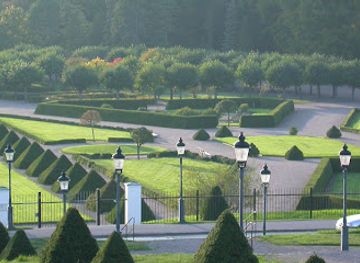
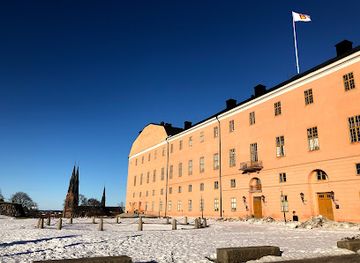

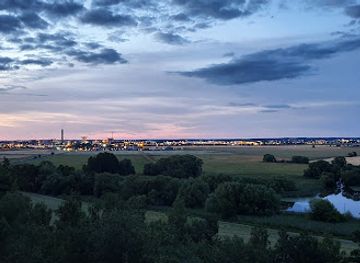
Explore Old Uppsala Archaeological Park on the Map
A handpicked selection of must-see spots near Old Uppsala Archaeological Park, mapped for you.
Getting There
-
Regional bus
Public regional bus from Uppsala city centre to Gamla Uppsala: typically 15–25 minutes depending on service; runs frequently during daytime but may have reduced frequency early morning and late evening; single adult fare usually in the range of 30–60 SEK if using local transit payment methods; bus stops are a short, level walk from the park entrance.
-
Car
Driving from Uppsala centre takes around 10–20 minutes depending on traffic; nearby pay parking is available but can fill at peak times and may be some distance from the principal mound area; expect parking fees generally in the range of 10–30 SEK per hour and limited turning space for larger vehicles.
-
Bicycle
Cycle from Uppsala along local bike paths in roughly 20–35 minutes depending on your starting point and pace; terrain is flat and suitable for most cyclists; secure bike racks are provided near the museum and park but chains and locks are recommended.
For the on-the-go comforts that matter to you
-
 Information Boards
-
 Seating Areas
-
 Visitor Center
-
 Restrooms
-
 Drink Options
Discover more about Old Uppsala Archaeological Park
The monumental burial mounds and the landscape they shape
The park is dominated by three large, grass‑topped Royal Mounds—imposing, rounded earthworks dating from the late Iron Age—along with numerous smaller barrows and traces of settlement that stitch the ridge into a deliberate ritual landscape. The mounds read at once as funerary architecture and as political statements: raised, visible and sited on the skyline so that for centuries they announced the presence of power to anyone approaching the area. The surrounding fields and hedgerows frame long sightlines, giving the site a deliberate, open feeling that favoured processions, gatherings and ritual activity.Layers of history: from prehistory to medieval parish life
Although the monumental tombs are the park’s most recognisable features, the site accumulates centuries of activity: Iron Age elite burial practices, Viking‑age sacrificial associations, and later Christian reuse centred on Gamla Uppsala Church. Stonework, turf, earth and planted trees all show the palimpsest of human occupation—the same ridge reinterpreted and re-used across eras. Scattered finds recovered by archaeologists, from weapon fragments to domestic goods, explain daily life alongside prestige burial practices, emphasising how the ceremonial and the practical coexisted here.The museum and interpretation that bring stones and soil to life
Adjacent to the mounds sits the on‑site museum, a compact interpretation centre that houses archaeological finds, models and displays explaining burial rites, mythology and the archaeology of the area. Exhibits combine artefacts with accessible explanatory panels and models that clarify how the mounds were constructed and why Gamla Uppsala became a focal point for both sacred and political functions. The museum gives context to what is visible in the landscape and is an ideal complement for visitors who want physical evidence and chronology to match the visual drama outside.Sensory character and the visitor experience of place
Walking the grassy crest, you feel both exposed and contained: wind across the ridge, the soft crunch of turf underfoot and the broad sky above lend a hush that invites reflection. Birdsong and farmland scents replace urban noise; in winter the site becomes a framed silhouette of mounds against pale light, while in high summer the ridgeline takes on warm, rounded tones. Benches and information boards offer moments to stop and read, while the scale of the mounds resists being reduced to a single photograph — they must be viewed in relation to the land.Stories and myth: sacred kings, gods and ritual memory
Old Uppsala’s significance extends beyond archaeology into saga and medieval chronicle: the place is tied in literature to royal assemblies, sacrificial festivals and gods of Norse religion. These associations are woven into the site’s interpretive narrative and linger in the atmosphere; even where documentary certainty fades, the cultural memory of kingship and rites keeps the site legible as a landscape of ceremonial importance. That layered storytelling—archaeological fact braided with mythic resonance—gives the park a charged, imaginative quality.Practical character and adjoining features to explore
The archaeological park is complemented by a medieval church and an open‑air farmstead nearby that illustrate later phases of local life. Paths are generally grassy and uneven, so the terrain rewards sturdy footwear and a measured pace. The park’s expanses make it suitable for reflective visits, study of ancient earthworks and photography that captures scale and horizon; the neighbouring museum deepens understanding and displays finds that otherwise would be invisible in the landscape.More to explore near Old Uppsala Archaeological Park
-

Best experiences near Old Uppsala Archaeological Park
-

Best hotels near Old Uppsala Archaeological Park
-

Best landmarks near Old Uppsala Archaeological Park
-

Best shops near Old Uppsala Archaeological Park
-

Best restaurants near Old Uppsala Archaeological Park
-

Best bars near Old Uppsala Archaeological Park







Your all‑in‑one travel companion app
Explore expert travel guides, compare and book tours, experiences, hotels, and more—all from the palm of your hand. Download now for seamless trip planning wherever your wanderlust takes you.


Explore More of Uppland
Looking beyond Old Uppsala Archaeological Park? Discover Uppland for broader travel guides, local hot-spots, and regional highlights.
Explore Uppland