
Venngarn Castle, Uppland Travel Guide
A layered baroque estate north of Sigtuna—ancient foundations, an intact 17th‑century chapel and parkland that reward slow exploration.
Venngarn Castle, set on a gentle rise north of Sigtuna, is a layered historic estate whose origins reach back to the 12th century and whose present baroque form was shaped in the 17th century by Magnus Gabriel De la Gardie and architect Jean de la Vallée. The castle complex includes a remarkably well-preserved baroque chapel, formal gardens and parkland stretching across the estate; the grounds are public and the house opens intermittently for tours and events, with a café and cultural programming during the season.
A brief summary to Venngarn Castle
- Wenngarns slott, Sigtuna, 193 91, SE
- Click to display
- Duration: 0.5 to 3 hours
- Free
-
 Outdoor
- Mobile reception: 4 out of 5
- Saturday 12 pm-3 pm
- Sunday 12 pm-3 pm

Know before you go
Hi, I'm Eve. Here are a few practical things to know before exploring Venngarn Castle.
- Check opening times before planning to enter the castle; the grounds are free to wander but interior access is limited and seasonal.
- Bring a camera and a picnic—formal garden vistas and lakeside edges make attractive, low-key photo spots.
- Look for the baroque chapel and stair hall when the castle is open; these spaces hold much of the estate’s historic detail.
- Wear sturdy shoes if you plan to explore the park beyond the formal gardens—paths can be uneven in wet weather.
Do you manage this location?
Take control to get all the benefits, like improved information, better appearance, and stronger visibility across AI-powered discovery. Learn more about listing your business on Evendo
Activate your presenceOther nearby places you may find interesting
The closest places of the same kind, if this one is not quite what you had in mind.

Explore Venngarn Castle on the Map
A handpicked selection of must-see spots near Venngarn Castle, mapped for you.
Unlock the Best of Venngarn Castle
Buy tickets
-
No tickets available
Book tours with entry

Book tours without entry
-
No tours available
Getting There
-
By car
Drive from central Sigtuna by regional roads; travel time typically 10–20 minutes depending on traffic. On‑site parking is available but capacity can be limited during events; be prepared for seasonal parking restrictions and modest parking fees (SEK 0–50 typical) during high season.
-
Regional bus + short walk
Take a scheduled regional bus serving the Sigtuna–Märsta corridor, journey time from Sigtuna bus hub typically 15–30 minutes with 1–3 services per hour at peak times; subsequent walk across estate paths of about 1.5–2.5 km on mixed terrain to reach the castle entrance. Service frequency reduces outside peak season and on weekends.
-
Taxi or rideshare
A taxi from Sigtuna centre or Märsta railway station typically takes 10–20 minutes and offers door‑to‑door convenience; fares generally range from SEK 150–350 depending on time of day and operator. Availability is good during daytime but may be limited late at night.
For the on-the-go comforts that matter to you
-
 Restrooms
-
 Drink Options
-
 Food Options
-
 Seating Areas
-
 Information Boards
Discover more about Venngarn Castle
Ancient foundations and aristocratic remodelling
Venngarn’s story begins as a modest fortified stone house in the 1100s and, over centuries, was enlarged and reworked to reflect the tastes and power of successive owners. In the 1500s the site was transformed into a Renaissance-style manor and then, in the mid-17th century, Magnus Gabriel De la Gardie commissioned the castle’s most recognisable appearance; together with royal architect Jean de la Vallée he reshaped the building into a formal baroque residence. Traces of this layered past remain visible in the fabric of the house: earlier masonry concealed beneath later façades, inscriptions and sculptural details that mark different eras of construction.The chapel and interior traces of baroque grandeur
One of Venngarn’s defining features is its baroque chapel, noted for being unusually intact; carved woodwork, painted ceilings and a compact, ceremonious layout offer a direct encounter with 17th‑century liturgical design. Interior rooms preserve details from De la Gardie’s period — stair halls, reception rooms and cabinet spaces where political and cultural life once intersected. While not every room is open at all times, guided openings and occasional exhibitions concentrate attention on the castle’s most illustrative interiors and artistic fittings.Gardens, parkland and waterside setting
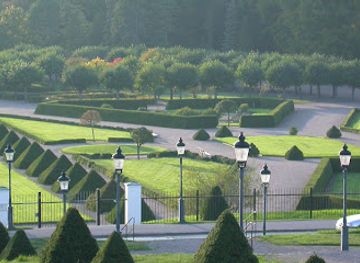
The castle sits within a designed landscape that reads as an extension of the house: terraces, axial sightlines and clipped parterres open toward the surrounding meadows and Garnsviken inlet. The restored baroque garden echoes historical geometries—formal beds, clipped hedges and stone elements—arranged to be read from the castle’s vantage points. Beyond the formal gardens, broad lawns and specimen trees give the estate a tranquil, park-like character that invites contemplative walks and seasonal birdwatching along its quieter margins.A place of many lives: uses across centuries
Venngarn’s biography is varied: noble residence, crown property, rehabilitative institution and later a cultural venue. During the 20th century parts of the estate served institutional uses and subsequent restorations sought to prioritise the baroque character established by De la Gardie. Today the site balances heritage conservation with practical adaptation: public parkland around the house, a seasonal café atmosphere and curated events that bring contemporary activity into historic rooms and garden spaces without erasing older layers.Architectural details and surprising stories
Architectural observers will find the building’s proportions, window rhythms and the preserved stair hall of particular interest; the chapel’s decorative program is a highlight for anyone curious about Baroque ecclesiastical interiors in a Swedish country setting. Local legends and literary references also linger here—medieval sagas linked to a mythical queen are reflected in paintings and room names, and the story of De la Gardie’s wealth and eventual decline is woven into the castle’s narrative fabric.Visitor character and seasonal rhythms
Venngarn offers a quiet, reflective experience rather than a packed museum route: the park and gardens are freely accessible for strolling, photography and picnics, while the castle opens for limited hours, guided tours and special events during the warmer months. The estate’s scale (tens of hectares surrounding a roughly 2,200 m² main building) means space to breathe; light across the lawns, the hush within the chapel and the distant ripple of water combine to produce an atmosphere that is at once formal and inviting.












Your all‑in‑one travel companion app
Explore expert travel guides, compare and book tours, experiences, hotels, and more—all from the palm of your hand. Download now for seamless trip planning wherever your wanderlust takes you.


Explore More of Uppland
Looking beyond Venngarn Castle? Discover Uppland for broader travel guides, local hot-spots, and regional highlights.
Explore Uppland
Discover Carl Linnaeus' peaceful rural retreat at Sävja: a historic farmhouse museum with herb gardens, study reconstruction, and summer cultural events in Uppsala's countryside.

A compact medieval waterfront town where runestones, timber houses and lake light make Sweden’s oldest streets quietly magnetic.
