

Old Uppsala museum, Uppsala Travel Guide
Free Guide: Explore Scandinavia’s ancient seat of power — artefacts, models and the great royal mounds meet modern interpretation.


A brief summary of Old Uppsala museum
Explore Scandinavia’s ancient seat of power — artefacts, models and the great royal mounds meet modern interpretation.
Perched beside the monumental royal burial mounds of Old Uppsala, Gamla Uppsala Museum explores the site’s long history as a religious and political centre from the Vendel period through the Viking Age. Housed in a distinctive mid‑20th‑century building, the museum combines archaeological finds, interactive displays and changing temporary exhibitions to bring myths, runes and ritual to life for families and history lovers alike.
On-site amenities
 Restrooms
 Drink options
 Food options
 Seating areas
 Information boards
 Visitor centre
Opening hours
- Every day10 am–4 pm
Opening hours as listed on the venue’s Google Business Profile. Hours can change for services and special events, so check with the venue before you go.
- Address
- Disavägen 15, 754 40 Uppsala
- Phone
- Website
Getting there
By regional bus
By car
By bicycle
Discover more about Old Uppsala museum
A landscape of power and ritual
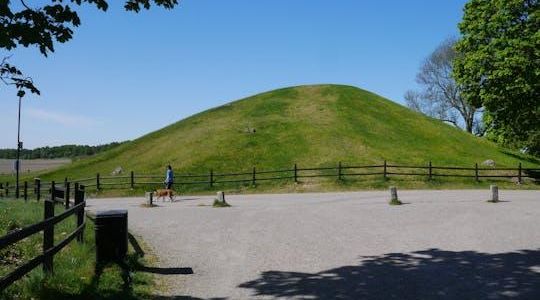
Gamla Uppsala is a place where earth and story meet: three enormous burial mounds dominate the skyline and mark a landscape used for elite burials and public ritual from the late Iron Age into the Viking Age. The museum sits immediately beside these mounds and interprets their meaning through artefacts, models and reconstructions that make clear why this spot became a seat of regional authority and religious observance.
The building and how it frames the past
The museum occupies a carefully designed building whose calm, modern lines and considered interiors create a sequence of exhibition spaces that focus attention on objects and narrative. Galleries are arranged to guide you from the very early finds through to the later medieval transformations of the site; lighting and display cases emphasise delicate metalwork, weapons and grave goods while larger visual tools—maps, 3D reconstructions and models—recreate the scale of the ancient settlement and ceremonial areas.
Objects that speak across a millennium
Displays include archaeological finds recovered from burials and settlements: ornate swords, horse harness fittings, jewellery and ritual objects that reveal social status, craft skill and long‑distance connections across the Baltic. Several hands‑on and interactive exhibits are aimed at younger visitors, and temporary exhibitions frequently explore focused themes such as runestones, craft traditions or ritual practice, providing fresh perspectives on familiar material.
Soundscapes, stories and the Viking imagination
The museum balances scientific explanation with mythic depth. Text panels and audio‑visual elements explain burial customs, cosmology and the role of sacrifice, while storytelling corners and evocative visual reconstructions invite you to imagine the lived experience of people who gathered here—priests, warriors and farmers whose actions shaped regional identity and Scandinavian myth.
The site beyond the walls
Because the museum is sited within a protected archaeological environment, visiting it is inevitably a two‑part experience: the interior displays present the research and finds, and the exterior landscape—mounds, church and traces of ancient routes—adds an essential spatial context. The museum’s orientation makes it straightforward to move from case to countryside, where scale and silence change how objects and narratives are understood.
Practical character and visitor essentials
The museum is family oriented and designed for mixed audiences: clear labels, scaled models and tactile elements sit alongside scholarly explanations. Facilities include a small museum shop with local craft items and guidebooks, and accessible features that allow visitors with mobility needs to experience most of the core exhibition spaces. Seasonal programming—guided tours, lectures and family events—adds layers of interpretation and often introduces specialist themes tied to current research or anniversaries.
Evendo Review Centre
 Google
Guest reviews
Best time to go
Quietest: Jan, Feb & Mar · before 8am or from 8pm
Busy times are Evendo estimates for a typical year, to help you plan. Actual crowds vary with events, school holidays and the weather.
Explore Old Uppsala museum on the map
A handpicked selection of must-see spots near Old Uppsala museum, mapped for you.
Get your free copy of our complete guide to Old Uppsala museum, delivered straight to you.
Everything on this page, from opening hours and how to get there to Eve’s tips and the best time to go, in one PDF you can read offline, print or share.
Already have an account? Sign in
Your Old Uppsala museum guide is ready.
We'll send it to · Not you? Sign out

Getting your guide ready…
We are putting together a fresh copy of the Old Uppsala museum guide. This can take up to a minute.
This can take a few moments. If your browser asks, choose Allow so the download can start. You'll find the guide in your Downloads folder.
Nothing happened? Download it again
Sorry, the guide is taking longer than usual. Please try again in a minute, or get it by email instead.
Unlock the best of Old Uppsala museum
Skip-the-line tickets, guided tours with entry, and walking tours of the area, booked in a few clicks.
Other nearby places you may find interesting
The closest places of the same kind, if this one is not quite what you had in mind.
-
-
-
-
-


Swipe for more places
More to explore near Old Uppsala museum

 Best experiences near Old Uppsala museum
 Best hotels near Old Uppsala museum
 Best landmarks near Old Uppsala museum
 Best attractions near Old Uppsala museum
 Best shops near Old Uppsala museum
 Best restaurants near Old Uppsala museum
 Best bars near Old Uppsala museum
Do you manage this location?
Take control to get all the benefits, like improved information, better appearance, and stronger visibility across AI-powered discovery.
Explore more

Explore more of Uppsala
Discover Uppsala, Sweden's historic and vibrant city, home to ancient landmarks, lush gardens, and a thriving cultural and culinary scene.
Explore Uppsala
Explore more of Sweden
Discover Sweden's breathtaking landscapes, vibrant cities, and rich cultural heritage. From the Northern Lights to historic castles, experience the essence of Scandinavia.
Explore Sweden
