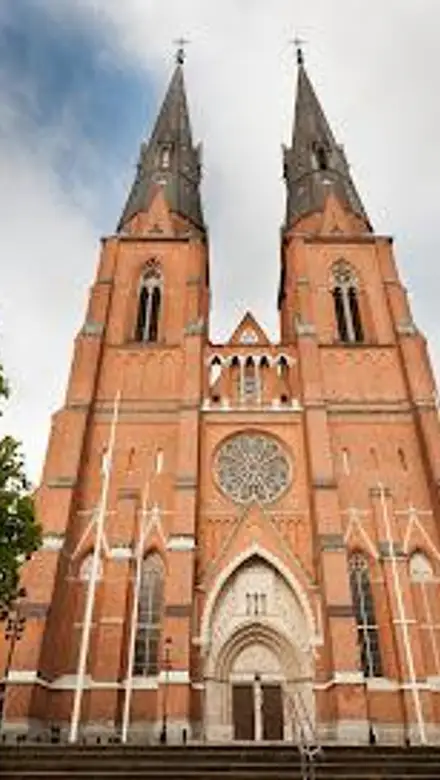
Uppsala Cathedral, Uppsala Travel Guide
Free Guide: A soaring medieval cathedral of brick and limestone — Sweden’s grand ceremonial church and a treasury of royal history beneath twin Gothic spires.


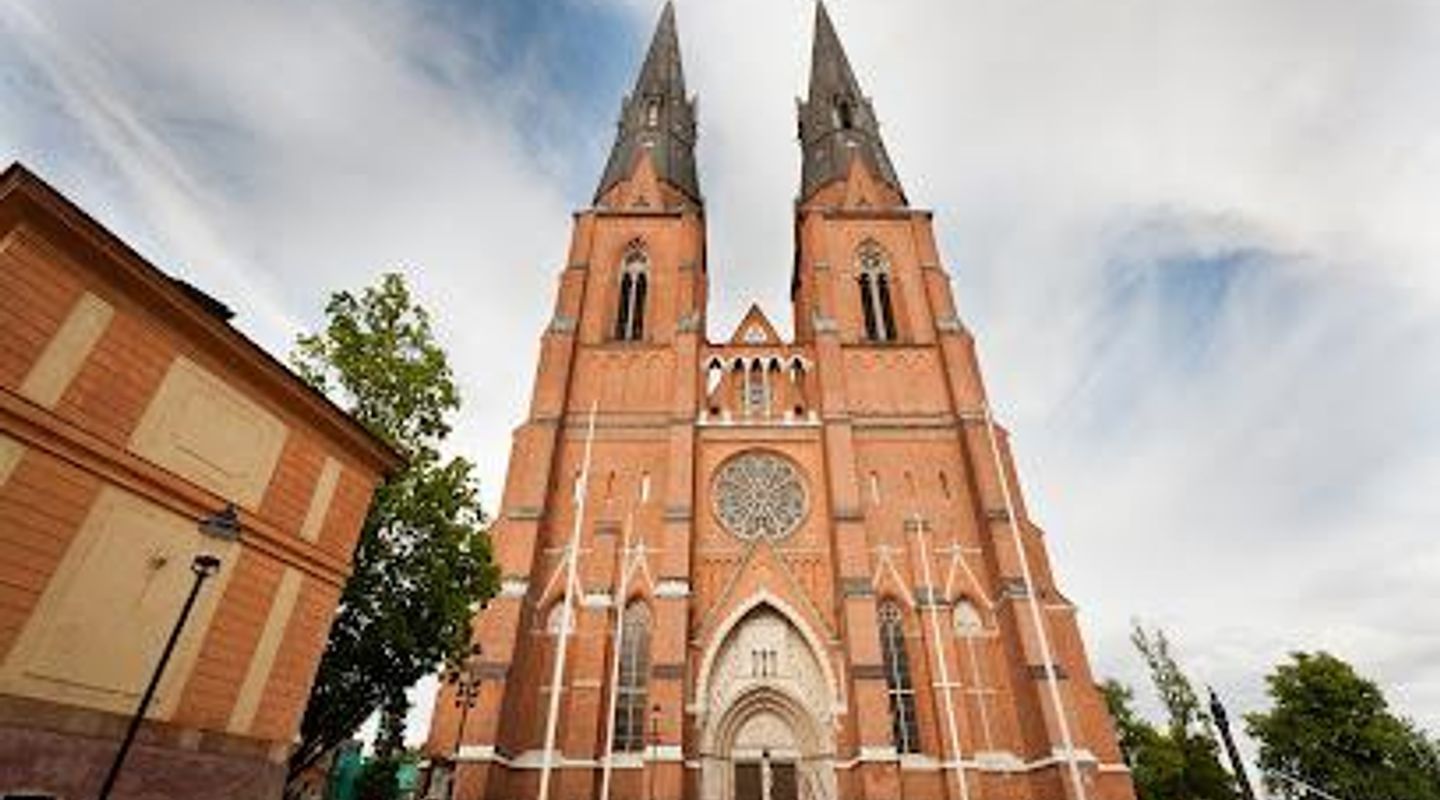
A brief summary of Uppsala Cathedral
A soaring medieval cathedral of brick and limestone — Sweden’s grand ceremonial church and a treasury of royal history beneath twin Gothic spires.
Uppsala Cathedral, towering over Domkyrkoplan in central Uppsala, is the Nordic region’s largest medieval church and a landmark of Swedish history. Built mainly in brick from the late 13th century and reshaped in the 19th century, the cathedral combines soaring Gothic proportions, twin pointed spires, richly decorated chapels and a treasury of royal burials and liturgical treasures. Its scale, layered architecture and long ceremonial role make it an essential encounter with Sweden’s religious and cultural past.
On-site amenities
 Restrooms
 Seating areas
 Information boards
 Visitor centre
Opening hours
- Every day8 am–6 pm
Opening hours as listed on the venue’s Google Business Profile. Hours can change for services and special events, so check with the venue before you go.
- Address
- Domkyrkoplan, 753 10 Uppsala
- Phone
- Website
Getting there
Local bus
Train plus short walk
Taxi or rideshare
Discover more about Uppsala Cathedral
Stone, brick and an evolving silhouette
Uppsala Cathedral began as a medieval building project in the late 1200s and grew over centuries into the vast brick-and-limestone structure you see today. Its plan reads as a Latin cross with a long nave, transepts and an eastern choir surrounded by chapels; much of the core fabric dates to the 14th and 15th centuries, while Gotland limestone and locally fired brick form the cathedral’s distinctive surfaces.Helgo Zettervall’s late-19th-century renovation dramatically altered the exterior profile, adding the tall pointed spires that give the building the current, vertically emphatic silhouette. Earlier episodes — fires, piecemeal repairs and baroque additions — left traces in the masonry, fittings and interior finishes, so the cathedral is legible as a sequence of building moments rather than a single stylistic statement.
Interior scale, craft and sound
Step inside and the scale becomes clearer: a high vaulted nave, stone piers and aisles that frame chapels and altarpieces. The cathedral houses large, historically important organs from different eras; one 19th-century Romantic instrument stands to the west and a versatile modern organ sits in the north transept, each contributing to the building’s acoustic character. Expect the warm timbre of organ pipes to swell through the vaults during services and concerts, and to notice carved and painted surfaces that range from medieval fragments to 19th-century neo-Gothic murals.
Royal connections and sacred relics
Uppsala Cathedral has served as a coronation and burial church for Sweden’s elite: royal sarcophagi and memorial chapels lie within its chapels and aisles, and the shrine of Saint Erik — Sweden’s patron saint — anchors the building’s medieval spiritual significance. The cathedral’s treasury preserves vestments, textiles and liturgical objects that document centuries of ceremonial use; these objects give tangible traces of royal and ecclesiastical ritual and the changing tastes of liturgical display.
Artistry in stone, wood and textile
Inside you’ll find a variety of artistic media: stained glass and painted murals largely introduced or standardized in the 19th-century restoration, carved pulpits and altarpieces with Baroque and Gothic antecedents, and richly woven tapestries installed in the late 20th century to strengthen chapel devotion. The pulpit and several funerary monuments display skilled carpentry and sculpture, while the masonry and buttressing outside reveal medieval engineering adapted to local material and climate conditions.
Layers of history in the urban setting
The cathedral’s position on Domkyrkoplan places it at the heart of Uppsala’s historic core; the surrounding streets and squares retain an irregular medieval grain that contrasts with later grid interventions elsewhere in the city. From this vantage the cathedral reads as both an ecclesiastical centre and a civic landmark — a vertical marker visible from approaches across the old town and a focal point for public processions and commemorations over many centuries.
What to look for as you explore
Take moments to study the carved capitals and painted details in side chapels, to examine funerary monuments and royal burial slabs, and to notice changes of material where restorations meet older fabric. The treasury offers a concentrated view of liturgical wealth, while the organs and choir area show how sound and light have been shaped to serve worship and music. The building invites close observation: details reward patience, while the cathedral’s overall proportions reward time spent standing under the vaults and looking up.
Evendo Review Centre
 Google
Guest reviews
Best time to go
Quietest: Jan, Feb & Nov · before 6am or at 9pm
Busy times are Evendo estimates for a typical year, to help you plan. Actual crowds vary with events, school holidays and the weather.
Explore Uppsala Cathedral on the map
A handpicked selection of must-see spots near Uppsala Cathedral, mapped for you.
Get your free copy of our complete guide to Uppsala Cathedral, delivered straight to you.
Everything on this page, from opening hours and how to get there to Eve’s tips and the best time to go, in one PDF you can read offline, print or share.
Already have an account? Sign in
Your Uppsala Cathedral guide is ready.
We'll send it to · Not you? Sign out

Getting your guide ready…
We are putting together a fresh copy of the Uppsala Cathedral guide. This can take up to a minute.
This can take a few moments. If your browser asks, choose Allow so the download can start. You'll find the guide in your Downloads folder.
Nothing happened? Download it again
Sorry, the guide is taking longer than usual. Please try again in a minute, or get it by email instead.
Unlock the best of Uppsala Cathedral
Skip-the-line tickets, guided tours with entry, and walking tours of the area, booked in a few clicks.
 Tour with entry
Uppsala walking tour to the runestones
from $54.41 Tour with entry
Uppsala bloody history 1h- racial biology, 18th century plague, 19th century prostitution etc.
from $64.83 Tour with entry
Uppsala University's strangest anecdotes, stories from Scandinavias oldest!
from $80.18 Tour with entry
3h Uppsala city walking tour, Cathedral, university buildings etc
from $147.68



Other nearby places you may find interesting
The closest places of the same kind, if this one is not quite what you had in mind.
-
-
-
-
-


Swipe for more places
More to explore near Uppsala Cathedral

 Best experiences near Uppsala Cathedral
 Best hotels near Uppsala Cathedral
 Best landmarks near Uppsala Cathedral
 Best attractions near Uppsala Cathedral
 Best shops near Uppsala Cathedral
 Best restaurants near Uppsala Cathedral
 Best bars near Uppsala Cathedral
Do you manage this location?
Take control to get all the benefits, like improved information, better appearance, and stronger visibility across AI-powered discovery.
Explore more

Explore more of Uppsala
Discover Uppsala, Sweden's historic and vibrant city, home to ancient landmarks, lush gardens, and a thriving cultural and culinary scene.
Explore Uppsala
Explore more of Sweden
Discover Sweden's breathtaking landscapes, vibrant cities, and rich cultural heritage. From the Northern Lights to historic castles, experience the essence of Scandinavia.
Explore Sweden