

Krokfors Slusstation Travel Guide
Free Guide: A compact double lock on the Dalsland Canal where boats climb 5.3 m through historic chambers beside lakeside woodland.


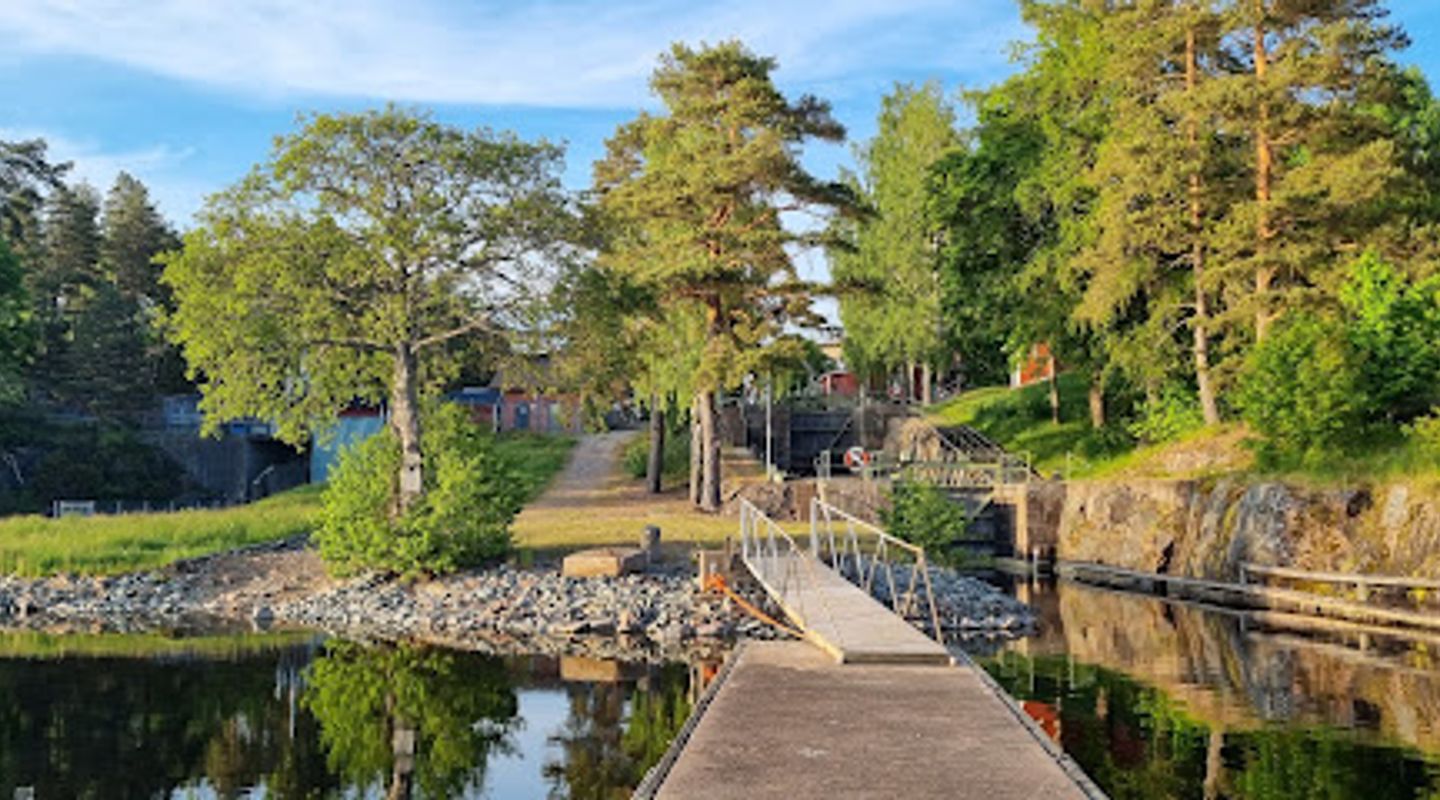
A brief summary of Krokfors Slusstation
A compact double lock on the Dalsland Canal where boats climb 5.3 m through historic chambers beside lakeside woodland.
Krokfors Lock Station sits on the Dalsland Canal near Bengtsfors, where a double lock lifts boats 5.3 m between Västra and Östra Silen lakes. The compact site pairs working canal infrastructure with a waiting jetty, a small kiosk, and a fixed bridge nearby; boat passage through the two chambers takes roughly 25 minutes and offers a close-up look at historic lock mechanics and lakeside Swedish landscape.
On-site amenities
 Drink options
 Seating areas
 Trash bins
 Information boards
Opening hours
- Every day9 am–7 pm
Opening hours as listed on the venue’s Google Business Profile. Hours can change for services and special events, so check with the venue before you go.
- Address
- 666 92 Bengtsfors
- Phone
- Website
Getting there
Car
Regional bus + walk
Boat (canal passage)
Discover more about Krokfors Slusstation
How the lock works and what you see
Krokfors is a double-chamber lock where water and mechanical gates raise and lower boats across a total elevation of about 5.3 metres. Approaching the stone-lined chamber you’ll notice heavy wooden gates and metal fittings that creak and hiss as water levels change; the process of filling or emptying a chamber takes visitors close to the engineering that has kept the Dalsland Canal navigable for leisure craft for more than a century.The site’s compact layout means you can observe operations from a short distance: a waiting jetty sits to the west of the lock while a fixed road bridge stands east of the chambers with roughly 20 metres of vertical clearance over the canal. From vantage points on the towpath you can watch boats enter the lower chamber, wait as the sluices bring the chamber to the necessary level, and then see the gate swing open to let the vessel continue its passage.
Local landscape and character
Krokfors is set amid the Dalsland lake landscape — mixed forest, scattered granite outcrops and a ribbon of calm water that widens into the Silen lakes. The setting is quietly rural: conifers and birch frame the canal and create a green backdrop in summer and a brittle, snow-dusted silhouette in winter. Birdsong and the sound of water on stone replace urban din; on still mornings the canal mirrors the sky and the bridge forms a neat silhouette across it.Beyond the immediate lock infrastructure, the atmosphere feels functional and historic rather than theatrical. The small kiosk near the lock offers basic supplies for boaters and daytrippers, and wooden benches or grassy banks afford places to sit and watch the sequence of gates and levels playing out like a mechanical ritual.
Practical features and details
The double lock has two chambers and a passage width that restricts the size of craft to what the historic channel will comfortably accept; the clearance beneath the nearby bridge is around 20 metres vertically and channel width at the bridge is limited to a few metres suitable for pleasure craft. There is a waiting jetty on the western side where boats can tie up while waiting for passage, and a modest kiosk supplies snacks and essentials during the canal season. On the canal operator’s timetable, staffed lock opening hours are concentrated into the main summer season and usually follow a daily window that aligns with boating timetables.The mechanics and layout make Krokfors a short, intense stop: observation, photography and brief picnics are natural activities here rather than long explorations. The site’s compactness is part of its charm — everything you need to understand a working lock is within a few minutes’ walk.
Sense of history and human scale
Although not ostentatious, Krokfors is part of a larger industrial-era network of locks and waterways that reshaped inland transport and recreation in the region. The exposed timberwork, metal hardware and dressed stone all speak to craft traditions and repeated maintenance; each season the canal is brought back to life by operators and volunteers who care for gates, sluices and moorings.Stand close to the chamber and you can imagine the slower rhythms of past freight traffic, then contrast that with the modern leisure craft sliding through today. The lock’s human scale — narrow footpaths, low railings and small working buildings — keeps the experience personal and immediate rather than monumental.
When to visit and what to bring
Krokfors is best seen during the canal season when locks are staffed and boats pass regularly: the sound of sluices and sight of moving water make the mechanics intelligible. Bring weather-appropriate outer layers and sturdy footwear for the towpath; binoculars or a camera with a modest zoom will capture gate details and passing craft. If you plan to linger, pack a small picnic and consider a quiet seat on the jetty or grassy bank to watch one full lock cycle unfold.
Nearby uses and visitor considerations
The lock sits within a working corridor: boats, service vehicles and occasional maintenance work are normal. Respect barriers and stay clear of gates and gear when the lock is operating. The kiosk offers simple supplies but services are otherwise limited, so treat your visit as a short, contemplative encounter with a living piece of hydrotechnical heritage rather than a full-day attraction.
Evendo Review Centre
 Google
Guest reviews
Best time to go
Quietest: Jan, Feb & Nov · before 8am or from 8pm
Busy times are Evendo estimates for a typical year, to help you plan. Actual crowds vary with events, school holidays and the weather.
Explore Krokfors Slusstation on the map
A handpicked selection of must-see spots near Krokfors Slusstation, mapped for you.
Get your free copy of our complete guide to Krokfors Slusstation, delivered straight to you.
Everything on this page, from opening hours and how to get there to Eve’s tips and the best time to go, in one PDF you can read offline, print or share.
Already have an account? Sign in
Your Krokfors Slusstation guide is ready.
We'll send it to · Not you? Sign out

Getting your guide ready…
We are putting together a fresh copy of the Krokfors Slusstation guide. This can take up to a minute.
This can take a few moments. If your browser asks, choose Allow so the download can start. You'll find the guide in your Downloads folder.
Nothing happened? Download it again
Sorry, the guide is taking longer than usual. Please try again in a minute, or get it by email instead.
Other nearby places you may find interesting
The closest places of the same kind, if this one is not quite what you had in mind.
-
-
-
-
-


Swipe for more places
More to explore near Krokfors Slusstation

 Best experiences near Krokfors Slusstation
 Best hotels near Krokfors Slusstation
 Best landmarks near Krokfors Slusstation
 Best attractions near Krokfors Slusstation
 Best shops near Krokfors Slusstation
 Best restaurants near Krokfors Slusstation
 Best bars near Krokfors Slusstation
Do you manage this location?
Take control to get all the benefits, like improved information, better appearance, and stronger visibility across AI-powered discovery.
Explore more

Explore more of Värmland
Discover Värmland: A Swedish paradise of lakes, forests, and cultural heritage perfect for outdoor adventures and serene getaways.
Explore Värmland
Explore more of Sweden
Discover Sweden's breathtaking landscapes, vibrant cities, and rich cultural heritage. From the Northern Lights to historic castles, experience the essence of Scandinavia.
Explore Sweden
