

Askeberga stone ship Travel Guide
Free Guide: A 55‑metre oval of 24 colossal boulders — a ship in stone that anchors Askeberga’s ancient landscape and invites quiet contemplation.


A brief summary of Askeberga stone ship
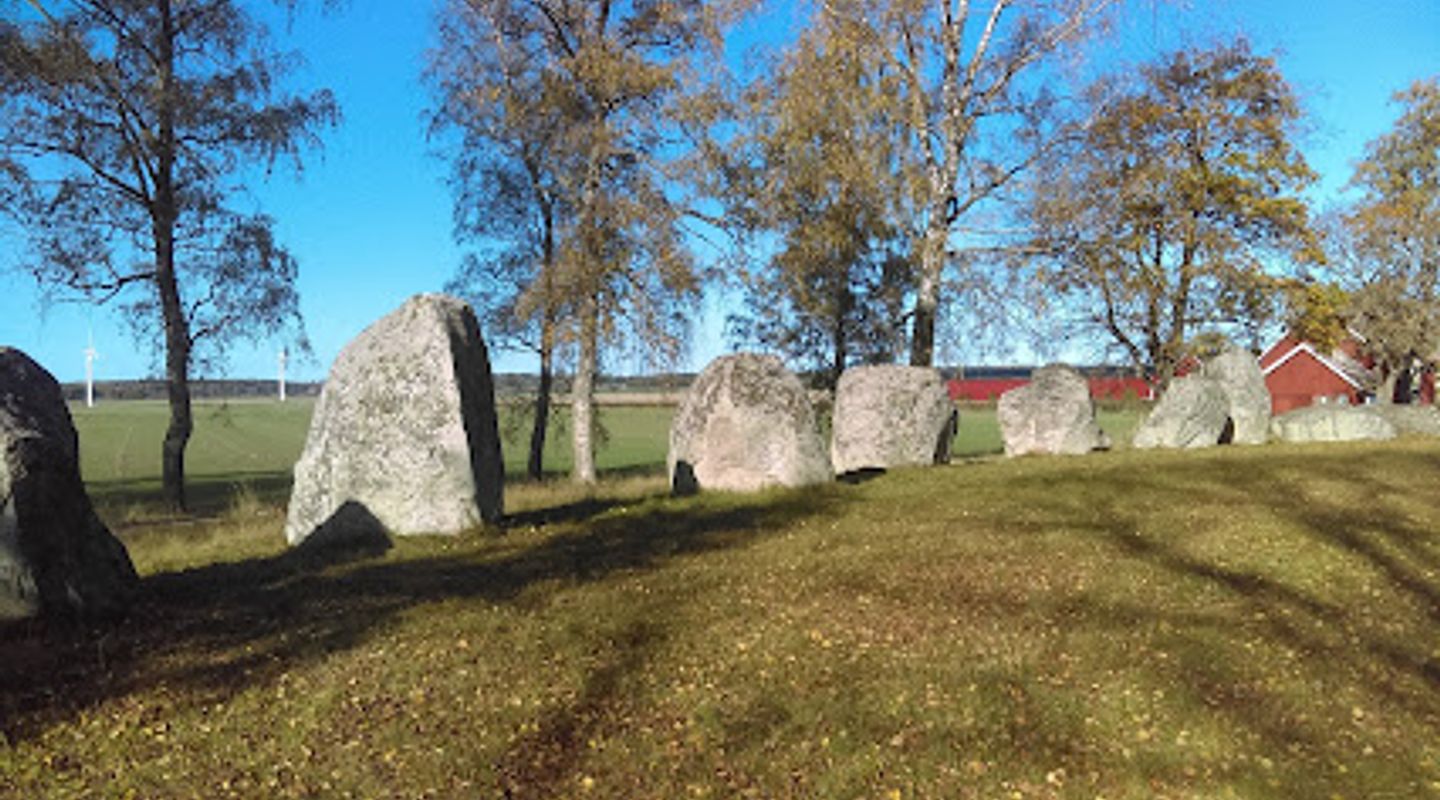
A 55‑metre oval of 24 colossal boulders — a ship in stone that anchors Askeberga’s ancient landscape and invites quiet contemplation.
A dramatic Iron Age/ Bronze Age monument near Askeberga: a 55‑metre oval of 24 colossal boulders laid out as a 'stone ship', each block weighing many tonnes and set into a grassy rise that reads like an ancient harbour frozen on land. The site is open year‑round, uncluttered by modern structures, and invites quiet reflection on funerary ritual, landscape memory and the scale of early Scandinavian engineering.
On-site amenities
 Seating areas
 Information boards
 Trash bins
Opening hours
- Every dayOpen 24 hours
Opening hours as listed on the venue’s Google Business Profile. Hours can change for services and special events, so check with the venue before you go.
- Address
- 549 91 Askeberga
Getting there
Regional bus and short walk
Car
Cycling and country walk
Discover more about Askeberga stone ship
Monumental silhouette on a low rise
The Askeberga stone ship is an eye‑catching arrangement of 24 enormous glacial boulders laid out in an elongated oval roughly 55 metres long; the overall impression is of a ship drawn ashore and set in stone. The stones sit on a gentle grassy swell, their dark, weathered surfaces contrasting with short pasture grass and the open sky. From close to the stones you notice variegated lichen, chips and striations that hint at long exposure to the elements and at work done by glacial and human hands over millennia.
Origins and funerary purpose
Stone ships in Scandinavia span a long period from the later Bronze Age into the Viking Age; they mark a funerary vocabulary in which the ship — central to seafaring cultures — becomes a metaphorical vehicle for the dead. Askeberga’s setting and form align with this tradition: though no single definitive explanation covers every example, archaeologists interpret these ship settings as ritual monuments connected with burial, memory and cosmology. The Askeberga monument, with its unusually large, widely spaced boulders, gestures to communal effort and to a time when landscape and belief were closely woven.
Scale, craft and local geology
What first surprises is scale: each stone at Askeberga is far larger than the small menhirs familiar from many other sites. Local accounts and field descriptions note blocks weighing many tonnes apiece, arranged so their visible faces form a continuous keel‑like outline. The stones are glacial erratics, selected or left in place by ancient people who understood how to exploit local bedrock and ice‑transported material; their placement required planning, manpower and repeated return visits across seasons or generations.
Landscape context and atmosphere
Askeberga sits within gently rolling farmland and meadow; the site is largely unencumbered by later buildings, which gives it a timeless quality. On a still day the stones catch light differently as clouds pass, and wind brings bird calls and the scent of cut grass. In winter the contrast of dark stone against snow sharpens the geometry of the ship, while high summer fills the surrounding fields with a soft, green hush. The location functions visually and sensorially as a focal point in the countryside, a place where horizon and horizon‑line meet the human mark on the land.
Interpretation, inscriptions and later history
Askeberga has been known to locals for centuries and has attracted antiquarian interest; the site has been cleared and conserved at various times to preserve the setting. Unlike runestone sites, the stone ship’s message is non‑textual — it communicates through form and placement rather than carved inscription — yet its presence has spawned modern interpretation, occasional archaeological survey, and signage that places the stones in the wider pattern of Scandinavian ritual landscapes. The monument’s survival owes as much to local stewardship as to its solidity; it reads as both relic and landscape feature.
How the site registers with a visitor
Standing within the ship or just outside it alters scale and perspective: from the centre the stones enclose you, a low horizon and a sense of sheltered enclosure; from the edge the formation reads as a single silhouette that anchors the field. The site invites slow movement — pacing the keel, touching cooled stone, crouching to study lichen and quarry marks. There are no built interpretive complexes here; the principal impressions are visual, tactile and temporal: the weight of stone, the spread of sky, and the sense of continuity between ancient people and the modern landscape.
Evendo Review Centre
 Google
Guest reviews
Best time to go
Quietest: Jan, Feb & Dec · before 3am
Busy times are Evendo estimates for a typical year, to help you plan. Actual crowds vary with events, school holidays and the weather.
Explore Askeberga stone ship on the map
A handpicked selection of must-see spots near Askeberga stone ship, mapped for you.
Get your free copy of our complete guide to Askeberga stone ship, delivered straight to you.
Everything on this page, from opening hours and how to get there to Eve’s tips and the best time to go, in one PDF you can read offline, print or share.
Already have an account? Sign in
Your Askeberga stone ship guide is ready.
We'll send it to · Not you? Sign out

Getting your guide ready…
We are putting together a fresh copy of the Askeberga stone ship guide. This can take up to a minute.
This can take a few moments. If your browser asks, choose Allow so the download can start. You'll find the guide in your Downloads folder.
Nothing happened? Download it again
Sorry, the guide is taking longer than usual. Please try again in a minute, or get it by email instead.
Other nearby places you may find interesting
The closest places of the same kind, if this one is not quite what you had in mind.
-
-
-
-
-


Swipe for more places
More to explore near Askeberga stone ship

 Best experiences near Askeberga stone ship
 Best hotels near Askeberga stone ship
 Best landmarks near Askeberga stone ship
 Best attractions near Askeberga stone ship
 Best shops near Askeberga stone ship
 Best restaurants near Askeberga stone ship
 Best bars near Askeberga stone ship
Do you manage this location?
Take control to get all the benefits, like improved information, better appearance, and stronger visibility across AI-powered discovery.
Explore more

Explore more of Västergötland
Discover Västergötland: A blend of historical treasures, natural beauty, and cultural richness in the heart of Sweden.
Explore Västergötland
Explore more of Sweden
Discover Sweden's breathtaking landscapes, vibrant cities, and rich cultural heritage. From the Northern Lights to historic castles, experience the essence of Scandinavia.
Explore Sweden
