Djurö National Park, Vastergotland Travel Guide
A remote, wind-sculpted archipelago in the heart of Lake Vänern where pines, bedrock and sea-birds shape a singular inland-coast solitude.
Djurö National Park is a remote archipelago of roughly thirty islands and skerries in the middle of Lake Vänern, Sweden’s largest lake. Established to preserve an inland-archipelago landscape, the park offers wind-sculpted rock shores, sparse pine forest, open grassy clearings kept by grazing fallow deer, and rich birdlife including ospreys and sea eagles. Accessible only by private or chartered boat, Djurö feels utterly isolated — the horizon here is almost entirely water.
A brief summary to Djurö National Park
- Säffle, SE
- Click to display
- Duration: 2 to 8 hours
- Budget
-
 Outdoor
- Mobile reception: 2 out of 5

Know before you go
Hi, I'm Eve. Here are a few practical things to know before exploring Djurö National Park.
- Access requires private boat or charter; plan and book transport in advance and check seasonal bird‑refuge closures (April 1–July 31) before landing.
- Bring sturdy, non-slip footwear for slippery rock; pack windproof layers and a small daypack — facilities are minimal once ashore.
- Respect marked bird refuges and nesting-season restrictions; keep dogs leashed or ashore rules may prohibit pets during certain months.
Do you manage this location?
Take control to get all the benefits, like improved information, better appearance, and stronger visibility across AI-powered discovery. Learn more about listing your business on Evendo
Activate your presenceOther nearby places you may find interesting
The closest places of the same kind, if this one is not quite what you had in mind.
Explore Djurö National Park on the Map
A handpicked selection of must-see spots near Djurö National Park, mapped for you.
Getting There
-
Private boat
Travel by privately owned or rented motorboat from nearby mainland harbours; typical crossing times from the nearest mainland landings are approximately 20–50 minutes depending on departure point and weather, with calm conditions required for safe landings; parking and launch facilities are available at regional marinas (fees vary by marina).
-
Chartered boat taxi
Book a local charter or boat taxi from towns such as Mariestad or Lidköping; journey times commonly range 1–3 hours depending on route and pickup location, operators may charge roughly 400–1,200 SEK per person or per group for day trips (prices vary by operator and season); services are seasonal and run on demand so reserve ahead.
-
Guided tour with transport
Join a guided boat excursion departing from regional harbours—these typically last 4–8 hours including island time, include a guide and sometimes meals, and cost in a mid-range band (expect organiser quotes in the mid-hundreds to low‑thousands SEK per person); tours operate mainly in warmer months and have limited capacity, so booking in advance is recommended.
For the on-the-go comforts that matter to you
-
 Restrooms
-
 Information Boards
-
 Seating Areas
Discover more about Djurö National Park
An archipelago carved by water and wind
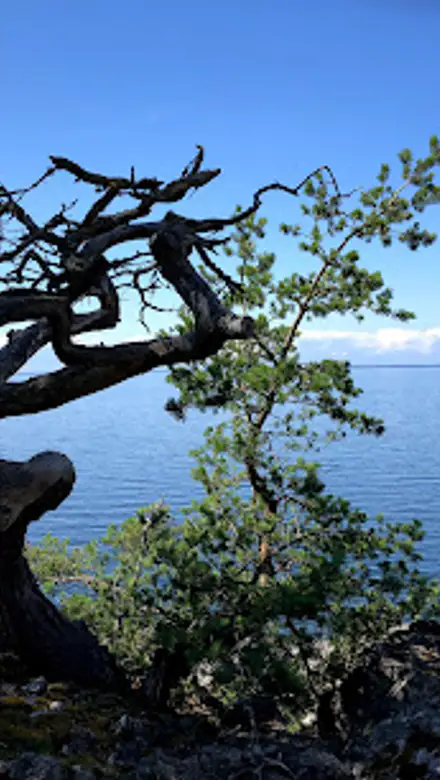
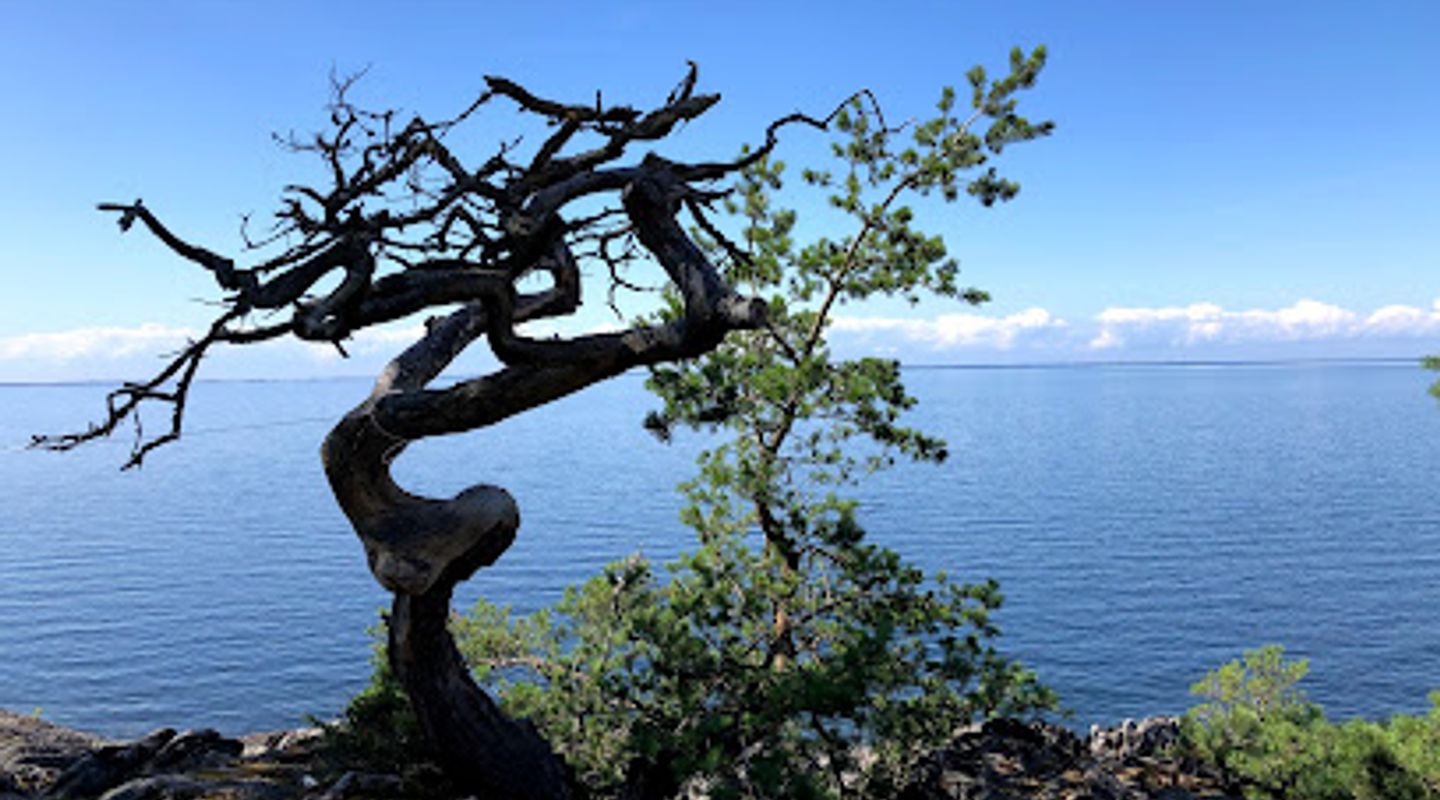
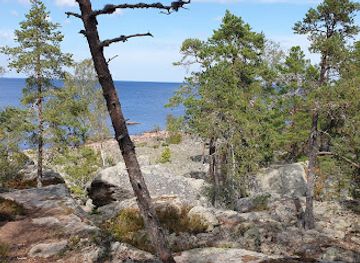
Djurö National Park is a compact, elemental landscape set on the open water of Lake Vänern. The protected area comprises the main island of Djurö and roughly thirty smaller islands and skerries whose contours are defined by wave-swept bedrock, rubble shores and strips of pebble beach. Exposed pines cling to fissured rock; pockets of heather, bilberry and lingonberry mark shallow soil; and the lines of the shore are regularly reshaped by wind and winter ice. The park’s visual signature is the meeting of inland forest with stark lakeshore — a sense of seaside solitude transplanted into the heart of a great freshwater sea.Nature kept wild and open
The park’s conservation aim is to let the archipelago’s ecosystems develop with minimal human interference. Open grassy clearings on the main island are maintained by grazing fallow deer, a legacy of former hunting estates, while coniferous forest is permitted to age naturally toward primeval structure in places. Birdlife is a central feature: ospreys and other raptors nest on the islands, waders and gulls use sheltered bays, and seabirds exploit the rich littoral feeding grounds. Small mammals, bats and amphibians occupy the mosaics of rock, forest and meadow.Traces of past lives
Although the islands are now essentially uninhabited, the landscape bears human traces. Remains of agricultural parcels, hunting villa ruins and an old lighthouse complex hint at earlier eras when families and gamekeepers made seasonal use of the islands. These vestiges are subtle: stone walls, cleared meadows and footpaths that fold into the wild vegetation. The cultural elements are part of the island story rather than dominant attractions, giving the place an atmosphere of quiet continuity between human presence and natural processes.A route-less island experience
There is a marked circular trail on the main island that lets visitors sample a variety of habitats — shorelines, grassy openings and pine-dominated woods — but much of the archipelago invites unstructured exploration from natural harbours and sheltered coves. Landing is easiest on the northern and western shores; some eastern and southern stretches are bird refuges with seasonal access restrictions during the nesting period. Expect a landscape of gentle contrasts rather than formal infrastructure: information boards and a few WCs are provided at main landing places, but the islands otherwise favour low-impact presence.












Your all‑in‑one travel companion app
Explore expert travel guides, compare and book tours, experiences, hotels, and more—all from the palm of your hand. Download now for seamless trip planning wherever your wanderlust takes you.


Explore More of Vastergotland
Looking beyond Djurö National Park? Discover Vastergotland for broader travel guides, local hot-spots, and regional highlights.
Explore Vastergotland