Engelsberg Ironworks Travel Guide
Free Guide: A remarkably complete 17th–19th‑century ironworks estate — timber blast furnace, forge, residences and parkland preserved as a UNESCO World Heritage site.


A brief summary of Engelsberg Ironworks
A remarkably complete 17th–19th‑century ironworks estate — timber blast furnace, forge, residences and parkland preserved as a UNESCO World Heritage site.
Engelsberg Ironworks is a remarkably complete 17th–19th‑century iron‑making estate in Ängelsberg, Sweden, preserved as a UNESCO World Heritage site. The compact complex combines a timber-clad blast furnace, forge, administrative buildings, managers’ residences and workers’ cottages set beside a tranquil lake and parkland. Much of the site is accessible on foot outside guided times, while interior access to industrial buildings and the smithy is through scheduled tours and seasonal programming.
On-site amenities
 Restrooms
 Drink options
 Food options
 Information boards
 Seating areas
- Address
- Snytenvägen 5, 737 90 Ängelsberg
- Website
Getting there
Regional bus and short walk
Car — self‑drive
Organised coach or small‑group tour
Discover more about Engelsberg Ironworks
A living industrial estate frozen in time
Engelsberg Ironworks is an intact ensemble of over fifty buildings that together illustrate the workings of an early modern Swedish ironworks. The core comprises the late‑18th‑century blast furnace with associated ore‑processing and charcoal stores, a forge rebuilt with 19th‑century hearths, and utility buildings that once sustained a self‑contained production community. The preserved material — timber facades, stone barns and machinery houses — conveys the technical evolution from water‑wheel power to 19th‑century blowing engines and kiln technologies.
The human scale: houses, halls and the manager’s compound
Surrounding the industrial heart are administrative and residential buildings: a mid‑18th‑century main house, inspector’s residence, managers’ dwellings, workers’ cottages, coach‑house, stables and a monumental stone barn. These structures reveal the social order of an industrial estate: domestic architecture and layout show how production, administration and daily life were interwoven, while the estate’s park‑like setting mediates between industry and the neighbouring lakes and forest.
Setting and landscape character
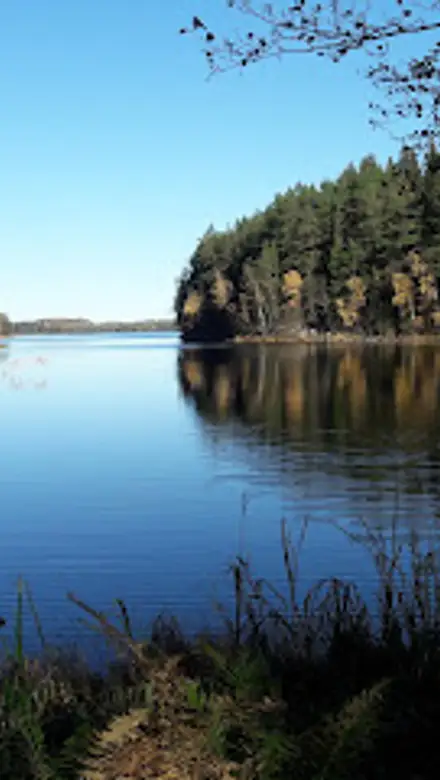
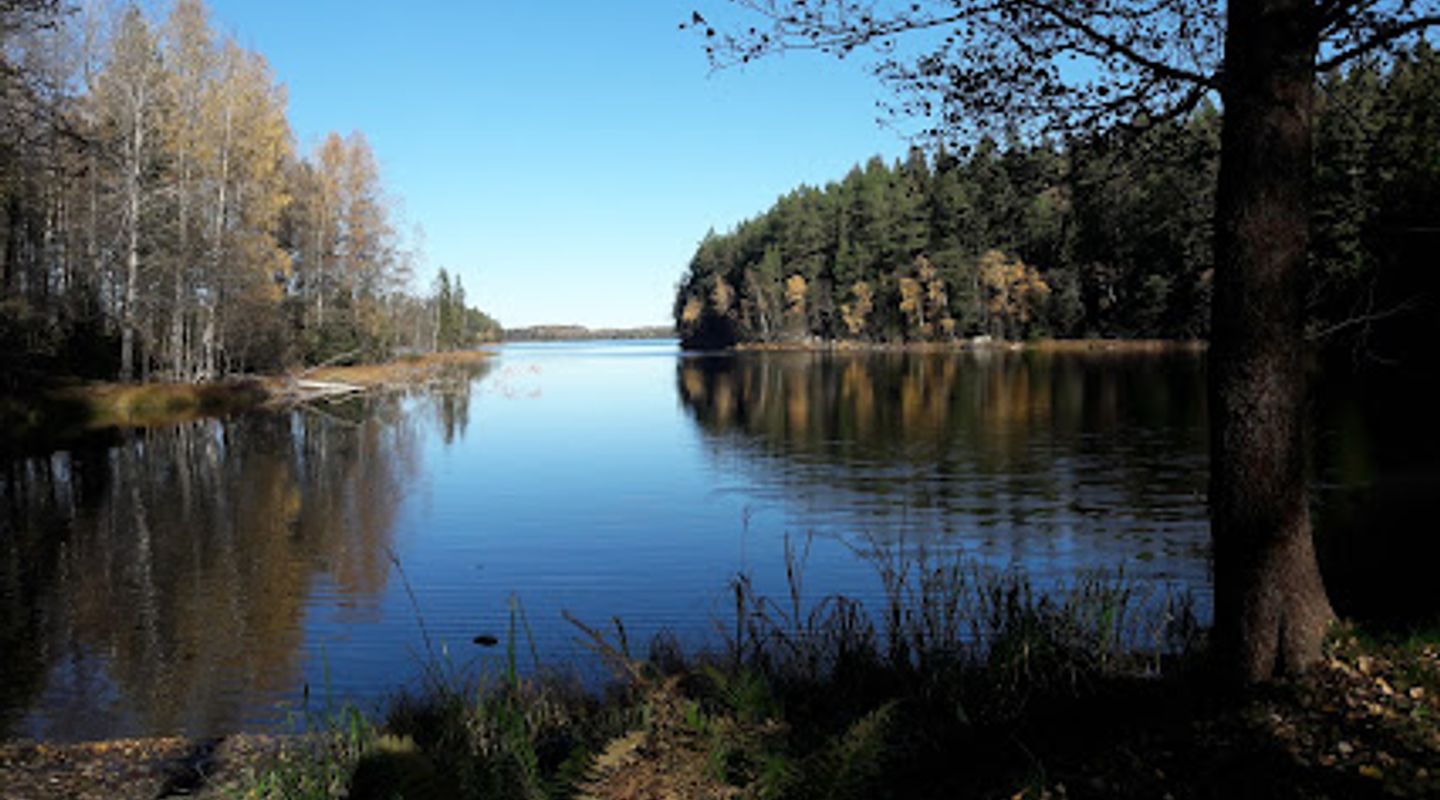
Set near a lake and ringed by mixed woodland, the ironworks sits in a typically Swedish rural landscape of water, timber and rock. The approach through a broad avenue gives way to compact courtyards and narrow gravel paths; red‑painted wooden façades and slate or metal roofs create a distinctive visual harmony. The estate’s rivers, ponds and channels are reminders of the waterpower that once drove bellows, hammers and crushers.
Preservation, continuity and management
Although industrial production ceased in the early 20th century, Engelsberg has been maintained with a focus on authenticity: repairs and restoration use traditional materials and craftsmanship. A management structure is in place to protect the site’s outstanding universal value, conserving both monumental stone buildings and everyday dwellings so the ensemble’s technical, residential and administrative fabric remains legible.
Visitor experience and access to interiors
The area is largely legible from outside at all seasons: the furnace, yards and many exterior façades can be appreciated on a self‑guided walk. Interior access to the forge and certain industrial buildings is regulated and normally possible only on guided tours or special openings; those guided visits illuminate processes, tools and the rhythms of working life onsite and usually last around an hour to an hour and a half.
Distinctive moments and small details
Look for the contrasts between monumental stonework and delicate timber cottages, the carefully kept gardens of the managers’ houses, and the re‑used industrial features that now form part of everyday buildings. The site’s scale makes it a concentrated study in early industrial architecture — compact courtyards, surviving conveyors of waterpower and the arranged hierarchy of buildings that once made the estate function as a self‑sufficient unit.
Evendo Review Centre
 Google
Guest reviews
Best time to go
Quietest: Jan, Feb & Nov · before 7am or at 9pm
Busy times are Evendo estimates for a typical year, to help you plan. Actual crowds vary with events, school holidays and the weather.
Explore Engelsberg Ironworks on the map
A handpicked selection of must-see spots near Engelsberg Ironworks, mapped for you.
Get your free copy of our complete guide to Engelsberg Ironworks, delivered straight to you.
Everything on this page, from opening hours and how to get there to Eve’s tips and the best time to go, in one PDF you can read offline, print or share.
Already have an account? Sign in
Your Engelsberg Ironworks guide is ready.
We'll send it to · Not you? Sign out

Getting your guide ready…
We are putting together a fresh copy of the Engelsberg Ironworks guide. This can take up to a minute.
This can take a few moments. If your browser asks, choose Allow so the download can start. You'll find the guide in your Downloads folder.
Nothing happened? Download it again
Sorry, the guide is taking longer than usual. Please try again in a minute, or get it by email instead.
Other nearby places you may find interesting
The closest places of the same kind, if this one is not quite what you had in mind.
-
-
-
-
-


Swipe for more places
More to explore near Engelsberg Ironworks

 Best experiences near Engelsberg Ironworks
 Best hotels near Engelsberg Ironworks
 Best landmarks near Engelsberg Ironworks
 Best attractions near Engelsberg Ironworks
 Best shops near Engelsberg Ironworks
 Best restaurants near Engelsberg Ironworks
 Best bars near Engelsberg Ironworks
Do you manage this location?
Take control to get all the benefits, like improved information, better appearance, and stronger visibility across AI-powered discovery.
Explore more
Explore more of Västmanland
Discover Västmanland: A blend of natural beauty, historical treasures, and modern attractions in the heart of Sweden.
Explore Västmanland
Explore more of Sweden
Discover Sweden's breathtaking landscapes, vibrant cities, and rich cultural heritage. From the Northern Lights to historic castles, experience the essence of Scandinavia.
Explore Sweden