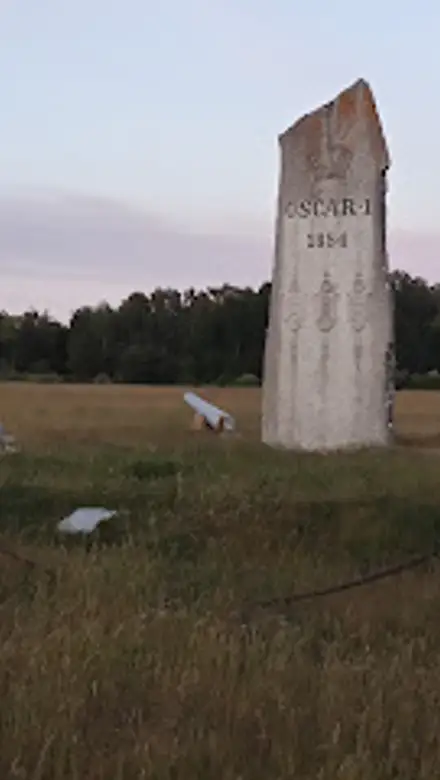
Oskarsstenen, Visby Travel Guide
Free Guide: Limestone sentinel on Visborgsslätt honoring King Oscar I's 1854 visit— a serene emblem of Gotland's military heritage amid open fields.


A brief summary of Oskarsstenen
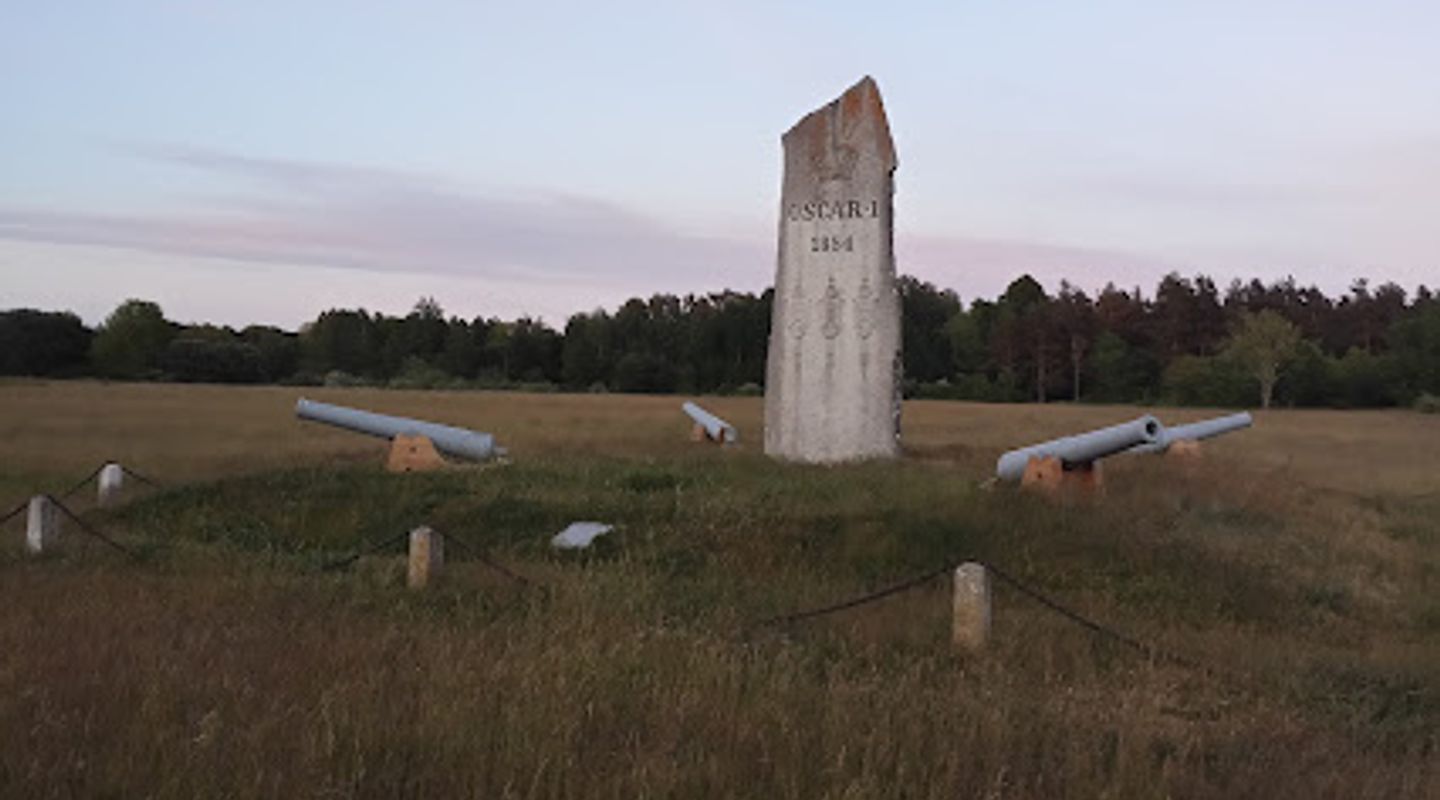
Limestone sentinel on Visborgsslätt honoring King Oscar I's 1854 visit— a serene emblem of Gotland's military heritage amid open fields.
Oskarsstenen is a striking limestone memorial stone on Visborgsslätt in Visby, erected by the officers of Gotland's national guard in 1854 to commemorate King Oscar I's visit on June 14. This understated monument amid open fields honors a pivotal moment in local military history, offering a serene spot to reflect on Gotland's strategic past. Free to visit around the clock, it draws those interested in Swedish heritage and quiet contemplation.
On-site amenities
 Trash bins
 Seating areas
Opening hours
- Every dayOpen 24 hours
Opening hours as listed on the venue’s Google Business Profile. Hours can change for services and special events, so check with the venue before you go.
- Address
- Toftavägen 12, 622 59 Visby
Getting there
Bus
Taxi
Cycling
Walking
Discover more about Oskarsstenen
Monument to a Royal Visit
Oskarsstenen stands as a simple yet poignant limestone marker on the expansive Visborgsslätt plain just outside Visby's medieval walls. Erected in 1854 by the officers of Gotland's national guard, it commemorates the visit of King Oscar I on June 14 that year. During this event, the king formally received the island's newly formed national guard, a milestone in Gotland's military organization amid Sweden's evolving defense strategies in the mid-19th century.The stone's inscription and modest design capture the era's military pride, set against the flat, windswept landscape typical of Gotland's interior.
Birth of Gotland's National Guard
The monument marks the inception of Gotlands nationalbeväring, a citizen militia formed to bolster island defenses. On that summer day in 1854, King Oscar I reviewed the troops, symbolizing royal endorsement of local efforts to protect this Baltic outpost. This gathering on Visborgsslätt highlighted Gotland's geopolitical importance, perched strategically between Sweden and potential continental threats.The event underscored a shift toward national conscription, blending civilian volunteers with professional oversight in Sweden's armed forces.
Military Legacy on Visborgsslätt
Visborgsslätt has long served as a hub for Gotland's military activities, from early camps to modern barracks. Oskarsstenen anchors this tradition, with later ceremonies like the 2002 presentation of a regimental color by King Carl XVI Gustaf at the site. The Gotland Regiment, evolving from infantry to armored units, maintained its garrison nearby, using the plain for drills and parades.Today, the stone evokes echoes of marching boots and fluttering banners across the open terrain.
Architectural Simplicity and Setting
Crafted from local limestone, Oskarsstenen exemplifies 19th-century commemorative style: unadorned, sturdy, and enduring. Rising plainly from the ground, it blends into the rural expanse of fields and low horizons, fringed by distant forests and the sea's subtle influence. The site's openness amplifies its solitude, especially under Gotland's vast skies.Nearby military remnants add layers to the vista, inviting exploration on foot.
Cultural and Historical Echoes
Beyond its military roots, the stone reflects Gotland's layered history as a Viking hub turned Hanseatic port and modern garrison. It stands as a quiet testament to monarchy's role in unifying remote regions, with Oscar I's reign bridging absolutism and constitutional reform. Funerary and memorial traditions on the island further contextualize such stones as communal memory keepers.Visiting evokes a sense of timeless vigilance over the Baltic approaches.
Experiencing the Site Today
Approach Oskarsstenen via rural paths on Visborgsslätt, where wild grasses sway and birds wheel overhead. The monument's isolation fosters introspection, ideal for pondering Sweden's defensive heritage. Seasonal changes transform the scene: golden summers, misty autumns, or frosted winters, each enhancing its atmospheric pull.
Evendo Review Centre
 Google
Guest reviews
Best time to go
Quietest: Jan, Feb & Dec · before 7am or from 9pm
Busy times are Evendo estimates for a typical year, to help you plan. Actual crowds vary with events, school holidays and the weather.
Explore Oskarsstenen on the map
A handpicked selection of must-see spots near Oskarsstenen, mapped for you.
Get your free copy of our complete guide to Oskarsstenen, delivered straight to you.
Everything on this page, from opening hours and how to get there to Eve’s tips and the best time to go, in one PDF you can read offline, print or share.
Already have an account? Sign in
Your Oskarsstenen guide is ready.
We'll send it to · Not you? Sign out

Getting your guide ready…
We are putting together a fresh copy of the Oskarsstenen guide. This can take up to a minute.
This can take a few moments. If your browser asks, choose Allow so the download can start. You'll find the guide in your Downloads folder.
Nothing happened? Download it again
Sorry, the guide is taking longer than usual. Please try again in a minute, or get it by email instead.
Other nearby places you may find interesting
The closest places of the same kind, if this one is not quite what you had in mind.
-
-
-
-
-


Swipe for more places
More to explore near Oskarsstenen

 Best experiences near Oskarsstenen
 Best hotels near Oskarsstenen
 Best landmarks near Oskarsstenen
 Best attractions near Oskarsstenen
 Best shops near Oskarsstenen
 Best restaurants near Oskarsstenen
 Best bars near Oskarsstenen
Do you manage this location?
Take control to get all the benefits, like improved information, better appearance, and stronger visibility across AI-powered discovery.
Explore more

Explore more of Visby
Discover Visby, Sweden's medieval marvel on the island of Gotland, where history, charm, and natural beauty converge in a UNESCO World Heritage site.
Explore Visby
Explore more of Sweden
Discover Sweden's breathtaking landscapes, vibrant cities, and rich cultural heritage. From the Northern Lights to historic castles, experience the essence of Scandinavia.
Explore Sweden