

Engelberg Travel Guide - Free Web & App
Your ultimate guide to Engelberg. Discover top landmarks, proposed trips, and local tips. Free on the web or via the Evendo companion app.


Engelberg, Switzerland, pairs alpine scenery with Titlis glaciers, Brunni trails, Benedictine heritage, skiing, hiking and mountain views.
Mountain Landscape and Village Character
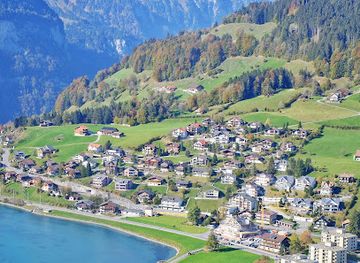
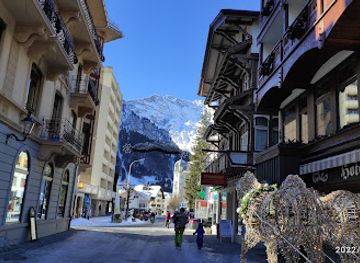
Engelberg lies at the head of a high alpine valley in central Switzerland, in the canton of Obwalden and close to Lake Lucerne. The settlement is surrounded by steep mountain walls, forested slopes, pastureland and limestone peaks, with the Titlis massif rising to the south. Its compact village centre combines hotels, shops and traditional buildings with the imposing Benedictine monastery that has shaped Engelberg's identity for centuries. Beyond the village, cableways and mountain roads open access to several distinct landscapes rather than one single resort area.Read more about Engelberg
Titlis, Brunni and the High Alps
Heritage and Local Culture
When is the best time to visit Engelberg?
Best: July–September · 15–19°C| Month | High (°C) | Rainfall (mm) |
|---|---|---|
| January | 2 | 83 |
| February | 2 | 76 |
| March | 4 | 75 |
| April | 7 | 79 |
| May | 11 | 127 |
| June | 16 | 172 |
| July (best) | 19 | 179 |
| August (best) | 19 | 172 |
| September (best) | 15 | 119 |
| October | 11 | 99 |
| November | 6 | 89 |
| December | 3 | 88 |
Getting to and around Engelberg
How to get there
Transportation
Best attractions in Engelberg
Engelberg's principal attraction is the Titlis mountain area, reached by cableway from the village through Trübsee to high alpine terrain associated with glaciers, snow sports and panoramic views. Trübsee itself provides a gentler mountain setting for walking and seasonal recreation, while the Titlis summit area offers a more elevated experience that depends closely on weather and operating conditions. Across the valley, Brunni is known for sunny slopes, family-oriented paths and broad views over Engelberg, and Fürenalp offers a quieter landscape of meadows, rock faces and hiking routes. The village should not be overlooked: Engelberg Abbey, its church and surrounding historic buildings provide a strong cultural counterpoint to the cable-car excursions. Further walks lead through pastureland and forest towards alpine farms and mountain viewpoints, with the exact character of each route changing markedly between summer and winter.
-
Tourist attraction
Brunnihütte SAC
Experience the enchanting Brunnihütte SAC in Engelberg, a mountain cabin offering breathtaking views and outdoor adventures in the heart of the Swiss Alps.
-
Tourist attraction
Grotzenwäldli Spielplatz
Experience the joy of family fun at Grotzenwäldli Spielplatz, a beautiful park in Engelberg with stunning views and engaging play areas.
-
Tourist attraction
Titlis Glacier
Discover the stunning beauty and thrilling adventures awaiting you at the breathtaking Titlis Glacier in Engelberg, Switzerland.
-
Tourist attraction
Klettersteig Brunnistöckli + Zittergrad
Experience the thrill of climbing at Klettersteig Brunnistöckli + Zittergrad, an unforgettable adventure in the heart of Engelberg, Switzerland.


Best landmarks in Engelberg
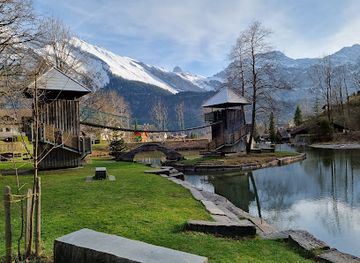
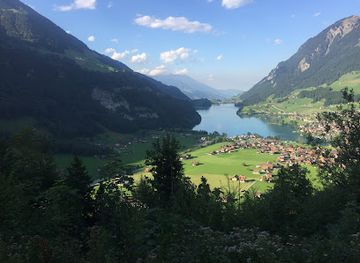
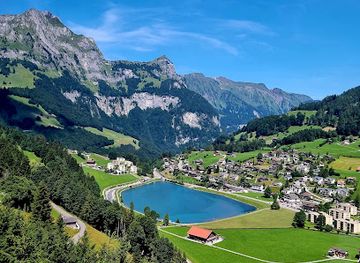
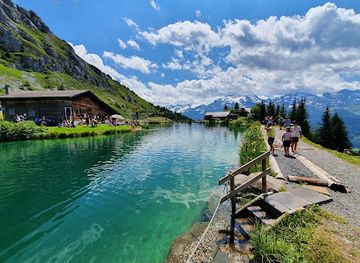
The defining natural landmark is Mount Titlis, whose glacier-covered summit and high alpine terrain dominate views south of Engelberg and provide the setting for one of central Switzerland's best-known mountain excursions. Trübsee, a mountain lake beneath the higher cableway stations, forms a contrasting landmark of open water, pasture and rugged peaks. Brunni and the valley walls reveal the area's varied relationship between sunny alpine meadows, forest and limestone mountains, while Fürenalp is associated with a quieter landscape of cliffs and pastoral slopes. In the village, Engelberg Abbey is the principal historical landmark: its long Benedictine presence explains much of the settlement's name, identity and cultural development. The abbey complex, church and surrounding village buildings stand in deliberate contrast to the engineered cableways and modern mountain facilities above them.
-
Tourist attraction
Titlis Cliff Walk
Discover breathtaking views and thrilling heights at the Titlis Cliff Walk, the highest suspension bridge in Europe, nestled in the stunning Swiss Alps.
-
Mountain cable car
Brunni-Bahnen - Die Sonnenseite von Engelberg
Experience the breathtaking views and outdoor adventures at Brunni-Bahnen in Engelberg, Switzerland, a perfect destination for families and thrill-seekers.
-
Hotel
H+ Hotel & SPA Engelberg
Discover the ultimate mountain retreat at H+ Hotel & SPA Engelberg, where luxury meets adventure in the heart of Switzerland.
-
Tourist attraction
Titlis Glacier Cave
Discover the breathtaking beauty of the Titlis Glacier Cave in Engelberg, a must-visit Swiss attraction showcasing stunning ice formations and alpine adventure.
Explore Engelberg on the map
Plan your trip on one map. See where the top attractions, landmarks, restaurants and hotels are, and book hotels and experiences in a few clicks.
Best hotels in Engelberg
Best restaurants in Engelberg
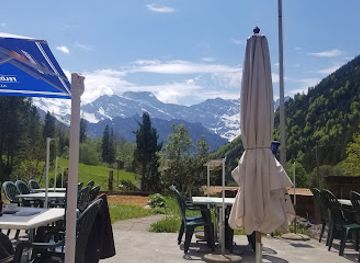
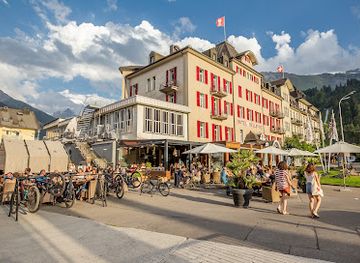
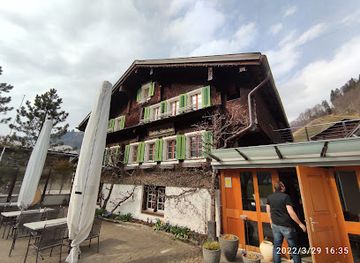
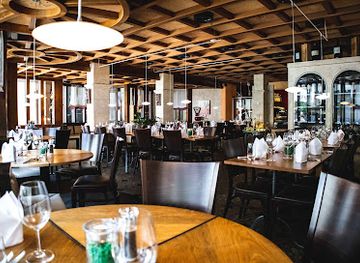
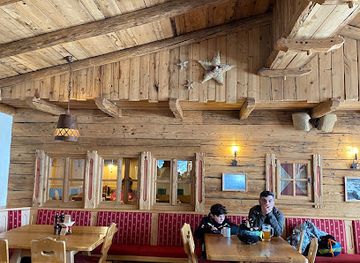
Dining in Engelberg reflects central Swiss mountain traditions, with menus commonly shaped by cheese, potatoes, bread, dairy produce and hearty seasonal cooking. Regional specialities may include rösti, cheese-based dishes and Älplermagronen, a rustic combination of pasta, potatoes, cream and cheese; menus vary between establishments. Restaurants, cafés, hotel dining rooms and traditional-style inns are concentrated chiefly in the village, with additional food outlets associated with mountain transport areas and higher resorts during their operating seasons. Visitors walking in the surrounding mountains may also encounter alpine huts or pasture businesses offering simple local refreshments, but opening arrangements are seasonal and should not be assumed. The village is the most dependable place to plan meals, buy provisions or combine Swiss cooking with more internationally familiar dishes.
-
Swiss
Ende der Welt
Discover authentic Swiss flavors at Ende der Welt in Engelberg – where every meal is a celebration of local culinary traditions.
-
Italian
Ristorante Al Monastero
Experience authentic Italian cuisine at Ristorante Al Monastero in Engelberg, offering delicious pizzas and fine wines amidst breathtaking alpine views.
-
Restaurant
Restaurant Yucatan
Discover the vibrant flavors of Mexico at Restaurant Yucatan in Engelberg – where every meal is a celebration of culinary art.
-
Swiss
Zum Schweizerhaus
Savor authentic Swiss cuisine at Zum Schweizerhaus in Engelberg – a perfect blend of tradition and breathtaking alpine views.
Best bars in Engelberg
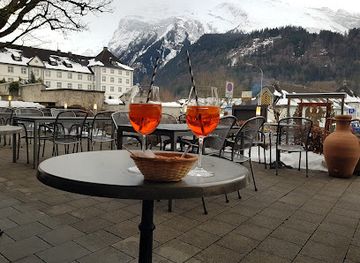
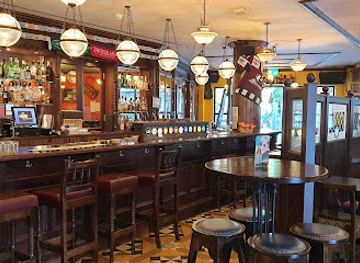
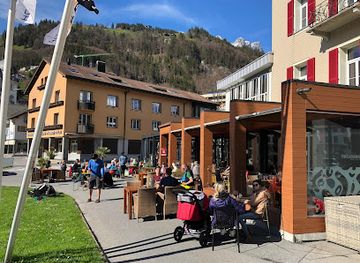
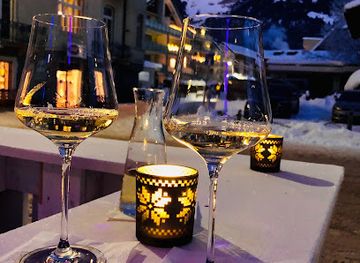
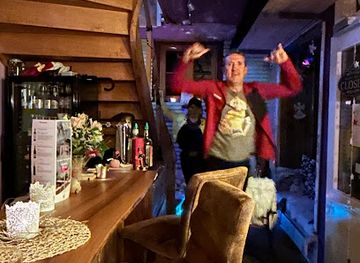
Engelberg's evening life is that of an alpine resort rather than a major nightlife centre. The village has hotel bars, traditional pubs and informal après-ski settings where visitors can meet after skiing or walking, while some restaurants provide a quieter evening atmosphere. During the winter season, activity is generally concentrated around accommodation and the central village, whereas summer evenings tend to be more subdued and oriented towards dining, conversation and mountain views. Visitors seeking extensive clubbing or a broad late-night entertainment scene will find limited choice within Engelberg; larger urban nightlife is associated with Lucerne rather than the valley. Events, music and venue schedules vary by season, so they should be checked locally rather than presumed.
-
Irish pub
The Core Irish Pub
Experience authentic Irish hospitality at The Core Irish Pub in Engelberg, where hearty meals and a cozy atmosphere await you.
-
Bar
Restaurant Yucatan
Savor the essence of Mexico at Restaurant Yucatan in Engelberg, where vibrant flavors and a cozy atmosphere await every visitor.
-
Steak
Restaurant Bierlialp
Experience the flavors of Switzerland at Restaurant Bierlialp, where succulent steaks and delicious pizzas await in stunning Engelberg.
-
Swiss
Stand
Experience the authentic taste of Swiss cuisine at Stand, a charming restaurant in Engelberg with stunning mountain views and a cozy ambiance.
Best nightclubs in Engelberg
Engelberg's evening life is that of an alpine resort rather than a major nightlife centre. The village has hotel bars, traditional pubs and informal après-ski settings where visitors can meet after skiing or walking, while some restaurants provide a quieter evening atmosphere. During the winter season, activity is generally concentrated around accommodation and the central village, whereas summer evenings tend to be more subdued and oriented towards dining, conversation and mountain views. Visitors seeking extensive clubbing or a broad late-night entertainment scene will find limited choice within Engelberg; larger urban nightlife is associated with Lucerne rather than the valley. Events, music and venue schedules vary by season, so they should be checked locally rather than presumed.
-
Bar
Gletscherspalte
Experience the vibrant nightlife of Engelberg at Gletscherspalte, a bar that blends rustic charm with modern mixology.
-
Bar
GRAND Bar
Discover the vibrant nightlife experience at GRAND Bar in Engelberg, where exceptional drinks and great company await in a cozy alpine atmosphere.
-
Bar
La Dolce Vita Bar & Shop
Experience the essence of Italian culture at La Dolce Vita Bar & Shop in Engelberg, where delightful wines and authentic cuisine await.
-
Bar
The Old Monk Bar
Discover the lively spirit of Engelberg at The Old Monk Bar, your perfect spot for drinks and entertainment in the Swiss Alps.

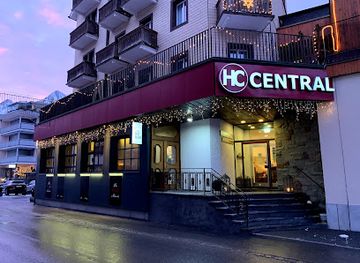
Best shops in Engelberg
Shopping in Engelberg is concentrated in the village and is practical as well as visitor-oriented. Independent shops and resort retailers provide outdoor clothing, equipment and winter-sports essentials, while food shops offer Swiss cheese, chocolate, bread, dairy products and other provisions for mountain days. Visitors may also find locally produced goods and souvenirs reflecting the abbey, alpine farming and the Titlis landscape, although the selection is more regional than designer-led. The village is the most useful place to shop before travelling to higher areas, where retail choices are limited and often linked to mountain transport or hospitality facilities. For a wider choice of Swiss brands, specialist shops and markets, visitors generally need to travel to larger nearby towns or Lucerne.
-
Supermarket
Coop
Shop local and savor the best of Swiss flavors at Coop Supermarket in Engelberg, your gateway to authentic Swiss culinary delights.
-
Coffee shop
Kafikaufbar Engelberg GmbH
Discover the charm of Kafikaufbar Engelberg, where exquisite coffee meets cozy alpine ambiance in the heart of Switzerland.
-
Coffee shop
Roastery Engelberg
Discover the finest coffee in Engelberg, Switzerland, at Roastery Engelberg – where passion meets quality in every cup.
-
Grocery store
Migros-Supermarkt - Engelberg
Shop local and savor the flavors of Engelberg at Migros-Supermarkt, your go-to grocery store for fresh ingredients and Swiss delicacies.
Get your free copy of our complete guide to Engelberg, delivered straight to you.
Everything on this page, from attractions and restaurants to essentials and local phrases, in one PDF you can read offline, print or share.
Already have an account? Sign in
Your Engelberg guide is ready.
We'll send it to · Not you? Sign out

Getting your guide ready…
We are putting together a fresh copy of the Engelberg guide. This can take up to a minute.
This can take a few moments. If your browser asks, choose Allow so the download can start. You'll find the guide in your Downloads folder.
Nothing happened? Download it again
Sorry, the guide is taking longer than usual. Please try again in a minute, or get it by email instead.
Engelberg essentials
Currency and Payment
Safety
Emergency Situations
Do's and Don'ts
Local Tips
From Eve
Local phrases worth knowing
You don't need to get them perfect. A few words go a long way, and locals appreciate the effort.
Basics
| English | Local | Say it |
|---|---|---|
| Hello | Grüezi | [grew-tsee] |
| Goodbye | Adieu | [ah-dee-uh] |
| Yes | Ja | [yah] |
| No | Nein | [nine] |
| Please/You're welcome | Bitte | [bit-tuh] |
| Thank you | Danke | [dahn-kuh] |
| Excuse me/Sorry | Entschuldigung | [ent-shool-dee-goong] |
| How are you? | Wie geht es Ihnen? | [vee gayt es een-en] |
| Fine. And you? | Danke, gut. Und Ihnen? | [dahn-kuh, goot. oont een-en] |
| Do you speak English? | Sprechen Sie Englisch? | [shprek-en zee eng-leesh] |
| I don't understand | Ich verstehe nicht | [ikh fair-shtay-uh nikht] |
Eating & Drinking
| English | Local | Say it |
|---|---|---|
| I'd like to see the menu, please | Ich hätte gerne die Speisekarte, bitte | [ikh hett-uh gair-nuh dee shpy-zuh-kar-tuh, bit-tuh] |
| I don't eat meat | Ich esse kein Fleisch | [ikh ess-uh kine fly-sh] |
| Cheers! | Prost! | [prohst] |
| I would like to pay, please | Ich möchte bezahlen, bitte | [ikh merkh-tuh buh-tsal-en, bit-tuh] |
Emergencies
| English | Local | Say it |
|---|---|---|
| Help! | Hilfe! | [hil-fuh] |
| Go away! | Gehen Sie weg! | [gay-en zee vehg] |
| Call the Police! | Rufen Sie die Polizei! | [roof-en zee dee poh-lee-tsay] |
| Call a doctor! | Rufen Sie einen Arzt! | [roof-en zee i-kn ar-tst] |
| I'm lost | Ich habe mich verirrt | [ikh hah-buh meekh fair-eert] |
| I'm ill | Ich bin krank | [ikh been krahngk] |
Shopping
| English | Local | Say it |
|---|---|---|
| I'd like to buy... | Ich möchte kaufen... | [ikh merkh-tuh kow-fen] |
| I'm just looking | Ich schaue nur | [ikh show-uh noor] |
| How much is it? | Wie viel kostet das? | [vee feel koh-stet dahs] |
| That's too expensive | Das ist zu teuer | [dahs ist tsoo toy-er] |
| Can you lower the price? | Können Sie den Preis senken? | [kern-en zee den price zank-en] |
Time & Numbers
| English | Local | Say it |
|---|---|---|
| What time is it? | Wie spät ist es? | [vee shpeht ist es] |
| It's one o'clock | Es ist ein Uhr | [es ist iyn oor] |
| Half past (10) | Halb (zehn) | [halb (tsehn)] |
| Morning | Morgen | [mohr-gen] |
| Afternoon | Nachmittag | [nahkh-mit-tahg] |
| Evening | Abend | [ah-bent] |
| Yesterday | Gestern | [geh-stern] |
| Today | Heute | [hoi-tuh] |
| Tomorrow | Morgen | [mohr-gen] |
| 1 | Eins | [ayns] |
| 2 | Zwei | [tsvai] |
| 3 | Drei | [drigh] |
| 4 | Vier | [feer] |
| 5 | Fünf | [foontf] |
| 6 | Sechs | [zeks] |
| 7 | Sieben | [zee-ben] |
| 8 | Acht | [ahkt] |
| 9 | Neun | [noyn] |
| 10 | Zehn | [tsehn] |
Transport & Directions
| English | Local | Say it |
|---|---|---|
| Where's a/the...? | Wo ist ein/der...? | [voh ist iyn/dehr] |
| What's the address? | Was ist die Adresse? | [vahs ist dee ah-dreh-suh] |
| Can you show me (on the map)? | Können Sie es mir zeigen (auf der Karte)? | [kern-en zee es meer tsee-gen (ouf dehr kahr-tuh)] |
| When's the next (bus)? | Wann kommt der nächste (Bus)? | [vahn kohmt dehr nehkh-stuh (boos)] |
| A ticket (to ....) | Eine Fahrkarte (nach ...) | [iyn-uh fahr-kahr-tuh (nahkh)] |
History of Engelberg
An Alpine Valley Shaped by Ice
Engelberg's landscape was formed by long-term geological processes and later reshaped by Ice Age glaciers. The valley is enclosed by the Uri Alps, with limestone and other mountain rocks contributing to the steep cliffs, high ridges and varied terrain visible around the settlement. Glacial action helped create the broad valley floor and the lakes and upland basins encountered on routes towards Trübsee and the surrounding mountains. This physical setting has always influenced settlement, farming, travel and, in modern times, tourism.
The Foundation of Engelberg Abbey
The history of the settlement is closely tied to Engelberg Abbey, a Benedictine monastery founded in 1120 by Konrad of Sellenbüren. The name Engelberg, meaning 'angel mountain', reflects the monastery's religious foundation legend. The abbey became a centre of worship, learning and administration in the valley, while surrounding land supported pastoral activity and agriculture. Although the monastery has experienced periods of change and disruption, Benedictine life remains central to Engelberg's cultural identity.
Monastic Land and Alpine Farming
For centuries, Engelberg developed as a rural alpine community in which the abbey, local farmers and seasonal pastoral workers were closely connected. Cattle grazing, haymaking and dairy production shaped the meadows and mountain pastures, while routes over surrounding passes connected the valley with neighbouring regions. The highland economy was demanding and seasonal, requiring movement between valley settlements and alpine grazing grounds. Cheese-making and other dairy traditions still form part of the region's culinary character.
From Mountain Valley to Resort
Improved roads and the arrival of the railway in the nineteenth century made Engelberg more accessible to visitors from central Switzerland and beyond. Mountain tourism expanded as travellers sought alpine scenery, fresh air and excursions to the surrounding peaks. Hotels and other visitor services grew around the village, while the abbey remained a defining landmark. The development of cableways in the twentieth century transformed access to higher terrain and helped establish Engelberg as a major destination for both summer mountain recreation and winter sports.
Modern Tourism and Landscape Stewardship
Contemporary Engelberg combines a long-established mountain-resort economy with continuing agricultural and religious traditions. The Titlis and Brunni areas have become important centres for skiing, hiking and sightseeing, while smaller mountain areas retain a quieter pastoral character. Tourism now operates alongside concerns about glacier change, landscape pressure and the careful management of alpine habitats. Visitors encounter a valley where transport infrastructure and modern outdoor recreation coexist with monastery life, working farms and established customs of mountain land use.
Engelberg in Photos
Browse through our photo collection highlighting the charm and character of the destination.
Neighbouring destination travel guides
The closest destinations to Engelberg, if you have time for more than one.
-

-

-

-

-


Swipe for more destinations
Explore more

Explore more of Central Switzerland
Discover Central Switzerland: A blend of history, culture, and stunning natural landscapes in the heart of Switzerland.
Explore Central Switzerland
Explore more of Switzerland
Discover Switzerland's majestic landscapes, vibrant cities, and rich culture. From alpine adventures to urban exploration, experience the best of Europe in one destination.
Explore Switzerland