

Wengen Travel Guide - Free Web & App
Your ultimate guide to Wengen. Discover top landmarks, proposed trips, and local tips. Free on the web or via the Evendo companion app.


Wengen, Switzerland, offers car-free alpine charm, Jungfrau views, hiking, skiing, mountain railways and access to the Lauterbrunnen Valley region.
Alpine Setting
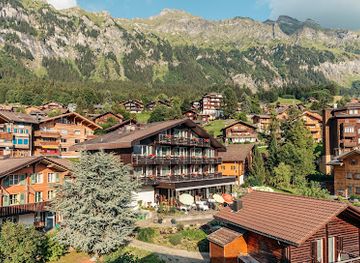
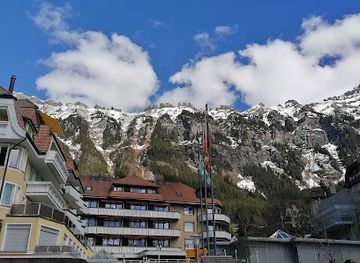
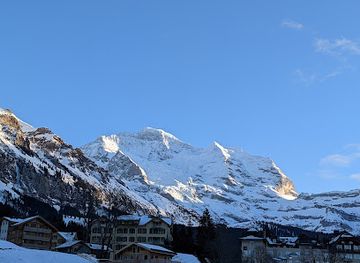
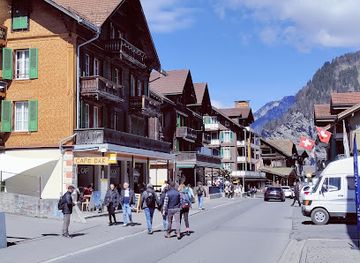
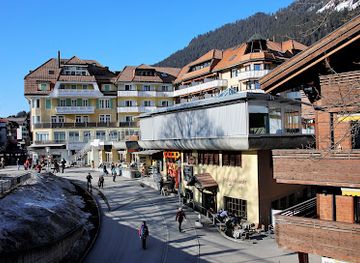
Wengen stands on a sunny terrace above the Lauterbrunnen Valley in Switzerland’s Bernese Oberland, surrounded by the high peaks of the Jungfrau, Mönch and Eiger. The village is reached by mountain railway rather than road, giving its centre a quieter character than many Alpine resorts. Traditional chalets, hotels and farm buildings extend across open meadows, while steep valley walls rise below and snow-covered summits dominate the southern horizon.Read more about Wengen
Walking, Winter Sports and Railways
Village Character and Regional Heritage
When is the best time to visit Wengen?
Best: June–August · 19–21°C| Month | High (°C) | Rainfall (mm) |
|---|---|---|
| January | 1 | 71 |
| February | 2 | 67 |
| March | 5 | 64 |
| April | 9 | 82 |
| May | 14 | 105 |
| June (best) | 19 | 133 |
| July (best) | 21 | 152 |
| August (best) | 21 | 145 |
| September | 17 | 121 |
| October | 12 | 101 |
| November | 6 | 88 |
| December | 3 | 79 |
Getting to and around Wengen
How to get there
Transportation
Best attractions in Wengen
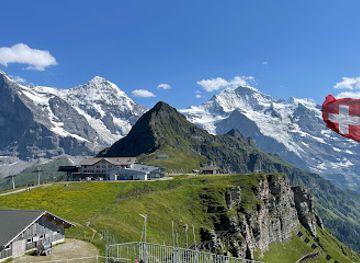
Wengen’s principal attractions are its mountain setting and the network of landscapes reached from the village. The Wengernalp Railway climbs through meadows and forest to Wengernalp and Kleine Scheidegg, where views open towards the Eiger, Mönch and Jungfrau and connections continue towards the Jungfraujoch. Männlichen, reached from Wengen by cable car, offers high-level walking and broad views across the Bernese Alps. Paths around the village pass traditional farm buildings, alpine pasture and viewpoints above the Lauterbrunnen Valley. The valley itself, including Staubbach Falls and Trümmelbach Falls, lies below Wengen and is readily reached through Lauterbrunnen, but is not part of the village. In winter, the slopes around Wengen, Kleine Scheidegg and Männlichen form part of the Jungfrau Ski Region, while the Lauberhorn course provides a significant sporting attraction when races take place.
-
Tourist attraction
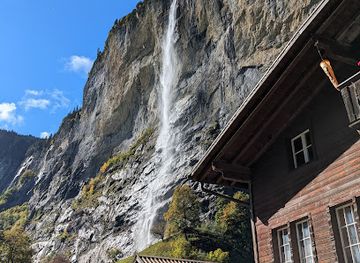
Staubbachfall Waterfall
Experience the breathtaking beauty of Staubbachfall Waterfall in Lauterbrunnen, a must-visit Swiss attraction surrounded by stunning alpine landscapes.
-
Mountain cable car
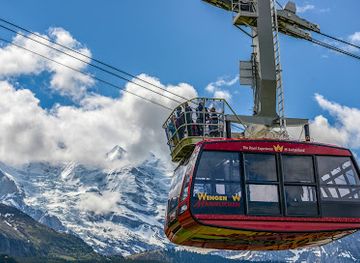
Luftseilbahn Wengen Männlichen
Experience the breathtaking beauty of the Swiss Alps with a ride on the Luftseilbahn Wengen Männlichen, where stunning landscapes await.
-
Tourist attraction
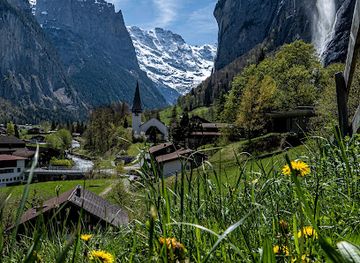
Staubbachfall Viewpoint
Experience the natural beauty of Staubbachfall Viewpoint in Lauterbrunnen, where majestic waterfalls and stunning mountain landscapes await.
-
Hiking area
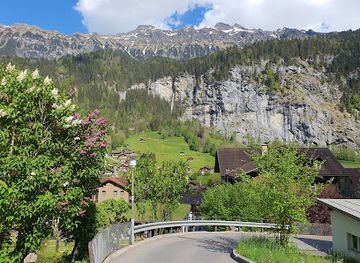
Lauterbrunnen
Explore the breathtaking beauty of Lauterbrunnen, a hiking paradise in the Swiss Alps, featuring stunning waterfalls and majestic mountain views.
Best landmarks in Wengen
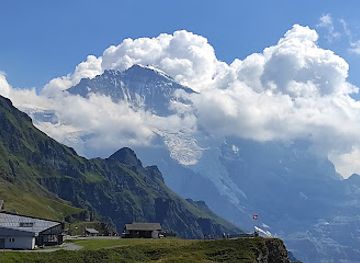
Wengen’s defining natural landmark is the steep Lauterbrunnen Valley, bordered by dramatic limestone walls and viewed from the village terrace. Above it, the Jungfrau, Mönch and Eiger form the best-known mountain backdrop, while Kleine Scheidegg and Männlichen mark important high passes and viewpoints in the local landscape. The Wengernalp Railway is a historic transport landmark as well as a practical route, climbing from Lauterbrunnen through Wengen to the high alpine junction at Kleine Scheidegg. The Lauberhorn, a mountain ridge above the village, is significant in international ski racing. Staubbach Falls and Trümmelbach Falls are major landmarks of the Lauterbrunnen Valley below Wengen and can be visited from the village by travelling through Lauterbrunnen, rather than being located within Wengen itself.
-
Hotel
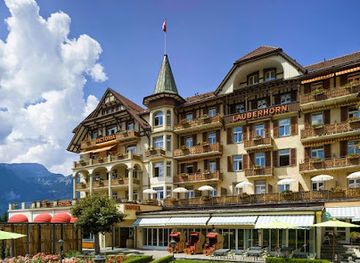
Arenas Resort Victoria-Lauberhorn
Discover Alpine serenity at Arenas Resort Victoria-Lauberhorn, your ideal retreat in the heart of the Swiss Alps.
-
Mountain cable car
Luftseilbahn Wengen Männlichen
Discover the breathtaking views and thrilling adventures at Luftseilbahn Wengen Männlichen, the gateway to the stunning Swiss Alps.
-
Hotel
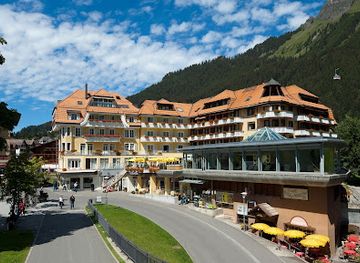
Hotel Silberhorn
Discover unparalleled comfort and breathtaking mountain views at Hotel Silberhorn - your wellness retreat in the heart of the Swiss Alps.
-
Heritage railroad
Wengernalpbahn
Experience the breathtaking Swiss Alps on the historic Wengernalpbahn, connecting Lauterbrunnen to Wengen with stunning views and rich heritage.
Explore Wengen on the map
Plan your trip on one map. See where the top attractions, landmarks, restaurants and hotels are, and book hotels and experiences in a few clicks.
Best hotels in Wengen
Best restaurants in Wengen
Dining in Wengen reflects its role as a mountain village and resort, with restaurants, hotel dining rooms, cafés and traditional Swiss establishments concentrated around the station and village centre. Menus commonly draw on regional Alpine cooking, including rösti, cheese dishes, seasonal soups and meat or vegetarian meals suited to walkers and skiers. Breakfasts and packed food are useful for days spent on the higher trails, where choices are more limited and may be seasonal. Additional restaurants and food shops are available in Lauterbrunnen, the valley gateway reached by railway, while Interlaken provides the broadest regional choice. Mountain restaurants around the railway and lift network may offer food during operating periods, but visitors should not assume that every high-altitude facility is open in every season.
-
Swiss
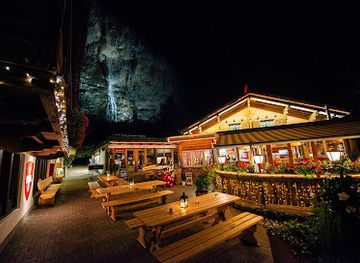
Restaurant Weidstübli
Discover authentic Swiss cuisine at Restaurant Weidstübli in Lauterbrunnen, where local flavors meet stunning Alpine views.
-
Swiss
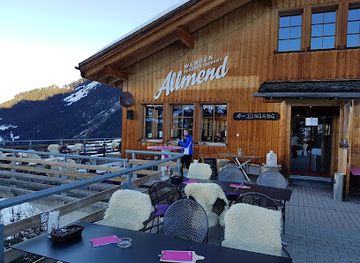
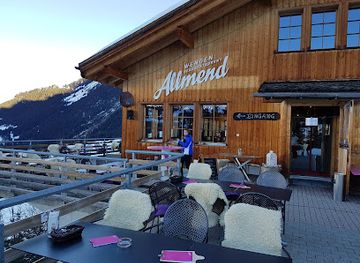
Bergrestaurant Allmend
Experience authentic Swiss cuisine at Bergrestaurant Allmend with breathtaking Alpine views – a must-visit for every traveler in Wengen.
-
Swiss
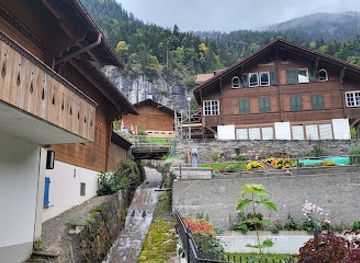
Restaurant Hotel Oberland
Experience authentic Swiss cuisine amidst breathtaking mountain views at Restaurant Hotel Oberland in Lauterbrunnen.
-
Italian
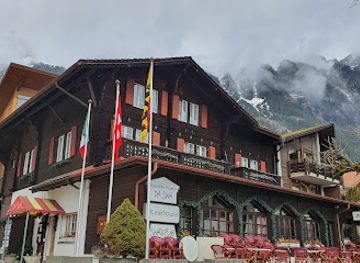
Ristorante Da Sina
Discover Ristorante Da Sina in Wengen: where Italian cuisine meets Swiss charm amid breathtaking alpine scenery.
Best bars in Wengen
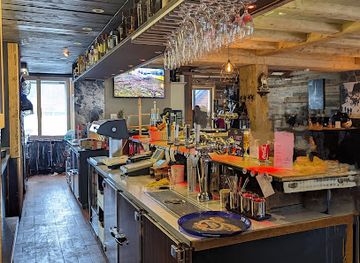
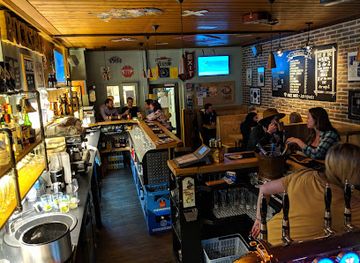
Wengen has a modest evening scene shaped by hotels, restaurants, traditional pubs and après-ski venues rather than by large nightclubs. After a day on the slopes or trails, visitors generally gather around the village centre for drinks, informal conversation and occasional seasonal entertainment associated with resort life. The atmosphere is usually quieter outside the main winter and summer periods, and options become increasingly limited in the surrounding high mountain areas. Lauterbrunnen has further cafés and hospitality venues, while Interlaken offers a broader choice of bars and late-evening entertainment, but these are outside Wengen and require a return journey by train. Checking the final railway connection is important when spending an evening away from the village.
-
Swiss
Bergrestaurant Allmend
Experience the charm of Swiss cuisine at Bergrestaurant Allmend, a fondue haven with breathtaking alpine views and a cozy atmosphere.
-
Italian
Ristorante Da Sina
Experience the authentic taste of Italy at Ristorante Da Sina, nestled in the scenic beauty of Wengen, Switzerland.
-
Hotel
Hotel Restaurant Bären - The Alpine Herb Hotel
Discover the enchanting Hotel Restaurant Bären in Wengen, where Swiss hospitality meets alpine culinary excellence amidst breathtaking mountain views.
-
Indian
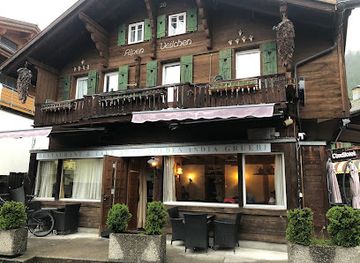
Restaurant GoldenIndia Wengen
Experience the flavors of India in the heart of Wengen, Switzerland, at Restaurant GoldenIndia, where authentic cuisine meets breathtaking alpine beauty.

Best nightclubs in Wengen
Wengen has a modest evening scene shaped by hotels, restaurants, traditional pubs and après-ski venues rather than by large nightclubs. After a day on the slopes or trails, visitors generally gather around the village centre for drinks, informal conversation and occasional seasonal entertainment associated with resort life. The atmosphere is usually quieter outside the main winter and summer periods, and options become increasingly limited in the surrounding high mountain areas. Lauterbrunnen has further cafés and hospitality venues, while Interlaken offers a broader choice of bars and late-evening entertainment, but these are outside Wengen and require a return journey by train. Checking the final railway connection is important when spending an evening away from the village.
-
Bar
Crystal Bar
Experience the charm of Crystal Bar in Wengen, where cozy vibes meet lively entertainment in the heart of the Swiss Alps.
-
Bar
On the Rocks
Discover the vibrant atmosphere at On the Rocks, Wengen's premier bar with stunning alpine views and a lively social scene.
-
Bar
Hasenstall
Discover Hasenstall, Wengen's lively bar offering a perfect blend of Swiss hospitality and vibrant nightlife in the heart of the Alps.
-
Bar
Schneebar Figeler
Discover Schneebar Figeler in Wengen, where cozy atmosphere meets stunning alpine views, perfect for relaxation after an adventure.
Best shops in Wengen
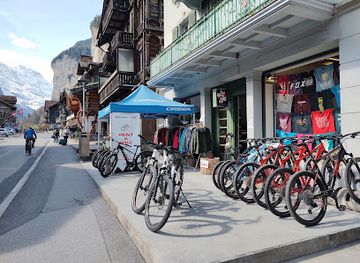
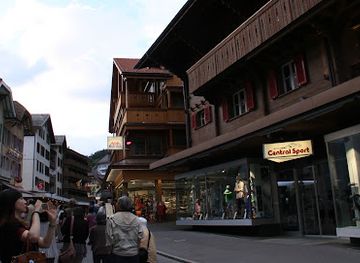
Shopping in Wengen is concentrated on practical travel needs, Swiss food products, mountain clothing and souvenirs rather than extensive retail. Village shops and specialist seasonal businesses serve walkers and skiers, while hotels and local retailers may stock regional produce, confectionery and craft-oriented gifts. The range is more limited than in Interlaken, which is the main nearby centre for larger shops and a wider selection of Swiss goods. Lauterbrunnen provides basic valley services and supplies before or after the train journey to Wengen. Visitors seeking local products should look for Swiss cheese, chocolate and other regional foods, while outdoor equipment is most useful for those who need clothing or gear for changing mountain conditions.
-
Café
Airtime Cafe Bakery
Experience the perfect blend of art and flavor at Airtime Café Bakery in Lauterbrunnen, where every visit is a feast for the senses.
-
Supermarket
Coop Supermarkt Wengen
Discover the convenience of Coop Supermarkt Wengen, your go-to grocery destination in the heart of the Swiss Alps, offering local and international products.
-
Bicycle Shop
Imboden Bike
Explore the breathtaking Swiss Alps with quality bike rentals and accessories at Imboden Bike in Lauterbrunnen.
-
Sporting goods store
INTERSPORT Central Sport Viktor Gertsch
Discover a world of adventure at INTERSPORT Central Sport Viktor Gertsch, your ultimate destination for sporting goods in Wengen, Switzerland.
Get your free copy of our complete guide to Wengen, delivered straight to you.
Everything on this page, from attractions and restaurants to essentials and local phrases, in one PDF you can read offline, print or share.
Already have an account? Sign in
Your Wengen guide is ready.
We'll send it to · Not you? Sign out

Getting your guide ready…
We are putting together a fresh copy of the Wengen guide. This can take up to a minute.
This can take a few moments. If your browser asks, choose Allow so the download can start. You'll find the guide in your Downloads folder.
Nothing happened? Download it again
Sorry, the guide is taking longer than usual. Please try again in a minute, or get it by email instead.
Wengen essentials
Currency and Payment
Safety
Emergency Situations
Do's and Don'ts
Local Tips
From Eve
Local phrases worth knowing
You don't need to get them perfect. A few words go a long way, and locals appreciate the effort.
Basics
| English | Local | Say it |
|---|---|---|
| Hello | Grüezi | [ɡrʏətsi] |
| Goodbye | Uf Widerluege | [ʊf ˈviːdərluːɡə] |
| Yes | Ja | [ja] |
| No | Nei | [naɪ] |
| Please/You're welcome | Bitte | [ˈbɪtə] |
| Thank you | Merci | [ˈmɛrtsi] |
| Excuse me/Sorry | Entschuldigung | [ɛntˈʃʊldɪɡʊŋ] |
| How are you? | Wie goots? | [vi: ɡuːts] |
| Fine. And you? | Guat. Und dir? | [ɡwat ʊnt di:r] |
| Do you speak English? | Redsch du Englisch? | [rɛtʃ du ˈɛŋlɪʃ] |
| I don't understand | Ich verstoh nöd | [ɪç fɛrˈʃtoː nœd] |
Eating & Drinking
| English | Local | Say it |
|---|---|---|
| I'd like to see the menu, please | Ich möchte bitte d'Menükarte aluege | [ɪç ˈmøːxtə ˈbɪtə də ˈmøːnəkɑrtə ˈɑluːɡə] |
| I don't eat meat | I esse kai Fleisch | [aɪ ɛs kai̯ flaɪ̯ʃ] |
| Cheers! | Proscht! | [prɔʃt] |
| I would like to pay, please | Ich möchte bitte zahle | [ɪç ˈmøːxtə ˈbɪtə ˈtsaːlə] |
Emergencies
| English | Local | Say it |
|---|---|---|
| Help! | Hüüf! | [hʏːf] |
| Go away! | Gang wäg! | [ɡaŋ wɛːɡ] |
| Call the Police! | Rüef d Polizei! | [ryəf d poˈliʦaɪ] |
| Call a doctor! | Rüef en Dokter! | [ryəf ən ˈdɔktər] |
| I'm lost | I ha mi verlaufe | [aɪ hɑ miː fərˈlaʊ̯fə] |
| I'm ill | I bi chrank | [aɪ biː xrɑŋk] |
Shopping
| English | Local | Say it |
|---|---|---|
| I'd like to buy... | Ich möcht ... kaufe | [ɪç mœxt ... ˈkaʊ̯fə] |
| I'm just looking | Ich luege nume | [ɪç ˈlyːɡə ˈnuːmə] |
| How much is it? | Wieviel kostet das? | [ˈviːfiːl ˈkɔstət das] |
| That's too expensive | Das isch zviel | [das ɪʃ ˈtsfiːl] |
| Can you lower the price? | Chasch du de Priis churzä? | [xaʃ du də priːs ˈxʊrtsæ] |
Time & Numbers
| English | Local | Say it |
|---|---|---|
| What time is it? | Wieviu isch es? | [ˈviːfiʊ ɪʃ ɛs] |
| It's one o'clock | Es isch eini | [ɛs ɪʃ ˈaɪni] |
| Half past (10) | Halbi (zähni) | [ˈhalbɪ (ˈt͡sɛːni)] |
| Morning | Morge | [ˈmɔrɡə] |
| Afternoon | Namittag | [naˈmɪtaɡ] |
| Evening | Abig | [ˈɑbiɡ] |
| Yesterday | Gestere | [ɡəˈʃtɛːrə] |
| Today | Hüt | [hyt] |
| Tomorrow | Morn | [mɔrn] |
| 1 | Eins | [aɪns] |
| 2 | Zwei | [tsvaɪ] |
| 3 | Drei | [draɪ] |
| 4 | Vier | [fiːr] |
| 5 | Fünf | [fʏnf] |
| 6 | Sechs | [zɛks] |
| 7 | Sieben | [ˈziːbən] |
| 8 | Acht | [axt] |
| 9 | Neun | [nɔɪn] |
| 10 | Zehn | [tseːn] |
Transport & Directions
| English | Local | Say it |
|---|---|---|
| Where's a/the...? | Wo isch ...? | [vo ɪʃ] |
| What's the address? | Was isch d'Adresse? | [vas ɪʃ ˈdadˌrɛsə] |
| Can you show me (on the map)? | Chasch mir das zeige (uf em Plan)? | [xas̩ miː das ˈtsaɪ̯ɡə (ʊf ɛm plan)] |
| When's the next (bus)? | Wänn fahrt de nächschti (Bus)? | [vɛn fɑrt də ˈnɛːχʃti (bʊs)] |
| A ticket (to ....) | E Fahrkart (nach ....) | [aɪ̯ ˈfaːrkaʁt (nax)] |
History of Wengen
A Walser Alpine Settlement
Wengen developed as a small highland settlement within the Lauterbrunnen Valley, whose communities used steep slopes and upland meadows for seasonal agriculture. The wider Bernese Oberland was influenced by Walser migration and Alpine farming traditions, although local settlement history is best understood through the scattered farms, pastures and villages of the valley rather than through a single foundation event. For centuries, haymaking, livestock and movement between valley floors and summer grazing grounds shaped the landscape that surrounds the modern village.
The Rise of Mountain Tourism
Wengen’s transformation into a tourism centre followed the nineteenth-century growth of Alpine travel. Improved roads and railways made the Lauterbrunnen Valley more accessible, while hotels and guesthouses began serving visitors drawn by the Jungfrau landscape. The opening of the Wengernalp Railway in 1893 provided a decisive change, linking Lauterbrunnen with Wengen, Wengernalp and Kleine Scheidegg. It allowed visitors to reach high mountain scenery with greater reliability and helped establish the village as a year-round destination.
Railways and the Jungfrau Region
Rail transport remains central to Wengen’s identity. The Wengernalp Railway connects the village with Lauterbrunnen and Kleine Scheidegg, while the wider railway network links the region with Interlaken and the Jungfraujoch. These routes were built during the formative period of Swiss Alpine tourism, when engineering, hotel development and landscape appreciation became closely connected. The railways also reduced the need for road construction on the steep terrace, helping Wengen retain its distinctive car-free character.
Skiing and the Lauberhorn
Winter tourism expanded during the twentieth century as skiing became an important part of the Bernese Oberland economy. Wengen is internationally associated with the Lauberhorn races, held on the demanding course above the village and first staged in the 1930s. The event helped place Wengen on the international alpine-sport calendar, while the surrounding lifts and railways created a wider winter network. Today, tourism operates alongside continuing pasture management and efforts to protect the mountain environment on which the region depends.
Wengen in Photos
Browse through our photo collection highlighting the charm and character of the destination.
Neighbouring destination travel guides
The closest destinations to Wengen, if you have time for more than one.
-

-

-

-

-


Swipe for more destinations
Explore more
Explore more of Bernese Oberland
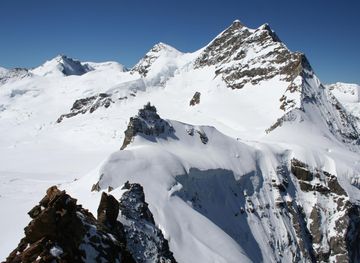
Discover the Bernese Oberland: A haven of alpine beauty, outdoor adventures, and Swiss cultural heritage in the heart of Switzerland.
Explore Bernese Oberland
Explore more of Switzerland
Discover Switzerland's majestic landscapes, vibrant cities, and rich culture. From alpine adventures to urban exploration, experience the best of Europe in one destination.
Explore Switzerland