

Niederdorf (Zurich) Travel Guide - Free
Explore Niederdorf in Zurich with Evendo's free guide. Find the best shops, historic streets, restaurants, and gems on web or mobile.


Niederdorf in Zurich pairs medieval lanes, Grossmünster, Dada history, independent shops, cafés and lively evening dining beside the Limmat.
Medieval Streets beside the Limmat
Niederdorf occupies the eastern side of Zurich’s historic centre, between the Limmat and the wooded rise of the Zürichberg. Often called “Dörfli” by locals, it is less a formal administrative district than a familiar old-town quarter whose narrow lanes, small squares and guild houses preserve the grain of medieval Zurich. Niederdorfstrasse forms its best-known pedestrian spine, while streets such as Spiegelgasse, Münstergasse and Oberdorfstrasse lead towards churches, cafés, bookshops and intimate courtyards.Read more about Niederdorf
Churches, Art and Everyday Life
A Compact Old-Town Experience
Best attractions in Niederdorf
Niederdorf’s attractions are concentrated within a walkable web of lanes rather than a single museum complex. Grossmünster dominates the southern approach, inviting visitors to examine its historic interior and, when access is available, seek views from its towers. Predigerkirche and its tall former monastic church form another important stop near Zähringerplatz. On Spiegelgasse, Cabaret Voltaire occupies the site associated with the beginnings of Dada in 1916 and presents changing cultural programming. Niederdorfstrasse supplies the everyday spectacle of old façades, cafés, restaurants and pedestrian life, while the lanes around Münstergasse reveal guild houses, bookshops and small galleries. The Limmat waterfront and Rathausbrücke provide open perspectives across the river, and nearby Lindenhof offers a short walk beyond the quarter for elevated views over the old town.
-
Tourist attraction
Paradeplatz
Explore Paradeplatz, Zürich's iconic square, a blend of history, luxury shopping, and vibrant culture in the heart of Switzerland.
8 min walk · 0.6 km from neighbourhood centre
-
Tourist attraction
Giacometti-Halle
Discover the artistic genius of Alberto Giacometti at Giacometti-Halle, a scenic gem in Zürich that blends modern artistry with stunning views.
3 min walk · 0.2 km from neighbourhood centre
-
Tourist attraction
Englischer Bench
Experience the serene beauty of Englischer Bench, a charming tourist attraction in Zurich, perfect for relaxation and picturesque views.
4 min walk · 0.3 km from neighbourhood centre
-
Tourist attraction
Niederdorfstrasse
Explore the historic Niederdorfstrasse in Zürich, a lively street filled with culture, shopping, and delicious dining options amidst medieval architecture.
1 min walk · 0.1 km from neighbourhood centre


Best landmarks in Niederdorf
Niederdorf’s landmarks express the overlapping religious, civic and artistic histories of Zurich’s old town. Grossmünster is the quarter’s most recognisable structure, with its twin towers rising above the Limmat and its long association with the Reformation. Predigerkirche, near Zähringerplatz, marks the former Dominican presence and remains a powerful architectural presence at the northern side of the old town. Spiegelgasse 1 is significant as the early home of Cabaret Voltaire, where Dada emerged in 1916. Along the lanes, ornate guild houses and carefully adapted medieval plots reveal the importance of craft and commerce in historic Zurich. Rathausbrücke links the riverbanks and frames views towards the old town, while the narrow street pattern itself is a landmark of the quarter’s medieval urban inheritance.
-
Historical landmark
Lindenhof
Experience the tranquil beauty and rich history of Lindenhof, Zurich's iconic park and historical landmark, offering stunning views and a peaceful retreat.
4 min walk · 0.3 km from neighbourhood centre
-
Protestant church
Predigerkirche
Discover Zurich's beloved Predigerkirche, a stunning Protestant church that showcases breathtaking architecture and rich cultural history, right in the heart of the city.
1 min walk · 0.1 km from neighbourhood centre
-
Historical landmark
Centralhof Monument
Explore the historical charm of Centralhof Monument in Zürich, where stunning architecture meets vibrant city life, perfect for culture enthusiasts and travelers alike.
8 min walk · 0.6 km from neighbourhood centre
-
Historical landmark
David Brunnen
Explore David Brunnen, a historical landmark in Zürich, where culture, history, and relaxation come together in a picturesque setting.
5 min walk · 0.4 km from neighbourhood centre


Explore Niederdorf on the map
A handpicked selection of must-see spots in Niederdorf, mapped for you.
Best hotels in Niederdorf
Best restaurants in Niederdorf
Niederdorf’s dining scene is shaped by its old-town setting, with restaurants, cafés, bakeries and bars fitted into narrow historic buildings along Niederdorfstrasse, Niederdorf and the lanes leading towards Grossmünster. Menus range from Swiss staples and European cooking to international food reflecting Zurich’s cosmopolitan population, while cafés provide places for coffee, pastries and people-watching throughout the day. The quarter is particularly suited to grazing between streets: a quick meal near Central, a more leisurely table around Münstergasse or an evening venue near the river can all sit within a short walk. Independent establishments and long-running taverns share space with contemporary restaurants, though the district’s central location means menus and businesses change over time. During busy periods, small dining rooms and terraces can fill quickly, so reservations may be sensible for a planned meal.
-
Swiss
Restaurant Brasserie Johanniter
Experience authentic Swiss cuisine in Zurich at Restaurant Brasserie Johanniter - where tradition meets taste in every dish.
2 min walk · 0.2 km from neighbourhood centre
-
Pizza Takeout
Santa Lucia
Experience mouthwatering pizzas and authentic Italian cuisine at Santa Lucia in Zürich's vibrant Niederdorf district.
3 min walk · 0.2 km from neighbourhood centre
-
Italian
La Pasta
Compact Italian restaurant with terrace seating on Zurich's historic Niederdorf pedestrian lane, focused on homemade pasta and steady street views.
3 min walk · 0.2 km from neighbourhood centre
-
Brasserie
Louis
French brasserie with terrace on Zurich’s historic Niederdorf pedestrian street and an upstairs smoking bar
2 min walk · 0.1 km from neighbourhood centre


Best bars in Niederdorf
After dark, Niederdorf becomes one of central Zurich’s most established evening districts, although its nightlife is more varied than a single club strip. Traditional taverns, wine bars, cocktail spots and small music venues occupy the lanes around Niederdorfstrasse, while theatres and cultural spaces provide alternatives to drinking. The quarter’s intimate scale encourages movement between venues, but the same narrow streets carry residential traffic and amplify sound, so visitors should keep conversation and departures discreet. Nightlife is generally concentrated around the main lanes and squares rather than the quieter residential passages near the churches. Niederdorf also has a long association with cabaret and artistic experimentation through Cabaret Voltaire on Spiegelgasse, whose cultural legacy remains distinct from the conventional bar scene. Opening hours, performances and door policies vary, making current venue information essential.
-
Bar
Kon-Tiki Coffeeshop & Bar
Discover the lively charm of Kon-Tiki Coffeeshop & Bar in Zürich, where delightful drinks meet live music in a vibrant setting.
1 min walk · 0.1 km from neighbourhood centre
-
Pub
Big Ben Pub Zurich
Discover the lively ambiance and delicious fare at Big Ben Pub Zurich, a local favorite for tourists and residents alike.
1 min walk · 0.1 km from neighbourhood centre
-
Bar
Gräbli Bar
Experience Zurich's vibrant nightlife at Gräbli Bar in the heart of Niederdorf, offering a diverse drink selection and a lively atmosphere.
2 min walk · 0.2 km from neighbourhood centre
-
Bar
Rainbow
Discover the lively and colorful Rainbow Bar in Zürich, where vibrant cocktails and a welcoming atmosphere await every visitor.
2 min walk · 0.1 km from neighbourhood centre


Best nightclubs in Niederdorf
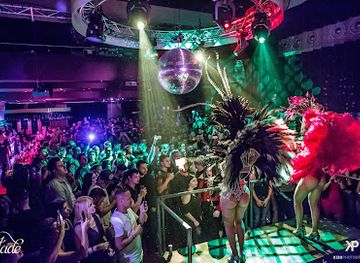
After dark, Niederdorf becomes one of central Zurich’s most established evening districts, although its nightlife is more varied than a single club strip. Traditional taverns, wine bars, cocktail spots and small music venues occupy the lanes around Niederdorfstrasse, while theatres and cultural spaces provide alternatives to drinking. The quarter’s intimate scale encourages movement between venues, but the same narrow streets carry residential traffic and amplify sound, so visitors should keep conversation and departures discreet. Nightlife is generally concentrated around the main lanes and squares rather than the quieter residential passages near the churches. Niederdorf also has a long association with cabaret and artistic experimentation through Cabaret Voltaire on Spiegelgasse, whose cultural legacy remains distinct from the conventional bar scene. Opening hours, performances and door policies vary, making current venue information essential.
-
Nightclub
Hive
Experience the vibrant nightlife at Hive, Zürich's premier nightclub, known for its electrifying atmosphere and top DJs.
6 min drive · 2.2 km from neighbourhood centre
-
Nightclub
Hiltl Club
Discover the heart of Zürich's nightlife at Hiltl Club, where music, dance, and vibrant socializing create unforgettable moments.
7 min walk · 0.6 km from neighbourhood centre
-
Nightclub
Jade Club
Discover Zürich's nightlife at Jade Club, a premier nightclub with electrifying beats and a chic atmosphere for an unforgettable experience.
9 min walk · 0.7 km from neighbourhood centre
-
Nightclub
Kaufleuten Klub
Experience Zurich's vibrant nightlife at Kaufleuten Klub, a stylish venue known for its eclectic music and energetic atmosphere.
8 min walk · 0.7 km from neighbourhood centre



Best shops in Niederdorf
Shopping in Niederdorf is concentrated along Niederdorfstrasse, Münstergasse and the adjoining lanes, where independent retailers occupy ground floors beneath historic façades. Visitors will find bookshops, fashion and design stores, jewellery, gifts, specialist food shops and small galleries alongside cafés and everyday services. The quarter is better suited to browsing distinctive central-city businesses than to large-scale shopping, with the main department stores and extensive retail streets located elsewhere in Zurich. Spiegelgasse and the lanes near Grossmünster are particularly pleasant for looking at small-scale creative and cultural businesses, while the riverfront provides an easy link to other old-town shopping areas. Stock and ownership change frequently, so the character of the experience is the mix of established premises and newer independent ventures rather than any guaranteed product selection.
-
Souvenir store
Teddy's Souvenir Shop AG
Explore Teddy's Souvenir Shop in Zürich for a delightful array of unique Swiss gifts and keepsakes that capture the spirit of Switzerland.
5 min walk · 0.4 km from neighbourhood centre
-
Market
Rosenhof-Markt
Explore the vibrant Rosenhof-Markt in Zurich, a treasure trove of vintage finds, local crafts, and a taste of authentic Swiss culture.
2 min walk · 0.2 km from neighbourhood centre
-
Clothing Shop
COS
Explore COS in Zurich for timeless fashion and contemporary style, perfect for enhancing your wardrobe while enjoying the city's vibrant atmosphere.
3 min walk · 0.2 km from neighbourhood centre
-
Gift shop
Arslonga AG
Discover the charm of Swiss craftsmanship at Arslonga AG, Zürich's premier gift shop for unique souvenirs and artisanal treasures.
5 min walk · 0.4 km from neighbourhood centre


Niederdorf essentials
Getting There
Getting Around
Safety
Emergency Situations
Do's and Don'ts
Local Tips

From Eve
Local phrases worth knowing
You don't need to get them perfect. A few words go a long way, and locals appreciate the effort.
Basics
| English | Local | Say it |
|---|---|---|
| Hello | Grüezi | [gru-e-tzi] |
| Goodbye | Adieu | [a-dju] |
| Yes | Ja | [ya] |
| No | Nei | [nai] |
| Please/You're welcome | Bitte | [bit-te] |
| Thank you | Merci | [mer-si] |
| Excuse me/Sorry | Entschuldigung | [ent-shul-di-gung] |
| How are you? | Wie geht es Ihnen? | [vee-gut-es-inen] |
| Fine. And you? | Gut. Und Ihnen? | [goot-und-inen] |
| Do you speak English? | Sprechen Sie Englisch? | [shpre-chen-zi-eng-lish] |
| I don't understand | Ich verstehe nicht | [ikh-fears-te-khuh-nikht] |
Eating & Drinking
| English | Local | Say it |
|---|---|---|
| I'd like to see the menu, please | Ich möchte die Speisekarte sehen, bitte | [ikh-mehr-te-dee-shpi-ze-kar-te-zay-en-bit-te] |
| I don't eat meat | Ich esse kein Fleisch | [ikh-es-se-kine-flysh] |
| Cheers! | Prost! | [prohst] |
| I would like to pay, please | Ich möchte bitte zahlen | [ikh-mehr-te-bit-te-tsa-len] |
Emergencies
| English | Local | Say it |
|---|---|---|
| Help! | Hilfe! | [hil-fe] |
| Go away! | Geh weg! | [geh-veg] |
| Call the Police! | Rufen Sie die Polizei! | [roo-fen-zi-dee-po-lee-tsey] |
| Call a doctor! | Rufen Sie einen Arzt! | [roo-fen-zi-ine-en-artst] |
| I'm lost | Ich habe mich verirrt | [ikh-ha-be-meekh-feer-rit] |
| I'm ill | Ich bin krank | [ikh-bin-kronk] |
Shopping
| English | Local | Say it |
|---|---|---|
| I'd like to buy... | Ich möchte kaufen... | [ikh-mehr-te-kow-fen] |
| I'm just looking | Ich schaue nur | [ikh-show-nur] |
| How much is it? | Wie viel kostet es? | [vee-feel-kos-tet-es] |
| That's too expensive | Das ist zu teuer | [das-ist-tso-troy-er] |
| Can you lower the price? | Können Sie den Preis senken? | [kern-en-zi-den-prise-sen-ken] |
Time & Numbers
| English | Local | Say it |
|---|---|---|
| What time is it? | Wie spät ist es? | [vee-spet-ist-es] |
| It's one o'clock | Es ist ein Uhr | [es-ist-ine-oor] |
| Half past (10) | Halb (10) | [halb] |
| Morning | Morgen | [morr-gen] |
| Afternoon | Nachmittag | [nakh-mit-tahg] |
| Evening | Abend | [ah-bent] |
| Yesterday | Gestern | [gess-turn] |
| Today | Heute | [hoi-te] |
| Tomorrow | Morgen | [morr-gen] |
| 1 | Eins | [ines] |
| 2 | Zwei | [tsvai] |
| 3 | Drei | [dry] |
| 4 | Vier | [feer] |
| 5 | Fünf | [foonf] |
| 6 | Sechs | [zeks] |
| 7 | Sieben | [zee-ben] |
| 8 | Acht | [ahkt] |
| 9 | Neun | [noyn] |
| 10 | Zehn | [tsayn] |
Transport & Directions
| English | Local | Say it |
|---|---|---|
| Where's a/the...? | Wo ist ein/der...? | [vo-ist-ine/der] |
| What's the address? | Was ist die Adresse? | [vas-ist-dee-ad-res-se] |
| Can you show me (on the map)? | Können Sie mir zeigen (auf der Karte)? | [kern-en-zi-meer-tsai-gen (owf-der-kar-te)] |
| When's the next (bus)? | Wann ist der nächste (Bus)? | [van-ist-der-nekhs-te (boos)] |
| A ticket (to ....) | Ein Ticket (nach ....) | [ine-tee-ket (nakh)] |
History of Niederdorf
The Medieval Lower Village
Niederdorf developed on the eastern bank of the Limmat below the Grossmünster and became known as the lower village, in contrast to the upper settlement around the Lindenhof and Münsterhof. Its lanes connected the river crossings with the northern approach to the medieval town, while workshops, small houses and inns occupied a dense urban fabric. The name survived as an everyday description even as the area was absorbed into Zurich’s growing built-up centre. Much of the irregular street pattern visible today reflects this medieval development rather than a later planned grid.
Churches and Religious Institutions
Religious foundations shaped Niederdorf’s identity for centuries. Grossmünster, whose origins reach back to the early medieval cult of Saints Felix and Regula, dominated the quarter’s southern skyline, while the Dominican order established the Predigerkirche and its associated religious precinct in the thirteenth century. The Reformation transformed Zurich’s ecclesiastical life in the sixteenth century, and former religious properties were gradually adapted to new civic and domestic purposes. These institutions helped make the district a place of worship, learning and administration as well as ordinary residence.
Guild Houses and Urban Commerce
As Zurich’s mercantile and political institutions developed, Niederdorf’s streets filled with guild houses, craft workshops, lodging houses and small businesses. The guild system influenced the city’s social organisation, while proximity to the river and bridges supported movement between the old town’s two banks. Buildings were repeatedly altered rather than replaced wholesale, leaving a mixture of medieval plots, early modern façades and later shopfronts. This accumulated architecture explains why the quarter feels more like a network of inherited lanes than a single monumental ensemble.
Dada on Spiegelgasse
Niederdorf acquired an international artistic association in 1916, when Hugo Ball and Emmy Hennings opened Cabaret Voltaire at Spiegelgasse 1 with fellow artists including Tristan Tzara and Jean Arp. The performances, poetry and experimental art presented there helped give the Dada movement its name and early public platform. The episode was brief, but its setting mattered: a modest old-town venue became a meeting point for artists responding to the upheavals of the First World War. Spiegelgasse consequently links Niederdorf’s historic streets with the history of European avant-garde art.
From Working Quarter to Visitor District
During the twentieth century, Niederdorf changed from a mixed old-town residential and commercial area into one of Zurich’s most recognisable visitor quarters. Shops, restaurants, cinemas, bars and cultural venues joined the long-established churches and businesses, while pedestrianisation made the narrow streets more comfortable for walking. The transformation did not erase residential life: apartments, offices and everyday services remain interwoven with tourism and nightlife. The present character of Niederdorf therefore reflects adaptation rather than a single redevelopment, with historic buildings accommodating changing social and commercial uses.
Niederdorf in Photos
Browse through our photo collection highlighting the charm and character of the destination.
Neighbourhoods near Niederdorf
The closest neighbourhoods to Niederdorf, if you have time for more than one stop.
-

-

-

-

-


Swipe for more neighbourhoods
Explore more

Explore more of Zurich
Zurich combines medieval lanes, lake views and world-class museums with Swiss food, design, finance and nearby Alpine landscapes for culture-rich city breaks.
Explore Zurich