

Free Obion River Valley Travel Guide & Mobile App
Explore Obion River Valley with free travel guides. Discover regional history, expert tips, proposed trips, and audio guides on web or mobile app.


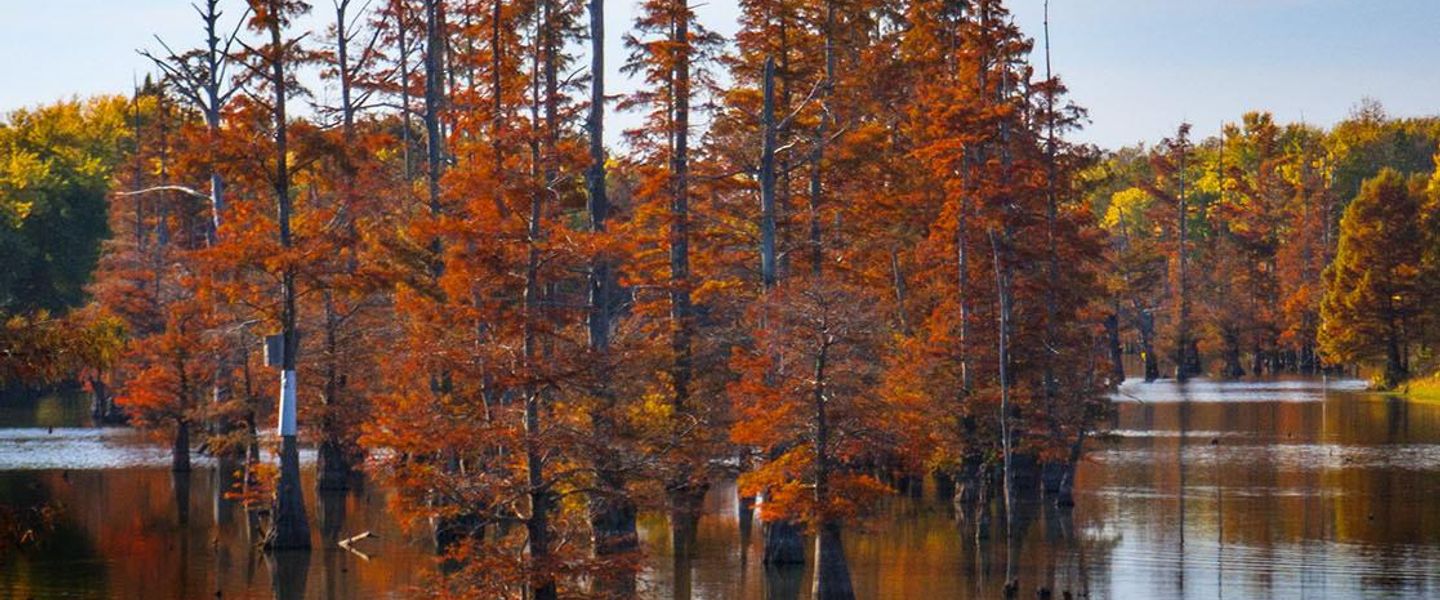


Explore Tennessee’s Obion River Valley for agricultural landscapes, small-town heritage, river country, regional food and Discovery Park of America.
Read more about Obion River Valley
Getting to and around Obion River Valley
How to get there
Transportation
Best landmarks in Obion River Valley
The most recognisable landmarks of the Obion River Valley are linked to its towns, educational institutions and waterways. Discovery Park of America’s prominent exterior architecture and tower make it a conspicuous modern landmark in Union City, while its galleries give the building wider educational significance. The historic courthouse settings and commercial streets of Dresden, Troy and Union City express the civic geography of agricultural West Tennessee, where county administration, trade and community life were concentrated around central squares. The campus of the University of Tennessee at Martin is another important local reference point, representing the region’s continuing role in higher education and public service. Beyond the towns, the Obion River and its wooded tributary corridors are the defining natural landmarks, although their character changes with season, rainfall and access. The low, open farmland between these waterways is itself a significant visual feature: it reveals how drainage, cultivation and transport have reshaped an originally wetter landscape.
-
Historical landmark
Old Obion River Bridge
Discover the Old Obion River Bridge, a stunning historical landmark in Tennessee, perfect for photography and immersing in local history.

Explore Obion River Valley on the map
Plan your trip on one map. See where the top cities, national parks and sights are, and book hotels and experiences in a few clicks.
Best hotels in Obion River Valley
Best restaurants in Obion River Valley
Dining in the Obion River Valley reflects the practical food culture of West Tennessee, with barbecue, fried or grilled catfish, country breakfasts, burgers, biscuits, sandwiches and vegetable-rich home-style plates common in cafés, diners and family restaurants. Barbecue traditions vary from kitchen to kitchen, but smoked pork and familiar Southern accompaniments are reliable regional choices. Catfish connects the area with the rivers, ponds and wetlands of western Tennessee, while seasonal produce, baked goods and preserves may appear at farm stands or community markets. Union City and Martin offer the broadest choice of restaurants, including casual contemporary venues, while smaller towns tend towards locally rooted diners, cafés and takeaway counters. Sweet tea, pies and other Southern desserts are widely encountered, and locally produced foods make useful informal souvenirs when purchased from reputable sellers. Restaurant hours can be limited in rural communities, particularly outside the main meal periods, so a little planning is sensible.
-
American
Dairy Hut
Discover Dairy Hut in Obion: A cozy American diner serving classic comfort food at affordable prices.
-
Restaurant
The Boat House Restaurant
Experience delightful Southern cuisine with stunning lakeside views at The Boat House Restaurant in Hornbeak, Tennessee.
-
Diner
DD's Diner
Savor Southern Comfort Food at DD's Diner in Hornbeak - A True Taste of Homestyle Cooking!
-
Restaurant
The Willow Tree
Discover the culinary treasures of Obion at The Willow Tree - where seasonal flavors meet warm hospitality in every bite.



Best bars in Obion River Valley
Evening life in the Obion River Valley is centred more on restaurants, traditional pubs and casual bars than on a large nightclub scene. Union City and Martin provide the greatest concentration of places to eat, meet friends and find occasional live music, with Martin’s university population giving it a younger evening rhythm during the academic year. In Dresden, Troy and Obion, nightlife is generally quieter and more locally oriented, often revolving around family restaurants, sports broadcasts, community events and informal gatherings rather than dedicated late-night venues. Alcohol is available in licensed establishments, but it is not necessary to experience the region’s social life. Opening arrangements and venue status can change, especially for small businesses, so confirm locally rather than relying on old listings. For a relaxed evening, combine dinner with a walk through a town centre or a scheduled cultural programme.
-
River
Obion River
Experience the tranquility and natural beauty of Obion River in Tennessee, a perfect destination for fishing, kayaking, and scenic hikes.

Best nightclubs in Obion River Valley
Evening life in the Obion River Valley is centred more on restaurants, traditional pubs and casual bars than on a large nightclub scene. Union City and Martin provide the greatest concentration of places to eat, meet friends and find occasional live music, with Martin’s university population giving it a younger evening rhythm during the academic year. In Dresden, Troy and Obion, nightlife is generally quieter and more locally oriented, often revolving around family restaurants, sports broadcasts, community events and informal gatherings rather than dedicated late-night venues. Alcohol is available in licensed establishments, but it is not necessary to experience the region’s social life. Opening arrangements and venue status can change, especially for small businesses, so confirm locally rather than relying on old listings. For a relaxed evening, combine dinner with a walk through a town centre or a scheduled cultural programme.
-
River
Obion River
Explore the stunning Obion River in Tennessee, a serene escape perfect for kayaking, fishing, and enjoying nature's beauty.

Best shops in Obion River Valley
Shopping in the Obion River Valley is concentrated in Union City and Martin, with smaller selections of independent businesses, services and antique or gift shops in Dresden, Troy and other county-seat communities. Rather than a major luxury-shopping destination, the area offers practical high-street retail, locally oriented boutiques, bookstores, craft items and regional food products. Discovery Park of America provides educational and science-themed souvenirs, while farmers’ markets, farm stands and seasonal community events may offer produce, baked goods, preserves and handmade items when operating. Antiques and small-town collectibles can be found sporadically, but availability changes and should not be confused with a permanent regional market circuit. Visitors seeking a meaningful purchase should look for locally made crafts, books about Tennessee history, agricultural products or items connected with the valley’s waterways and wildlife. Larger general retail is available in Union City, making it the most convenient place to combine shopping with meals and other services.
-
River
Obion River
Experience the serene beauty of Obion River in Tennessee, a perfect spot for fishing, kayaking, and connecting with nature.

Get your free copy of our complete guide to Obion River Valley, delivered straight to you.
Everything on this page, from attractions and restaurants to essentials and local phrases, in one PDF you can read offline, print or share.
Already have an account? Sign in
Your Obion River Valley guide is ready.
We'll send it to · Not you? Sign out

Getting your guide ready…
We are putting together a fresh copy of the Obion River Valley guide. This can take up to a minute.
This can take a few moments. If your browser asks, choose Allow so the download can start. You'll find the guide in your Downloads folder.
Nothing happened? Download it again
Sorry, the guide is taking longer than usual. Please try again in a minute, or get it by email instead.
Obion River Valley essentials
Currency and Payment
Safety
Emergency Situations
Do's and Don'ts
Local Tips
From Eve
Local phrases worth knowing
You don't need to get them perfect. A few words go a long way, and locals appreciate the effort.
Basics
| English | Local | Say it |
|---|---|---|
| Hello | Howdy | [Ha-dee] |
| Goodbye | See ya | [See ya] |
| Yes | Yep | [Yep] |
| No | Nah | [Nah] |
| Please/You're welcome | Please/No problem | [Please/No prob-lem] |
| Thank you | Thanks a lot | [Thanks uh lot] |
| Excuse me/Sorry | Pardon me/Sorry | [Par-don me/Sor-ry] |
| How are you? | How ya doin'? | [How ya do-in'?] |
| Fine. And you? | I’m good. How 'bout you? | [I’m good. How 'bout ya?] |
| Do you speak English? | Do ya talk English? | [Do ya talk Ing-lish?] |
| I don't understand | I ain't gettin' it | [I ain't get-tin' it] |
Eating & Drinking
| English | Local | Say it |
|---|---|---|
| I'd like to see the menu, please | Can I see the menu, please? | [Can I see the men-u, please?] |
| I don't eat meat | I don’t eat meat | [I don’t eat meat] |
| Cheers! | Cheers! | [Cheers!] |
| I would like to pay, please | Can I pay, please? | [Can I pay, please?] |
Emergencies
| English | Local | Say it |
|---|---|---|
| Help! | Help! | [Help!] |
| Go away! | Leave me alone! | [Leave me a-lone!] |
| Call the Police! | Call the cops! | [Call the cops!] |
| Call a doctor! | Get a doctor! | [Get a doc-tor!] |
| I'm lost | I’m lost | [I’m lost] |
| I'm ill | I ain't feelin' good | [I ain't feel-in' good] |
Shopping
| English | Local | Say it |
|---|---|---|
| I'd like to buy... | I wanna buy... | [I wanna buy...] |
| I'm just looking | Just lookin' | [Just look-in'] |
| How much is it? | What’s the price? | [What’s the price?] |
| That's too expensive | That’s too pricey | [That’s too price-y] |
| Can you lower the price? | Can ya make it cheaper? | [Can ya make it cheap-er?] |
Time & Numbers
| English | Local | Say it |
|---|---|---|
| What time is it? | What time is it? | [What time is it?] |
| It's one o'clock | It's one o'clock | [It's one o'clock] |
| Half past (10) | Half past ten | [Half past ten] |
| Morning | Mornin' | [Morn-in'] |
| Afternoon | Afternoon | [Af-ter-noon] |
| Evening | Evenin' | [Eve-nin'] |
| Yesterday | Yesterday | [Yes-ter-day] |
| Today | Today | [To-day] |
| Tomorrow | Tomorrow | [To-mor-row] |
| 1 | One | [One] |
| 2 | Two | [Two] |
| 3 | Three | [Three] |
| 4 | Four | [Four] |
| 5 | Five | [Five] |
| 6 | Six | [Six] |
| 7 | Seven | [Seven] |
| 8 | Eight | [Eight] |
| 9 | Nine | [Nine] |
| 10 | Ten | [Ten] |
Transport & Directions
| English | Local | Say it |
|---|---|---|
| Where's a/the...? | Where’s the...? | [Where’s the...?] |
| What's the address? | What’s the address? | [What’s the ad-dress?] |
| Can you show me (on the map)? | Can ya show me on the map? | [Can ya show me on the map?] |
| When's the next (bus)? | When’s the next bus? | [When’s the next bus?] |
| A ticket (to ....) | A ticket to... | [A tick-et to...] |
History of Obion River Valley
Chickasaw Homeland and Indigenous Trade Routes
Before Euro-American settlement, the wider West Tennessee region was part of the homeland and sphere of influence of the Chickasaw people. Rivers, wetlands and natural rises shaped movement, hunting and exchange across the lowlands, while the Mississippi and its tributaries connected communities over a broad territory. European-derived maps and later county boundaries do not fully reflect these earlier relationships with the land. The valley’s modern agricultural appearance therefore overlays a much older Indigenous geography, although relatively few visitor sites within the Obion River landscape interpret that history in depth.
Treaties and Nineteenth-Century Settlement
During the early nineteenth century, treaties and the forced dispossession of Indigenous peoples opened West Tennessee to intensified American settlement. Farmers, merchants and land speculators established communities along waterways and emerging roads, clearing forests and adapting the wet, fertile plain for cultivation. The area’s settlement pattern remained dispersed, with small county seats and trading points serving surrounding farms. Many present-day communities in and around the valley owe their origins to this period, even though their later streets, buildings and institutions have changed considerably.
Cotton, Commerce and the Formation of Towns
Cotton became a major force in West Tennessee during the nineteenth century, supported by fertile soils, enslaved labour and commercial links to the Mississippi River and larger market centres. After the Civil War, agricultural production continued to shape local wealth and social structures, while merchants and professional services concentrated in county-seat towns. Union City, Dresden, Troy and other communities developed civic squares, churches and commercial streets that expressed this agricultural economy. The legacy is visible in the region’s built environment, but it must also be understood alongside the violence of slavery, emancipation and racial inequality.
Railways and the Agricultural Market
Railway development in the nineteenth and early twentieth centuries strengthened the valley’s links with markets beyond north-west Tennessee. Rail lines reduced dependence on slow river and wagon transport, encouraged the growth of depots and warehouses, and helped small towns function as shipping and service centres for surrounding farms. Grain, cotton, livestock and other agricultural goods could move more efficiently, while manufactured products and news arrived more regularly. Although road transport later became dominant, the town plans and commercial buildings of the rail era remain important clues to how the valley became economically connected.
The Obion River, Flood Control and Landscape Change
The Obion River system has always brought both fertility and flood risk. Seasonal water shaped settlement and farming, while twentieth-century drainage, levees, channel works and improved roads altered the relationship between communities and wetlands. These interventions made more land suitable for cultivation but also changed habitats and the appearance of the valley. Today, wooded stream corridors and low-lying fields preserve evidence of the river’s natural influence, while modern agriculture reflects a continuing effort to balance productive land with water management.
Mechanised Farming and Modern Regional Identity
Twentieth-century mechanisation reduced the need for farm labour and accelerated the consolidation of agricultural operations across West Tennessee. Soybeans, corn, wheat and cotton remain important crops, and the valley’s economy is still closely linked to farming, food processing, transport and local services. At the same time, education, healthcare and cultural institutions have broadened the role of towns such as Martin and Union City. The opening of Discovery Park of America in the twenty-first century added a major educational and tourism focus, presenting science, history and regional culture to visitors.
Obion River Valley in Photos
Browse through our photo collection highlighting the charm and character of the destination.
Neighbouring regions of Obion River Valley
The closest regions to Obion River Valley, if you have time for more than one.
-

-

-

-
-


Swipe for more regions
Explore more

Explore more of Tennessee
Discover Tennessee: A melting pot of music, history, and natural beauty, offering visitors an authentic taste of Southern hospitality and unforgettable experiences.
Explore Tennessee