Invermark Castle Travel Guide
Free Guide: A towering 16th-century Scottish tower house guarding the rugged glens of Angus, steeped in clan history and Highland defense.


A brief summary of Invermark Castle
A towering 16th-century Scottish tower house guarding the rugged glens of Angus, steeped in clan history and Highland defense.
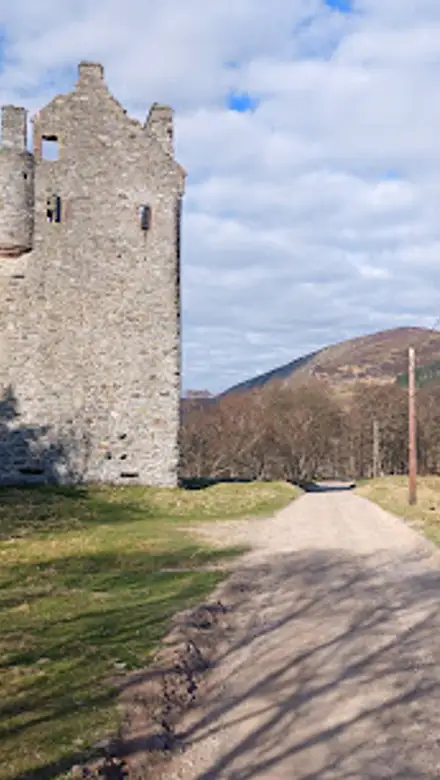
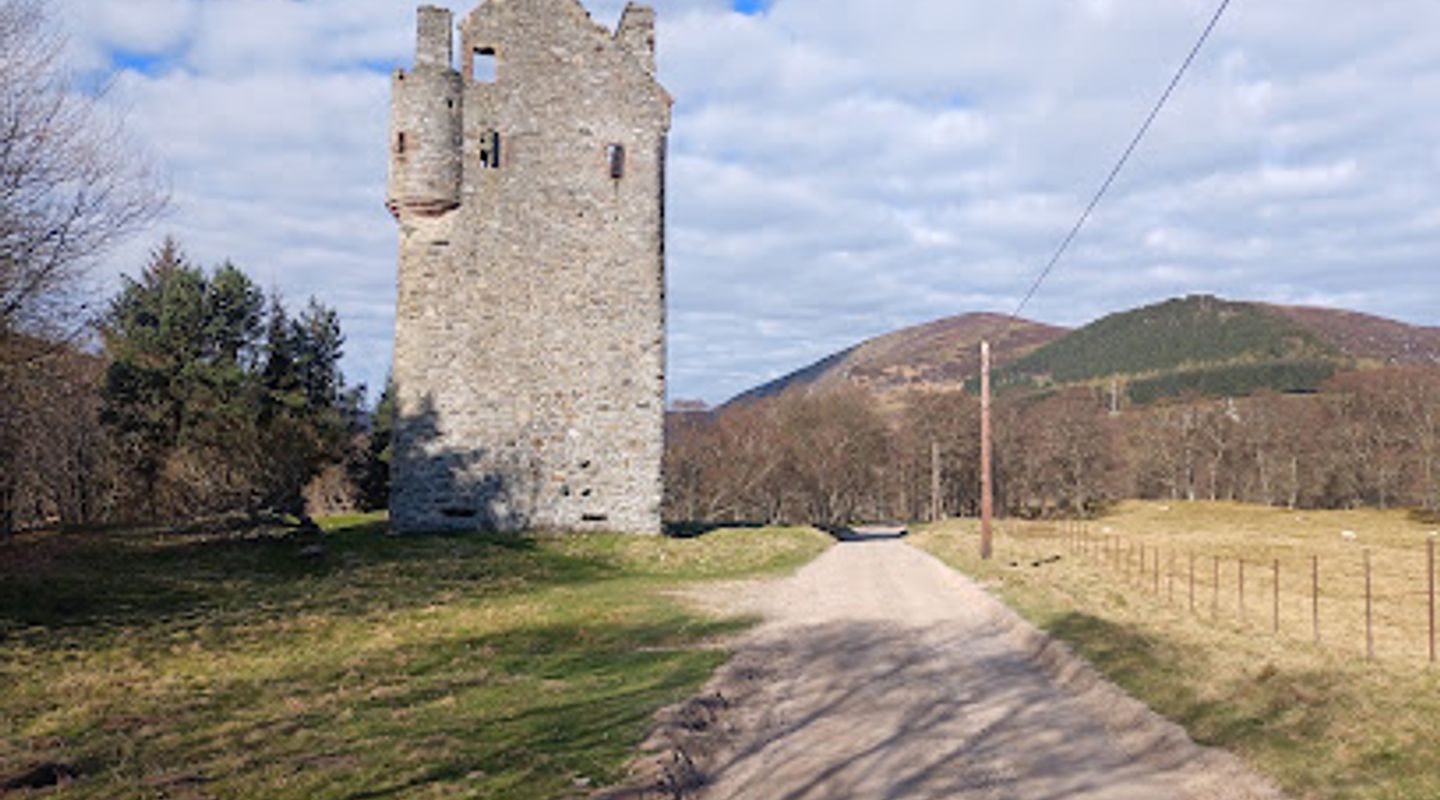
Invermark Castle is a striking 16th-century oblong tower house located near Loch Lee in Angus, Scotland. Built by the Lindsay family on a 14th-century castle site, it served as a defensive stronghold against Highland raiders. The castle’s imposing height, corbelled parapet, and iron-barred entrance reflect its martial purpose. Though now a ruin and inaccessible inside, its rugged silhouette and remote setting offer a dramatic glimpse into Scotland’s turbulent past.
On-site amenities
 Information boards
 Seating areas
- Address
- Unnamed Road,Brechin, Brechin DD9 7YZ
Getting there
Car
Bus and Walk
Hiking
Discover more about Invermark Castle
Origins and Historical Significance
Invermark Castle stands on the site of an earlier 14th-century fortress, constructed to guard the strategic southern approach to Glen Esk. The present tower house was built around 1526 by the Lindsay family of Crawford, a powerful noble lineage in Angus. It was designed as a fortified refuge and control point against Highland marauders, embodying the martial tensions of the era. Notably, David Lindsay, 9th Earl of Crawford, died here in 1558. The castle also sheltered key historical figures such as David Lindsay after a deadly feud in Edinburgh, and James Carnegie, Lord Balnamoon, fleeing government forces after the Battle of Culloden in 1746.
Architectural Features and Defensive Design
The castle is an oblong tower house, originally three storeys tall, later heightened in the early 17th century with an additional storey and garret, plus a two-storey angle tower. Its walls feature rounded corners and a corbelled parapet with a parapet walk, typical of Scottish defensive architecture. The entrance is uniquely placed at first-floor level, accessible only by a movable timber bridge or stair, and protected by a rounded arch with an iron yett (a heavy iron gate). Inside, a vaulted basement was accessed by a wheel stair, while upper floors were reached by a now-lost turnpike stair. The castle’s limited windows and massive chimney stacks with light openings to the garret emphasize its fortress-like character.
Setting and Surrounding Landscape
Nestled near the east shore of Loch Lee, Invermark Castle commands a remote and rugged landscape where Glen Lee and Glen Mark converge to form Glen Esk. The mountainous terrain enhances the castle’s imposing presence and strategic importance. The castle is surprisingly hidden from the southeast by tree growth along the Water of Mark, revealing itself only at close range. Nearby are remnants of outbuildings and the ruins of a late 17th-century parish church by Loch Lee, adding to the historical atmosphere of the area.
Current Condition and Preservation Status
Though the castle’s exterior walls remain impressively intact up to the battlements, the interior is inaccessible due to the barred entrance and its ruinous state. Small trees growing from the roofline hint at some deterioration. The castle was abandoned around 1803 and is now a Scheduled Monument, protected for its historical and architectural significance. Any restoration would require highly authentic methods, preserving its character as a formidable tower house.
Cultural Legacy and Visitor Experience
Invermark Castle offers a vivid window into Scotland’s feudal past and clan conflicts. Its austere, defensive design contrasts with the serene beauty of the surrounding Angus glens and Loch Lee. Visitors can appreciate the castle’s dramatic silhouette against the wild landscape, imagining the lives of those who sought refuge within its walls. While entry is barred, the site’s evocative presence and nearby heritage sites make it a compelling destination for history enthusiasts and nature lovers alike.
Connections to the Dalhousie Estates and Local Heritage
The castle is part of the historic Dalhousie Estates, which also includes Brechin Castle and Invermark Lodge, a mid-19th-century shooting lodge nearby. The estate’s long lineage ties Invermark Castle to the broader narrative of Angus’s aristocratic families and their role in Scottish history. The surrounding area offers a rich tapestry of cultural heritage, from medieval castles to traditional parish churches, set within a landscape cherished for its natural beauty and historical depth.
Evendo Review Centre
 Google
Guest reviews
Best time to go
Quietest: Jan, Feb & Dec · before 6am or at 9pm
Busy times are Evendo estimates for a typical year, to help you plan. Actual crowds vary with events, school holidays and the weather.
Explore Invermark Castle on the map
A handpicked selection of must-see spots near Invermark Castle, mapped for you.
Get your free copy of our complete guide to Invermark Castle, delivered straight to you.
Everything on this page, from opening hours and how to get there to Eve’s tips and the best time to go, in one PDF you can read offline, print or share.
Already have an account? Sign in
Your Invermark Castle guide is ready.
We'll send it to · Not you? Sign out

Getting your guide ready…
We are putting together a fresh copy of the Invermark Castle guide. This can take up to a minute.
This can take a few moments. If your browser asks, choose Allow so the download can start. You'll find the guide in your Downloads folder.
Nothing happened? Download it again
Sorry, the guide is taking longer than usual. Please try again in a minute, or get it by email instead.
Other nearby places you may find interesting
The closest places of the same kind, if this one is not quite what you had in mind.
-
-
-
-
-


Swipe for more places
More to explore near Invermark Castle

 Best experiences near Invermark Castle
 Best hotels near Invermark Castle
 Best landmarks near Invermark Castle
 Best attractions near Invermark Castle
 Best shops near Invermark Castle
 Best restaurants near Invermark Castle
 Best bars near Invermark Castle
Do you manage this location?
Take control to get all the benefits, like improved information, better appearance, and stronger visibility across AI-powered discovery.
Explore more

Explore more of Angus
Explore Angus: A captivating destination in Scotland known for its rich history, stunning landscapes, and vibrant culture.
Explore Angus
Explore more of United Kingdom
Discover the United Kingdom: A blend of rich history, stunning landscapes, and vibrant cities, offering a unique travel experience for every visitor.
Explore United Kingdom