Dunseverick Castle Travel Guide
Free Guide: Explore the evocative ruins of Dunseverick Castle, a 5th-century fortress perched on Northern Ireland’s dramatic Atlantic cliffs.


A brief summary of Dunseverick Castle
Explore the evocative ruins of Dunseverick Castle, a 5th-century fortress perched on Northern Ireland’s dramatic Atlantic cliffs.
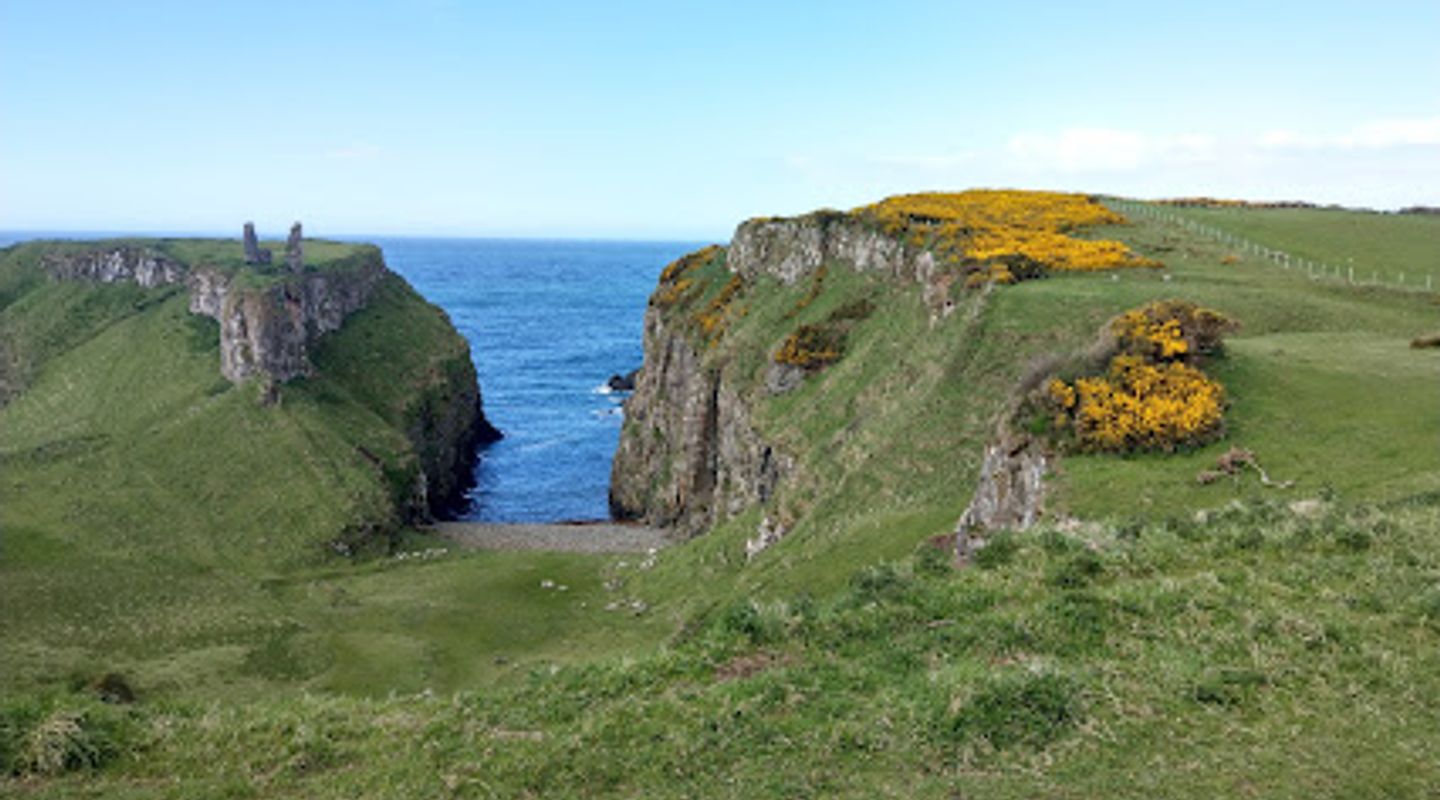
Dunseverick Castle, perched on a basalt promontory along Northern Ireland’s rugged Causeway Coast, is one of the oldest castle ruins in Ireland. With origins dating back to the 5th century, it was once a royal seat and witnessed visits from St. Patrick, Viking raids, and battles during the 17th century. Today, only the gatehouse ruins remain, set against dramatic Atlantic Ocean views and accessible via scenic cliff walks near the Giant’s Causeway.
On-site amenities
 Picnic areas
 Trash bins
 Information boards
Opening hours
- Every dayOpen 24 hours
Opening hours as listed on the venue’s Google Business Profile. Hours can change for services and special events, so check with the venue before you go.
- Address
- 55°07'57.5N 6°02'29.4W
Getting there
Car
Bus
Walking
Discover more about Dunseverick Castle
Historic Origins and Legendary Connections
Dunseverick Castle’s history stretches back over 1,500 years to the early medieval period. Originally a stone fort, it was fortified around the 5th century by the chieftain Sobhairce and later became the seat of Fergus Mor MacEirc, a king of the Dál Riada kingdom which linked northeast Ireland and western Scotland. Saint Patrick is said to have visited here in the 5th century, baptizing Olcán, a local man who later became a bishop. The site was strategically important, located on the ancient High King’s Road (Slige Midluachra) that connected Tara to Dunseverick.
Sieges, Raids, and Decline
The castle endured numerous attacks, including Viking raids in the late 9th and early 10th centuries and later conflicts involving Scottish and English forces. The O’Cahan family controlled the castle from about 1000 AD until the 14th century and then again in the 16th century. In the mid-17th century, during the Irish Confederate Wars, the castle was captured and destroyed by General Robert Munro and subsequently by Cromwellian troops. A small residential tower survived until 1978 but eventually collapsed into the sea, leaving only the gatehouse ruins visible today.
Setting and Natural Surroundings
Dunseverick Castle is dramatically situated on a steep-sided basalt stack overlooking the stormy Atlantic Ocean. The rugged cliffs and rocky peninsula create a wild, atmospheric setting. Nearby, visitors can explore the Causeway Cliff Path, which offers breathtaking coastal views and connects to the Giant’s Causeway and Dunseverick Harbour. The area also features the picturesque Dunseverick Falls, where a small river cascades off the cliffs into the sea, adding to the site’s natural allure.
Visitor Experience and Accessibility
Today, Dunseverick Castle is managed by the National Trust and is freely accessible year-round. The ruins can be viewed safely from a small parking and viewing area on Causeway Road. While the castle itself offers limited remains, the site’s appeal lies in its evocative atmosphere, historical significance, and stunning coastal vistas. Visitors often combine a stop here with walks along the cliff paths or a visit to the nearby Giant’s Causeway. Facilities are minimal, with no restrooms at the site, but picnic areas are available nearby.
Archaeological Insights and Preservation
Though the site has not been extensively excavated, archaeological studies reveal earthworks and defensive banks protecting the promontory fort. Pottery and animal bones found in nearby caves suggest early medieval occupation and local craftsmanship. Conservation efforts focus on stabilizing the remaining structures and preserving the natural landscape that frames this ancient stronghold.
Enduring Legacy and Cultural Importance
Dunseverick Castle remains a symbol of Ireland’s rich early history, connecting legends of kingship, Christian evangelism, and maritime power. Its ruins inspire imagination and reflection on centuries of conflict and change. The site’s dramatic coastal scenery and historical depth make it a captivating destination for history enthusiasts, hikers, and photographers exploring Northern Ireland’s Causeway Coast.
Evendo Review Centre
 Google
Guest reviews
Best time to go
Quietest: Jan, Feb & Dec · before 7am or at 9pm
Busy times are Evendo estimates for a typical year, to help you plan. Actual crowds vary with events, school holidays and the weather.
Explore Dunseverick Castle on the map
A handpicked selection of must-see spots near Dunseverick Castle, mapped for you.
Get your free copy of our complete guide to Dunseverick Castle, delivered straight to you.
Everything on this page, from opening hours and how to get there to Eve’s tips and the best time to go, in one PDF you can read offline, print or share.
Already have an account? Sign in
Your Dunseverick Castle guide is ready.
We'll send it to · Not you? Sign out

Getting your guide ready…
We are putting together a fresh copy of the Dunseverick Castle guide. This can take up to a minute.
This can take a few moments. If your browser asks, choose Allow so the download can start. You'll find the guide in your Downloads folder.
Nothing happened? Download it again
Sorry, the guide is taking longer than usual. Please try again in a minute, or get it by email instead.
Unlock the best of Dunseverick Castle
Skip-the-line tickets, guided tours with entry, and walking tours of the area, booked in a few clicks.
 Tour with entry
Game of Thrones Northern Ireland Self Guided Coastal Drive Tour
from $14.24 Tour with entry
Giants Causeway & Coastal Region Sightseeing Tour
from $630.48 Tour with entry
Private Tour of the Antrim Glens Coast and Giants Causeway
from $632.62 Tour with entry
Luxury Giants Causeway Tour in Mercedes + FREE Belfast Mural Tour
from $699.83

Other nearby places you may find interesting
The closest places of the same kind, if this one is not quite what you had in mind.
-
-
-
-
-


Swipe for more places
More to explore near Dunseverick Castle

 Best experiences near Dunseverick Castle
 Best hotels near Dunseverick Castle
 Best landmarks near Dunseverick Castle
 Best attractions near Dunseverick Castle
 Best shops near Dunseverick Castle
 Best restaurants near Dunseverick Castle
 Best bars near Dunseverick Castle
Do you manage this location?
Take control to get all the benefits, like improved information, better appearance, and stronger visibility across AI-powered discovery.
Explore more
Explore more of Antrim
Discover Antrim: A blend of history, nature, and culture in Northern Ireland. Explore castles, gardens, and the scenic beauty of Lough Neagh.
Explore Antrim
Explore more of United Kingdom
Discover the United Kingdom: A blend of rich history, stunning landscapes, and vibrant cities, offering a unique travel experience for every visitor.
Explore United Kingdom