

Kildalton Cross Travel Guide
Free Guide: Discover the exquisite 8th-century Kildalton Cross on Islay—one of Scotland’s finest Celtic high crosses, rich in history and intricate biblical carvings.


A brief summary of Kildalton Cross
Discover the exquisite 8th-century Kildalton Cross on Islay—one of Scotland’s finest Celtic high crosses, rich in history and intricate biblical carvings.
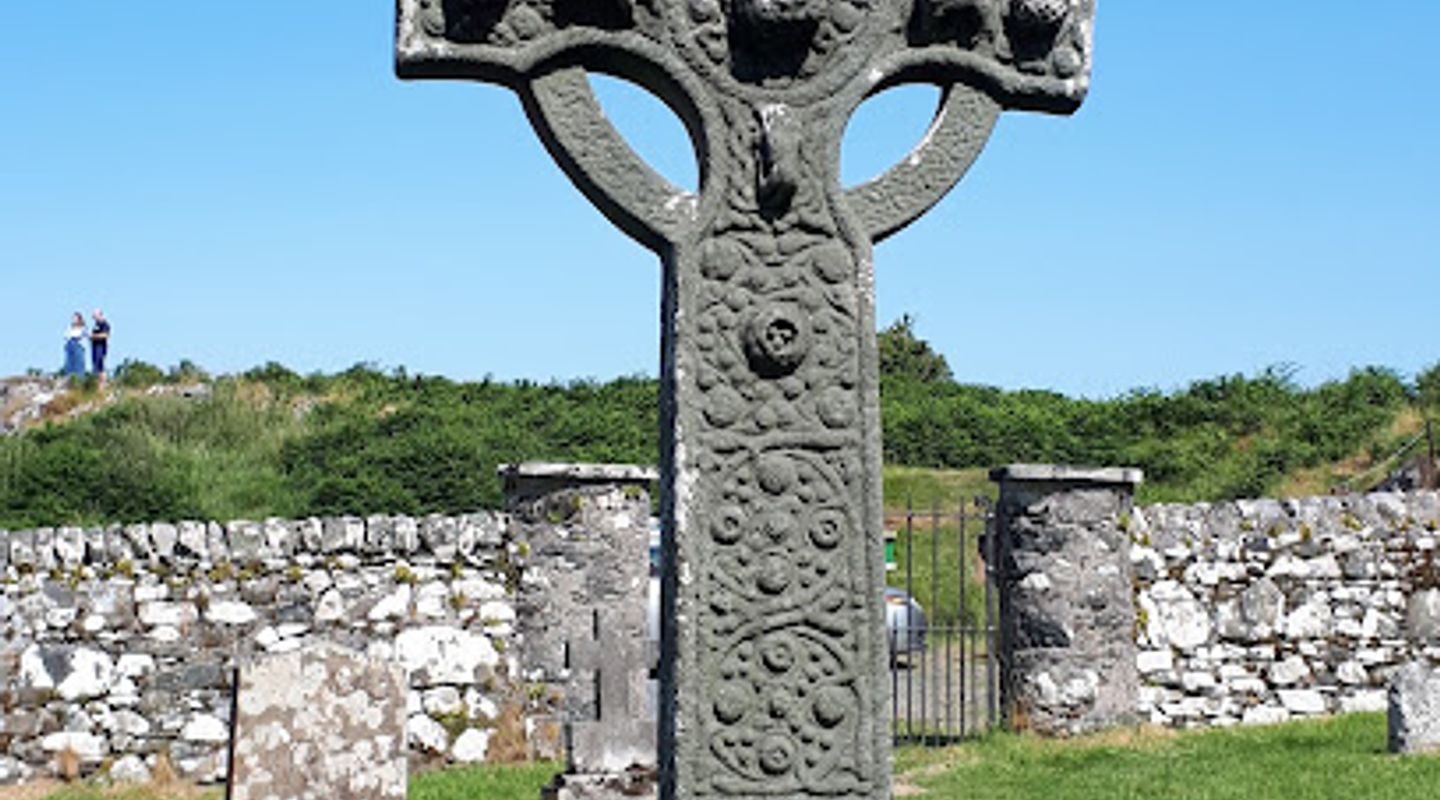
The Kildalton Cross on the Isle of Islay is an exceptionally well-preserved 8th-century Celtic high cross, renowned for its intricate biblical carvings and remarkable survival in its original setting. Adjacent to the ruins of Kildalton Chapel, this historic site offers a profound glimpse into early medieval Scottish Christianity and artistry, surrounded by a tranquil graveyard featuring medieval warrior tombs and carved stones.
On-site amenities
 Seating areas
 Information boards
Opening hours
- Every dayOpen 24 hours
Opening hours as listed on the venue’s Google Business Profile. Hours can change for services and special events, so check with the venue before you go.
- Address
- Unnamed Road, Isle of Islay PA42 7EE
- Website
Getting there
Bus
Car
Walking
Discover more about Kildalton Cross
An Enduring Symbol of Early Medieval Faith
The Kildalton Cross stands as one of Scotland's finest surviving Celtic high crosses, carved in the second half of the 8th century from a hard, green-grey epidiorite stone quarried nearby. Measuring 2.65 metres tall with arms spanning 1.32 metres, this monolithic ringed cross remains in its original location, a rare testament to its age and significance. Its surface is richly adorned with biblical scenes and intricate knotwork, including depictions of the Virgin Mary and Child, angels, David fighting a lion, Cain murdering Abel, and the sacrifice of Isaac. The cross’s detailed carvings reveal a sophisticated blend of Pictish and early Christian symbolism, linking it closely to other major crosses in Iona and western Scotland.
The Sacred Grounds of Kildalton Chapel
Adjacent to the cross lie the atmospheric ruins of Kildalton Chapel, a medieval parish church likely built in the late 12th or early 13th century. Though roofless today, the chapel’s stone walls and surviving interior features such as a piscina and aumbry evoke its former role as a spiritual and community hub for the local population. The chapel’s graveyard contains several medieval carved stones and warrior tombs, including a notable grave slab bearing a musket carving, which add layers of historical intrigue and reflect the evolving religious and social life of Islay through the centuries.
Artistry and Iconography of the Cross
The Kildalton Cross’s iconography is exceptional for its clarity and preservation. The east face features rich spiral-work and peacocks feeding on grapes, motifs reminiscent of the illuminated Book of Kells. The west face displays geometric snake-and-boss designs and four inward-facing lions symbolizing Christ as the Lion of Judah. The arms of the cross portray dramatic biblical narratives: Cain and Abel, Abraham’s sacrifice of Isaac, and the heroic figure of David. Circular bosses entwined with serpents decorate the shaft and arms, enhancing the cross’s visual complexity and spiritual symbolism.
Historical Context and Archaeological Insights
Excavations beneath the cross revealed human bones and evidence of an earlier cross-slab, indicating that the site was a center of Christian worship predating the current monument. The chapel and graveyard’s carved stones, some now housed in the Museum of Islay Life, further attest to the long-standing religious activity here. The site’s continuity from early Celtic Christianity through medieval times highlights its importance in the spiritual landscape of Islay.
The Cross’s Place in Scottish Heritage
The Kildalton Cross is often regarded as the finest surviving Celtic cross in Scotland and is comparable to the great high crosses of Iona. Its survival in situ and the quality of its craftsmanship make it a unique cultural treasure. The cross exemplifies early medieval Scottish artistry and faith, serving as a powerful symbol of the island’s Christian heritage and its connections to broader Celtic and Pictish traditions.
Visitor Experience and Surrounding Landscape
Visitors to Kildalton Cross can explore the peaceful churchyard and ruins, absorbing the serene atmosphere that has changed little in over a millennium. A short walk up the nearby hill offers stunning views over the chapel grounds and the surrounding Islay landscape, enhancing the sense of connection to the past. The site’s remote and tranquil setting, combined with its historical and artistic significance, provides a deeply moving experience for those interested in Scotland’s early Christian history.
Evendo Review Centre
 Google
Guest reviews
Best time to go
Quietest: Jan, Feb & Dec · before 6am or at 9pm
Busy times are Evendo estimates for a typical year, to help you plan. Actual crowds vary with events, school holidays and the weather.
Explore Kildalton Cross on the map
A handpicked selection of must-see spots near Kildalton Cross, mapped for you.
Get your free copy of our complete guide to Kildalton Cross, delivered straight to you.
Everything on this page, from opening hours and how to get there to Eve’s tips and the best time to go, in one PDF you can read offline, print or share.
Already have an account? Sign in
Your Kildalton Cross guide is ready.
We'll send it to · Not you? Sign out

Getting your guide ready…
We are putting together a fresh copy of the Kildalton Cross guide. This can take up to a minute.
This can take a few moments. If your browser asks, choose Allow so the download can start. You'll find the guide in your Downloads folder.
Nothing happened? Download it again
Sorry, the guide is taking longer than usual. Please try again in a minute, or get it by email instead.
Unlock the best of Kildalton Cross
Skip-the-line tickets, guided tours with entry, and walking tours of the area, booked in a few clicks.
 Tour with entry
4-Day Islay & Whisky Tour Including Admissions from Edinburgh
from $1,667.73 Tour with entry
Whisky Tour 3 Day Private Driver Guide to Isle of Islay
from $4,337.67 Tour with entry
4-Day Private Whisky Tour to Islay with Distillery Visits
from $6,128.22 Tour with entry
Edinburgh: 4-Day Privately Guided Islay Whisky Tour
from $8,736.76
Other nearby places you may find interesting
The closest places of the same kind, if this one is not quite what you had in mind.
-
-
-
-

-


Swipe for more places
More to explore near Kildalton Cross

 Best experiences near Kildalton Cross
 Best hotels near Kildalton Cross
 Best landmarks near Kildalton Cross
 Best attractions near Kildalton Cross
 Best shops near Kildalton Cross
 Best restaurants near Kildalton Cross
 Best bars near Kildalton Cross
Do you manage this location?
Take control to get all the benefits, like improved information, better appearance, and stronger visibility across AI-powered discovery.
Explore more

Explore more of Argyllshire
Explore Argyllshire: A Scottish paradise of rugged coastlines, ancient castles, and charming villages, offering a blend of natural beauty and rich history.
Explore Argyllshire
Explore more of United Kingdom
Discover the United Kingdom: A blend of rich history, stunning landscapes, and vibrant cities, offering a unique travel experience for every visitor.
Explore United Kingdom
