Marsh Mill Travel Guide
Free Guide: Explore Marsh Mill, a towering 18th-century windmill and Grade II* listed landmark showcasing Lancashire’s rich milling heritage.


A brief summary of Marsh Mill
Explore Marsh Mill, a towering 18th-century windmill and Grade II* listed landmark showcasing Lancashire’s rich milling heritage.
Marsh Mill is an iconic 18th-century tower windmill in Thornton-Cleveleys, Lancashire, built in 1794 by millwright Ralph Slater for Bold Hesketh. Once a working corn mill until the 1920s, it is now a fully restored Grade II* listed building, celebrated as one of the finest and most complete windmills in the UK. Standing over 70 feet tall with its distinctive patent sails and fantail, Marsh Mill offers a glimpse into England's milling heritage and industrial past.
On-site amenities
 Restrooms
 Seating areas
 Information boards
Opening hours
- MonClosed
- TueClosed
- WedClosed
- ThuClosed
- FriClosed
- Sat10:30 am–4:30 pm
- Sun10:30 am–4:30 pm
Opening hours as listed on the venue’s Google Business Profile. Hours can change for services and special events, so check with the venue before you go.
- Address
- 73 Fleetwood Rd N, Thornton-Cleveleys FY5 4AB
- Phone
- Website
Getting there
Bus
Car
Train and Walk
Discover more about Marsh Mill
Origins and Historical Significance
Marsh Mill was commissioned in 1794 by Bold Fleetwood Hesketh, a local landowner of Rossall Hall, and constructed by the renowned Fylde millwright Ralph Slater. Named after the marshy land in north Fylde that was drained for its construction, the mill became a vital part of the local agricultural economy. Initially, it ground various grades of flour, later shifting to animal feed production in the 19th century. Its operational life extended until the 1920s, after which it served diverse roles including a café and furniture store.
Architectural Features and Machinery
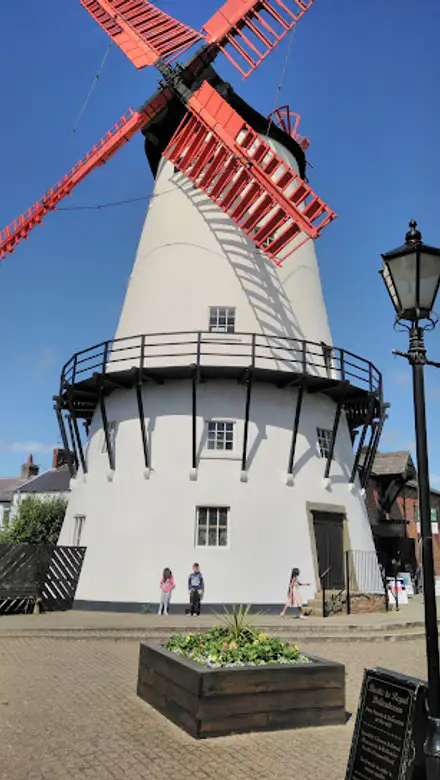
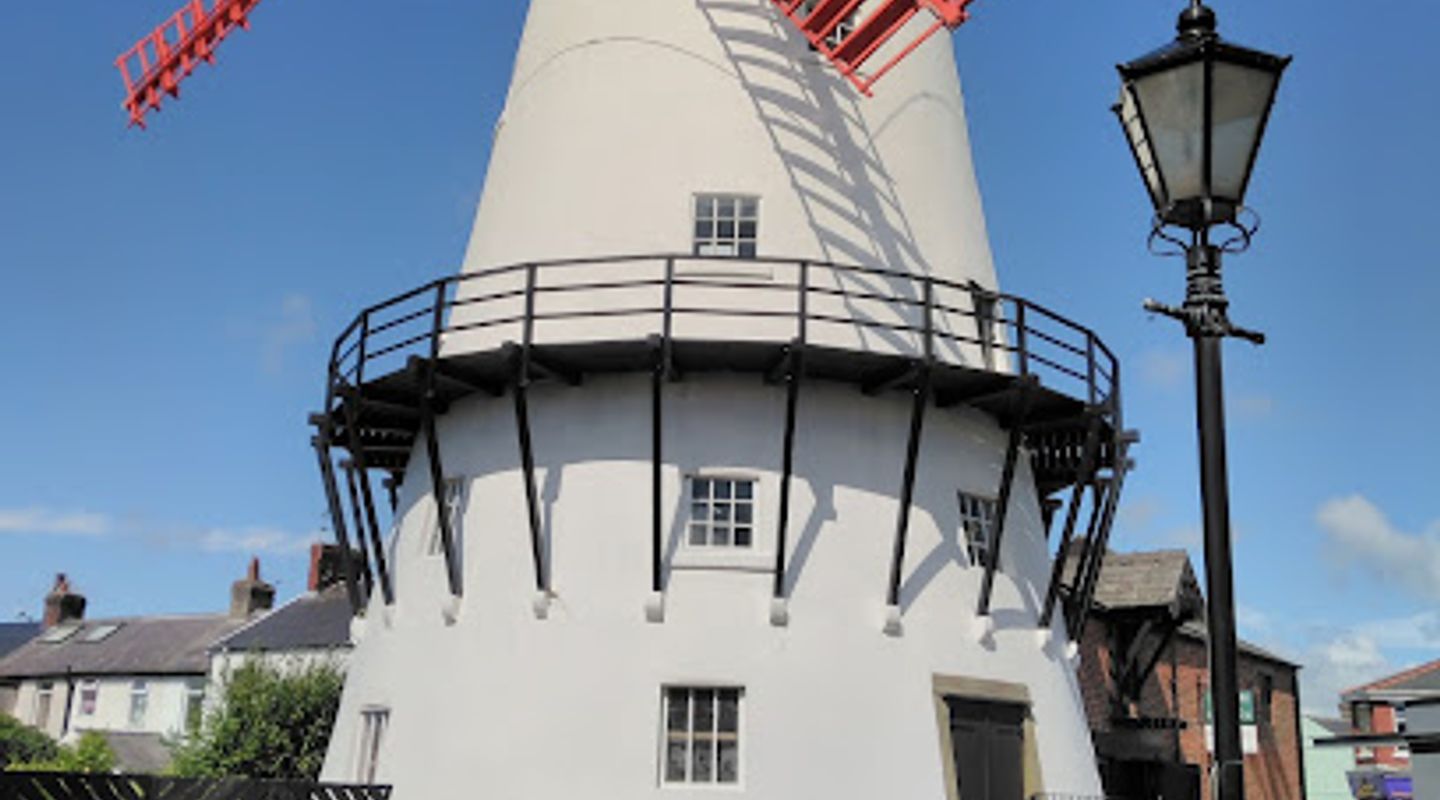
This tower mill stands over 70 feet (22.8 meters) tall with five storeys, tapering as it rises with plain square windows punctuating its brick-rendered facade. A two-storey kiln house adjoins the structure, historically used to dry grain before milling. The mill retains its original internal machinery, including four pairs of millstones on the stone floor and corn-dressing equipment on the meal floor. Its external wooden stage, supported by stone corbels, encircles the tower at the second-floor level, providing access to the sails. The mill’s sails were upgraded to patent sails in 1896, and a four-bladed fantail was added in the 19th century to orient the mill into the wind automatically.
Preservation and Restoration Efforts
Designated a Grade II* listed building in 1950, Marsh Mill is recognized for its exceptional completeness and historical importance. After decades of decline and damage, including sail loss due to storms in the 1960s, restoration efforts began in earnest from 1965 led by the Marsh Mill Preservation Society. Over 20 years, the mill was painstakingly restored, with further work completed in 1990 to return the machinery to full working order. These efforts have preserved Marsh Mill as the best-preserved windmill in northwest England and a rare surviving example of its type nationally.
Local Legacy and Cultural Context
Marsh Mill is not only a testament to the region’s agricultural and industrial heritage but also closely tied to the Hesketh family, influential in shaping the Fylde area, including the founding of Fleetwood. The mill is part of a once extensive network of windmills across the Fylde, which supported local farming communities. Its survival and restoration reflect the community’s dedication to preserving local history and craftsmanship.
Visitor Experience and Surroundings
Today, visitors to Marsh Mill can admire its towering silhouette and detailed craftsmanship, including the boat-shaped wooden cap and fantail. The surrounding area includes a reconstructed drying kiln and a craft village that enhances the historical atmosphere. The site offers a unique window into 18th- and 19th-century milling technology and rural life, making it a compelling destination for history enthusiasts and cultural tourists alike.
Notable Events and Anecdotes
A tragic event marked the mill’s history in 1930 when two women inspecting the mill for purchase died after the fantail platform collapsed. Despite such setbacks, the mill’s story is one of resilience and revival. The dedication of local preservationists ensured that Marsh Mill remains a landmark of industrial heritage, continuing to turn its sails and tell the story of England’s milling past.
Evendo Review Centre
 Google
Guest reviews
Best time to go
Quietest: Jan, Feb & Dec · before 3am
Busy times are Evendo estimates for a typical year, to help you plan. Actual crowds vary with events, school holidays and the weather.
Explore Marsh Mill on the map
A handpicked selection of must-see spots near Marsh Mill, mapped for you.
Get your free copy of our complete guide to Marsh Mill, delivered straight to you.
Everything on this page, from opening hours and how to get there to Eve’s tips and the best time to go, in one PDF you can read offline, print or share.
Already have an account? Sign in
Your Marsh Mill guide is ready.
We'll send it to · Not you? Sign out

Getting your guide ready…
We are putting together a fresh copy of the Marsh Mill guide. This can take up to a minute.
This can take a few moments. If your browser asks, choose Allow so the download can start. You'll find the guide in your Downloads folder.
Nothing happened? Download it again
Sorry, the guide is taking longer than usual. Please try again in a minute, or get it by email instead.
Other nearby places you may find interesting
The closest places of the same kind, if this one is not quite what you had in mind.
-
-
-
-
-


Swipe for more places
More to explore near Marsh Mill

 Best experiences near Marsh Mill
 Best hotels near Marsh Mill
 Best landmarks near Marsh Mill
 Best attractions near Marsh Mill
 Best shops near Marsh Mill
 Best restaurants near Marsh Mill
 Best bars near Marsh Mill
Do you manage this location?
Take control to get all the benefits, like improved information, better appearance, and stronger visibility across AI-powered discovery.
Explore more

Explore more of Blackpool
Discover Blackpool, the quintessential British seaside escape, where nostalgia meets excitement. Enjoy iconic attractions, sandy beaches, and vibrant local culture.
Explore Blackpool
Explore more of United Kingdom
Discover the United Kingdom: A blend of rich history, stunning landscapes, and vibrant cities, offering a unique travel experience for every visitor.
Explore United Kingdom