

Ben Lomond Travel Guide
Free Guide: Scotland’s most southerly Munro, rising above Loch Lomond with panoramic Highland views and a challenging yet rewarding hike to the summit.


A brief summary of Ben Lomond
Scotland’s most southerly Munro, rising above Loch Lomond with panoramic Highland views and a challenging yet rewarding hike to the summit.
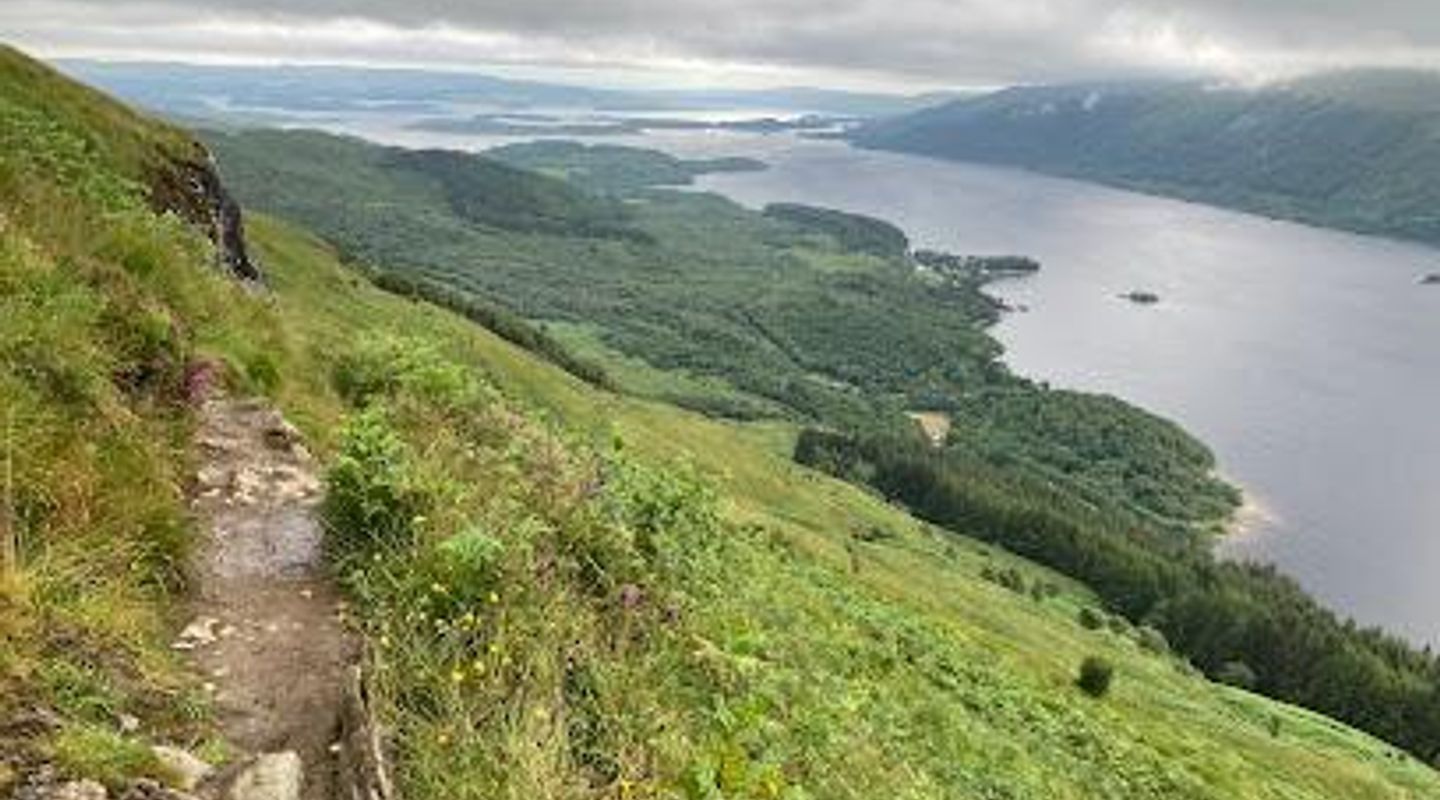
Ben Lomond, Scotland’s most southerly Munro, rises dramatically above the eastern shore of Loch Lomond in the Trossachs National Park. This iconic mountain offers a challenging but rewarding hike with a well-maintained path leading from Rowardennan up through woodland and open hillside to a broad summit ridge. From the top, panoramic views stretch across the length of Loch Lomond, its many islands, and deep into the Highlands, with peaks like Ben Nevis visible on clear days. The mountain is steeped in Scottish folklore and is a popular destination for both Munro-baggers and day hikers seeking a classic Highland experience.
On-site amenities
 Restrooms
 Drink options
 Drinking water
 Food options
 Seating areas
 Sheltered areas
 Trash bins
 Information boards
- Address
- Stirling FK8 3TS
Getting there
By car
By public transport and ferry
By bike
On foot
Discover more about Ben Lomond
A Highland Beacon Above Loch Lomond
Ben Lomond, standing at 974 metres (3,196 feet), is Scotland’s most southerly Munro and one of its most iconic mountains. It rises prominently from the eastern shore of Loch Lomond, forming a dramatic backdrop to the loch’s shimmering waters and scattered islands. The name Ben Lomond is thought to derive from Gaelic, meaning something like “beacon mountain” or “beetle-shaped mountain,” and for centuries it has served as a landmark for travelers and locals alike. From viewpoints around Luss or Ross Priory, the mountain appears almost like a shark’s fin, while from Inverbeg and beyond it takes on a more rounded, imposing profile.
The Hike to the Summit
The most popular route begins at the Rowardennan car park, where a clear, well-constructed path winds through ancient oak and birch woodland before emerging onto open moorland. The first section is relatively gentle, passing through managed forest where native trees are gradually reclaiming former plantations. After a couple of gates and a forestry track, the path begins to climb more steeply, with stone-pitched zigzags helping to ease the ascent. At Sron Aonaich, the “nose of the ridge,” the gradient eases and the full scale of the mountain unfolds ahead. The final push to the summit ridge is steep in places, but the path remains clear and well-defined, making it accessible to walkers of reasonable fitness.
Views and the Summit Experience
Reaching the summit ridge rewards hikers with one of the finest panoramas in southern Scotland. On a clear day, the view stretches the entire length of Loch Lomond, with its maze of islands and the Luss Hills on the western shore. To the north, the Trossachs and the Arrochar Alps unfold, with peaks like The Cobbler, Ben Vorlich, and Ben Ledi standing out. Further north, the distant bulk of Ben Nevis can often be seen, while to the west the islands of Arran, Bute, and the Kyles of Bute are visible. The summit area is broad enough to allow space for rest and reflection, with cairns and the trig point marking the highest point. The contrast between the loch’s calm waters below and the wild, open moorland above is striking.
History, Folklore and the Mountain’s Character
Ben Lomond has long held a place in Scottish history and legend. It is said to have been the lair of a fearsome dragon in local folklore, while other tales speak of a powerful giant buried within its slopes. The mountain’s strategic position overlooking the loch made it an important landmark in times of conflict, and its slopes have seen centuries of shepherding, hunting, and forestry. Today, it is managed in part by the National Trust for Scotland and forms a key part of Loch Lomond and The Trossachs National Park. The mountain’s character changes with the weather: on sunny days it feels accessible and inviting, but in mist or wind it quickly becomes a serious mountain environment.
Practicalities and the Mountain Environment
The standard route from Rowardennan is around 13 km (8 miles) round trip with about 930 metres of ascent, typically taking between 4 and 6 hours depending on pace and conditions. The path is generally good underfoot, but there are rocky sections and exposed areas, especially on the upper slopes and ridge. Weather can change rapidly, and conditions at the summit are often much colder and windier than at the base. Hikers should carry full hillwalking gear, including waterproofs, warm layers, food, water, and a map and compass (or GPS), even on seemingly benign days. The mountain is popular year-round, with peak numbers in summer, and the car park at Rowardennan can fill early on fine weekends.
Wildlife and the Surrounding Landscape
The lower slopes of Ben Lomond support a mix of woodland and moorland habitats, home to red deer, roe deer, and a variety of birds including black grouse, ptarmigan, and raptors such as buzzards and peregrine falcons. Pine martens and other smaller mammals also inhabit the area, though they are more elusive. The surrounding national park includes ancient woodlands, lochs, and glens, offering a rich tapestry of landscapes for exploration. The mountain’s position at the edge of the Highlands makes it a perfect introduction to Munro-bagging, combining accessibility with a genuine sense of wilderness and grandeur.
Evendo Review Centre
 Google
Guest reviews
Best time to go
Quietest: Jan, Feb & Dec · before 6am or from 8pm
Busy times are Evendo estimates for a typical year, to help you plan. Actual crowds vary with events, school holidays and the weather.
Explore Ben Lomond on the map
A handpicked selection of must-see spots near Ben Lomond, mapped for you.
Get your free copy of our complete guide to Ben Lomond, delivered straight to you.
Everything on this page, from opening hours and how to get there to Eve’s tips and the best time to go, in one PDF you can read offline, print or share.
Already have an account? Sign in
Your Ben Lomond guide is ready.
We'll send it to · Not you? Sign out

Getting your guide ready…
We are putting together a fresh copy of the Ben Lomond guide. This can take up to a minute.
This can take a few moments. If your browser asks, choose Allow so the download can start. You'll find the guide in your Downloads folder.
Nothing happened? Download it again
Sorry, the guide is taking longer than usual. Please try again in a minute, or get it by email instead.
Unlock the best of Ben Lomond
Skip-the-line tickets, guided tours with entry, and walking tours of the area, booked in a few clicks.

Other nearby places you may find interesting
The closest places of the same kind, if this one is not quite what you had in mind.
-
-
-
-
-


Swipe for more places
More to explore near Ben Lomond

 Best experiences near Ben Lomond
 Best hotels near Ben Lomond
 Best landmarks near Ben Lomond
 Best attractions near Ben Lomond
 Best shops near Ben Lomond
 Best restaurants near Ben Lomond
 Best bars near Ben Lomond
Do you manage this location?
Take control to get all the benefits, like improved information, better appearance, and stronger visibility across AI-powered discovery.
Explore more

Explore more of Bute
Discover the Isle of Bute in the United Kingdom, a serene island retreat offering stunning landscapes, historic landmarks, and a vibrant local culture.
Explore Bute
Explore more of United Kingdom
Discover the United Kingdom: A blend of rich history, stunning landscapes, and vibrant cities, offering a unique travel experience for every visitor.
Explore United Kingdom
