

Free Bute Travel Guide & Mobile App
Explore Bute with free travel guides. Discover regional history, expert tips, proposed trips, and audio guides on web or mobile app.


Explore Bute’s medieval castle, country-house grandeur, beaches, coastal walks and island scenery from Rothesay and beyond.
Read more about Bute
When is the best time to visit Bute?
Best: June–August · 17–19°C| Month | High (°C) | Rainfall (mm) |
|---|---|---|
| January | 6 | 120 |
| February | 6 | 100 |
| March | 8 | 90 |
| April | 12 | 80 |
| May | 14 | 70 |
| June (best) | 17 | 70 |
| July (best) | 19 | 80 |
| August (best) | 18 | 90 |
| September | 16 | 90 |
| October | 12 | 110 |
| November | 8 | 120 |
| December | 6 | 130 |
Getting to and around Bute
How to get there
Transportation
Best attractions in Bute
Bute’s attractions combine accessible heritage with coastal and countryside experiences. Rothesay Castle is the island’s principal medieval monument, while Bute Museum introduces visitors to local archaeology, natural history and social change. Mount Stuart provides a very different encounter: a richly detailed Gothic Revival house set within extensive grounds, where architecture, collections and landscape are closely connected. Around the island, beaches such as Ettrick Bay and Scalpsie Bay offer space for walking, picnicking and wildlife watching, although facilities and conditions vary. The roads towards Kilchattan Bay and Kingarth lead to early Christian remains, rural scenery and views across the Firth of Clyde. Woodland paths, Loch Fad and the coastal edges around Port Bannatyne add opportunities for walking, cycling and quiet observation. Bute is not defined by a single large attraction; its appeal lies in the changing relationship between harbour town, estate, farm, beach, archaeological site and open water.
-
Tourist attraction
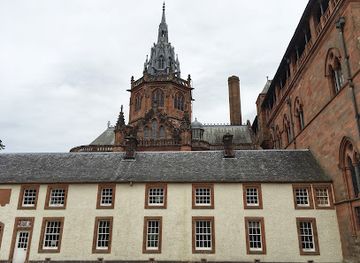
Mount Stuart
Explore Mount Stuart, a breathtaking Victorian Gothic palace on the Isle of Bute, blending rich heritage, architectural grandeur, and stunning gardens.
-
Fortress
Dunadd Fort
Explore Dunadd Fort, the ancient royal seat of the Gaelic kings of Dál Riata, where history, ritual, and panoramic views converge in Argyll’s Kilmartin Glen.
-
Mountain peak
Ben Lomond
Scotland’s most southerly Munro, rising above Loch Lomond with panoramic Highland views and a challenging yet rewarding hike to the summit.
-
Castle
Rothesay Castle
Explore Scotland’s only circular castle with rich royal history and stunning waterfront views on the Isle of Bute.


Best landmarks in Bute
Rothesay Castle is Bute’s clearest medieval landmark, distinguished by its circular curtain wall and four projecting towers beside the modern town. Rothesay’s Victorian seafront and broad promenade form another defining ensemble, reflecting the era when Clyde steamers made the island a popular resort. Mount Stuart is the island’s most elaborate architectural landmark: its dramatic exterior, ornate interiors and formal setting embody the nineteenth-century ambitions of the Marquesses of Bute. At Kingarth, St Blane’s Church and its burial ground preserve an early Christian setting whose importance extends beyond the surviving medieval fabric. Dunagoil’s defensive earthworks occupy a striking southern coastal position and connect the landscape with Bute’s prehistoric and later fortified past. The Kyles of Bute, viewed from the island’s northern roads, provide a natural landmark of equal importance, showing the waterways that have long shaped Bute’s settlement, trade and identity.
-
Tourist attraction
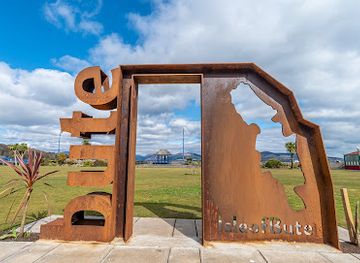
Welcome To Bute Sculpture
A striking metal welcome sign celebrating arrival on Scotland's artistic island, perfectly framed by historic gardens.
Explore Bute on the map
Plan your trip on one map. See where the top cities, national parks and sights are, and book hotels and experiences in a few clicks.
Best hotels in Bute
Best restaurants in Bute
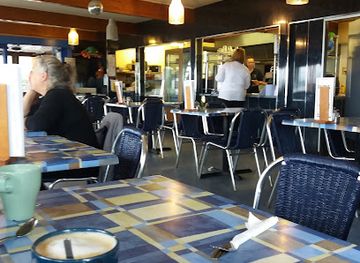
Dining on Bute is centred mainly on Rothesay, with additional cafés, pubs and seasonal food stops around the island. The culinary character reflects the wider Scottish west coast while making practical use of island and regional produce: seafood, fish, beef, lamb, dairy products, baking and locally sourced vegetables commonly appear on menus. Rothesay offers the broadest choice, from informal cafés and traditional pub food to restaurants serving contemporary Scottish dishes. Rural inns and small eateries provide a slower setting for meals, while the harbour and seafront are natural places to look for seafood when supplies and menus permit. Local shops and food outlets are useful for assembling picnics for beaches and walks. Visitors should distinguish between genuinely local products and items simply marketed with Scottish branding, and should check seasonal opening arrangements outside Rothesay.
-
Cafe
Ettrick Bay Tea Room
A historic seaside tea room offering stunning bay views, homemade treats, and warm hospitality on the Isle of Bute.
-
Family friendly
Harry Haw's
Family-friendly dining with fresh seafood and warm hospitality in the heart of Rothesay, Isle of Bute.
-
Cafe
The Kettledrum
Award-winning café and bistro in Rothesay offering traditional Scottish dishes and harbour views in a cosy, welcoming setting.
-
Restaurant
The Diner
Classic American diner vibes with hearty portions and friendly service in the heart of Rothesay, Isle of Bute.


Best bars in Bute
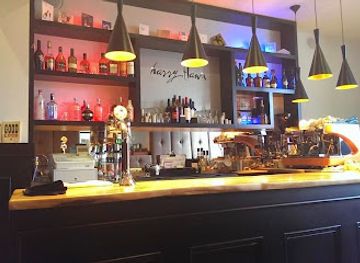
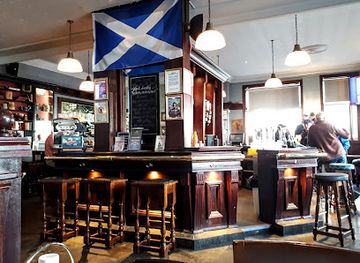
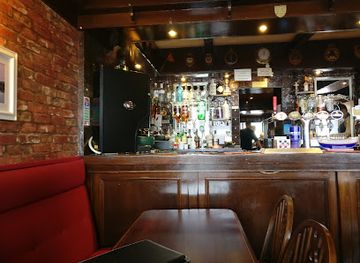
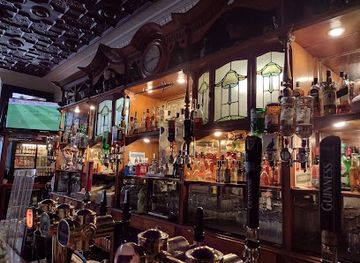
Bute’s evening life is modest and sociable rather than centred on large nightclubs. Rothesay has the greatest concentration of traditional pubs, hotel bars, restaurants and places to meet after the last ferry arrivals, with occasional live music or community entertainment depending on the season. Port Bannatyne and other settlements offer smaller-scale pub hospitality, while rural evenings are generally quiet and shaped by local events, dining and conversation. The island is not a major clubbing destination, and visitors should not assume late-night venues or extensive transport will be available outside Rothesay. A drink in a traditional pub can be part of an island visit, but cafés, walks, harbour views and a relaxed meal are equally characteristic ways to spend the evening. Check current arrangements locally, particularly in winter and on weekdays.
-
Pub
Drouthy Neebors
A welcoming Scottish pub and restaurant on Largs’ Main Street, perfect for hearty meals, drinks, and live sports in a lively atmosphere.
-
Pub
Black Bull Inn
Traditional Scottish pub and restaurant in Rothesay, offering hearty meals, real ales, and marina views in a warm, family-friendly setting.
-
Pub
The Golfers
Historic Art Nouveau pub with lively music, great pints, and a warm community spirit in the heart of Rothesay, Isle of Bute.
-
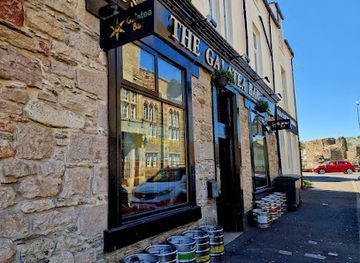
Bar
The Galatea
A welcoming traditional bar in Rothesay with a charming beer garden and authentic Scottish hospitality on the Isle of Bute.
Best shops in Bute
Shopping on Bute is concentrated in Rothesay, where the traditional town centre provides everyday services alongside independent shops, cafés, galleries and places selling gifts or locally themed products. The selection is practical rather than metropolitan, with seasonal variation in opening days and stock. Visitors can look for Scottish food products, baking, preserves, whisky and craft items, as well as books and souvenirs connected with the island’s history and maritime setting. Small galleries and makers may offer artwork, textiles, jewellery or ceramics, while farm and food outlets can provide ingredients for picnics when available. The island’s markets and community events are occasional rather than a permanent large-scale retail attraction, so dates should be checked locally. Rothesay is the best place to buy essentials before travelling to the more remote beaches, sites and northern roads.
-
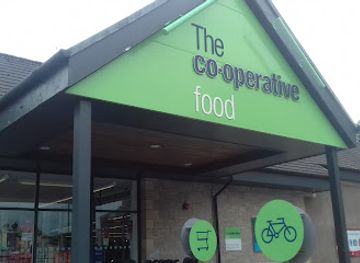
Convenience Store
Co-op Food - Rothesay - Bridge Street
Conveniently located in Rothesay, Co-op Food Bridge Street offers daily essentials, local flavors, and modern retail comforts from dawn till late evening.
-
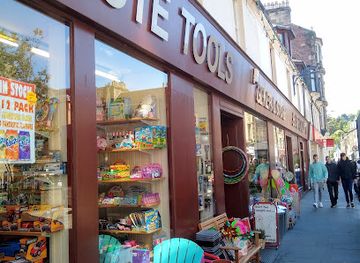
Hardware Shop
Bute Tools
A family-run hardware and general store in Rothesay offering extensive DIY supplies and local gifts with friendly service on the Isle of Bute.
-
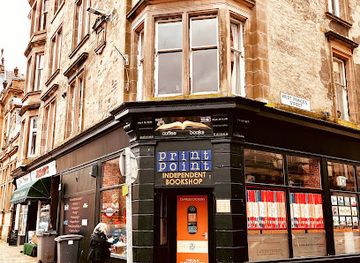
Book Shop
Print Point
Rothesay’s cherished independent bookshop blending literary treasures with creative print and stationery services since 1997.
-
Animal feed shop
Mill Cottage Garden Centre, Pet Shop and Feed Store
A charming family-run garden centre and pet shop in Rothesay, offering plants, pet supplies, and local expertise on the Isle of Bute.
Get your free copy of our complete guide to Bute, delivered straight to you.
Everything on this page, from attractions and restaurants to essentials and local phrases, in one PDF you can read offline, print or share.
Already have an account? Sign in
Your Bute guide is ready.
We'll send it to · Not you? Sign out

Getting your guide ready…
We are putting together a fresh copy of the Bute guide. This can take up to a minute.
This can take a few moments. If your browser asks, choose Allow so the download can start. You'll find the guide in your Downloads folder.
Nothing happened? Download it again
Sorry, the guide is taking longer than usual. Please try again in a minute, or get it by email instead.
Bute essentials
Currency and Payment
Safety
Emergency Situations
Do's and Don'ts
Local Tips
From Eve
Local phrases worth knowing
You don't need to get them perfect. A few words go a long way, and locals appreciate the effort.
Basics
| English | Local | Say it |
|---|---|---|
| Hello | Hiya | [Hī-yə] |
| Goodbye | Cheerio | [Cheer-ee-oh] |
| Yes | Aye | [Āy] |
| No | Naw | [Naw] |
| Please/You're welcome | Please/No bother | [Plēz/Nō bŏth-er] |
| Thank you | Cheers | [Chērz] |
| Excuse me/Sorry | Scuse me/Sorry | [Skūz mē/Sŏr-ē] |
| How are you? | How's it gaun? | [Hows it goun?] |
| Fine. And you? | Aye, awright. An you? | [Āy, aw-right. An yū?] |
| Do you speak English? | Dae ye speak English? | [Dā yē spēk Ēng-lĭsh?] |
| I don't understand | Ah dinnae understand | [Ah din-ā un-dər-stănd] |
Eating & Drinking
| English | Local | Say it |
|---|---|---|
| I'd like to see the menu, please | Cud ye show me the menu, please? | [Cud yē shō me thə men-yū, plēz?] |
| I don't eat meat | Ah dinnae eat meat | [Ah din-ā ēat mēt] |
| Cheers! | Cheers! | [Chērz!] |
| I would like to pay, please | Ah'd like tae pay, please | [Ah'd līk tā pay, plēz] |
Emergencies
| English | Local | Say it |
|---|---|---|
| Help! | Help! | [Help!] |
| Go away! | Get lost! | [Get lŏst!] |
| Call the Police! | Phone the polis! | [Fōn thə pō-lis!] |
| Call a doctor! | Get a doctor! | [Get ə dŏk-tər!] |
| I'm lost | Ah'm lost | [Ah'm lŏst] |
| I'm ill | Ah'm unwell | [Ah'm un-wel] |
Shopping
| English | Local | Say it |
|---|---|---|
| I'd like to buy... | Ah'd like tae buy... | [Ah'd līk tā bī...] |
| I'm just looking | Ah'm just lookin' | [Ah'm jəst lūk-in'] |
| How much is it? | Whit’s the price? | [Whit's thə prīs?] |
| That's too expensive | That's far too dear | [Thăts fār tū dēr] |
| Can you lower the price? | Kin ye gie me a better price? | [Kin yē gē mē ə bet-er prīs?] |
Time & Numbers
| English | Local | Say it |
|---|---|---|
| What time is it? | Whit time is it? | [Whīt tīm is it?] |
| It's one o'clock | It's one o'clock | [It's wān ə-klŏk] |
| Half past (10) | Half past ten | [Hāf pāst ten] |
| Morning | Mornin' | [Morn-in'] |
| Afternoon | Afternoon | [Af-tər-nūn] |
| Evening | Evenin' | [Eve-nin'] |
| Yesterday | Yestreen | [Yest-rēn] |
| Today | T'day | [T'dā] |
| Tomorrow | The morn | [Thə morn] |
| 1 | Wan | [Wən] |
| 2 | Twa | [Twā] |
| 3 | Three | [Thrē] |
| 4 | Four | [Fōr] |
| 5 | Five | [Fīve] |
| 6 | Six | [Siks] |
| 7 | Seven | [Sev-ən] |
| 8 | Eight | [Āt] |
| 9 | Nine | [Nīn] |
| 10 | Ten | [Ten] |
Transport & Directions
| English | Local | Say it |
|---|---|---|
| Where's a/the...? | Whar's a/the...? | [Whar's ə/thə...?] |
| What's the address? | Whit’s the address? | [Whit's thə ə-drĕs?] |
| Can you show me (on the map)? | Kin ye show me (on the map)? | [Kin yē shō me (on thə map)?] |
| When's the next (bus)? | When's the next (bus)? | [When's thə nĕkst (bŭs)?] |
| A ticket (to ....) | A ticket (ta ....) | [A tik-it (tə ....)] |
History of Bute
Prehistoric Bute and Dunagoil
Bute’s archaeological record reaches back to prehistoric settlement, with evidence of early communities using the island’s fertile ground, coastal resources and defensible locations. Dunagoil, on the south-western peninsula, is associated with an important prehistoric and later fortified site overlooking the Firth of Clyde. Its surviving earthworks and setting demonstrate how the island’s position could support both agriculture and control of maritime movement. The evidence is fragmentary, but it places Bute within the wider pattern of long occupation found across the islands and western seaboard of Scotland.
Early Christian Foundations
Christian influence became established on Bute during the early medieval period. St Blane’s Church and its surrounding burial ground at Kingarth preserve the memory of an early religious centre traditionally linked with Saint Blane. The present remains are later than the earliest missionary period, but the site’s location and dedication point to the continuing importance of Kingarth in the island’s religious history. Small ecclesiastical communities such as this helped connect Bute with the wider Christian networks of Argyll and the western Scottish islands.
Norse Seas and Scottish Lordship
For centuries Bute occupied a maritime zone influenced by Norse power, Gaelic culture and the expanding Scottish kingdom. The surrounding Firth of Clyde provided routes between the mainland, the islands and the Irish Sea, making control of Bute strategically valuable. By the twelfth century the island was associated with the Stewart family, whose growing influence in western Scotland later became central to the Scottish monarchy. This overlapping history helps explain why Bute’s heritage combines Gaelic, Norse and royal Scottish elements.
Rothesay Castle and the Stewart Monarchy
Rothesay Castle was developed as a major royal stronghold during the later medieval period, probably beginning in the thirteenth century and undergoing substantial rebuilding afterwards. Its circular curtain wall, four substantial towers and broad moat made it an unusual and formidable structure. Bute’s position gave the castle military and administrative importance, while Rothesay grew as the island’s principal settlement. The castle was connected with the Stewarts and remained a visible symbol of royal authority in the western seaways.
Medieval Church and Estate Society
Medieval Bute was shaped by parish organisation, landed estates and religious institutions as well as by the castle. Churches at sites such as Kingarth and Rothesay served communities whose livelihoods depended on farming, fishing and maritime exchange. Over time, estate ownership influenced land use, settlement patterns and access to resources. The surviving churches, burial grounds, field patterns and estate landscapes are reminders that island history was not confined to royal events: it was also formed by generations of tenants, clergy, craftsmen and seafarers.
Agriculture, Quarrying and Clyde Connections
From the eighteenth century onwards, Bute’s economy remained closely connected to the Clyde while retaining a strong agricultural base. Farming estates supplied local communities and markets, and quarrying became an important island industry, with stone transported by sea. Rothesay developed as a harbour and service centre, linking the island to mainland trade. These activities brought practical changes to roads, piers and buildings, while the Clyde’s steamship network increasingly made Bute accessible to excursionists and holiday visitors.
Victorian Tourism and Mount Stuart
The nineteenth century transformed Rothesay into a fashionable Clyde resort. Steamers enabled large numbers of visitors to reach the island for promenades, bathing, excursions and seasonal entertainment, encouraging hotels, villas and public improvements. At the same time, the Marquesses of Bute created Mount Stuart, one of Britain’s most ambitious Gothic Revival houses, after the earlier residence was damaged by fire. Its architecture and interiors expressed aristocratic wealth, Catholic identity and medievalist taste, while the estate helped shape the cultural landscape encountered by visitors today.
Bute in Photos
Browse through our photo collection highlighting the charm and character of the destination.
Neighbouring regions of Bute
The closest regions to Bute, if you have time for more than one.
-

-

-

-

-


Swipe for more regions
Explore more

Explore more of United Kingdom
Discover the United Kingdom: A blend of rich history, stunning landscapes, and vibrant cities, offering a unique travel experience for every visitor.
Explore United Kingdom