Royston Cave Travel Guide
Free Guide: Discover the mysterious medieval carvings and legends beneath Royston’s historic crossroads in this unique underground chalk cave.


A brief summary of Royston Cave
Discover the mysterious medieval carvings and legends beneath Royston’s historic crossroads in this unique underground chalk cave.
Royston Cave is a unique, man-made chalk chamber beneath the crossroads of Ermine Street and Icknield Way in Royston, England. Famous for its mysterious medieval carvings, the cave’s origins remain debated, with theories linking it to Knights Templar, hermits, or even a prison. Visitors can explore this atmospheric site on guided tours that reveal its rich religious symbolism and enduring mysteries.
On-site amenities
 Restrooms
 Information boards
 Visitor centre
 Seating areas
Opening hours
- MonClosed
- TueClosed
- WedClosed
- ThuClosed
- FriClosed
- Sat1 pm–4 pm
- Sun1 pm–4 pm
Opening hours as listed on the venue’s Google Business Profile. Hours can change for services and special events, so check with the venue before you go.
- Address
- Katherine's Yard, Melbourn St, Royston SG8 7BZ
- Phone
- Website
Getting there
Train and Walk
Car
Bus
Discover more about Royston Cave
A Hidden Medieval Chamber Beneath Royston
Royston Cave is an artificial bell-shaped chamber carved into chalk bedrock beneath the historic crossroads of Ermine Street and Icknield Way in Royston, Hertfordshire. Measuring approximately 8 meters high and 5 meters in diameter, the cave features an octagonal podium encircling its interior. It was rediscovered in 1742 during construction work and has since captivated historians and visitors alike due to its mysterious purpose and remarkable medieval carvings.
Enigmatic Carvings and Religious Symbolism
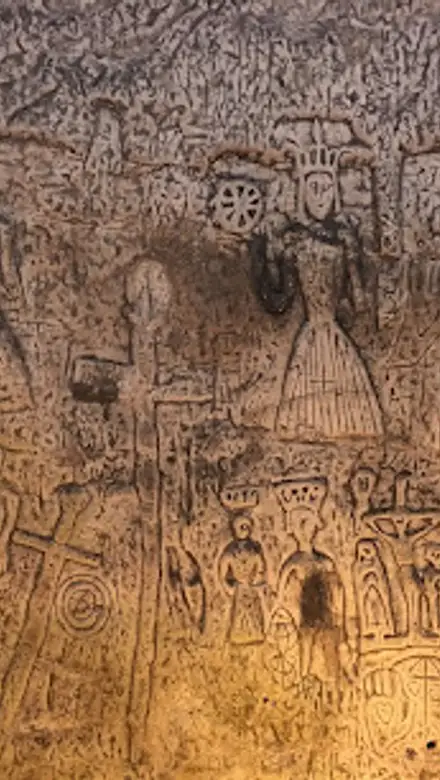
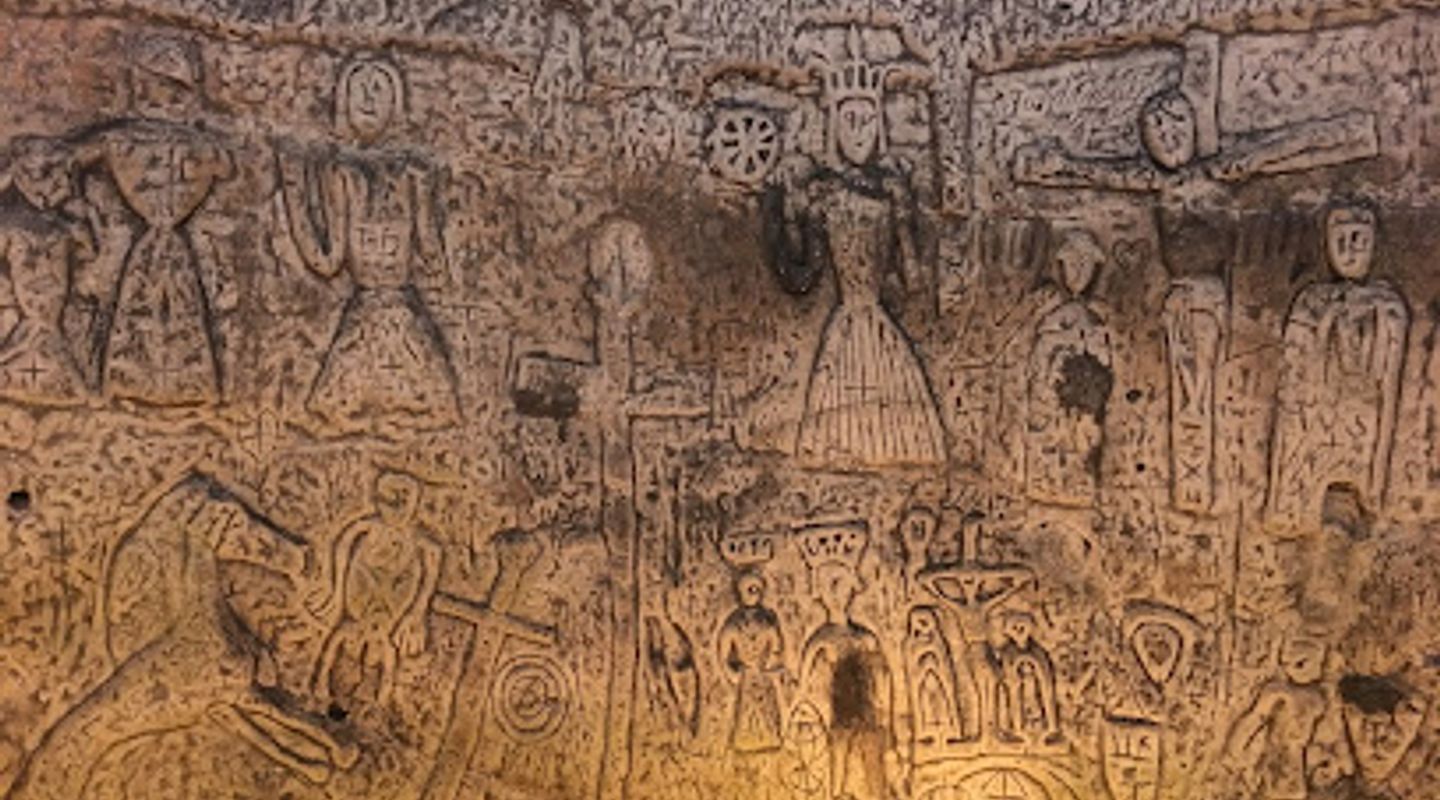
The cave’s walls are adorned with numerous medieval carvings, many depicting religious figures such as St. Catherine of Alexandria, St. Lawrence, St. Christopher, King Richard I (The Lionheart), and King David. A notable panel is believed to memorialize Jacques de Molay, the last Grand Master of the Knights Templar. Other carvings include pagan symbols like a Sheila-na-gig, suggesting a complex spiritual significance. The artistry is often considered amateurish, implying the work of a hermit or local craftsman rather than professional artists.
Origins and Theories Surrounding the Cave
The cave’s origin and purpose remain subjects of debate. Popular theories include its use as a secret worship site for the Knights Templar before their suppression in 1312, a hermitage for religious solitude, or even a prison cell constructed in the 16th century. Archaeological research suggests the carvings date from the late 15th century, possibly linked to a hermit who lived in the area. Despite its legendary associations with Templars and Freemasons, no definitive evidence confirms these connections.
Visiting Royston Cave Today
Today, Royston Cave is a protected Grade I listed building and scheduled ancient monument, open to the public on weekends and bank holidays from April to September. Guided tours lasting about 30 to 45 minutes offer insights into the cave’s history, carvings, and the many mysteries it holds. Due to its delicate condition, visitor numbers are limited, and advance online booking is recommended. The cave’s atmospheric interior provides a rare glimpse into medieval religious life and local folklore.
The Cave’s Place in Local Heritage and Mystery
Royston Cave remains one of England’s most intriguing historical sites, blending folklore, religious symbolism, and medieval craftsmanship. Its location at a crossroads of ancient routes and the presence of carvings spanning Christian and pagan motifs continue to inspire curiosity. The cave’s preservation challenges underscore its fragility and the dedication of those committed to safeguarding this enigmatic heritage for future generations.
Surroundings and Complementary Attractions
Situated in the market town of Royston, the cave is near other historical landmarks, including the Royston Cross and remains of an Augustinian priory. Visitors often combine a cave tour with exploring Royston’s charming streets, local museums, and countryside walks. The town’s rich history and the cave’s mysterious allure make it a compelling destination for history enthusiasts and curious travelers alike.
Evendo Review Centre
 Google
Guest reviews
Best time to go
Quietest: Jan, Feb & Dec · before 8am or from 9pm
Busy times are Evendo estimates for a typical year, to help you plan. Actual crowds vary with events, school holidays and the weather.
Explore Royston Cave on the map
A handpicked selection of must-see spots near Royston Cave, mapped for you.
Get your free copy of our complete guide to Royston Cave, delivered straight to you.
Everything on this page, from opening hours and how to get there to Eve’s tips and the best time to go, in one PDF you can read offline, print or share.
Already have an account? Sign in
Your Royston Cave guide is ready.
We'll send it to · Not you? Sign out

Getting your guide ready…
We are putting together a fresh copy of the Royston Cave guide. This can take up to a minute.
This can take a few moments. If your browser asks, choose Allow so the download can start. You'll find the guide in your Downloads folder.
Nothing happened? Download it again
Sorry, the guide is taking longer than usual. Please try again in a minute, or get it by email instead.
Other nearby places you may find interesting
The closest places of the same kind, if this one is not quite what you had in mind.
-
-
-
-
-


Swipe for more places
More to explore near Royston Cave

 Best experiences near Royston Cave
 Best hotels near Royston Cave
 Best landmarks near Royston Cave
 Best attractions near Royston Cave
 Best shops near Royston Cave
 Best restaurants near Royston Cave
 Best bars near Royston Cave
Do you manage this location?
Take control to get all the benefits, like improved information, better appearance, and stronger visibility across AI-powered discovery.
Explore more

Explore more of Cambridgeshire
Discover the historic charm and natural beauty of Cambridgeshire, a picturesque county in the UK known for its prestigious university, scenic countryside, and cultural festivals.
Explore Cambridgeshire
Explore more of United Kingdom
Discover the United Kingdom: A blend of rich history, stunning landscapes, and vibrant cities, offering a unique travel experience for every visitor.
Explore United Kingdom