

Llangollen Bridge Travel Guide
Free Guide: A medieval stone bridge spanning the River Dee, blending centuries of history with stunning river valley views in the heart of Llangollen.


A brief summary of Llangollen Bridge
A medieval stone bridge spanning the River Dee, blending centuries of history with stunning river valley views in the heart of Llangollen.
Llangollen Bridge, spanning the River Dee in North Wales, is a medieval stone bridge originally built around 1345 by Bishop John Trevor I. Known as one of the 'Seven Wonders of Wales,' it has been widened and rebuilt multiple times, blending historical charm with functional adaptations including a 19th-century railway extension. Its picturesque arches, large stone cutwaters, and riverside setting make it a captivating landmark rich in history and scenic views.
On-site amenities
 Restrooms
 Drink options
 Food options
 Seating areas
 Information boards
Opening hours
- Every dayOpen 24 hours
Opening hours as listed on the venue’s Google Business Profile. Hours can change for services and special events, so check with the venue before you go.
- Address
- Castle St, Llangollen LL20 8NY
- Website
Getting there
Train
Bus
Car
Discover more about Llangollen Bridge
Origins and Early History of Llangollen Bridge
Llangollen Bridge’s origins trace back to the mid-14th century when John Trevor I, Bishop of St Asaph, commissioned the first stone bridge around 1345. It replaced earlier wooden structures that were vulnerable to the River Dee’s floods. The bridge was strategically important, possibly linked to military campaigns such as the 1114 Scottish incursion into North Wales. The earliest official record dates from 1284, indicating a long-standing crossing point at Llangollen.
Architectural Evolution and Structural Features
Over the centuries, the bridge underwent several reconstructions and widenings, notably in the 16th century and later in 1873 and 1968 to accommodate increasing road traffic. A significant 19th-century addition was the extension at the northern end to carry a railway line, including a stone tower with a castellated parapet that once housed a café before its demolition in the 1930s. The bridge’s defining features include its large V-shaped stone cutwaters, which divert river flow around the piers and provide extended pedestrian viewing points.
Historical Significance and Cultural Heritage
Llangollen Bridge is celebrated as one of the 'Seven Wonders of Wales,' admired for its picturesque setting and enduring medieval craftsmanship. It has witnessed centuries of local life, including fishing traditions using coracles, and dramatic events such as the 1901 incident involving a local man in distress. The bridge’s proximity to other historic sites like Castell Dinas Brân and the Horseshoe Falls enriches its cultural landscape.
Scenic and Environmental Context
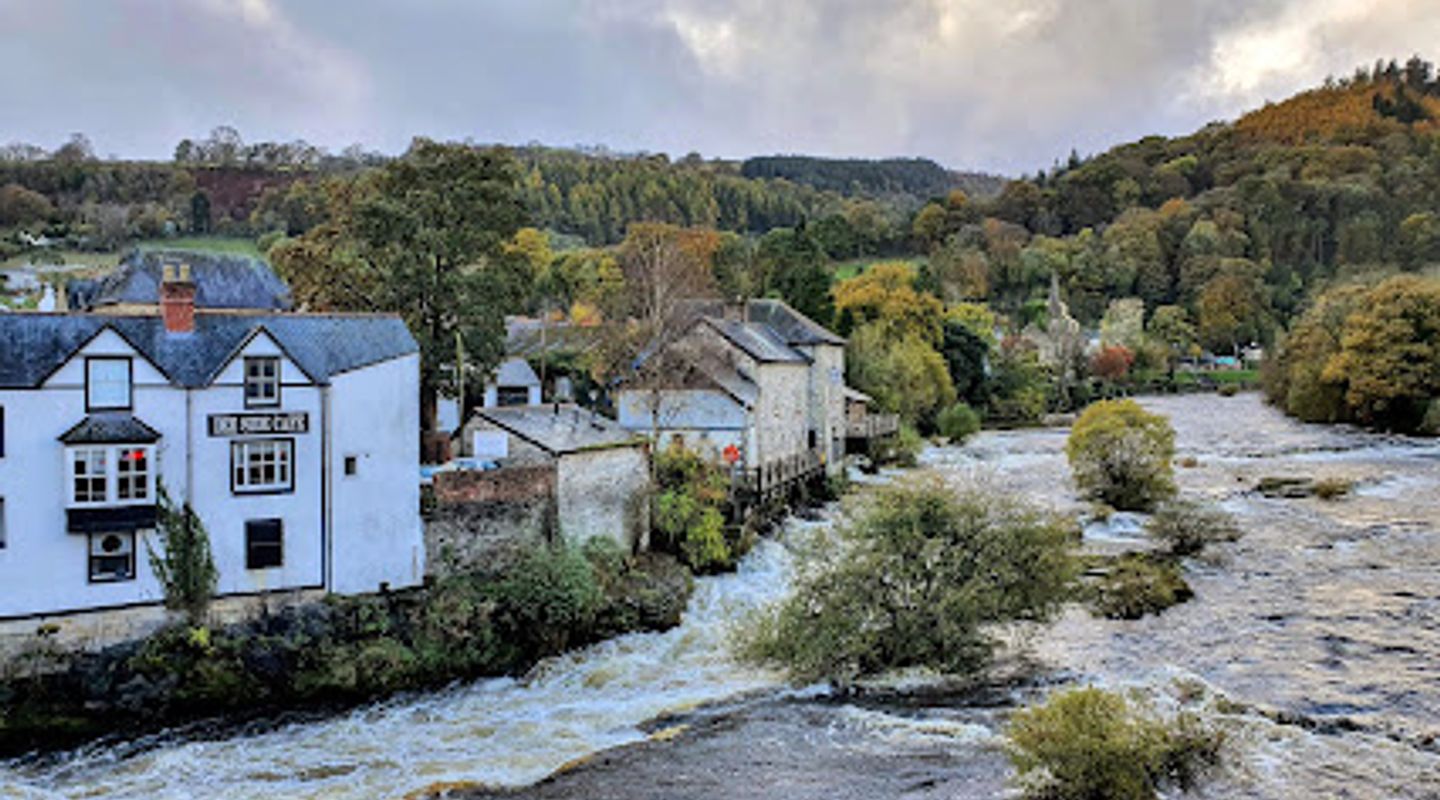
Set against the backdrop of the Dee Valley, the bridge offers stunning views through its arches of the turbulent river below and the surrounding wooded hillsides. The adjacent weir and the nearby Chain Bridge add layers to the riverside experience, combining natural beauty with engineering heritage. The bridge’s pavements extend over the cutwaters, allowing visitors to pause and appreciate the dynamic water flow and valley vistas.
Modern Role and Visitor Experience
Today, Llangollen Bridge remains a vital pedestrian and vehicular crossing, blending historical ambiance with practical use. Its location on Castle Street places it at the heart of Llangollen’s historic town center, surrounded by shops, cafes, and other attractions. The bridge’s atmosphere is tranquil yet lively, inviting visitors to soak in centuries of history while enjoying the scenic river environment.
Legacy and Preservation Efforts
Despite the removal of the northern tower in 1939 to improve traffic flow, the bridge’s core medieval structure endures, carefully maintained to preserve its heritage. Interpretive signage and nearby historic buildings, including the Masonic Hall which houses a commemorative stone from the 1656 reconstruction, contribute to the educational value of the site. Llangollen Bridge stands as a testament to Welsh medieval engineering and ongoing conservation efforts.
Evendo Review Centre
 Google
Guest reviews
Best time to go
Quietest: Jan, Feb & Dec · before 6am or at 10pm
Busy times are Evendo estimates for a typical year, to help you plan. Actual crowds vary with events, school holidays and the weather.
Explore Llangollen Bridge on the map
A handpicked selection of must-see spots near Llangollen Bridge, mapped for you.
Get your free copy of our complete guide to Llangollen Bridge, delivered straight to you.
Everything on this page, from opening hours and how to get there to Eve’s tips and the best time to go, in one PDF you can read offline, print or share.
Already have an account? Sign in
Your Llangollen Bridge guide is ready.
We'll send it to · Not you? Sign out

Getting your guide ready…
We are putting together a fresh copy of the Llangollen Bridge guide. This can take up to a minute.
This can take a few moments. If your browser asks, choose Allow so the download can start. You'll find the guide in your Downloads folder.
Nothing happened? Download it again
Sorry, the guide is taking longer than usual. Please try again in a minute, or get it by email instead.
Other nearby places you may find interesting
The closest places of the same kind, if this one is not quite what you had in mind.
-
-
-
-

-


Swipe for more places
More to explore near Llangollen Bridge

 Best experiences near Llangollen Bridge
 Best hotels near Llangollen Bridge
 Best landmarks near Llangollen Bridge
 Best attractions near Llangollen Bridge
 Best shops near Llangollen Bridge
 Best restaurants near Llangollen Bridge
 Best bars near Llangollen Bridge
Do you manage this location?
Take control to get all the benefits, like improved information, better appearance, and stronger visibility across AI-powered discovery.
Explore more

Explore more of Clwyd
Discover Clwyd: A picturesque region in North Wales, known for its rolling hills, historic castles, and vibrant cultural events.
Explore Clwyd
Explore more of United Kingdom
Discover the United Kingdom: A blend of rich history, stunning landscapes, and vibrant cities, offering a unique travel experience for every visitor.
Explore United Kingdom
