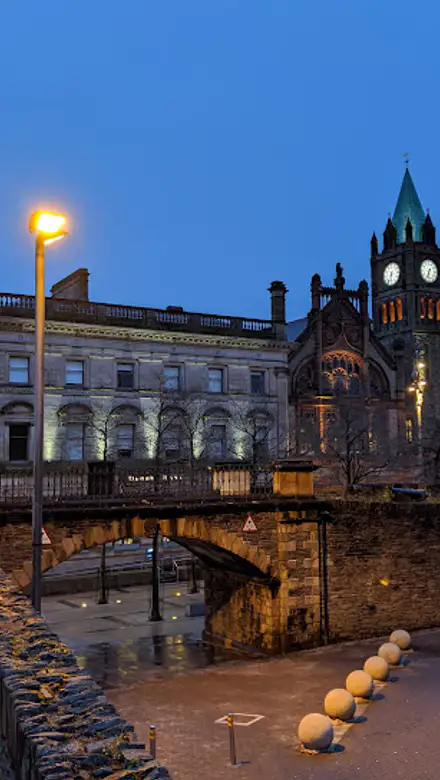
Guildhall, Derry Travel Guide
Free Guide: Discover Derry’s iconic neo-Gothic Guildhall, a historic civic and cultural landmark renowned for its stunning stained glass, grand organ, and vibrant events.


A brief summary of Guildhall
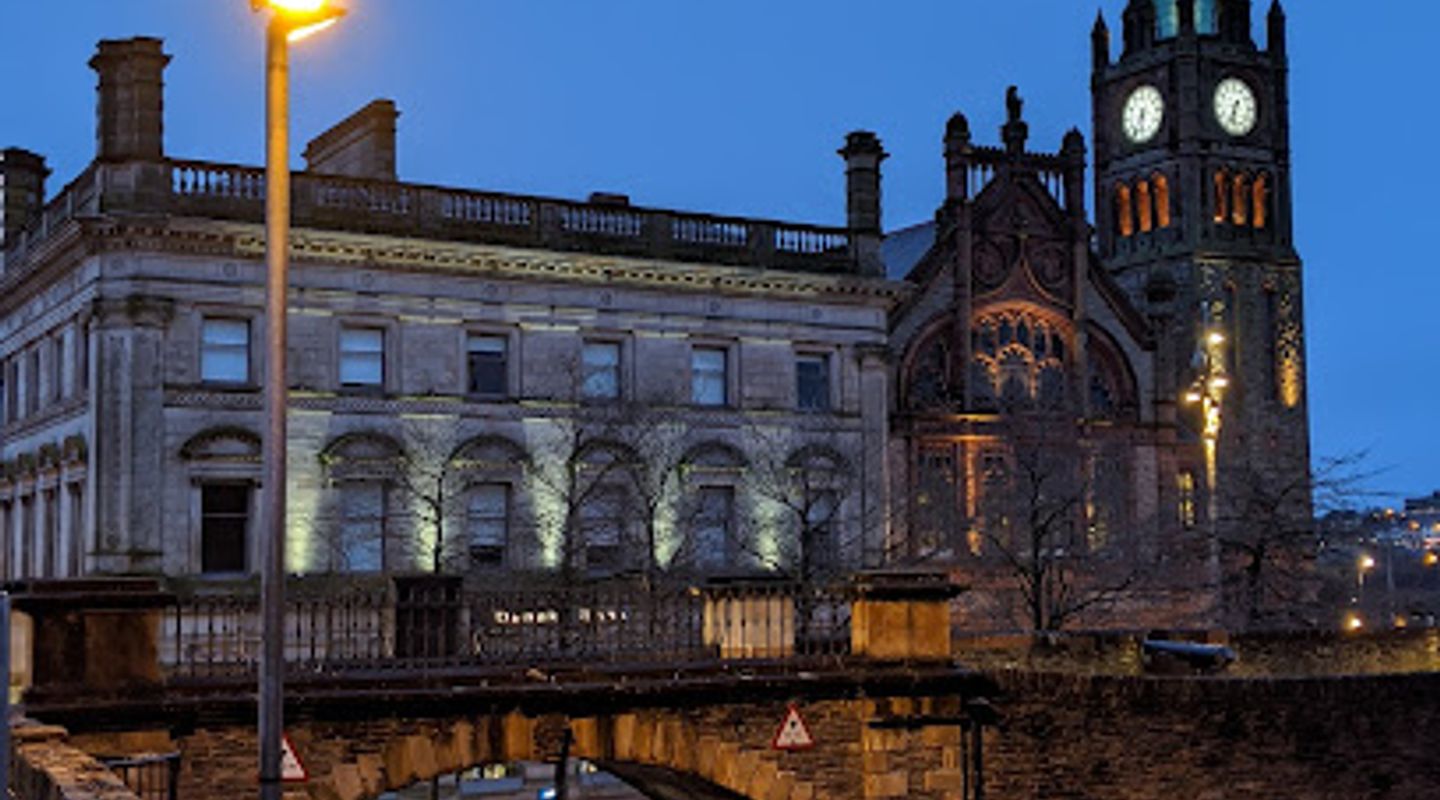
Discover Derry’s iconic neo-Gothic Guildhall, a historic civic and cultural landmark renowned for its stunning stained glass, grand organ, and vibrant events.
The Guildhall in Derry, Northern Ireland, is a striking neo-Gothic civic building dating back to 1890. Renowned for its stunning red sandstone façade, intricate stained-glass windows, and a magnificent 3,132-pipe organ, it serves as a cultural hub, council chamber, and event venue. Visitors can explore exhibitions on the Plantation of Ulster and enjoy a rich program of concerts, festivals, and ceremonies in this historic landmark.
On-site amenities
 Restrooms
 Drink options
 Food options
 Seating areas
 Information boards
 Visitor centre
Opening hours
- Mon9 am–7:30 pm
- Tue9 am–7:30 pm
- Wed9 am–7:30 pm
- Thu9 am–7:30 pm
- Fri9 am–7:30 pm
- Sat9 am–5 pm
- Sun9 am–5 pm
Opening hours as listed on the venue’s Google Business Profile. Hours can change for services and special events, so check with the venue before you go.
- Address
- Londonderry BT48 7BB
- Phone
- Website
Getting there
Public Bus
Taxi
Walking
Car
Discover more about Guildhall
Architectural Grandeur and Historical Roots
The Guildhall stands prominently in Guildhall Square, Derry, as a testament to Victorian-era grandeur fused with neo-Gothic architectural style. Completed in 1890 and designed by John Guy Ferguson, the building features red sandstone construction with Tudor influences. Its clock tower, modeled on London's Elizabeth Tower (Big Ben), is an iconic city symbol. After a fire in 1908, the Guildhall was rebuilt by Mathew Alexander Robinson in 1912, preserving its distinctive style. The building’s interior boasts a magnificent organ with 3,132 pipes, designed by Sir Walter Parratt, and exquisite stained-glass windows donated by London guilds representing various trades, from fishmongers to musicians.
A Venue of Civic and Cultural Significance
Serving as the meeting place for the Derry City and Strabane District Council, the Guildhall has long been central to local governance. Its chambers and the Mayor’s Parlour remain active civic spaces. Beyond politics, the Guildhall is a vibrant cultural venue, hosting concerts, theatrical performances, craft fairs, weddings, and civic ceremonies. It has been a backdrop for significant events such as the premiere of Brian Friel’s "Translations" in 1980 and the Saville Inquiry into Bloody Sunday. The square outside regularly hosts festivals including the Derry Halloween celebrations and the City of Derry Jazz Festival.
Resilience and Restoration Through Turbulent Times
The Guildhall has endured significant challenges, notably bomb damage during The Troubles in 1972. Following restoration costing £1.7 million, it reopened in 1977, reaffirming its place in the community. A major restoration project from 2010 to 2013, led by H & J Martin and Consarc Architects, revitalized the building’s stonework, stained glass, roofs, and clock, with a £8 million investment. This restoration earned a Royal Institute of British Architects regional award in 2014, highlighting the Guildhall’s architectural and cultural importance.
Engaging Exhibitions and Visitor Experience
Inside, visitors can explore the interactive Plantation of Ulster exhibition, which illuminates the city’s complex history shaped by colonization and settlement. The stained-glass windows and the grand organ enrich the visitor experience, while interpretation panels throughout the building bring its stories to life. The Guild Café offers a welcoming spot to relax, and guided tours provide deeper insights into the building’s heritage and local legends.
A Living Landmark in the Modern City
Today, the Guildhall remains a focal point for Derry’s community life and tourism. It hosts a variety of public events, from musical performances by the Ulster Orchestra to civic celebrations. The building’s blend of historic charm and contemporary use makes it a must-see attraction, symbolizing the city’s resilience and vibrant culture. Its accessibility and visitor facilities, including baby changing and a gift shop, ensure a comfortable visit for all.
Symbol of Peace and Progress
The Guildhall has also played a role in peace and reconciliation, hosting significant political events such as U.S. President Bill Clinton’s 1995 address. It stands as a symbol of Derry’s journey through conflict towards a hopeful future, embodying the spirit of community and cultural pride that defines the city today.
Evendo Review Centre
 Google
Guest reviews
Best time to go
Quietest: Jan, Feb & Mar · before 6am or from 11pm
Busy times are Evendo estimates for a typical year, to help you plan. Actual crowds vary with events, school holidays and the weather.
Explore Guildhall on the map
A handpicked selection of must-see spots near Guildhall, mapped for you.
Get your free copy of our complete guide to Guildhall, delivered straight to you.
Everything on this page, from opening hours and how to get there to Eve’s tips and the best time to go, in one PDF you can read offline, print or share.
Already have an account? Sign in
Your Guildhall guide is ready.
We'll send it to · Not you? Sign out

Getting your guide ready…
We are putting together a fresh copy of the Guildhall guide. This can take up to a minute.
This can take a few moments. If your browser asks, choose Allow so the download can start. You'll find the guide in your Downloads folder.
Nothing happened? Download it again
Sorry, the guide is taking longer than usual. Please try again in a minute, or get it by email instead.
Unlock the best of Guildhall
Skip-the-line tickets, guided tours with entry, and walking tours of the area, booked in a few clicks.
 Tour with entry
Walking Bogside History Tour in Guildhall
from $25.45 Tour with entry
Discover the City Walls - Small Group Public or Private Tour
from $120.65 Tour with entry
Heritage and Stories: A Comprehensive Derry Private Walking Tour
from $643.90 Tour with entry
Derry Londonderry Private Full Day Tour From Belfast
from $789.02
 Tour
TourDerry Self Guide Walking Tour Experience
from $5.34 Tour
TourDerrie Danders: Wander around the Waterside on a self-guided GPS audio tour
from $11.39 Tour
TourDerrie Danders: A Self-Guided Audio Tour of the Quayside and North City
from $11.39 Tour
TourDerrie Danders: Unveiling Derry's Dark & Haunted Past Audio Tour
from $14.24
Other nearby places you may find interesting
The closest places of the same kind, if this one is not quite what you had in mind.
-
-
-
-
-


Swipe for more places
More to explore near Guildhall

 Best experiences near Guildhall
 Best hotels near Guildhall
 Best landmarks near Guildhall
 Best attractions near Guildhall
 Best shops near Guildhall
 Best restaurants near Guildhall
 Best bars near Guildhall
Do you manage this location?
Take control to get all the benefits, like improved information, better appearance, and stronger visibility across AI-powered discovery.
Explore more
Explore more of Derry
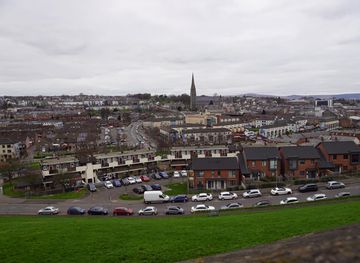
Explore Derry: Where history meets vibrant culture in a city bridging Irish and British heritage, offering breathtaking views and captivating festivals.
Explore Derry
Explore more of United Kingdom
Discover the United Kingdom: A blend of rich history, stunning landscapes, and vibrant cities, offering a unique travel experience for every visitor.
Explore United Kingdom