

Rosslyn Castle Travel Guide
Free Guide: Explore centuries of history and stunning ruins at Rosslyn Castle, ancestral home of the St Clair family nestled in scenic Roslin Glen.


A brief summary of Rosslyn Castle
Explore centuries of history and stunning ruins at Rosslyn Castle, ancestral home of the St Clair family nestled in scenic Roslin Glen.
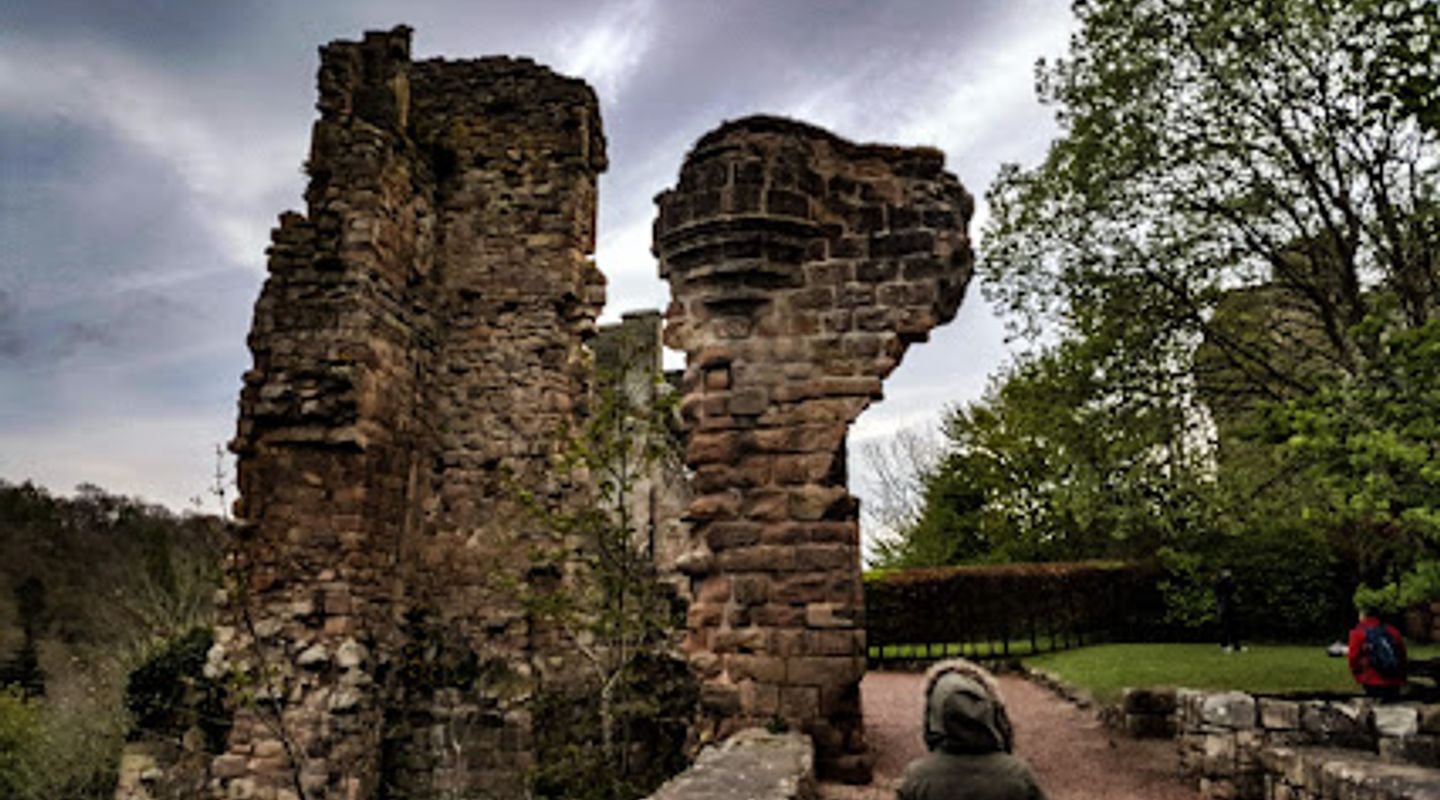
Rosslyn Castle, perched on a rocky promontory overlooking Roslin Glen, dates back to the early 14th century. Built and expanded by the influential St Clair family, it has witnessed battles, fires, and sieges, including damage during the Rough Wooing and Cromwell’s 1650 siege. Restored in the 1980s and recently refurbished, the castle’s East Range now offers unique holiday accommodation amid evocative ruins rich with medieval and Renaissance history.
On-site amenities
 Seating areas
 Information boards
- Address
- B7003, Roslin EH25 9PX
- Website
Getting there
Train and Taxi
Car
Bus and Walk
Discover more about Rosslyn Castle
Origins and Medieval Foundations
Rosslyn Castle’s origins trace back to the early 1300s, shortly after the nearby Battle of Roslin in 1303 where Scottish forces defeated the English. The earliest surviving structure is the ‘lantern’ or ‘lamp tower’ near the bridge, likely built around 1304 by William St Clair, a Norman descendant granted lands by Malcolm Canmore. This initial fortress was strategically placed on an almost insulated rock overlooking the deep glen of the River North Esk, accessed by a single-arched bridge which replaced an earlier drawbridge. The castle’s defensive design included a formidable gatehouse and strong walls, setting the stage for centuries of fortification and habitation.
Expansion and Renaissance Flourishes
During the late 14th and early 15th centuries, the castle was significantly expanded by Henry St Clair, the second Prince of Orkney, who added a distinctive round keep on the south-west corner. His son, Sir William St Clair, who founded the famous Rosslyn Chapel, further enlarged and embellished the castle. Influenced by his travels in France, he introduced French architectural elements such as rounded buttresses reminiscent of the Chateau of Guillard. The castle’s interiors were richly appointed with embroidered hangings and served with gold and silver vessels, reflecting its status as a noble residence. The East Range, including a clock tower and Great Hall, was developed through the late 16th and early 17th centuries, with Renaissance detailing and fine plaster ceilings added in 1622.
Conflict, Damage, and Decline
Rosslyn Castle endured repeated assaults and destruction. It was set ablaze during the 1544 Rough Wooing campaign led by the Earl of Hertford under Henry VIII, part of England’s attempt to force a dynastic marriage. Later, in 1650, Cromwell’s forces besieged the castle during the Third English Civil War, battering walls with artillery and stabling horses in the chapel as an act of contempt. These attacks left the castle largely ruined and dilapidated by the 18th century, with only parts of the East Range remaining habitable. The castle’s decline mirrored that of many Scottish strongholds caught in the turbulence of national conflicts.
Restoration and Modern Use
The 20th century saw renewed interest in Rosslyn Castle’s preservation. After a period of tenancy, a major restoration was completed in 1984, spearheaded by the Earl and Countess of Rosslyn. This restoration stabilized the ruins and adapted the East Range into self-catering holiday accommodation, a pioneering use that opened in 1985. More recently, a £4 million conservation project completed in 2024 reroofed the Great Hall and tower for the first time since the 17th century, protecting historic vaults and adding modern comforts. Managed by the Rosslyn Chapel Trust in partnership with the Landmark Trust, the castle now offers visitors a rare chance to stay within a living piece of Scottish heritage.
Setting and Cultural Significance
Nestled in the wooded Roslin Glen on the edge of the River North Esk, Rosslyn Castle commands dramatic views and a serene natural environment. Its proximity to the famous Rosslyn Chapel deepens its cultural resonance, linking the St Clair family’s legacy across architecture, art, and history. The castle has inspired artists like JMW Turner and writers such as Sir Walter Scott, drawn to its romantic ruins and storied past. Today, it stands as a testament to Scotland’s medieval nobility, warfare, and architectural evolution, inviting exploration and reflection.
Visitor Experience and Accommodation
Guests staying in the castle’s East Range enjoy a unique blend of historic ambiance and modern amenities. The accommodation includes four bedrooms across vaulted levels, with views over the glen and the castle’s evocative ruins. The site’s layered history is palpable in the stonework, inscriptions, and architectural details, offering an immersive experience of Scotland’s past. The surrounding woodland and river setting provide a tranquil backdrop for exploration, photography, and connection with nature.
Evendo Review Centre
 Google
Guest reviews
Best time to go
Quietest: Jan, Feb & Dec · before 7am
Busy times are Evendo estimates for a typical year, to help you plan. Actual crowds vary with events, school holidays and the weather.
Explore Rosslyn Castle on the map
A handpicked selection of must-see spots near Rosslyn Castle, mapped for you.
Get your free copy of our complete guide to Rosslyn Castle, delivered straight to you.
Everything on this page, from opening hours and how to get there to Eve’s tips and the best time to go, in one PDF you can read offline, print or share.
Already have an account? Sign in
Your Rosslyn Castle guide is ready.
We'll send it to · Not you? Sign out

Getting your guide ready…
We are putting together a fresh copy of the Rosslyn Castle guide. This can take up to a minute.
This can take a few moments. If your browser asks, choose Allow so the download can start. You'll find the guide in your Downloads folder.
Nothing happened? Download it again
Sorry, the guide is taking longer than usual. Please try again in a minute, or get it by email instead.
Unlock the best of Rosslyn Castle
Skip-the-line tickets, guided tours with entry, and walking tours of the area, booked in a few clicks.
 Tour with entry
Private Walking Tour in Roslin village
from $719.50 Tour with entry
Romantic Walks in Roslin: A Scottish Love Story Private Tour
from $720.57 Tour with entry
A Private Family Adventure in Enchanted Roslin
from $720.57 Tour with entry
Journey through Roslin's Christmas: A 2-Hour Festive Private Tour
from $811.17
Other nearby places you may find interesting
The closest places of the same kind, if this one is not quite what you had in mind.
-
-
-
-
-


Swipe for more places
More to explore near Rosslyn Castle

 Best experiences near Rosslyn Castle
 Best hotels near Rosslyn Castle
 Best landmarks near Rosslyn Castle
 Best attractions near Rosslyn Castle
 Best shops near Rosslyn Castle
 Best restaurants near Rosslyn Castle
 Best bars near Rosslyn Castle
Do you manage this location?
Take control to get all the benefits, like improved information, better appearance, and stronger visibility across AI-powered discovery.
Explore more
Explore more of Down
Discover the tranquil beauty, historical treasures, and warm hospitality of Down in Northern Ireland, where serene landscapes and rich heritage await.
Explore Down
Explore more of United Kingdom
Discover the United Kingdom: A blend of rich history, stunning landscapes, and vibrant cities, offering a unique travel experience for every visitor.
Explore United Kingdom
