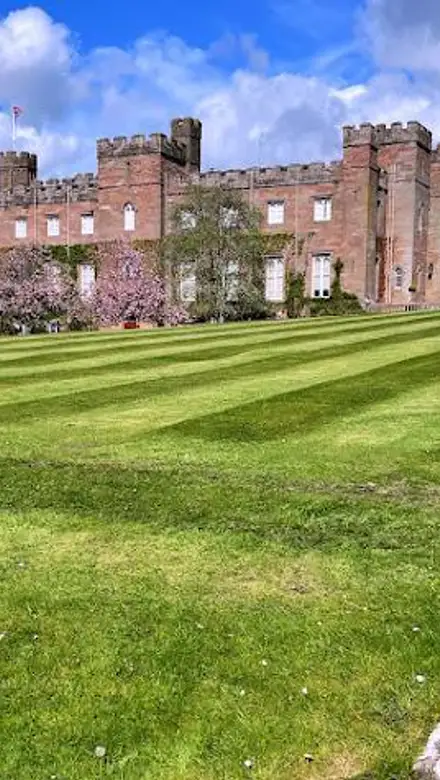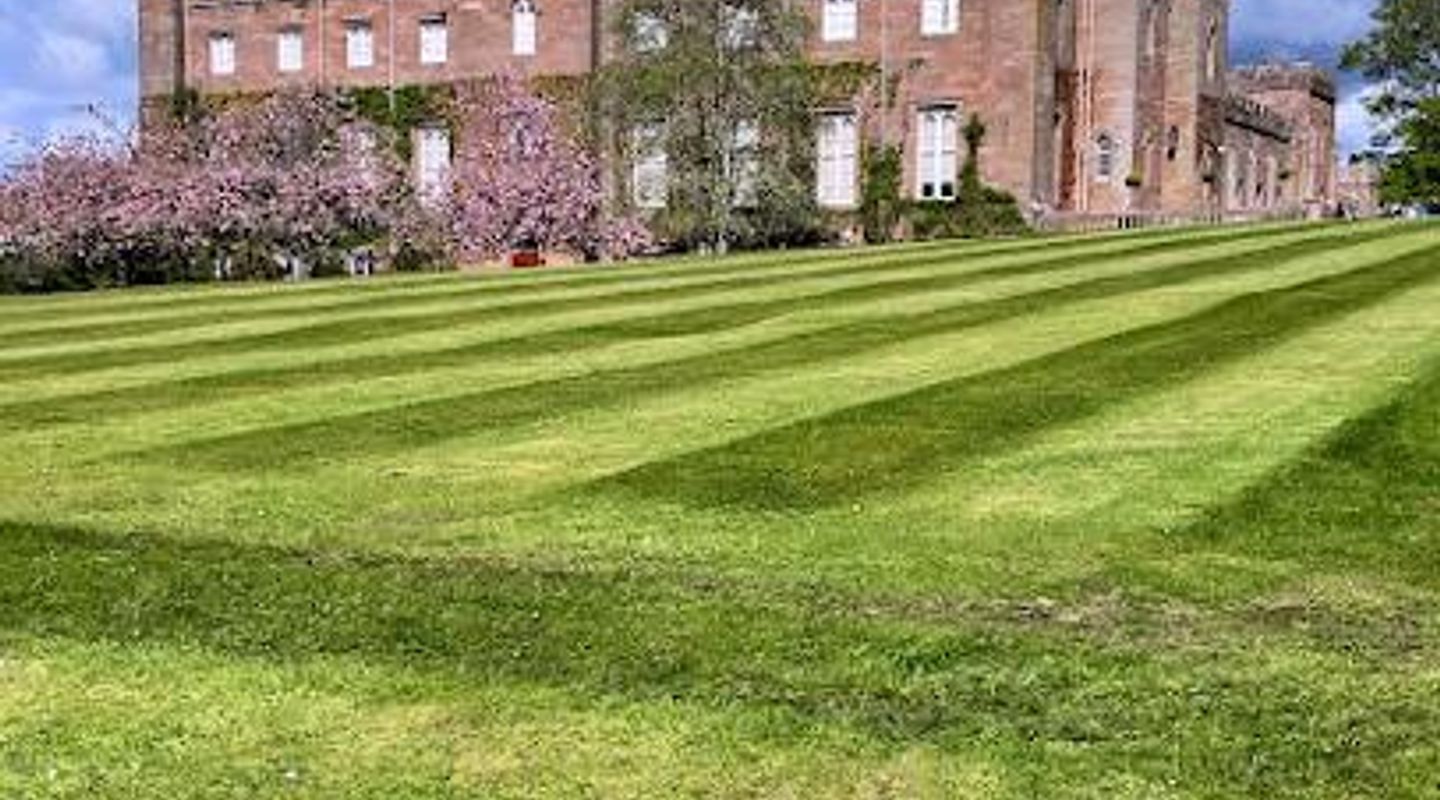
Scone Palace, Fife Travel Guide
Historic Gothic palace and gardens where 42 Scottish kings were crowned, home to the Earls of Mansfield and the legendary Stone of Destiny.
Scone Palace, near Perth in Scotland, is a grand historic estate famed as the ancient coronation site of Scottish kings, including Macbeth and Robert the Bruce. The current Gothic Revival palace, built in the early 19th century on the grounds of a medieval abbey, houses the ancestral home of the Earls of Mansfield. Visitors can explore majestic state rooms, expansive gardens, and the symbolic Moot Hill where the Stone of Destiny once rested.
A brief summary to Scone Palace
- Perth, PH2 6BD, GB
- Click to display
- Click to display
- Duration: 1.5 to 3.5 hours
- Mid ranged
-
 Outdoor
- Mobile reception: 4 out of 5
- Thursday 10 am-4 pm
- Friday 10 am-4 pm
- Saturday 10 am-4 pm
- Sunday 10 am-4 pm

Know before you go
Hi, I'm Eve. Here are a few practical things to know before exploring Scone Palace.
- Book tickets online in advance, especially during peak season, to ensure entry and access to guided tours.
- Allow at least two hours to explore both the palace interiors and the extensive gardens fully.
- Visit Moot Hill to see the replica Stone of Destiny and learn about its historic significance.
- Try the famous Scottish scones with tea at the Old Servants’ Hall Coffee Shop for a traditional experience.
- Check the events calendar for seasonal festivals and special exhibitions during your visit.
Do you manage this location?
Take control to get all the benefits, like improved information, better appearance, and stronger visibility across AI-powered discovery. Learn more about listing your business on Evendo
Activate your presenceOther nearby places you may find interesting
The closest places of the same kind, if this one is not quite what you had in mind.

Explore Scone Palace on the Map
A handpicked selection of must-see spots near Scone Palace, mapped for you.
Unlock the Best of Scone Palace
Buy tickets
-
No tickets available
Book tours with entry
-
No tours available


Getting There
-
Train and Taxi
From Perth Train Station, take a taxi for a 15-minute ride to Scone Palace. Trains to Perth run frequently from major Scottish cities, making this a convenient option. Taxi fares typically range from £10 to £15.
-
Car
Driving from central Perth to Scone Palace takes about 15 minutes via the A93. Ample free parking is available on-site during the main season. Note that parking fees apply in early spring (February to March).
-
Bus
Local bus services connect Perth to Scone village with a 20-minute ride, followed by a 15-minute walk to the palace. Bus frequency varies, so check local timetables. This option is budget-friendly and eco-conscious.
For the on-the-go comforts that matter to you
-
 Restrooms
-
 Drink Options
-
 Food Options
-
 Seating Areas
-
 Trash Bins
-
 Information Boards
-
 Visitor Center
Discover more about Scone Palace
Legacy of Scottish Royalty and the Stone of Destiny
Scone Palace stands on hallowed ground that has been central to Scottish history for over 1,500 years. It was the crowning place of 42 Scottish monarchs, including notable figures such as Macbeth, Robert the Bruce, and Charles II. The Stone of Destiny, also known as the Stone of Scone, was the symbolic seat upon which kings were inaugurated, marking Scone as the heart of Scotland’s monarchy. Though the original Stone now resides in Edinburgh Castle, a replica marks its historic resting place on Moot Hill within the palace grounds.From Abbey to Noble Residence
Originally the site of an early Christian church and later an Augustinian priory founded in 1114, Scone Abbey flourished as a religious and political center for centuries. It hosted Scotland’s first recorded parliament and was a key spiritual site until its destruction during the Reformation in 1559 by a mob incited by John Knox. The abbey’s lands were later granted to the Ruthven family, and subsequently passed to the Murray family in 1600, who transformed the site into a noble residence that remains their family home today.Architectural Transformation and Gothic Grandeur
The current palace largely dates from the early 19th century when the 3rd Earl of Mansfield commissioned architect William Atkinson to rebuild and extend the late 16th-century Abbot’s Palace. Completed by 1807, the design masterfully blends Gothic Revival elements with medieval abbey features, creating one of the finest Georgian Gothic houses in Scotland. The palace’s interiors showcase opulent state rooms, a grand Long Gallery, and a chapel that serves as the Murray family mausoleum.Gardens, Grounds, and Visitor Experience
Surrounding the palace are over 100 acres of beautifully maintained gardens and grounds, including woodlands, formal gardens, and a maze. Visitors can enjoy peaceful walks, spot the estate’s famous peacocks, and relax in the Old Servants’ Hall Coffee Shop, renowned for its traditional Scottish scones. The estate also hosts a gift and food shop, offering local products and souvenirs. Seasonal events and guided tours enrich the visitor experience, with audio guides available in multiple languages.Historical Significance and Cultural Heritage
Scone Palace embodies Scotland’s rich cultural heritage, representing centuries of monarchy, religion, and lawmaking. It was the site where Scottish kings were crowned and where the Parliament of Scotland met until the mid-15th century. The palace and its grounds preserve this legacy, offering insight into the nation’s formation and the enduring influence of the Murray family as custodians of this historic landmark.Modern-Day Accessibility and Amenities
Open to the public from April to October, Scone Palace provides ample parking, accessible facilities, and visitor information. The palace offers self-guided tours with extensive interpretative materials and QR-code audio guides. While the gardens are free to enter during winter months with a suggested donation, palace admission requires a ticket. The estate balances heritage preservation with welcoming modern tourism, making it a must-visit destination in Perthshire.












Your all‑in‑one travel companion app
Explore expert travel guides, compare and book tours, experiences, hotels, and more—all from the palm of your hand. Download now for seamless trip planning wherever your wanderlust takes you.


Explore More of Fife
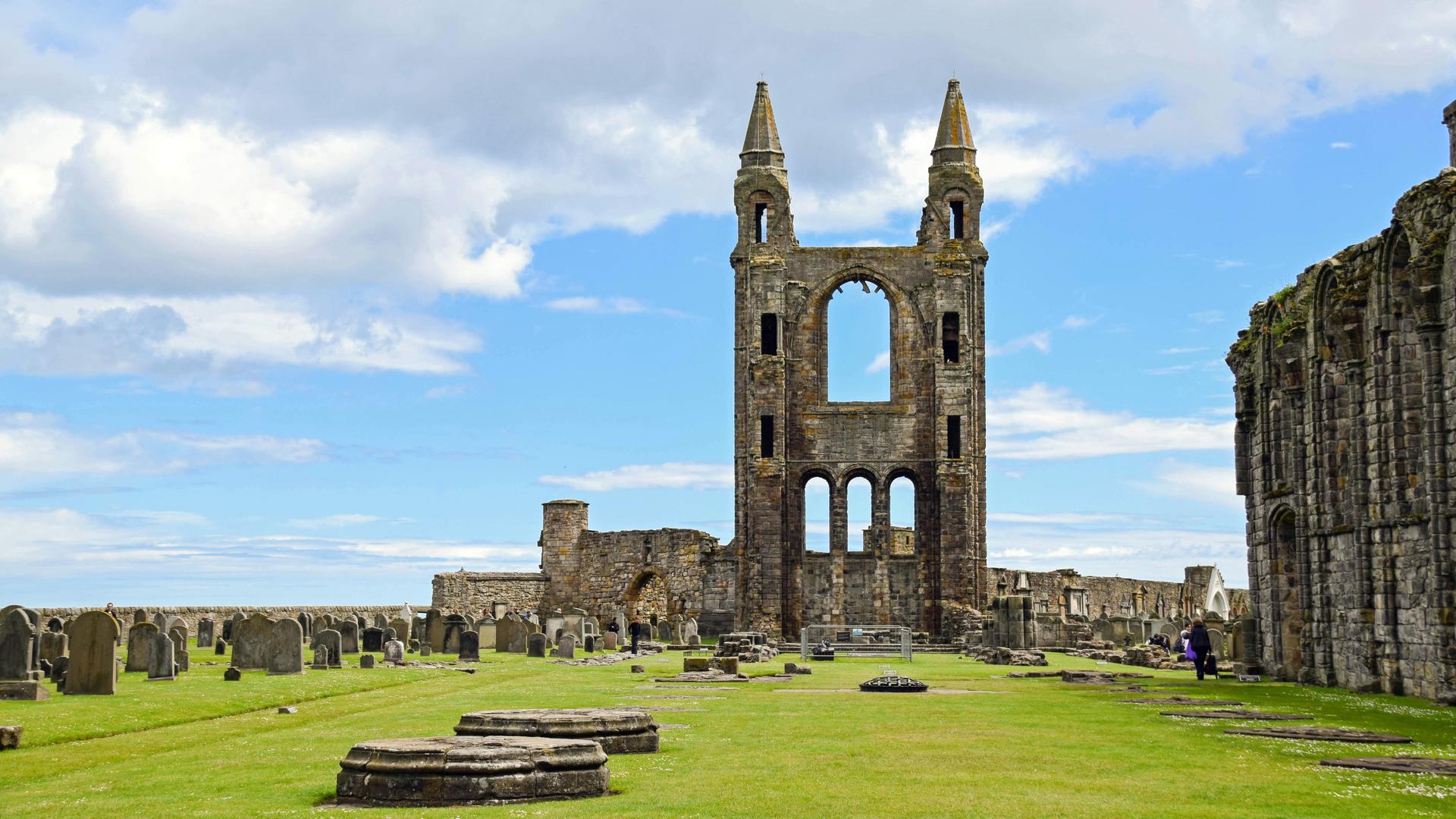
Looking beyond Scone Palace? Discover Fife for broader travel guides, local hot-spots, and regional highlights.
Explore Fife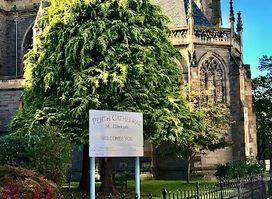
Discover Perth Cathedral, St Ninian's—a Gothic Revival masterpiece blending rich history, spiritual warmth, and stunning stained glass in Scotland’s heart.

Discover peaceful woodland trails, ancient trees, and friendly café charm just north of Perth in Quarrymill Woodland Park.