Talley Abbey Travel Guide
Free Guide: Wales' only Premonstratensian abbey, where medieval ambition meets lakeside serenity.


A brief summary of Talley Abbey
Wales' only Premonstratensian abbey, where medieval ambition meets lakeside serenity.
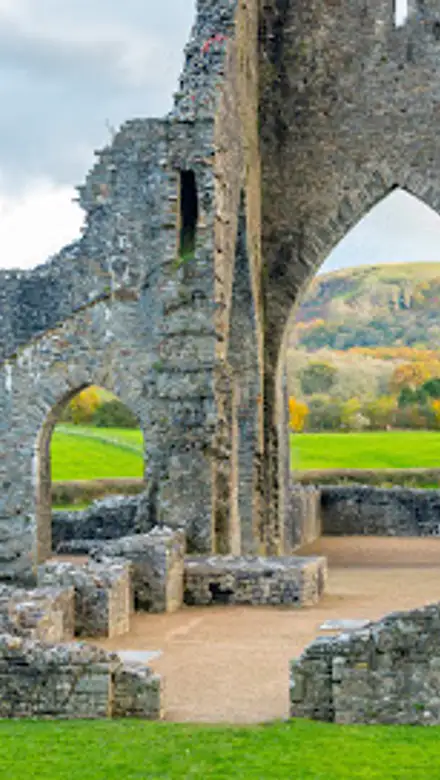
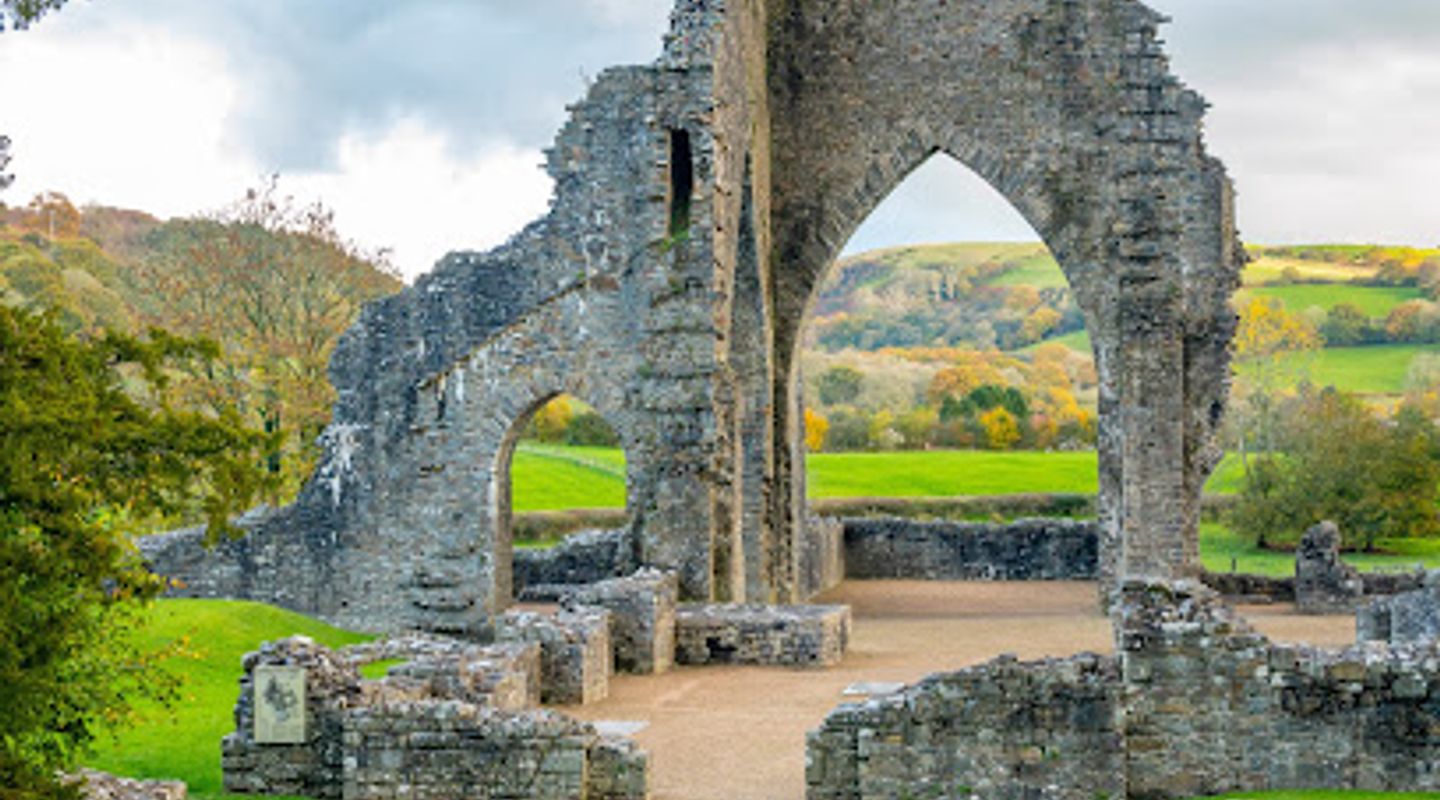
Talley Abbey stands as Wales' only Premonstratensian monastery, founded in the 1180s by Rhys ap Gruffydd for the White Canons. The haunting ruins, dominated by a nearly intact church tower, occupy an idyllic setting beside twin lakes in rural Carmarthenshire. Though never completed due to financial constraints, the abbey's ambitious design and skeletal remains reveal the spiritual aspirations of medieval Welsh monasticism. Nearby St Michael and All Angels Church, constructed partly from the abbey's own stones, continues the site's religious legacy.
On-site amenities
 Trash bins
 Information boards
Opening hours
- Every day10 am–4 pm
Opening hours as listed on the venue’s Google Business Profile. Hours can change for services and special events, so check with the venue before you go.
- Address
- Talley, Llandeilo SA19 7YY
Getting there
By car from Llandeilo
By train and taxi from Llangadog
Walking from Talley village
By bus from regional centres
Discover more about Talley Abbey
A Unique Religious Foundation in Medieval Wales
Talley Abbey holds a singular place in Welsh monastic history as the only Premonstratensian monastery ever established in Wales. Founded in the 1180s by Rhys ap Gruffydd, known as 'The Lord Rhys', the native ruler of the south Wales kingdom of Deheubarth, the abbey was created for monks of the Premonstratensian order, commonly called the 'White Canons' for the colour of their religious habits. This distinction set Talley apart from the numerous Cistercian settlements that flourished throughout Wales during the same period. Rhys ap Gruffydd's patronage represented a significant act of religious reform, as he donated substantial lands to support this emerging French monastic order, demonstrating his commitment to spiritual renewal in his realm.
The Ambitions and Limitations of an Incomplete Vision
The most striking feature of Talley Abbey today is its church tower, which stands almost to its full original height and dominates the landscape of ruins. This impressive structure testifies to the grand ambitions of the abbey's founders, yet the incomplete nature of the church reveals a more sobering reality. Lack of funds meant that the abbey never achieved the wealth and success enjoyed by its Cistercian counterparts. The outline of the church's footings demonstrates the scale of the original design, but financial constraints prevented the structure from ever being fully completed. Unlike the thriving Cistercian abbeys scattered across Wales, Talley struggled to accumulate the resources necessary for expansion and maintenance, a limitation that would ultimately shape its modest legacy.
Life and Livelihood at the Lakes
The Premonstratensian canons who inhabited Talley sustained themselves through agricultural pursuits typical of medieval monastic communities. They established granges—clusters of buildings housing granaries, livestock enclosures, and stalls—while also farming and fishing in the twin lakes that define the site's setting. The abbey's name itself, Talley (Talyllychau), translates to 'head of the lakes', reflecting the centrality of these waters to both the monks' survival and the landscape's identity. The lakes provided not only sustenance but also a serene backdrop that enhanced the spiritual atmosphere the canons sought to cultivate. This integration of practical necessity and contemplative purpose created a self-sufficient religious community rooted in the natural beauty of rural Carmarthenshire.
Dissolution and the Abbey's Afterlife
Like all English and Welsh monasteries, Talley Abbey fell victim to Henry VIII's Dissolution of the Monasteries in the 16th century. The destruction of the abbey marked the end of nearly four centuries of monastic life at the site. Yet the abbey's influence persisted in unexpected ways. In the centuries following the Dissolution, local builders repurposed the abbey's stone to construct homes in the surrounding village, creating a tangible continuity between the sacred past and the secular present. The stone cottages and houses that line the lanes near the abbey today incorporate material salvaged from its ruins, suggesting that the abbey has 'sired many offspring' in the very fabric of the community it once spiritually nourished.
The Enduring Presence of St Michael and All Angels
Adjacent to the abbey ruins stands St Michael and All Angels Church, a structure built partly from the abbey's own remains. This church, substantially rebuilt in the 18th century, represents the continuation of the site's religious purpose beyond the Dissolution. The graveyard surrounding the church preserves centuries of local history and remains an active place of worship and remembrance. The coexistence of the ruined abbey and the functioning church creates a poignant dialogue between medieval monasticism and modern parish life, demonstrating how sacred spaces evolve and adapt across centuries. The church's presence ensures that Talley remains a living spiritual centre rather than merely an archaeological curiosity.
A Landscape of Contemplation and History
Talley Abbey's setting in the beautiful hills at the head of the twin lakes creates an atmosphere of profound tranquility. The site's remote location, accessible only by narrow country lanes, preserves a sense of isolation that mirrors the monks' original desire for spiritual withdrawal from the world. The natural surroundings—rolling hills, clear waters, and abundant bird life—provide a sensory experience that connects modern visitors to the contemplative aspirations of the medieval canons. The skeletal remains of the abbey, weathered by centuries of exposure to the Welsh elements, stand as a testament to both human ambition and the inevitable passage of time, inviting reflection on the transience of earthly institutions and the enduring power of sacred places.
Evendo Review Centre
 Google
Guest reviews
Best time to go
Quietest: Jan, Feb & Dec · before 8am or from 5pm
Busy times are Evendo estimates for a typical year, to help you plan. Actual crowds vary with events, school holidays and the weather.
Explore Talley Abbey on the map
A handpicked selection of must-see spots near Talley Abbey, mapped for you.
Get your free copy of our complete guide to Talley Abbey, delivered straight to you.
Everything on this page, from opening hours and how to get there to Eve’s tips and the best time to go, in one PDF you can read offline, print or share.
Already have an account? Sign in
Your Talley Abbey guide is ready.
We'll send it to · Not you? Sign out

Getting your guide ready…
We are putting together a fresh copy of the Talley Abbey guide. This can take up to a minute.
This can take a few moments. If your browser asks, choose Allow so the download can start. You'll find the guide in your Downloads folder.
Nothing happened? Download it again
Sorry, the guide is taking longer than usual. Please try again in a minute, or get it by email instead.
Other nearby places you may find interesting
The closest places of the same kind, if this one is not quite what you had in mind.
-
-
-
-
-


Swipe for more places
More to explore near Talley Abbey

 Best experiences near Talley Abbey
 Best hotels near Talley Abbey
 Best landmarks near Talley Abbey
 Best attractions near Talley Abbey
 Best shops near Talley Abbey
 Best restaurants near Talley Abbey
 Best bars near Talley Abbey
Do you manage this location?
Take control to get all the benefits, like improved information, better appearance, and stronger visibility across AI-powered discovery.
Explore more
Explore more of Dyfed
Experience the natural beauty and rich history of Dyfed, Wales, where coastal charm meets cultural heritage in a breathtaking setting.
Explore Dyfed
Explore more of United Kingdom
Discover the United Kingdom: A blend of rich history, stunning landscapes, and vibrant cities, offering a unique travel experience for every visitor.
Explore United Kingdom