
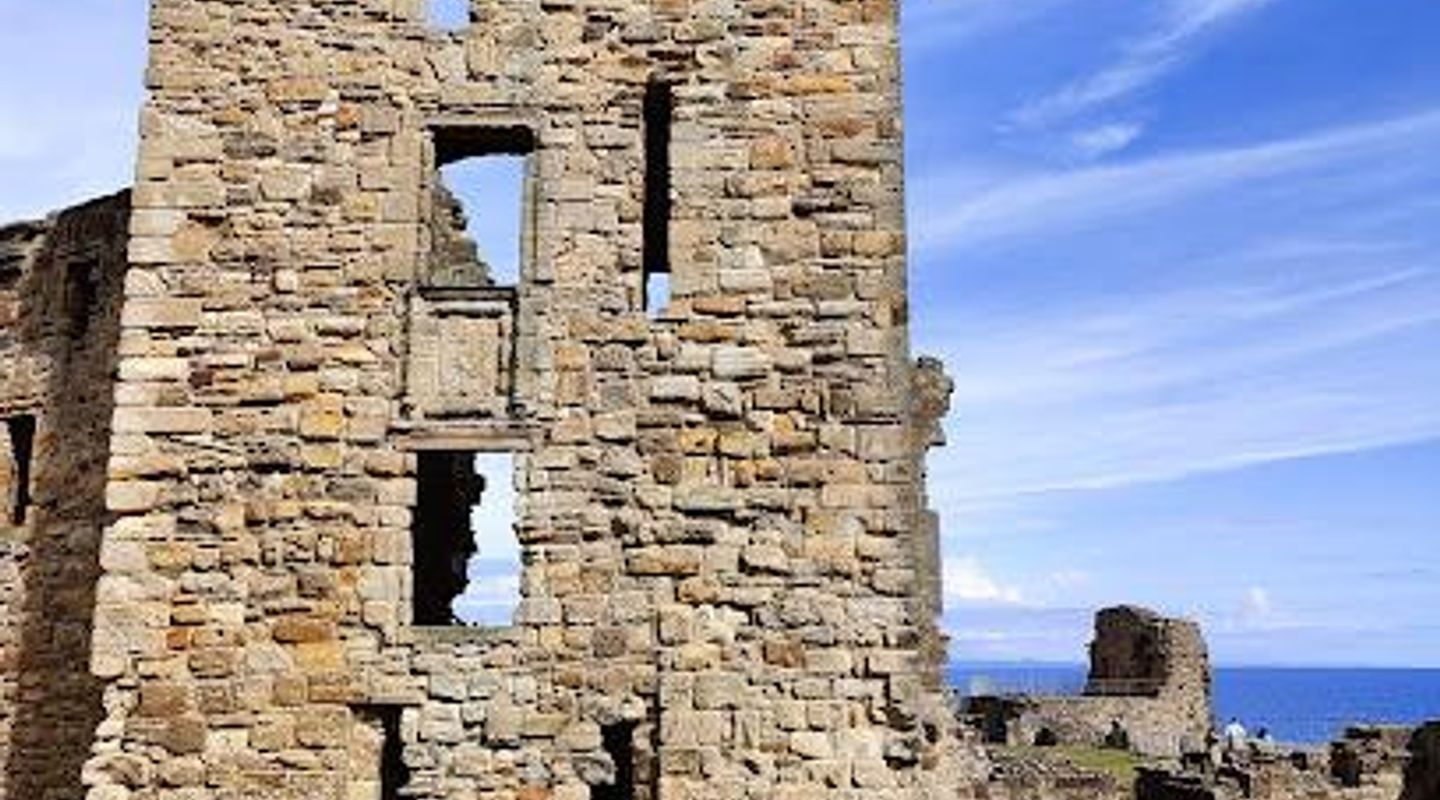
St Andrews Castle, Fife Travel Guide
Explore the dramatic ruins of St Andrews Castle, a fortress shaped by medieval power struggles and Reformation conflict on Scotland’s scenic east coast.
St Andrews Castle, perched dramatically on a rocky promontory overlooking the North Sea in Fife, Scotland, was the medieval seat of the bishops and archbishops of St Andrews. Built from the 12th century and rebuilt after repeated wars, it became a focal point of religious and political turmoil during the Scottish Reformation. Today its evocative ruins, including the infamous bottle dungeon and siege tunnels, reveal centuries of ecclesiastical power struggles and military conflict.
A brief summary to St Andrews Castle
- The Scores, St Andrews, KY16 9AR, GB
- Click to display
- Click to display
- Duration: 1 to 2.5 hours
- Mid ranged
-
 Outdoor
- Mobile reception: 4 out of 5
- Monday 10 am-4 pm
- Tuesday 10 am-4 pm
- Wednesday 10 am-4 pm
- Thursday 10 am-4 pm
- Friday 10 am-4 pm
- Saturday 10 am-4 pm
- Sunday 10 am-4 pm

Know before you go
Hi, I'm Eve. Here are a few practical things to know before exploring St Andrews Castle.
- Don’t miss the bottle dungeon, one of medieval Britain’s most infamous prisons, where prisoners were held in darkness.
- Explore the underground mine and countermine tunnels dug during the 1546 siege, unique relics of medieval warfare.
- Visit the visitor centre for detailed exhibitions and to see carved fragments from the castle.
- Take the audio guide on your phone or from the centre to enrich your understanding of the castle’s turbulent history.
Do you manage this location?
Take control to get all the benefits, like improved information, better appearance, and stronger visibility across AI-powered discovery. Learn more about listing your business on Evendo
Activate your presenceOther nearby places you may find interesting
The closest places of the same kind, if this one is not quite what you had in mind.

Explore St Andrews Castle on the Map
A handpicked selection of must-see spots near St Andrews Castle, mapped for you.
Unlock the Best of St Andrews Castle
Buy tickets
-
No tickets available
Book tours with entry


Getting There
-
Bus
Take the Stagecoach bus service from Dundee or Edinburgh to St Andrews, with journey times of approximately 1 to 1.5 hours. Buses run frequently but check schedules for seasonal variations. From the town centre, the castle is a 10-minute walk.
-
Train and Bus
Travel by train to Leuchars station, about 7 km from St Andrews, with connections from Edinburgh or Dundee taking around 1 to 1.5 hours. From Leuchars, take a local bus or taxi to St Andrews town centre, then walk 10 minutes to the castle.
-
Car
Drive to St Andrews via the A91 or A92 roads. Parking is available in town car parks within walking distance of the castle. Note that the town centre can be busy during peak tourist seasons.
For the on-the-go comforts that matter to you
-
 Restrooms
-
 Drink Options
-
 Food Options
-
 Seating Areas
-
 Information Boards
-
 Visitor Center
Discover more about St Andrews Castle
Origins and Ecclesiastical Power
St Andrews Castle was originally constructed in the late 12th century by Bishop Roger, son of the Earl of Leicester, as a fortified residence for the leading bishops of Scotland. Situated on sheer cliffs with natural sea defenses and rock-cut ditches, the castle symbolized the immense wealth and authority of the Scottish church. Over the Middle Ages, it served as the official residence of the bishops and archbishops, reflecting their political influence as well as spiritual leadership.Warfare and Reconstruction Through the Centuries
The castle endured significant damage during the Wars of Scottish Independence, frequently changing hands between Scottish and English forces. After being rendered indefensible and deliberately destroyed by the Scots in 1337 to prevent English occupation, it was substantially rebuilt around 1400 under Bishop Walter Trail. The new fortress featured thick curtain walls, five square towers, and extensive residential ranges, designed to withstand siege warfare and artillery attacks.Reformation Turmoil and Siege
In the 16th century, St Andrews Castle became a center of religious conflict during the Scottish Reformation. Archbishop James Beaton fortified the castle with massive gun towers anticipating artillery assaults. The castle witnessed the imprisonment and execution of Protestant preacher George Wishart, whose death incited Protestant nobles to seize the castle and assassinate Cardinal David Beaton. This sparked a brutal siege in 1546–47, notable for the unique mine and countermine tunnels dug beneath the castle walls, relics of medieval siegecraft still visible today.Decline and Ruin
Following the Reformation and the abolition of the bishopric in 1592, the castle lost its ecclesiastical function and fell into disrepair. Despite repairs by Archbishop John Hamilton in the mid-16th century, the castle was gradually abandoned. By the 17th century, parts of the structure collapsed into the sea, and the site became a picturesque ruin maintained by Historic Environment Scotland.Visiting the Castle Today
Today, visitors can explore the evocative ruins, including the eerie bottle dungeon where prisoners were held in darkness, the impressive Hamilton Façade, and the remarkable underground siege tunnels. The visitor centre offers exhibitions on the castle’s turbulent history and displays carved fragments. The castle’s dramatic coastal setting and rich historical layers make it a compelling destination for those interested in Scotland’s medieval and Reformation heritage.Legends and Atmosphere
The castle is steeped in legend, including tales of hauntings by Cardinal Beaton’s ghost and grim stories from the bottle dungeon. Its ruins evoke the tension between faith and power, rebellion and repression, making it a haunting and atmospheric site that vividly tells the story of Scotland’s turbulent past.












Your all‑in‑one travel companion app
Explore expert travel guides, compare and book tours, experiences, hotels, and more—all from the palm of your hand. Download now for seamless trip planning wherever your wanderlust takes you.


Explore More of Fife
Looking beyond St Andrews Castle? Discover Fife for broader travel guides, local hot-spots, and regional highlights.
Explore Fife