

Crawford Priory Travel Guide
Free Guide: Explore the haunting Gothic ruins of Crawford Priory, a grand 19th-century estate shaped by the enigmatic Lady Mary Lindsay Crawford in scenic Fife.


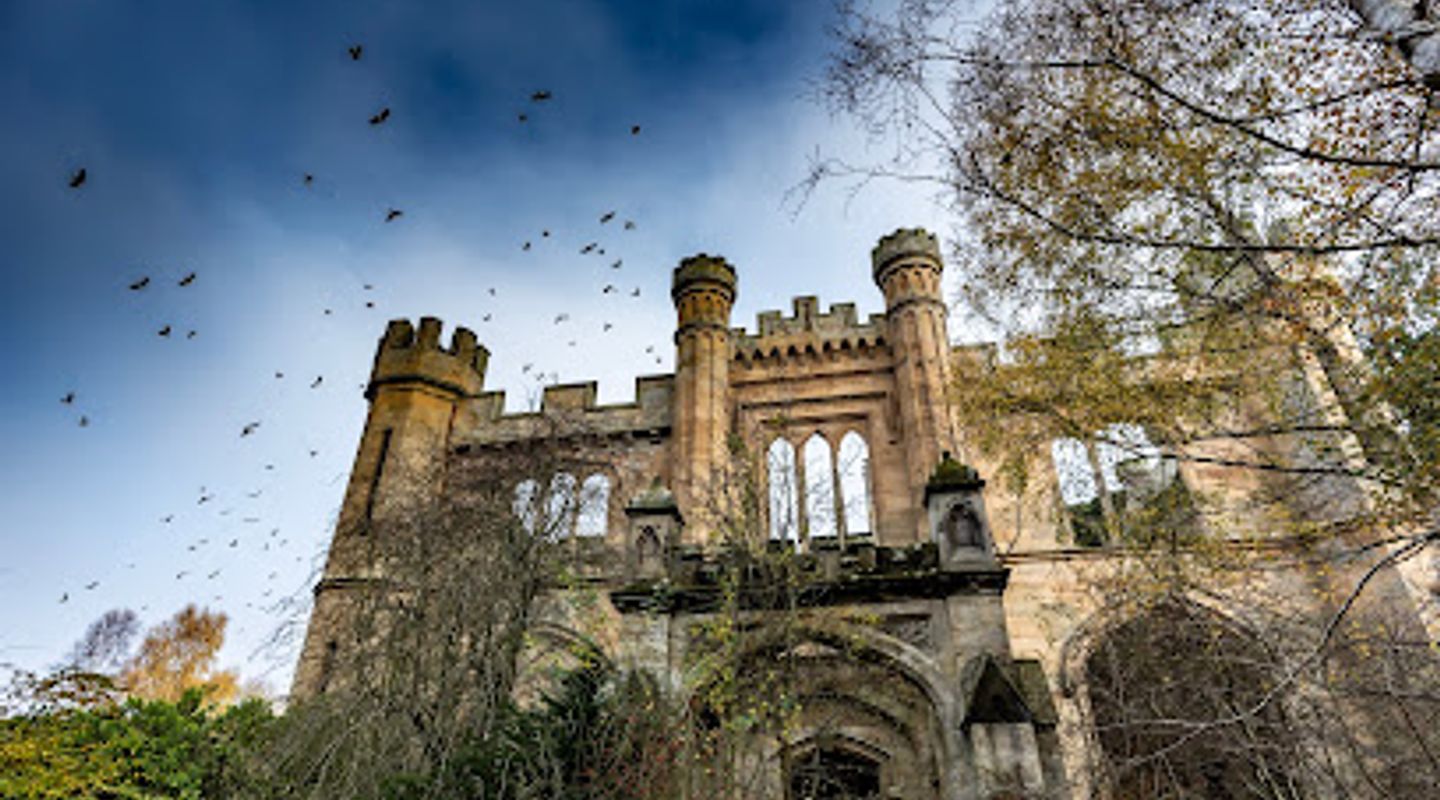
A brief summary of Crawford Priory
Explore the haunting Gothic ruins of Crawford Priory, a grand 19th-century estate shaped by the enigmatic Lady Mary Lindsay Crawford in scenic Fife.
Crawford Priory, located near Cupar in Fife, Scotland, is a striking Gothic revival ruin originally built as a hunting lodge in 1758 and transformed into a grand priory-style mansion in the early 19th century by Lady Mary Lindsay Crawford. Known for its romantic architecture and haunting atmosphere, the priory was once a bustling estate hub but has been abandoned since 1968, now standing as a poignant reminder of Scotland’s architectural heritage and Lady Mary’s unique legacy.
On-site amenities
 Restrooms
 Drink options
 Food options
 Seating areas
 Information boards
- Address
- 5 Crawford Priory Courtyard, Cupar KY15 5RA
- Website
Getting there
Car
Bus and Walk
Walking
Discover more about Crawford Priory
Origins and Architectural Evolution
Crawford Priory began its life in 1758 as Crawford Lodge, a simple hunting retreat built by the 21st Earl of Crawford. After the death of the 22nd Earl in 1808, the estate passed to his sister, Lady Mary Lindsay Crawford, who undertook an ambitious transformation of the property. Between 1809 and 1813, she commissioned renowned architects David Hamilton and later James Gillespie Graham to remodel the lodge into a grand Gothic revival mansion. The design incorporated ecclesiastical Gothic elements such as pointed windows, battlements, and a chapel with murals and stained glass, evoking the appearance of a medieval priory despite never having been a religious institution.
Lady Mary Lindsay Crawford’s Influence and Legacy
Lady Mary was a remarkable figure for her time — a reclusive, devout woman who managed a large estate including farms, coal mines, limestone kilns, and quarries. She lived mostly alone with her servants and was known for her business acumen and generosity, leaving bequests to the local poor and her beloved animals. Her deep attachment to Crawford Priory is echoed in local lore, including reports of her ghost wandering the grounds accompanied by the animals she cared for. Her funeral in 1833 was held in the priory’s Gothic hall, a vivid scene illuminated by stained glass sunlight, marking the end of the Lindsay family’s long lineage.
Later Modifications and Decline
Following Lady Mary’s death, the priory fell into disuse but was restored and altered in the 1870s by the 6th Earl of Glasgow and later by Reginald Fairlie in the 1920s. These renovations added a towering five-story Gothic tower, a chapel redesign, wood paneling, and a carriage porch. The estate remained in the hands of the Cochrane family until 1968, when the cost of upkeep and issues like dry rot led to its abandonment. Despite attempts to demolish or redevelop the site, it remains a protected ruin, listed as a category B building and included in the Buildings at Risk Register.
The Priory’s Surroundings and Features
Set amid estate forestry and arable land, the priory once featured extensive grounds including a curling pond, dovecot, stables, kennels, and a north lodge echoing the Gothic style. The inner courtyard, accessed by a grand arch, and the richly decorated interiors once boasted fan vaulting, medieval-style stained glass, and armorial panels. Nearby woods contain Lady Mary’s crypt and a pet cemetery, adding to the site’s mystique. The surrounding landscape offers views of the Lomond Hills and the Howe of Fife, blending natural beauty with historical intrigue.
Atmosphere and Visitor Experience Today
Now a romantic yet melancholic ruin, Crawford Priory captivates visitors with its haunting ambiance. The sounds of crows and the wind through the battlements evoke the presence of Lady Mary’s spirit, a local legend. The priory’s decaying grandeur invites reflection on the passage of time and the endurance of heritage. Though fenced off for safety due to its dangerous condition, the site remains accessible for photography and exploration of its evocative exterior and estate surroundings.
Preservation and Cultural Significance
Crawford Priory stands as one of Scotland’s finest early Gothic revival examples, embodying the architectural tastes and social history of the early 19th century. Its story highlights the role of a pioneering woman landowner and the challenges of preserving large historic estates. While its interior has long since vanished, the priory’s silhouette against the Fife landscape continues to inspire historians, architects, and visitors drawn to its unique blend of beauty, history, and legend.
Evendo Review Centre
 Google
Guest reviews
Best time to go
Quietest: Jan, Feb & Dec · before 7am or at 8pm
Busy times are Evendo estimates for a typical year, to help you plan. Actual crowds vary with events, school holidays and the weather.
Explore Crawford Priory on the map
A handpicked selection of must-see spots near Crawford Priory, mapped for you.
Get your free copy of our complete guide to Crawford Priory, delivered straight to you.
Everything on this page, from opening hours and how to get there to Eve’s tips and the best time to go, in one PDF you can read offline, print or share.
Already have an account? Sign in
Your Crawford Priory guide is ready.
We'll send it to · Not you? Sign out

Getting your guide ready…
We are putting together a fresh copy of the Crawford Priory guide. This can take up to a minute.
This can take a few moments. If your browser asks, choose Allow so the download can start. You'll find the guide in your Downloads folder.
Nothing happened? Download it again
Sorry, the guide is taking longer than usual. Please try again in a minute, or get it by email instead.
Other nearby places you may find interesting
The closest places of the same kind, if this one is not quite what you had in mind.
-
-
-
-
-


Swipe for more places
More to explore near Crawford Priory

 Best experiences near Crawford Priory
 Best hotels near Crawford Priory
 Best landmarks near Crawford Priory
 Best attractions near Crawford Priory
 Best shops near Crawford Priory
 Best restaurants near Crawford Priory
 Best bars near Crawford Priory
Do you manage this location?
Take control to get all the benefits, like improved information, better appearance, and stronger visibility across AI-powered discovery.
Explore more
Explore more of Fife
Discover Fife, Scotland’s Kingdom of History and Natural Beauty, featuring St. Andrews, ancient ruins, charming fishing villages, and stunning coastal walks.
Explore Fife
Explore more of United Kingdom
Discover the United Kingdom: A blend of rich history, stunning landscapes, and vibrant cities, offering a unique travel experience for every visitor.
Explore United Kingdom
