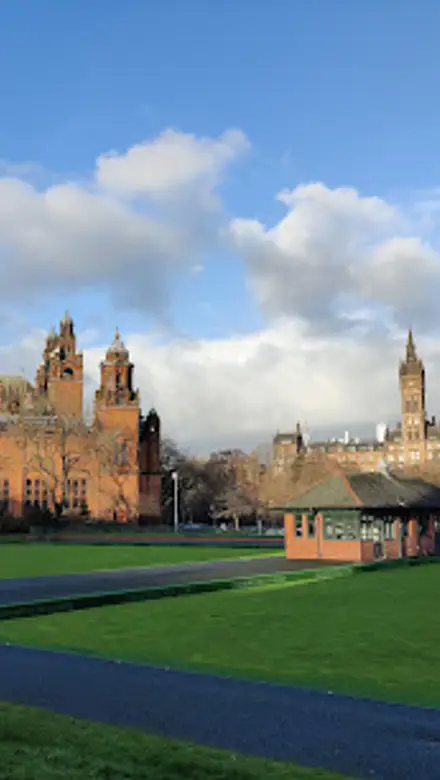
Kelvingrove Park, Glasgow Travel Guide
Free Guide: Explore Glasgow’s historic Kelvingrove Park — a vibrant Victorian green space with iconic art, serene river walks, and lively community spirit.


A brief summary of Kelvingrove Park
Explore Glasgow’s historic Kelvingrove Park — a vibrant Victorian green space with iconic art, serene river walks, and lively community spirit.
Kelvingrove Park is a sprawling 85-acre Victorian park in Glasgow’s West End, featuring scenic river walks, historic monuments, a vibrant bandstand, and the renowned Kelvingrove Art Gallery and Museum. Open 24/7 with free entry, it offers a blend of natural beauty, cultural heritage, and recreational spaces, making it a beloved destination for locals and visitors alike.
On-site amenities
 Restrooms
 Seating areas
 Picnic areas
 Trash bins
 Information boards
Opening hours
- Every dayOpen 24 hours
Opening hours as listed on the venue’s Google Business Profile. Hours can change for services and special events, so check with the venue before you go.
- Address
- Park Terrace, Glasgow G3 6BY
- Phone
- Website
Getting there
Public Transport
Bus
Car
Walking
Discover more about Kelvingrove Park
A Legacy of Victorian Urban Design
Kelvingrove Park was established in 1852 as part of Glasgow’s response to rapid urban growth and industrial expansion. Designed by Sir Joseph Paxton, famed for London’s Crystal Palace, the park was created to provide green space and respite for the city’s residents. Its Victorian roots remain evident in the formal landscaping, elegant bridges, and historic monuments such as the Stewart Memorial Fountain and the Lord Frederick Sleigh Roberts Monument. The River Kelvin meanders through the park, adding a tranquil water element that enhances the park’s serene atmosphere.
Architectural and Cultural Highlights
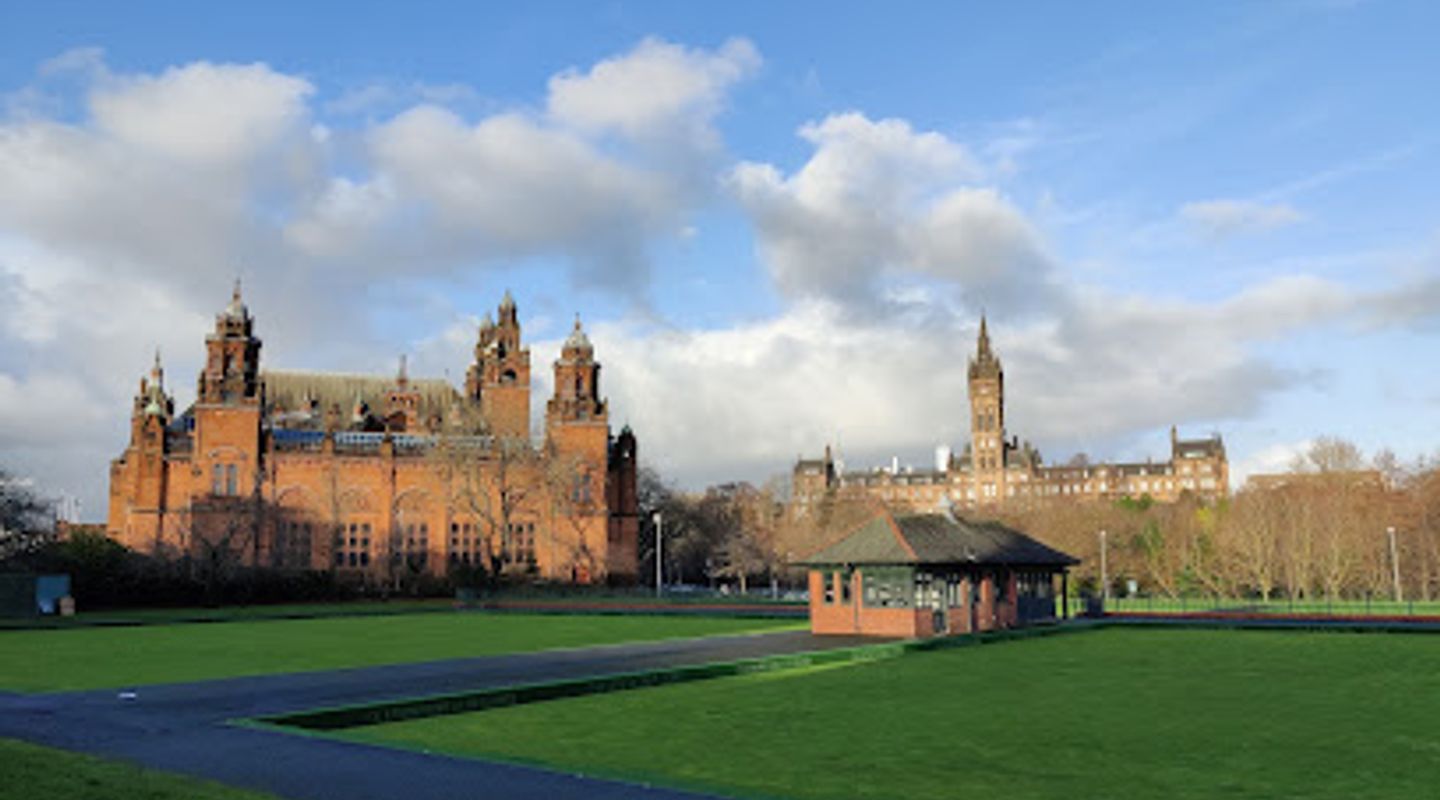
Dominating the eastern edge of the park is the Kelvingrove Art Gallery and Museum, a grand red sandstone building opened in 1901. This iconic structure showcases Spanish Baroque architectural style with intricate detailing and a commanding presence. Inside, visitors can explore 22 themed galleries housing over 8,000 objects, ranging from fine art and natural history to arms, armour, and ancient artifacts. Notable exhibits include Salvador Dalí’s famous "Christ of Saint John of the Cross," Scottish Colourist paintings, and the impressive natural history displays featuring Scottish wildlife and fossils.
A Hub for Recreation and Community
Beyond its cultural offerings, Kelvingrove Park is a lively recreational space. It features a well-equipped children’s playground, a skatepark, bowling and croquet greens, and a bandstand that hosts live music and community events. The park’s wide paths and wooded trails attract joggers, walkers, and cyclists, while its open lawns provide picnic spots and areas for relaxation. The park’s design encourages visitors to pause and appreciate its many statues, bridges, and floral displays, making it a perfect blend of leisure and heritage.
Wildlife and Natural Environment
Kelvingrove Park is also a sanctuary for local birdlife and native flora. The River Kelvin supports diverse aquatic life and contributes to the park’s peaceful ambiance. The carefully maintained gardens and wooded areas offer a habitat for wildlife and a green refuge within the urban landscape. Seasonal changes bring vibrant displays of flowers and foliage, enhancing the park’s visual appeal throughout the year.
Accessibility and Visitor Experience
The park is open 24 hours daily and free to enter, welcoming visitors at any time. It is easily accessible via public transport, with nearby subway stations such as Kelvinbridge and Kelvinhall providing convenient connections. Onsite amenities include restrooms, seating areas, picnic spots, and information boards. The adjacent Kelvingrove Art Gallery and Museum offers additional facilities such as a café, gift shop, and accessible services, ensuring a comfortable visit for families and individuals of all abilities.
Events and Local Significance
Kelvingrove Park has a rich history of hosting significant events, including the 1901 International Exhibition and the 1911 Scottish Exhibition. Today, it remains a vibrant community hub, regularly hosting cultural events, outdoor concerts, and festivals. Its proximity to the University of Glasgow and the West End’s cultural scene adds to its dynamic character, making it a cherished landmark that reflects Glasgow’s heritage and contemporary life.
Evendo Review Centre
 Google
Guest reviews
Best time to go
Quietest: Jan, Feb & Dec · before 6am or at 10pm
Busy times are Evendo estimates for a typical year, to help you plan. Actual crowds vary with events, school holidays and the weather.
Explore Kelvingrove Park on the map
A handpicked selection of must-see spots near Kelvingrove Park, mapped for you.
Get your free copy of our complete guide to Kelvingrove Park, delivered straight to you.
Everything on this page, from opening hours and how to get there to Eve’s tips and the best time to go, in one PDF you can read offline, print or share.
Already have an account? Sign in
Your Kelvingrove Park guide is ready.
We'll send it to · Not you? Sign out

Getting your guide ready…
We are putting together a fresh copy of the Kelvingrove Park guide. This can take up to a minute.
This can take a few moments. If your browser asks, choose Allow so the download can start. You'll find the guide in your Downloads folder.
Nothing happened? Download it again
Sorry, the guide is taking longer than usual. Please try again in a minute, or get it by email instead.
Unlock the best of Kelvingrove Park
Skip-the-line tickets, guided tours with entry, and walking tours of the area, booked in a few clicks.
 Tour with entry
Glasgow Self Guided Audio Experience
from $5.70 Tour with entry
Ultimate Glasgow Highlights Bike or e-bike Tour with Great Route
from $61.96 Tour with entry
Glasgow Small Group E Bike Tour: Highlights & Hidden Corners
from $72.12 Tour with entry
Glasgow City Bike Tour and Craft Beer Experience
from $107.55


Other nearby places you may find interesting
The closest places of the same kind, if this one is not quite what you had in mind.
-
-
-
-
-


Swipe for more places
More to explore near Kelvingrove Park

 Best experiences near Kelvingrove Park
 Best hotels near Kelvingrove Park
 Best landmarks near Kelvingrove Park
 Best attractions near Kelvingrove Park
 Best shops near Kelvingrove Park
 Best restaurants near Kelvingrove Park
 Best bars near Kelvingrove Park
Do you manage this location?
Take control to get all the benefits, like improved information, better appearance, and stronger visibility across AI-powered discovery.
Explore more

Explore more of Glasgow
Discover Glasgow, Scotland's cultural capital, where history, architecture, and vibrant arts scene meet, offering a unique and unforgettable travel experience.
Explore Glasgow
Explore more of United Kingdom
Discover the United Kingdom: A blend of rich history, stunning landscapes, and vibrant cities, offering a unique travel experience for every visitor.
Explore United Kingdom