Painted Hall, London Travel Guide
A richly painted Baroque hall in Greenwich where ceiling and wall scenes reward slow viewing, careful photography, and a taste for heritage interiors.
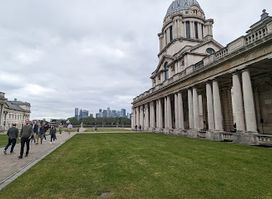
The Painted Hall is the ceremonial centrepiece of the Old Royal Naval College in Greenwich, a vast Baroque interior covered in ceiling and wall paintings by Sir James Thornhill. Visitors come for slow, upward-looking viewing rather than quick sightseeing: the room rewards time, with layered allegory, maritime power, and formal grandeur in every direction. It is one of London’s most concentrated heritage interiors, best approached as a focused cultural stop.
A brief summary to Painted Hall
- College Way, London, SE10 9NN, GB
- Click to display
- Click to display
- Duration: 0.75 to 4 hours
- Mid ranged
-
 Indoor
- Mobile reception: 4 out of 5
- Monday 10 am-4:30 pm
- Tuesday 10 am-4:30 pm
- Wednesday 10 am-4:30 pm
- Thursday 10 am-4:30 pm
- Friday 10 am-4:30 pm
- Saturday 10 am-4:30 pm
- Sunday 10 am-4:30 pm

Know before you go
Hi, I'm Eve. Here are a few practical things to know before exploring Painted Hall.
- Allow time to stand back and then move closer; the hall reads differently from the centre, the edges, and beneath the ceiling.
- Use public transport if possible, as Greenwich parking is limited and the site is easier to reach on foot from the DLR.
- Visit earlier in the day or later in the afternoon if you want fewer groups and more space for photographs.
Do you manage this location?
Take control to get all the benefits, like improved information, better appearance, and stronger visibility across AI-powered discovery. Learn more about listing your business on Evendo
Activate your presenceOther nearby places you may find interesting
The closest places of the same kind, if this one is not quite what you had in mind.



Explore Painted Hall on the Map
A handpicked selection of must-see spots near Painted Hall, mapped for you.
Unlock the Best of Painted Hall
Buy tickets
-
No tickets available
Book tours with entry


Book tours without entry

Getting There
-
Public Transport
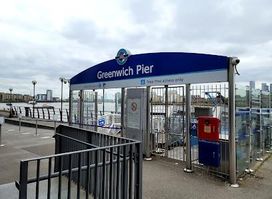
Take the DLR to Cutty Sark for Maritime Greenwich, then walk a short distance to the Old Royal Naval College; this is usually the simplest option.
-
Train
Rail access via Greenwich-area stations is practical, with a short onward walk; useful if you are already travelling on southeast London rail lines.
-
River Boat
A river service to Greenwich is a slower but scenic approach from central London; it is more weather-dependent than rail or DLR travel.
-
Taxi / Rideshare
A taxi or rideshare is convenient for limited mobility or combined itineraries, but it is usually unnecessary for a straightforward visit.
For the on-the-go comforts that matter to you
-
 Restrooms
-
 Drink Options
-
 Food Options
-
 Seating Areas
-
 Information Boards
-
 Visitor Center
Discover more about Painted Hall
What it is
The Painted Hall is the main ceremonial interior of the Old Royal Naval College in Greenwich, set within the Maritime Greenwich World Heritage landscape in southeast London. It is not a stand-alone museum room but a grand historic hall inside a larger heritage complex. The space is known for its painted ceiling and walls by Sir James Thornhill, created over an extended period in the early 18th century, and for its place in the architectural vision associated with Sir Christopher Wren.The hall was originally conceived as a formal dining and ceremonial space for naval pensioners, which gives the room its unusual mix of state symbolism, maritime history, and theatrical decoration. It is one of the most important surviving Baroque interiors in Britain, and that significance is immediately visible the moment you step inside and look up.Atmosphere and setting
The experience is indoors, enclosed, and visually dense. The hall is large and high-ceilinged, but it does not feel airy in the modern sense; instead, it feels controlled, symmetrical, and deliberately ceremonial. The strongest impression is vertical: visitors spend much of their time looking upward at the painted ceiling, then moving slowly around the room to catch the walls, corners, and perspective shifts from different angles.The surrounding setting is urban and riverside rather than scenic in a natural sense. Outside the hall, the wider Old Royal Naval College complex provides courtyards, historic façades, and a strong sense of ordered architecture. The Painted Hall itself is the visual climax, with the rest of the site acting as context rather than competition.How a visit unfolds
Most visitors enter through the wider Old Royal Naval College visitor experience, pass interpretive displays, and then spend time in the hall itself. The visit is observation-led: you pause, look, photograph, and listen to interpretation. It is not a place for constant movement or high-energy activity. The room encourages slow reading of detail, from painted figures and allegorical scenes to the way the architecture frames the decoration.A realistic visit lasts about an hour if you are moving briskly, but art and architecture travellers often stay longer. The hall works well for solo visitors, couples, and anyone interested in heritage interiors, photography, or the visual language of power and ceremony. It is less suited to travellers looking for an outdoor landmark, a hands-on attraction, or a fast-paced stop.Practical expectations
The Painted Hall is a ticketed heritage interior, so the main cost is admission rather than transport or food. Facilities are centred on the visitor complex, with a visitor centre, interpretive material, and likely café and restroom access nearby. The site is easiest to reach by public transport, especially the DLR to Cutty Sark for Maritime Greenwich, followed by a short walk. River services are a slower but pleasant alternative, while driving is usually unnecessary because parking is limited.The hall is indoors and works well in rain, cold, or hot weather. Crowds are usually lightest soon after opening and later in the afternoon, with the busiest period in the middle of the day, especially at weekends and during school holidays. The overall mood is formal, reflective, and richly detailed: a place for looking carefully rather than rushing through.












Your all‑in‑one travel companion app
Explore expert travel guides, compare and book tours, experiences, hotels, and more—all from the palm of your hand. Download now for seamless trip planning wherever your wanderlust takes you.


Explore More of London

Looking beyond Painted Hall? Discover London for broader travel guides, local hot-spots, and regional highlights.
Explore London