

National Trust - Rainham Hall Travel Guide
Free Guide: Explore Rainham Hall, a stunning 1729 Georgian merchant’s house blending history, community gardens, and immersive exhibitions on London’s eastern edge.


A brief summary of National Trust - Rainham Hall
Explore Rainham Hall, a stunning 1729 Georgian merchant’s house blending history, community gardens, and immersive exhibitions on London’s eastern edge.
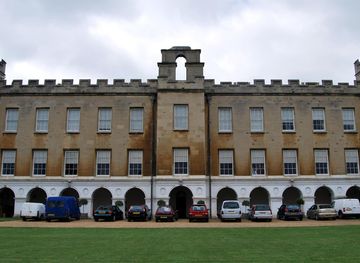
Rainham Hall is a beautifully preserved Grade II* listed Queen Anne style Georgian house built in 1729 by sea merchant Captain John Harle. Located in Rainham village on London’s eastern edge, it offers visitors a rare glimpse into early 18th-century merchant life through engaging exhibitions, historic interiors, and a tranquil community garden. Managed by the National Trust, the Hall blends history, community involvement, and evolving interpretation in a unique heritage experience.
On-site amenities
 Restrooms
 Drink options
 Food options
 Seating areas
 Information boards
 Visitor centre
Opening hours
- Mon11 am–4:30 pm
- TueClosed
- Wed11 am–4:30 pm
- Thu11 am–4:30 pm
- Fri11 am–4:30 pm
- Sat11 am–4:30 pm
- Sun11 am–4:30 pm
Opening hours as listed on the venue’s Google Business Profile. Hours can change for services and special events, so check with the venue before you go.
- Address
- Rainham Hall, The Broadway, Rainham RM13 9YN
- Phone
- Website
Getting there
Train
Bus
Car
Discover more about National Trust - Rainham Hall
Origins of an 18th-Century Merchant’s Home
Rainham Hall was constructed in 1729 by Captain John Harle, a successful coal and shipping merchant originally from South Shields in northeast England. Harle’s family business involved shipping coal to London, a vital commodity at the time. He purchased the land in Rainham and had the River Ingrebourne dredged to allow ships to dock at his wharf, linking his home directly to his maritime trade. The Hall’s architecture reflects the Queen Anne style typical of the period, with elegant proportions and a design more akin to a London merchant’s townhouse than a rural villa. The house features a grand entrance hall for public functions and smaller parlors for family use, embodying the social and business life of its owner.
The Harle Family and Historical Transitions
John Harle lived at the Hall until his death in 1742, leaving behind a young family. His widow Sarah and later relatives maintained the property, but after 1751 the house was rented out and the original contents auctioned off. The Harle family retained ownership until 1895, after which the Hall fell into disrepair. Remarkably, an original copy of John Harle’s 1741 will was rediscovered at a car boot sale and donated to the Hall in 2014, providing a tangible link to its early history. The National Trust acquired Rainham Hall in 1949, preserving it as a significant example of early Georgian architecture and merchant life.
Restoration and Modern Interpretation
After decades of limited public access and tenancy, Rainham Hall underwent a £2.5 million conservation project to restore its historic interiors and open it fully to visitors. The National Trust has adopted an innovative interpretive approach, blending traditional displays with immersive and participatory elements. Visitors can explore changing exhibitions that cover four key periods of the Hall’s history, from the 1700s to the 1960s, with interactive trails for children and community-led projects such as model boat making and replica costume sewing. The Hall’s rooms retain traces of later occupants, including a blue rag-rolled parlour inspired by 1980s design, illustrating the building’s layered history.
Gardens and Community Engagement
Surrounding the Hall is a peaceful community garden featuring formal and informal areas, woodland, orchards, and vegetable plots. The garden serves as a green oasis in the village and hosts family nature activities, play areas, and seasonal events. The restored stable block and coach house provide additional interpretive spaces detailing the Hall’s history. This blend of heritage and community use reflects the Hall’s ongoing role as a local cultural hub, connecting past and present.
Architectural and Cultural Significance
Rainham Hall stands as one of England’s finest surviving examples of an early Georgian merchant’s house. Its Grade II* listing underscores its architectural and historic importance. The Hall’s design, with its elegant panelled rooms, marble floors, and mahogany banisters, offers insight into the lifestyle of an 18th-century sea merchant and the commercial networks that shaped London’s growth. The National Trust’s stewardship ensures that this heritage is preserved while engaging contemporary audiences through dynamic storytelling and community involvement.
A Hidden Gem on London’s Outskirts
Nestled in the heart of Rainham village, the Hall is uniquely accessible by public transport, close to Rainham Station, making it an easy day trip from central London. Its setting contrasts urban proximity with views of marshland and industry, offering a distinctive atmosphere. With exhibitions, events, and a welcoming garden space, Rainham Hall invites visitors to explore a lesser-known facet of London’s rich history and enjoy a tranquil cultural escape.
Evendo Review Centre
 Google
Guest reviews
Best time to go
Quietest: Jan, Feb & Nov · before 7am or at 8pm
Busy times are Evendo estimates for a typical year, to help you plan. Actual crowds vary with events, school holidays and the weather.
Explore National Trust - Rainham Hall on the map
A handpicked selection of must-see spots near National Trust - Rainham Hall, mapped for you.
Get your free copy of our complete guide to National Trust - Rainham Hall, delivered straight to you.
Everything on this page, from opening hours and how to get there to Eve’s tips and the best time to go, in one PDF you can read offline, print or share.
Already have an account? Sign in
Your National Trust - Rainham Hall guide is ready.
We'll send it to · Not you? Sign out

Getting your guide ready…
We are putting together a fresh copy of the National Trust - Rainham Hall guide. This can take up to a minute.
This can take a few moments. If your browser asks, choose Allow so the download can start. You'll find the guide in your Downloads folder.
Nothing happened? Download it again
Sorry, the guide is taking longer than usual. Please try again in a minute, or get it by email instead.
Other nearby places you may find interesting
The closest places of the same kind, if this one is not quite what you had in mind.
-
-
-
-
-


Swipe for more places
More to explore near National Trust - Rainham Hall
-
 Best experiences near National Trust - Rainham Hall
-
 Best hotels near National Trust - Rainham Hall
-
 Best landmarks near National Trust - Rainham Hall
-
 Best attractions near National Trust - Rainham Hall
-
 Best shops near National Trust - Rainham Hall
-
 Best restaurants near National Trust - Rainham Hall
-
 Best bars near National Trust - Rainham Hall


Do you manage this location?
Take control to get all the benefits, like improved information, better appearance, and stronger visibility across AI-powered discovery.
Explore more
Explore more of Middlesex
Discover Middlesex: A blend of historic charm and modern excitement, offering scenic beauty, cultural events, and easy access to London.
Explore Middlesex
Explore more of United Kingdom
Discover the United Kingdom: A blend of rich history, stunning landscapes, and vibrant cities, offering a unique travel experience for every visitor.
Explore United Kingdom
