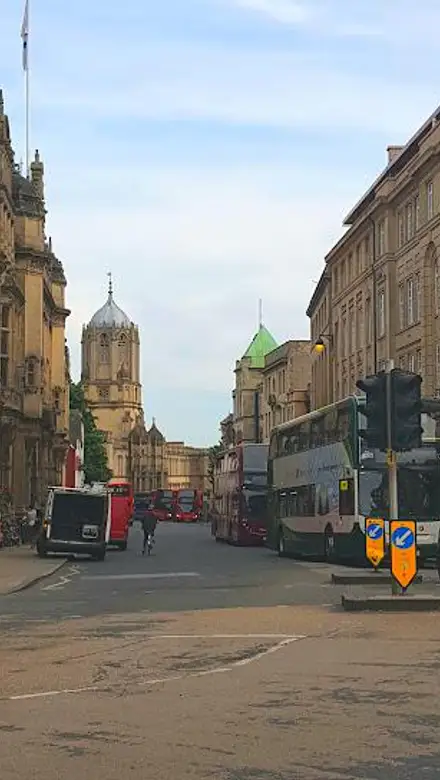
Park End St, Oxford Travel Guide
Free Guide: Historic gateway to Oxford’s west, blending Georgian heritage with vibrant modern dining and urban life.


A brief summary of Park End St
Historic gateway to Oxford’s west, blending Georgian heritage with vibrant modern dining and urban life.
Park End Street is a central street in Oxford, England, known for its historic significance and vibrant urban life. Built in the late 18th century as part of New Road, it connects the city centre with the west and lies close to Oxford railway station. Today, it hosts a mix of dining venues, offices, and modern developments, serving as a lively gateway to the city’s rich cultural and commercial offerings.
On-site amenities
 Restrooms
 Drink options
 Food options
 Seating areas
 Trash bins
 Information boards
- Address
- Oxford
Getting there
Train
Bus
Walking
Discover more about Park End St
Origins and Urban Evolution
Park End Street was constructed between 1769 and 1770 as a key segment of New Road, a turnpike designed to improve access between central Oxford and the western outskirts. This new thoroughfare bypassed older, narrower streets such as Hythe Bridge Street and St Thomas' High Street, reflecting the city’s expansion and modernization during the Georgian era. The street’s eastern end crosses Castle Mill Stream via Pacey's Bridge, part of the River Thames system, underscoring its strategic location within Oxford’s historic waterways.
Railway Heritage and Transformation
From 1851, Park End Street was closely linked to Oxford Rewley Road railway station, situated at its junction with Rewley Road. This station played a vital role in the city’s transport network until its closure in 1951, with the adjacent goods yard operating until 1984. The station building was carefully dismantled and relocated to Buckinghamshire Railway Centre in 1999 to accommodate the development of Frideswide Square and the Saïd Business School, marking a significant shift from industrial to educational and civic uses in the area.
Contemporary Character and Amenities
Today, Park End Street is a bustling urban corridor featuring a variety of establishments including restaurants, bars, offices, and event venues. Notable dining spots such as The Lighthouse and The Olive Branch offer diverse culinary experiences from tapas to Mediterranean and Middle Eastern flavors, attracting locals and visitors alike. The street’s proximity to Oxford railway station and the city centre makes it a convenient and vibrant location for social and business activities.
Architectural and Social Landscape
The street’s architecture blends historic Georgian influences with modern developments, including the award-winning Saïd Business School complex. The area around Park End Street reflects Oxford’s dynamic urban fabric, where heritage meets contemporary life. Public spaces like Frideswide Square provide pedestrian-friendly environments, while the street itself serves as a key artery for traffic and public transport, linking various parts of the city.
Connectivity and Urban Mobility
Park End Street benefits from excellent transport connections, with multiple bus stops nearby and immediate access to Oxford railway station. This makes it a vital node for commuters and travelers. The street’s location facilitates easy access to Oxford’s cultural, educational, and commercial districts, enhancing its role as a gateway to the city’s broader attractions.
Community and Cultural Significance
Beyond its functional role, Park End Street is embedded in Oxford’s community life, hosting diverse businesses and serving as a meeting point for social and cultural exchange. Its evolution from a Georgian turnpike to a modern urban hub encapsulates the city’s ongoing narrative of growth, adaptation, and heritage preservation.
Evendo Review Centre
 Google
Guest reviews
Best time to go
Quietest: Jan, Feb & Mar · before 7am
Busy times are Evendo estimates for a typical year, to help you plan. Actual crowds vary with events, school holidays and the weather.
Explore Park End St on the map
A handpicked selection of must-see spots near Park End St, mapped for you.
Get your free copy of our complete guide to Park End St, delivered straight to you.
Everything on this page, from opening hours and how to get there to Eve’s tips and the best time to go, in one PDF you can read offline, print or share.
Already have an account? Sign in
Your Park End St guide is ready.
We'll send it to · Not you? Sign out

Getting your guide ready…
We are putting together a fresh copy of the Park End St guide. This can take up to a minute.
This can take a few moments. If your browser asks, choose Allow so the download can start. You'll find the guide in your Downloads folder.
Nothing happened? Download it again
Sorry, the guide is taking longer than usual. Please try again in a minute, or get it by email instead.
Other nearby places you may find interesting
The closest places of the same kind, if this one is not quite what you had in mind.
-
-
-
-
-


Swipe for more places
More to explore near Park End St

 Best experiences near Park End St
 Best hotels near Park End St
 Best landmarks near Park End St
 Best attractions near Park End St
 Best shops near Park End St
 Best restaurants near Park End St
 Best bars near Park End St
Do you manage this location?
Take control to get all the benefits, like improved information, better appearance, and stronger visibility across AI-powered discovery.
Explore more

Explore more of Oxford
Discover Oxford, the City of Dreaming Spires – where historic academia meets vibrant culture. Explore its ancient colleges, museums, and scenic waterways for an unforgettable visit.
Explore Oxford
Explore more of United Kingdom
Discover the United Kingdom: A blend of rich history, stunning landscapes, and vibrant cities, offering a unique travel experience for every visitor.
Explore United Kingdom