Clairinsh Travel Guide
Free Guide: A fish-shaped island fortress steeped in clan history and now a protected nature sanctuary on Loch Lomond.


A brief summary of Clairinsh
A fish-shaped island fortress steeped in clan history and now a protected nature sanctuary on Loch Lomond.
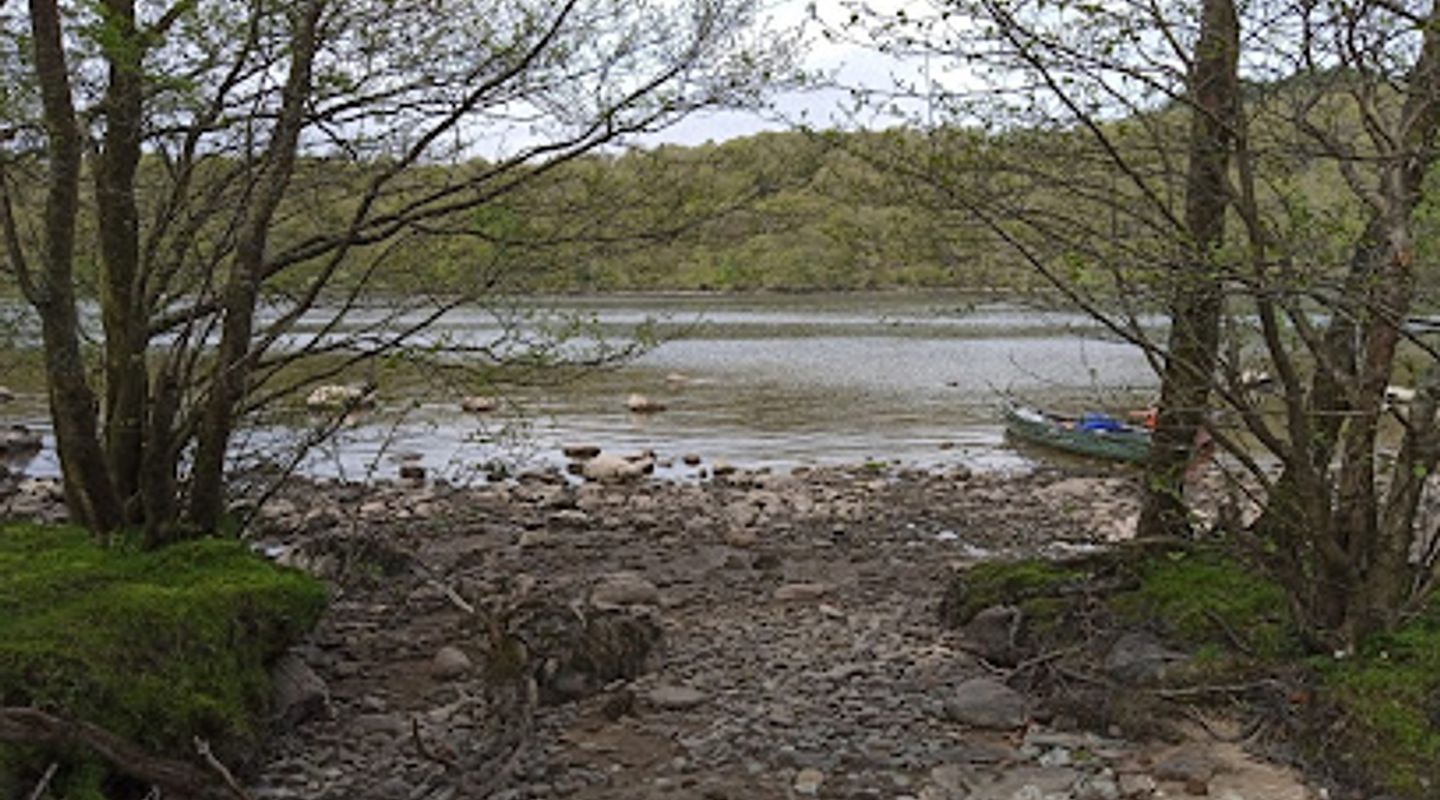
Clairinsh, known as 'The Flat Island,' is a small wooded island in Loch Lomond, central Scotland, steeped in Highland history and natural beauty. Covered in ancient oak trees entwined with ivy and shaped like a fish when viewed from above, this protected nature reserve lies just offshore from Balmaha. Once the fortress and gathering place of Clan Buchanan, the island now serves as a sanctuary for wildlife and a window into Scotland's medieval past, with ruins and archaeological remains telling stories of centuries gone by.
On-site amenities
 Information boards
 Seating areas
 Picnic areas
- Address
- Clairinsh G63 0JQ
Getting there
Car from Balloch
Bus and walk from Glasgow
Train and bus from Edinburgh
Boat tour from Loch Lomond
Discover more about Clairinsh
The Heart of Clan Buchanan
Clairinsh holds profound significance in Scottish clan history as the ancient seat of Clan Buchanan, believed to have been in their possession since 1225. The island became the symbolic heart of the clan, so important that its Gaelic name, Clàr-Innis, meaning 'flat island,' inspired the clan's war cry: 'Clair Innis!' This small wooded island, measuring approximately one kilometre long and half a kilometre wide with an area of about 14 acres, was the primary gathering place for the clan during times of war and peace alike. The island's strategic location in Loch Lomond, just offshore from the village of Balmaha, made it an ideal fortress and refuge for the Buchanan chiefs throughout the medieval period.
Landscape and Natural Character
The island's distinctive appearance sets it apart from other Loch Lomond islands. When viewed from the air, Clairinsh resembles a fish, a characteristic that has made it instantly recognisable for centuries. The island is remarkably flat, with its highest elevation reaching only 13 metres, which aligns perfectly with its Gaelic name. Dense woodland covers the island, dominated by ancient oak trees entwined with ivy, creating a lush, natural canopy that shelters the island's wildlife. The surrounding waters of Loch Lomond, which sits on the boundary between Scotland's Highlands and Lowlands, provide a dramatic backdrop to this small but historically significant landmass.
Archaeological Treasures and Medieval Remains
Clairinsh is rich with archaeological evidence of human habitation spanning centuries. Archaeologists have identified the remains of seven old buildings and seven stone docks on the island, testament to its importance as a settlement and trading post. Close to Clairinsh lies a crannog known as 'The Kitchen' or 'Keppinch,' a man-made island structure situated approximately 62 metres off the north end of Clairinsh. This crannog represents a sophisticated form of Iron Age and medieval construction, and Roman pottery discovered there indicates that the area was inhabited or visited many centuries ago. These archaeological sites provide invaluable insights into the lives of people who inhabited this region long before the Buchanan clan established their stronghold.
From Clan Fortress to Protected Sanctuary
Clairinsh remained under Buchanan clan control until 1682, when it was purchased by the Duke of Montrose's family, who retained ownership for approximately 250 years. The island's trajectory changed dramatically in 1934 when William George Buchanan, a wealthy industrialist who made his fortune in the nitrate industry in Chile, purchased the island. Recognising the island's ecological and historical value, Buchanan made a visionary decision in his will to gift Clairinsh to the Buchanan Society, stipulating that it be preserved forever as a sanctuary for animals and birds where hunting would be prohibited. Since 1940, the Buchanan Society has owned and protected the island, and in 1958, Clairinsh was officially designated as the first part of a National Nature Reserve, fulfilling Buchanan's conservation vision.
Current Status and Conservation
Today, Clairinsh is owned by the Buchanan Society in Glasgow and leased to Scottish Natural Heritage, ensuring its protection as a nature reserve and wildlife sanctuary. The island remains overrun with brush and trees, creating an ideal habitat for birds and other wildlife. Access to the island is restricted to preserve its ecological integrity and protect the nesting sites of various bird species. The island's designation as a National Nature Reserve reflects its dual significance as both a historically important site and an environmentally sensitive area worthy of conservation. Visitors to the surrounding areas of Loch Lomond can appreciate the island from the water or from viewpoints along the loch's shore, gaining perspective on this remarkable piece of Scottish heritage.
Evendo Review Centre
 Google
Guest reviews
Best time to go
Quietest: Jan, Feb & Dec · before 6am or at 9pm
Busy times are Evendo estimates for a typical year, to help you plan. Actual crowds vary with events, school holidays and the weather.
Explore Clairinsh on the map
A handpicked selection of must-see spots near Clairinsh, mapped for you.
Get your free copy of our complete guide to Clairinsh, delivered straight to you.
Everything on this page, from opening hours and how to get there to Eve’s tips and the best time to go, in one PDF you can read offline, print or share.
Already have an account? Sign in
Your Clairinsh guide is ready.
We'll send it to · Not you? Sign out

Getting your guide ready…
We are putting together a fresh copy of the Clairinsh guide. This can take up to a minute.
This can take a few moments. If your browser asks, choose Allow so the download can start. You'll find the guide in your Downloads folder.
Nothing happened? Download it again
Sorry, the guide is taking longer than usual. Please try again in a minute, or get it by email instead.
Other nearby places you may find interesting
The closest places of the same kind, if this one is not quite what you had in mind.
-
-
-
-
-


Swipe for more places
More to explore near Clairinsh

 Best experiences near Clairinsh
 Best hotels near Clairinsh
 Best landmarks near Clairinsh
 Best attractions near Clairinsh
 Best shops near Clairinsh
 Best restaurants near Clairinsh
 Best bars near Clairinsh
Do you manage this location?
Take control to get all the benefits, like improved information, better appearance, and stronger visibility across AI-powered discovery.
Explore more

Explore more of Renfrewshire
Discover Renfrewshire: Scotland's blend of history, culture, and natural beauty, from ancient abbeys to scenic parks.
Explore Renfrewshire
Explore more of United Kingdom
Discover the United Kingdom: A blend of rich history, stunning landscapes, and vibrant cities, offering a unique travel experience for every visitor.
Explore United Kingdom