
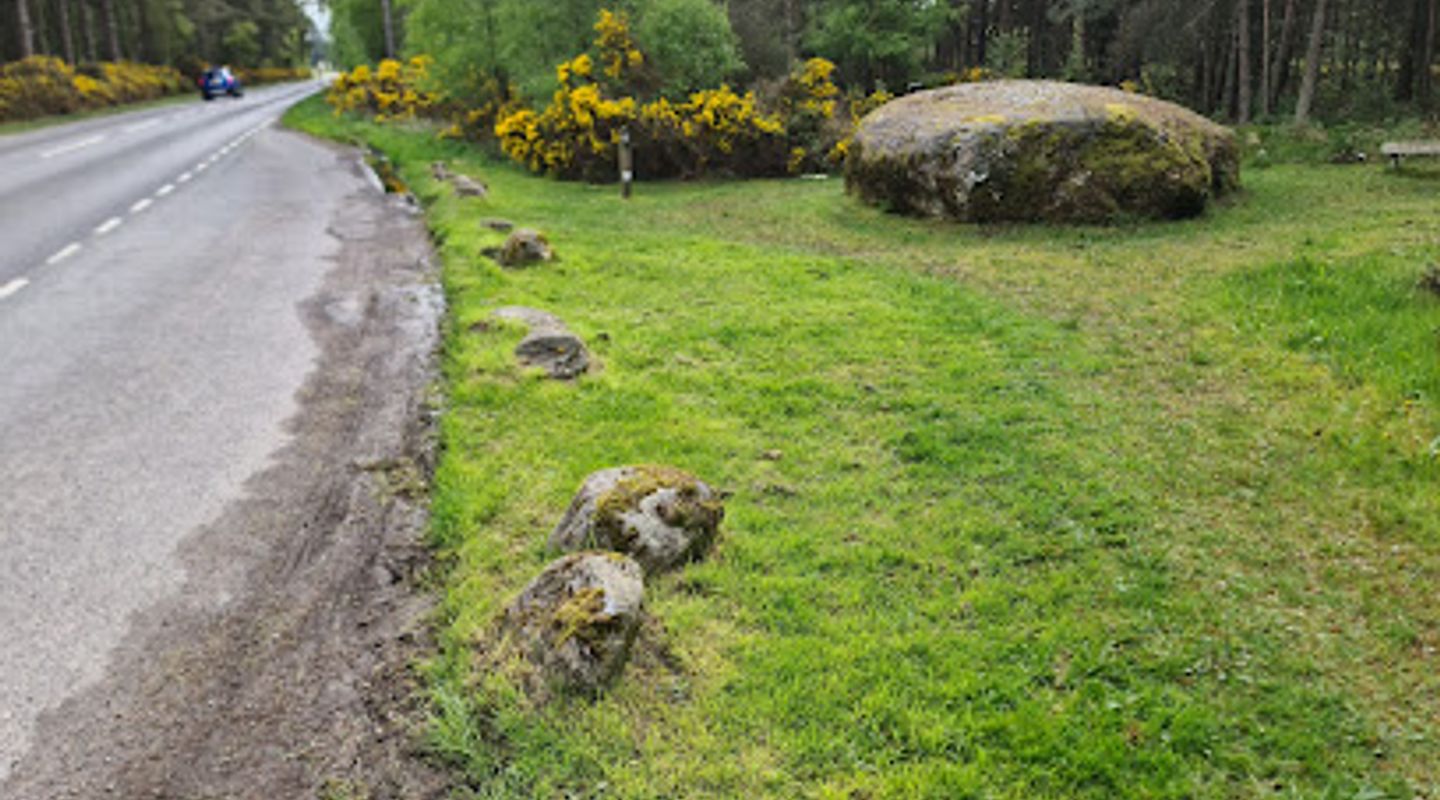
Cumberland Stone, Scottish Highlands Travel Guide
A towering Ice Age relic near Culloden Moor, where history and nature converge at the Duke of Cumberland’s legendary vantage point.
Cumberland Stone is a massive glacial erratic boulder near Culloden Moor, Inverness, believed to be the spot where the Duke of Cumberland observed the 1746 Battle of Culloden. Carried and deposited by ice sheets during the last Ice Age, this imposing stone offers a tangible connection to Scotland’s dramatic history and natural past, set amidst tranquil woodland close to the battlefield.
A brief summary to Cumberland Stone
- B9006, Inverness, GB
- Duration: 0.5 to 1.5 hours
- Free
-
 Outdoor
- Mobile reception: 4 out of 5

Know before you go
Hi, I'm Eve. Here are a few practical things to know before exploring Cumberland Stone.
- Climb the steps on the side of the stone for a unique view and a tactile connection to history.
- Visit alongside the Culloden Battlefield visitor centre to deepen your understanding of the 1746 battle.
- Wear sturdy footwear as the surrounding woodland trails can be uneven and muddy, especially after rain.
- Bring a camera to capture the impressive scale of the stone and the serene natural setting.
Do you manage this location?
Take control to get all the benefits, like improved information, better appearance, and stronger visibility across AI-powered discovery. Learn more about listing your business on Evendo
Activate your presenceOther nearby places you may find interesting
The closest places of the same kind, if this one is not quite what you had in mind.




Explore Cumberland Stone on the Map
A handpicked selection of must-see spots near Cumberland Stone, mapped for you.
Getting There
-
Bus
Take the Stagecoach Highland bus service from Inverness city centre to Culloden Battlefield, which runs every 30 minutes and takes approximately 25–30 minutes. From the battlefield visitor centre, it is a 10-minute walk through woodland to Cumberland Stone. A return ticket costs around £5–£7.
-
Car
Driving from Inverness city centre takes about 15 minutes via the A96 and B9006 roads. Parking is available at the Culloden Battlefield visitor centre, with a small fee of about £3–£5. From the car park, Cumberland Stone is a short walk through marked woodland paths.
-
Walking
For active visitors, a 90-minute walk from Inverness city centre to Cumberland Stone is possible via the B9006, though the route includes some uneven terrain and minor road crossings. Suitable footwear is recommended.
For the on-the-go comforts that matter to you
-
 Restrooms
-
 Drink Options
-
 Food Options
-
 Seating Areas
-
 Information Boards
-
 Visitor Center
-
 Trash Bins
Discover more about Cumberland Stone
A Monument Born of Ice and Time
Cumberland Stone is a colossal glacial erratic, a boulder transported and deposited by the great ice sheets that once covered Scotland during the last Ice Age, around 16,000 years ago. Measuring over 5 feet high and with a circumference exceeding 50 feet, it stands out as a natural marvel amidst the landscape of Culloden Moor. Its presence is a silent testament to the immense geological forces that shaped the Highlands, offering visitors a glimpse into a prehistoric era long before human history was recorded.Historical Significance on Culloden Moor
This stone is famously associated with the Battle of Culloden in 1746, the last pitched battle fought on British soil. Tradition holds that the Duke of Cumberland, commander of the government forces, used the stone as a vantage point to watch the battle unfold. Some accounts even suggest he ate his meal atop the stone on the day of the conflict. Though the stone itself did not influence the battle, it has become a poignant symbol linking the natural world with this pivotal moment in Scottish history.Physical Features and Visitor Interaction
Visitors to Cumberland Stone will notice steps hammered into its side, allowing people to climb atop the rock for a unique perspective and a playful connection to the past. While not the most comfortable seat for a picnic, the stone invites exploration and offers a tactile experience of history. Surrounded by woodland near the battlefield, the setting enhances the atmosphere of reflection and remembrance.Surrounding Landscape and Atmosphere
Situated close to the Culloden Battlefield visitor centre, the stone is enveloped by peaceful woods that contrast with the turbulent history of the site. The area is steeped in stories of conflict and cultural change, and the quiet natural environment encourages contemplation. The nearby memorials and interpretive signage deepen understanding of the battle’s impact on Scotland’s heritage.Legacy and Cultural Reflections
Cumberland Stone stands not only as a geological artifact but also as a cultural landmark. It evokes narratives of power, loss, and transformation that resonate beyond the battlefield. The stone’s enduring presence invites visitors to consider the passage of time—from ancient ice ages to historic struggles—and the ways landscapes hold memory. It connects the natural and human histories in a profound and tangible way.Visiting Today
Today, Cumberland Stone remains accessible year-round, offering a free and evocative stop for those exploring the Highlands and the Culloden area. Its imposing form and quiet dignity continue to inspire curiosity and respect, making it a must-see for history buffs, nature lovers, and anyone intrigued by Scotland’s layered past.












Your all‑in‑one travel companion app
Explore expert travel guides, compare and book tours, experiences, hotels, and more—all from the palm of your hand. Download now for seamless trip planning wherever your wanderlust takes you.


Explore More of Scottish Highlands
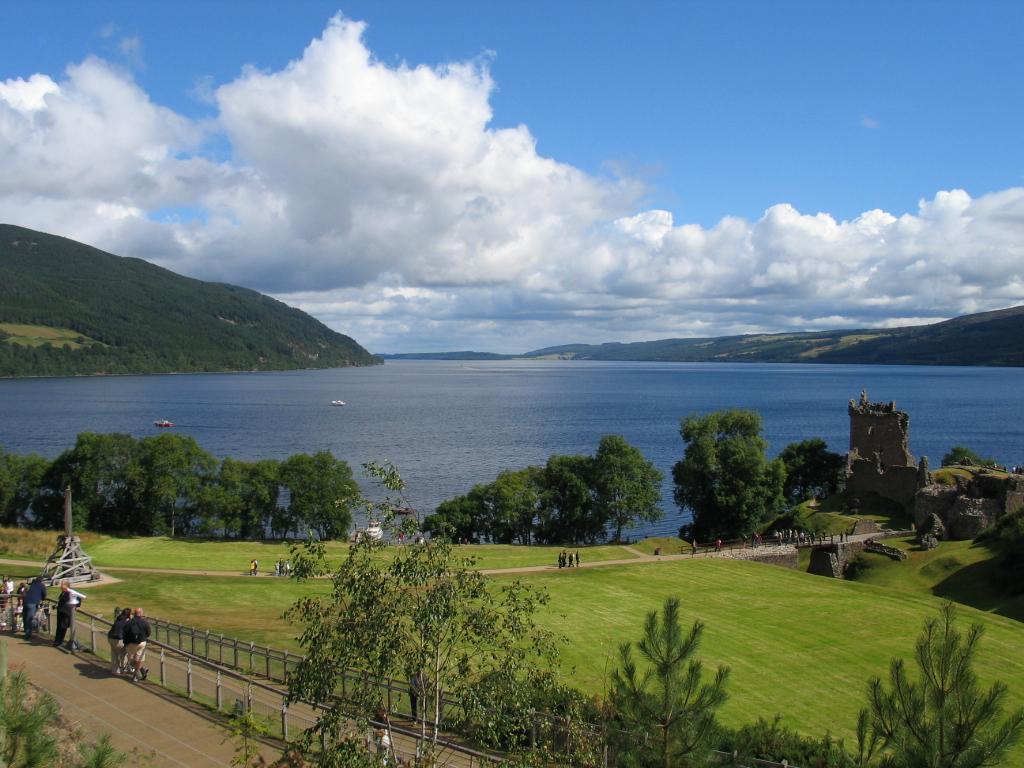
Looking beyond Cumberland Stone? Discover Scottish Highlands for broader travel guides, local hot-spots, and regional highlights.
Explore Scottish Highlands
Premium motorbike hire in Inverness, your perfect start to the iconic North Coast 500 adventure through Scotland’s stunning Highlands.

Explore the haunting moor where the 1746 Battle of Culloden ended the Jacobite Rising, with immersive exhibits and historic memorials.
