RSPB Mousa Travel Guide
Free Guide: A 2,000-year-old Iron Age broch and sanctuary for 6,800 storm-petrels on a wild, uninhabited Shetland island.


A brief summary of RSPB Mousa
A 2,000-year-old Iron Age broch and sanctuary for 6,800 storm-petrels on a wild, uninhabited Shetland island.
Mousa is a wild, uninhabited island in Shetland, Scotland, home to the Broch of Mousa—the best-preserved Iron Age round tower in the British Isles. This RSPB nature reserve hosts approximately 6,800 breeding pairs of European storm-petrels, representing 8% of the British population. Accessible only by ferry from April to September, the island offers visitors an extraordinary blend of 2,000-year-old archaeology, rugged coastal landscapes, and internationally significant seabird and seal colonies. No facilities exist on the island, making it a pristine destination for nature enthusiasts and history buffs seeking an authentic wilderness experience.
On-site amenities
 Information boards
- Address
- Sandwick, Shetland ZE2 9HP
- Phone
- Website
Getting there
Ferry from Sandsayre Pier
Kayak from Sandwick
Private boat charter
Discover more about RSPB Mousa
A Monument to Iron Age Engineering
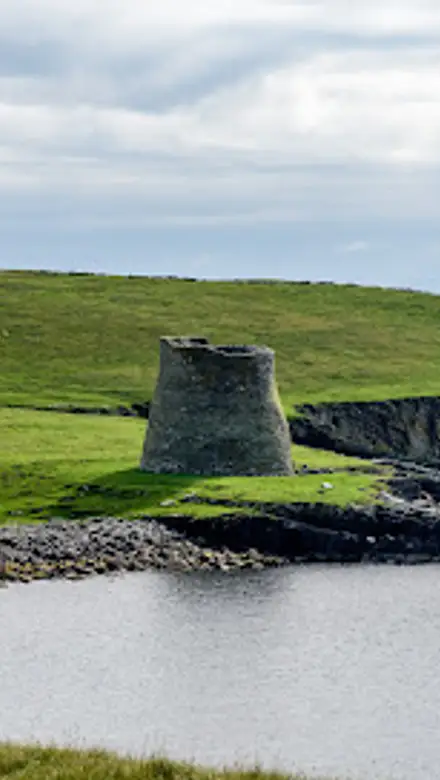
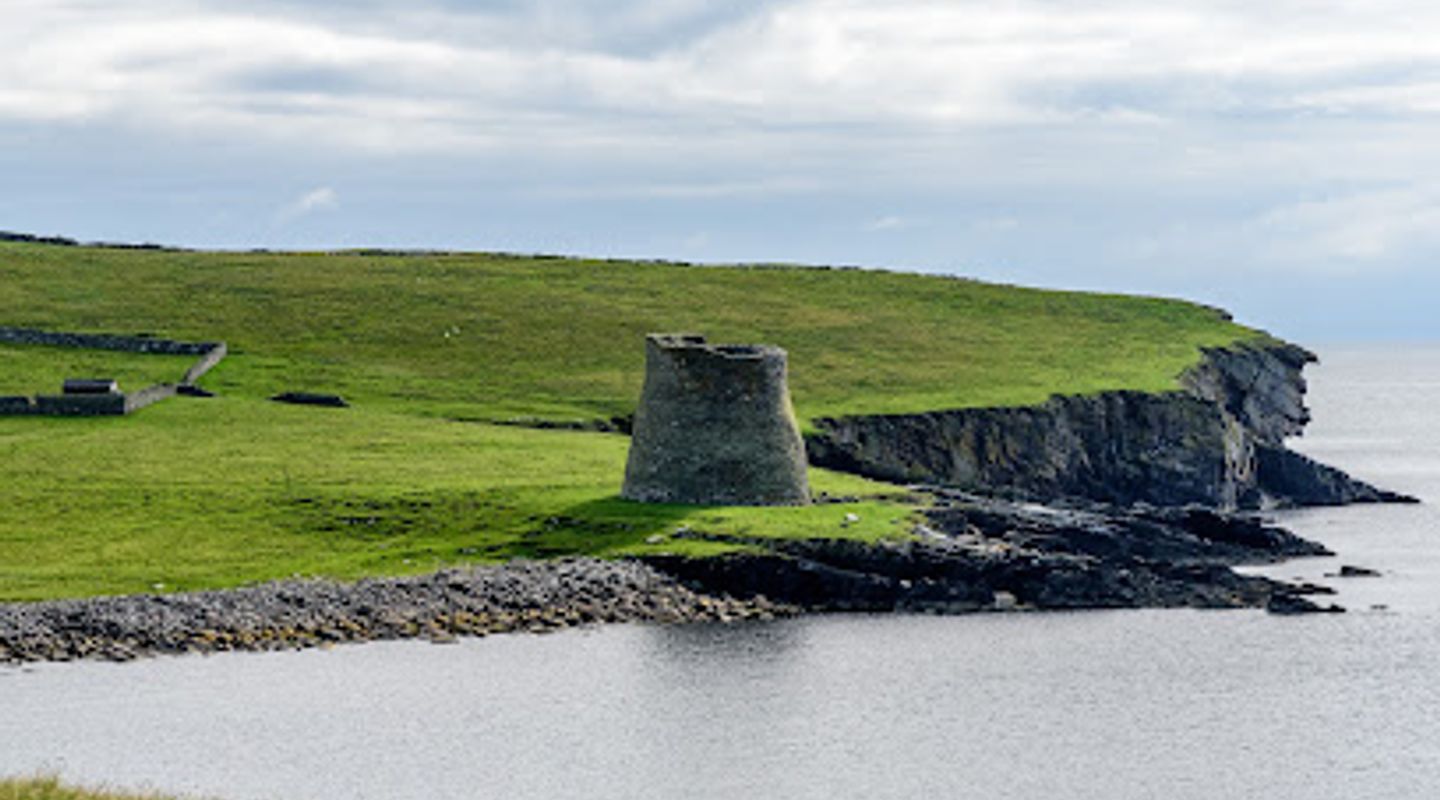
The Broch of Mousa stands as the finest surviving example of Iron Age fortification in the entire British Isles. This remarkable drystone tower, constructed around 2,000 years ago, rises dramatically above a rocky shoreline with walls of extraordinary thickness—15 metres in diameter at the base, yet only 6 metres across the interior. The entrance passage is deceptively long, a defensive feature reflecting the immense structural engineering required to create such a formidable structure. Within the massive walls lie a series of chambers, likely used for storage, while passages run between the inner and outer skins at higher levels. A steep internal staircase allows visitors to ascend to the top, where a landing halfway up probably once provided access to an upper level built on a ledge running around the interior circumference. The preservation of this 2,000-year-old tower is so complete that visitors can still climb to the summit and marvel at both the commanding views and the sophisticated workmanship of its ancient builders.
Legends, Sagas, and Hidden Histories
Mousa carries a rich tapestry of historical narratives woven through Norse sagas and local lore. The island appears in the Orkneyinga Saga as a place of refuge during invasions and as a lovers' hideaway, lending it an air of romantic mystery that has endured for centuries. In July 1558, Scottish sailors from Aberdeen attacked an English fleet off Shetland and seized cattle and goods belonging to Olave Sinclair on Mousa—a raid that led to compensation claims in the Edinburgh courts. More recently, the broch served as a secret store for smugglers, adding another layer to its storied past. The island remained inhabited until 1853, when the last family departed, leaving behind only archaeological traces and the enduring presence of the broch itself.
A Global Sanctuary for Storm-Petrels
Today, Mousa's greatest significance lies in its role as a nature reserve of international importance. The island hosts approximately 6,800 breeding pairs of European storm-petrels—diminutive seabirds that nest in the crevices and cavities of the ancient broch and nearby stone dykes. This population represents roughly 8% of the entire British population and 2.6% of the world's total storm-petrel population, making Mousa a site of extraordinary ornithological value. The island is designated as a Special Protection Area and Site of Special Scientific Interest by NatureScot, and is managed as a reserve by the RSPB. The storm-petrels are best observed during special evening trips, when visitors can witness these nocturnal birds returning to their nest sites in the semi-light of the Shetland summer night—a spectacle described as truly unforgettable.
A Living Seascape Teeming with Wildlife
Beyond the storm-petrels, Mousa supports an extraordinary array of breeding seabirds and marine mammals. Black guillemots, Arctic terns, great skuas, fulmars, and shags nest on the island's cliffs and moorland. The surrounding waters are home to both harbour and grey seals, which haul out on rocks and beaches throughout the island. Harbour porpoises, known locally as 'Neesick', are frequently spotted in Mousa Sound, one of Britain's best locations for observing this species. The island's isolation and freedom from introduced predators—such as rats, mice, hedgehogs, and stoats—make it a pristine refuge for vulnerable species. The varied habitats, including coastal cliffs, wet heathland, mires, grassland, and ancient dry-stone dykes, create niches for rare plants and the diminutive Shetland wren.
Geology and Landscape of Ancient Seas
Mousa's physical landscape tells a story spanning hundreds of millions of years. The island is composed primarily of flagstone, sedimentary rock originally deposited as river and lake sediments during the Devonian period, approximately 375 million years ago. This low-lying island, measuring just 1.5 kilometres long and 1 kilometre wide, sits precisely on the 60th parallel north, positioned one nautical mile off the east coast of Mainland Shetland. The coastline features dramatic cliff formations, particularly along the southeastern reaches, where a high-level storm beach displays massive slabs of flagstone piled up by the great storm of 16 February 1900. The island's moorland and coastal paths offer visitors intimate encounters with Shetland's raw, windswept landscape.
Visiting the Island: Access and Experience
Access to Mousa is exclusively by ferry from Sandsayre Pier near Sandwick on Mainland Shetland, a crossing that takes approximately 15 minutes. The ferry operates daily except Saturdays from April through mid-September, with sailings dependent on weather conditions. Visitors should be prepared for uneven, steep, narrow, stony, and boggy terrain, and sturdy footwear and wet-weather gear are essential. The island offers no facilities whatsoever—no toilets, cafes, shops, or visitor centre—making it imperative that visitors bring provisions, including water and food. A well-marked circular trail guides visitors around the RSPB reserve, passing the broch, coastal viewpoints, seal haul-outs, and nesting sites. Evening storm-petrel trips, departing around 10 PM and returning near 1 AM, require advance booking and a torch, offering a unique nocturnal experience of watching these remarkable seabirds return to their breeding grounds.
Evendo Review Centre
 Google
Guest reviews
Best time to go
Quietest: Jan, Feb & Oct · before 7am or at 7pm or at 8pm
Busy times are Evendo estimates for a typical year, to help you plan. Actual crowds vary with events, school holidays and the weather.
Explore RSPB Mousa on the map
A handpicked selection of must-see spots near RSPB Mousa, mapped for you.
Get your free copy of our complete guide to RSPB Mousa, delivered straight to you.
Everything on this page, from opening hours and how to get there to Eve’s tips and the best time to go, in one PDF you can read offline, print or share.
Already have an account? Sign in
Your RSPB Mousa guide is ready.
We'll send it to · Not you? Sign out

Getting your guide ready…
We are putting together a fresh copy of the RSPB Mousa guide. This can take up to a minute.
This can take a few moments. If your browser asks, choose Allow so the download can start. You'll find the guide in your Downloads folder.
Nothing happened? Download it again
Sorry, the guide is taking longer than usual. Please try again in a minute, or get it by email instead.
Other nearby places you may find interesting
The closest places of the same kind, if this one is not quite what you had in mind.
-
-
-
-
-


Swipe for more places
More to explore near RSPB Mousa

 Best experiences near RSPB Mousa

 Best hotels near RSPB Mousa

 Best landmarks near RSPB Mousa

 Best attractions near RSPB Mousa

 Best shops near RSPB Mousa

 Best restaurants near RSPB Mousa

 Best bars near RSPB Mousa
Do you manage this location?
Take control to get all the benefits, like improved information, better appearance, and stronger visibility across AI-powered discovery.
Explore more
Explore more of Shetland
Explore Shetland: A captivating blend of rugged landscapes, rich wildlife, and a unique cultural heritage between Scotland and Scandinavia.
Explore Shetland
Explore more of United Kingdom
Discover the United Kingdom: A blend of rich history, stunning landscapes, and vibrant cities, offering a unique travel experience for every visitor.
Explore United Kingdom