

Free Shetland Travel Guide & Mobile App
Explore Shetland with free travel guides. Discover regional history, expert tips, proposed trips, and audio guides on web or mobile app.


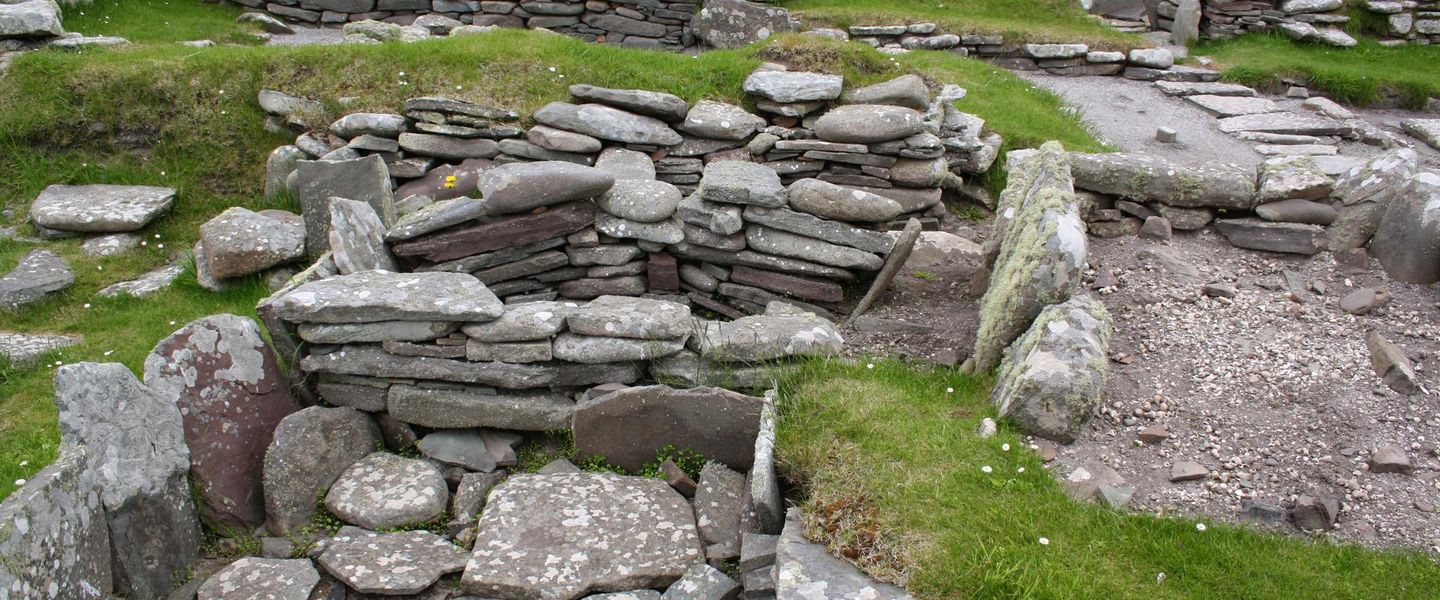


Discover Shetland’s windswept islands through Norse heritage, seabird cliffs, archaeological sites, coastal walks, local food and Lerwick culture.
Read more about Shetland
When is the best time to visit Shetland?
Best: June–August · 14–15°C| Month | High (°C) | Rainfall (mm) |
|---|---|---|
| January | 5 | 80 |
| February | 6 | 70 |
| March | 7 | 75 |
| April | 9 | 60 |
| May | 11 | 50 |
| June (best) | 14 | 50 |
| July (best) | 15 | 60 |
| August (best) | 15 | 60 |
| September | 14 | 70 |
| October | 11 | 80 |
| November | 8 | 90 |
| December | 6 | 90 |
Getting to and around Shetland
How to get there
Transportation
Best attractions in Shetland
Shetland’s attractions range from internationally important archaeology to wildlife-rich coastlines and small, community-run museums. Jarlshof, near Sumburgh, presents an exceptional sequence of prehistoric, Iron Age, Norse and medieval settlement, while Mousa Broch offers a boat-accessed encounter with one of Scotland’s best-preserved Iron Age towers. The Shetland Museum and Archives in Lerwick explains the islands’ archaeology, crofting, fishing, textiles and maritime connections. For landscapes and wildlife, Sumburgh Head, Hermaness National Nature Reserve on Unst and the cliffs of Eshaness provide opportunities to see seabirds and dramatic geology; access, weather and seasonal wildlife conditions should be checked locally. Beaches such as St Ninian’s Tombolo and West Sandwick contrast with the black volcanic-looking rock and layered cliffs of parts of North Mainland, although Shetland’s geology is more varied than a single coastal description suggests. Scalloway Castle and local heritage centres add political and wartime history, while walking, birdwatching, photography, sea kayaking and island-hopping provide active ways to explore the archipelago.
-
Museum
Shetland Museum & Archives
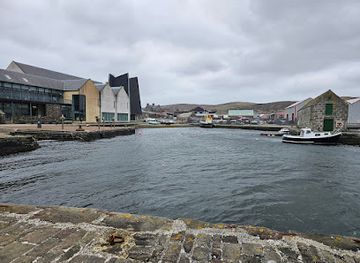
Discover Shetland’s rich heritage through captivating exhibits and archives in a historic dockside setting in Lerwick.
-
Tourist attraction
Sumburgh Head Lighthouse, Visitor Centre & Nature Reserve
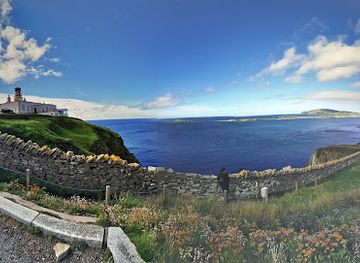
Historic lighthouse and immersive nature reserve perched on Shetland’s southern cliffs, rich in wildlife, heritage, and dramatic coastal views.
-
Tourist attraction
Jarlshof Prehistoric and Norse Settlement
Explore 4,000 years of Shetland history through Neolithic homes, Iron Age wheelhouses, Norse longhouses, and a 16th-century laird’s house at Jarlshof.
-
Museum
Scalloway Museum
Discover Shetland’s history and heroic wartime tales at Scalloway Museum, a vibrant community hub near the iconic castle.
Best landmarks in Shetland
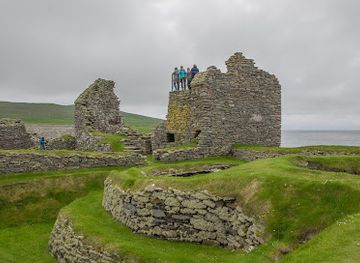
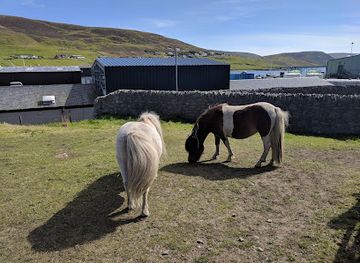
Mousa Broch is one of Shetland’s defining historic landmarks: its tall, nearly complete Iron Age stone tower rises above the uninhabited island of Mousa and is approached by seasonal boat trips. At Jarlshof, the visible remains form a layered record of settlement from prehistoric times through the Norse and medieval periods. Sumburgh Head Lighthouse, built in the nineteenth century, stands above a major seabird coast at the southern entrance to Mainland, while the cliffs of Hermaness on Unst create one of the archipelago’s most recognisable natural settings. Scalloway Castle, built in the early seventeenth century, represents the political authority of the Stewart earls and the former importance of Scalloway. In Lerwick, the stone waterfront lanes and harbour buildings express the town’s maritime development, while the modern Shetland Museum and Archives anchors the islands’ public understanding of history. St Ninian’s Tombolo, a narrow sand causeway linking a tidal island to Mainland, is a notable geographical feature as well as a place associated with early Christian archaeology.
-
Town Hall
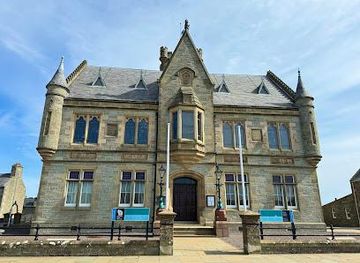
Lerwick Town Hall
Victorian civic masterpiece with breathtaking stained glass windows telling Shetland's historical narrative
-
Historical landmark
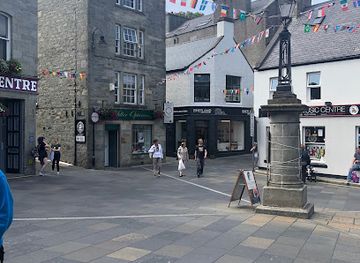
Market Cross
Historic Market Cross in Lerwick, the symbolic heart of Shetland’s trade, community, and civic life.
Explore Shetland on the map
Plan your trip on one map. See where the top cities, national parks and sights are, and book hotels and experiences in a few clicks.
Best hotels in Shetland
Best restaurants in Shetland
Shetland’s food culture is shaped by cold waters, maritime trade, crofting and a short growing season. Fish and shellfish are prominent, with local menus often featuring scallops, mussels, crab, lobster and other North Atlantic produce when available. Shetland lamb, beef and traditional reestit mutton reflect the islands’ livestock and preserving traditions, while potatoes, vegetables, dairy products, baking and seasonal berries supplement the local larder. In Lerwick, cafés, pubs and restaurants provide the broadest choice, from straightforward seafood and home baking to contemporary cooking using island ingredients. Rural inns and village cafés offer a more limited but often locally focused selection, and opening patterns can be seasonal. Farmers’ markets, food stalls and independent producers are useful places to look for knitwear-adjacent gifts such as oatcakes, preserves and confectionery as well as edible specialities. Shetland ale and other Scottish drinks are widely available, but local provenance should be checked rather than assumed for every item described as island produce.
-
Fish & chips
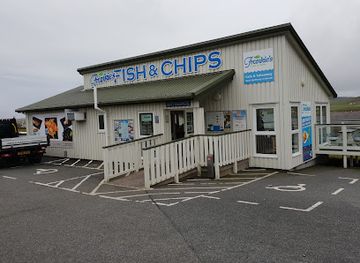
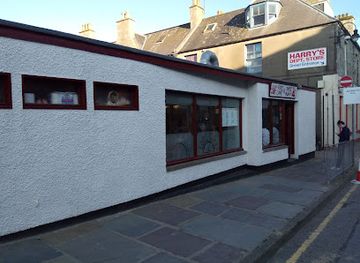
Frankie's Fish & Chips
Shetland's premier fish and chips haven in Brae, where fresh haddock meets crispy batter and generous chips, blending casual dine-in charm with takeaway perfection amid island adventures.
-
-
Nepalese
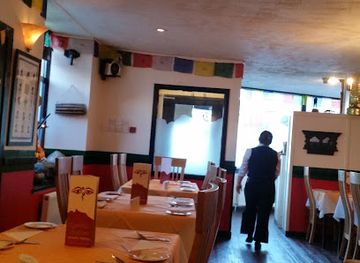
Gurkha Kitchen
Award-winning Nepali and Indian cuisine in the heart of Lerwick, where authentic Himalayan flavors meet island warmth.
-
Fish & chips
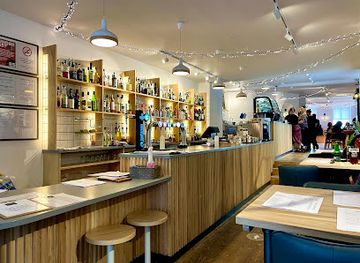
Fort Cafe & Take Away
Shetland's crispiest fish & chips from fresh local catches, served fast in Lerwick's bustling heart—a true island essential for golden, satisfying suppers.
Best bars in Shetland
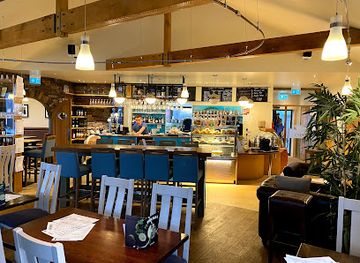
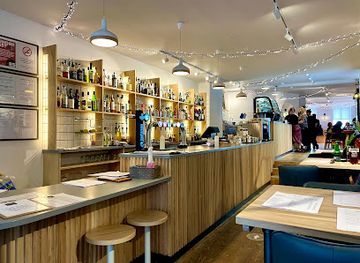
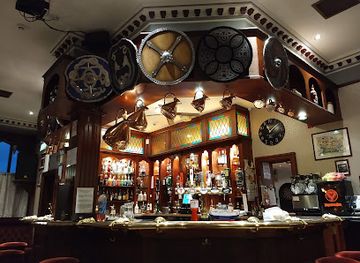
Evenings in Shetland are centred more on pubs, restaurants, community halls and live music than on a large nightclub scene. Lerwick has the widest selection of traditional pubs, hotel bars and places offering music or occasional cultural events, while smaller settlements generally provide a quieter social atmosphere. Local and Scottish ales, whisky and non-alcoholic drinks are commonly available, and traditional music may feature in scheduled performances or informal sessions without being guaranteed nightly. During festivals and community celebrations, halls and public venues can become important gathering places, but arrangements are seasonal and should be checked in advance. The Up Helly Aa fire festivals are significant local events with their own community traditions, not simply nightlife spectacles. Visitors should respect residential areas and remember that late transport options are limited outside Lerwick, particularly on the islands.
-
Pub
The Ship Inn
Charming seaside pub and hotel with stunning bay views, fresh local seafood, and warm Scottish hospitality in the heart of Elie’s coastal village.
-
Bar
Fjarå Café Bar
Coastal charm meets local flavors at Lerwick’s Fjarå Café Bar, where sea views and seasonal dishes create an unforgettable dining escape.
-
Bar
The Dowry
A cozy, contemporary bar and café in Lerwick offering local flavors, vegan delights, and scenic harbour views on Commercial Street.
-
Pub
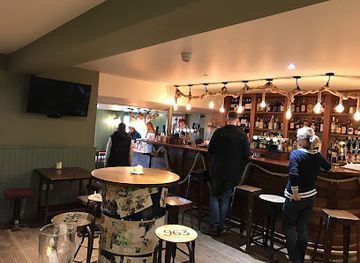
Douglas Arms
Cozy and welcoming, the Douglas Arms is Lerwick’s beloved traditional pub, offering local drinks, live music, and genuine Shetland hospitality.
Best shops in Shetland
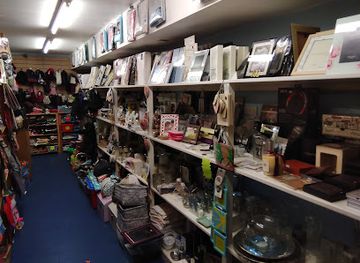
Lerwick is Shetland’s principal shopping centre, with a mixture of practical high-street services, independent retailers, cafés, galleries and shops selling locally made goods. Traditional Shetland knitwear is the most recognisable purchase, available in distinctive patterns and contemporary designs; look for clear information about where an item was made rather than assuming every island-themed garment is locally produced. Craft shops and galleries may offer textiles, ceramics, jewellery, artwork and photographs inspired by the archipelago’s landscapes. Small community shops on the islands provide useful everyday supplies and sometimes local produce, but they are not a substitute for an extensive retail district. Food gifts can include oatcakes, preserves, confectionery, whisky and other Scottish products, while seasonal markets and community events offer opportunities to meet individual producers. Shopping choices become more limited outside Lerwick, so visitors planning remote island trips should buy essentials beforehand and treat local retail as part of the character of each settlement rather than expecting uniform opening arrangements.
-
Shopping Centre
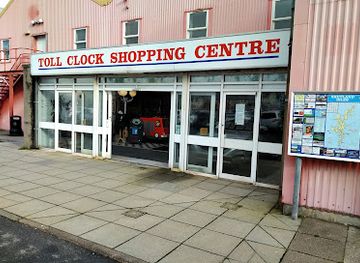
Toll Clock Shopping Centre
A vibrant indoor shopping hub in Lerwick offering local crafts, daily essentials, eateries, and community spirit in the heart of Shetland.
-
General Store
Aywick Shop
A beloved general store in East Yell, Aywick Shop offers an eclectic range of goods and a warm community atmosphere in the heart of Shetland’s northern isles.
-
Gift shop
Boots
Your trusted local pharmacy and beauty destination in the heart of Lerwick, offering health, wellness, and personal care essentials.
-
Book Shop
The Shetland Times Bookshop
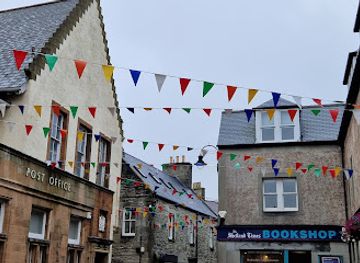
Explore Britain’s most northerly bookshop, a cultural gem in Lerwick offering rich Shetland literature and a welcoming browsing experience.

Get your free copy of our complete guide to Shetland, delivered straight to you.
Everything on this page, from attractions and restaurants to essentials and local phrases, in one PDF you can read offline, print or share.
Already have an account? Sign in
Your Shetland guide is ready.
We'll send it to · Not you? Sign out

Getting your guide ready…
We are putting together a fresh copy of the Shetland guide. This can take up to a minute.
This can take a few moments. If your browser asks, choose Allow so the download can start. You'll find the guide in your Downloads folder.
Nothing happened? Download it again
Sorry, the guide is taking longer than usual. Please try again in a minute, or get it by email instead.
Shetland essentials
Currency and Payment
Safety
Emergency Situations
Do's and Don'ts
Local Tips
From Eve
Local phrases worth knowing
You don't need to get them perfect. A few words go a long way, and locals appreciate the effort.
Basics
| English | Local | Say it |
|---|---|---|
| Hello | Haa | [Hah] |
| Goodbye | Taa | [Tah] |
| Yes | Aye | [Ay] |
| No | Nae | [Nay] |
| Please/You're welcome | Please/Ye're welcome | [Pleez/Yair welcum] |
| Thank you | Fank ye | [Fank yee] |
| Excuse me/Sorry | Scuse me/Sorry | [Skewz mee/Sorree] |
| How are you? | Hoo's it gaun? | [Hoo's it gawn?] |
| Fine. And you? | Fine. An ye? | [Fine. An yee?] |
| Do you speak English? | Dae ye spik Inglis? | [Day yee speak Inglis?] |
| I don't understand | Ah dinnae understan' | [Ah din-eh under-stan'] |
Eating & Drinking
| English | Local | Say it |
|---|---|---|
| I'd like to see the menu, please | Ah'd like tae see the menu, please | [Ah'd laik tay see the menu, pleez] |
| I don't eat meat | Ah dinnae eat meat | [Ah din-eh eet meet] |
| Cheers! | Skål! | [Skawl] |
| I would like to pay, please | Ah wud like tae pay, please | [Ah wood laik tay pay, pleez] |
Emergencies
| English | Local | Say it |
|---|---|---|
| Help! | Help! | [Help!] |
| Go away! | Ga awa! | [Gah awah] |
| Call the Police! | Ca' the Police! | [Cah the Puh-leese!] |
| Call a doctor! | Ca' a doctor! | [Cah a dok-tor!] |
| I'm lost | Ah'm lost | [Ah'm lost] |
| I'm ill | Ah'm ill | [Ah'm ill] |
Shopping
| English | Local | Say it |
|---|---|---|
| I'd like to buy... | Ah'd like tae buy... | [Ah'd laik tay buy...] |
| I'm just looking | Ah'm juist lookin' | [Ah'm joost lukin'] |
| How much is it? | Hoo muckle is it? | [Hoo muck-lay is it?] |
| That's too expensive | That’s ower dear | [That’s oover deer] |
| Can you lower the price? | Can ye lower the price? | [Can yee lower the price?] |
Time & Numbers
| English | Local | Say it |
|---|---|---|
| What time is it? | Whit time is it? | [Whit time is it?] |
| It's one o'clock | It's wan o'clock | [Its wan o'clock] |
| Half past (10) | Half past ten | [Half past ten] |
| Morning | Mornin' | [Mornin'] |
| Afternoon | Aft'noon | [Aft-noon] |
| Evening | Evenin' | [Evenin'] |
| Yesterday | Yestreen | [Yes-treen] |
| Today | T'day | [T'day] |
| Tomorrow | Morn | [Morn] |
| 1 | Wan | [Wan] |
| 2 | Twa | [Twa] |
| 3 | Tree | [Tree] |
| 4 | Fower | [Fower] |
| 5 | Five | [Five] |
| 6 | Six | [Six] |
| 7 | Seven | [Seven] |
| 8 | Eight | [Eight] |
| 9 | Nine | [Nine] |
| 10 | Ten | [Ten] |
Transport & Directions
| English | Local | Say it |
|---|---|---|
| Where's a/the...? | Whar's a/the...? | [Whar's a/the...?] |
| What's the address? | Whit’s the address? | [Whit’s the address?] |
| Can you show me (on the map)? | Can ye shaw me (on the map)? | [Can yee show me (on the map)?] |
| When's the next (bus)? | When's the next (bus)? | [When's the next (bus)?] |
| A ticket (to ....) | A ticket (ta ....) | [A ticket (ta ....)] |
History of Shetland
Prehistoric Settlement and Jarlshof
Shetland has been inhabited for thousands of years, and the archaeological site at Jarlshof near Sumburgh presents an unusually long sequence of occupation. Its remains include late Neolithic and Bronze Age structures, Iron Age buildings, a broch, wheelhouses, Norse longhouses and a medieval farm. These layers show how communities adapted to a cool, windy island environment through mixed farming, fishing and marine trade. Elsewhere, chambered tombs, standing stones and settlement remains testify to prehistoric activity across Mainland and the outer islands.
Picts, Brochs and Iron Age Island Society
During the Iron Age, Shetland supported communities that built substantial stone structures, including brochs: tall, circular defensive or status buildings found across northern Scotland. Mousa Broch, on the island of Mousa, is the best-preserved example and retains much of its impressive hollow-wall construction. The exact purposes of brochs remain debated, but they indicate organised communities with considerable building expertise. Later Iron Age settlements, including wheelhouses and underground features, reveal adaptation to island resources and changing social conditions.
Norse Settlement and Language
Norse settlers arrived from Scandinavia during the Viking Age and established farms, maritime networks and political influence across Shetland. Norse culture became deeply embedded, particularly in place names, landholding patterns and aspects of local heritage. The islands formed part of the Norwegian earldom of Orkney for centuries, and the medieval remains at Jarlshof illustrate the transition from Norse longhouse settlement to later farm life. Although Gaelic and Scots influences also shaped Shetland, the Norse legacy remains one of the region’s most distinctive historical features.
Transfer to Scotland in 1469
Shetland entered the Scottish sphere in the fifteenth century when the Norwegian crown pledged Orkney and Shetland to Scotland as security for the marriage of King Christian I’s daughter Margaret to James III of Scotland. The islands were later formally incorporated into the Scottish realm. This transition changed administrative and landholding relationships while leaving strong Norse cultural memories. Scalloway developed as an important local centre, and the later construction of Scalloway Castle reflected the authority of the Stewart earls of Orkney in the islands.
Fishing, Trade and the Growth of Lerwick
From the early modern period onwards, Shetland’s economy was shaped by fishing, farming, knitwear and trade with northern Europe and the Scottish mainland. Lerwick grew around its sheltered harbour and became the principal town and commercial centre. Herring brought particular prosperity during the nineteenth and early twentieth centuries, attracting seasonal activity, processing and maritime traffic. Crofting remained important in rural districts, while local households combined small-scale agriculture with fishing and other forms of work suited to an island economy.
The Shetland Bus and the Second World War
During the Second World War, Shetland became a vital base for the clandestine Norwegian resistance operation known as the Shetland Bus. Small fishing vessels carried agents, refugees, intelligence and supplies between Shetland and occupied Norway, often in dangerous winter conditions. Lunna House and Scalloway are closely associated with this history, which is also interpreted at the Scalloway Museum. The operation depended on local knowledge, seafaring skill and cooperation between Norwegian personnel and Shetland communities.
Oil, Conservation and Contemporary Shetland
The discovery and development of North Sea oil brought major economic and social change from the 1970s. Sullom Voe, in the north of Mainland, became a significant oil terminal, while public debate focused on how industrial development should coexist with crofting, fishing and the islands’ marine and terrestrial environments. Modern Shetland continues to balance energy infrastructure, renewable projects, conservation, tourism and traditional industries. Archaeology, textiles, music, food production and community-led heritage remain closely connected to the region’s contemporary identity.
Shetland in Photos
Browse through our photo collection highlighting the charm and character of the destination.
Neighbouring regions of Shetland
The closest regions to Shetland, if you have time for more than one.
-

-

-

-

-


Swipe for more regions
Explore more

Explore more of United Kingdom
Discover the United Kingdom: A blend of rich history, stunning landscapes, and vibrant cities, offering a unique travel experience for every visitor.
Explore United Kingdom