

Fort Charlotte Travel Guide
Free Guide: An 18th-century artillery fort above Lerwick harbour, offering panoramic views and centuries of military history in a free-to-enter historic site.


A brief summary of Fort Charlotte
An 18th-century artillery fort above Lerwick harbour, offering panoramic views and centuries of military history in a free-to-enter historic site.
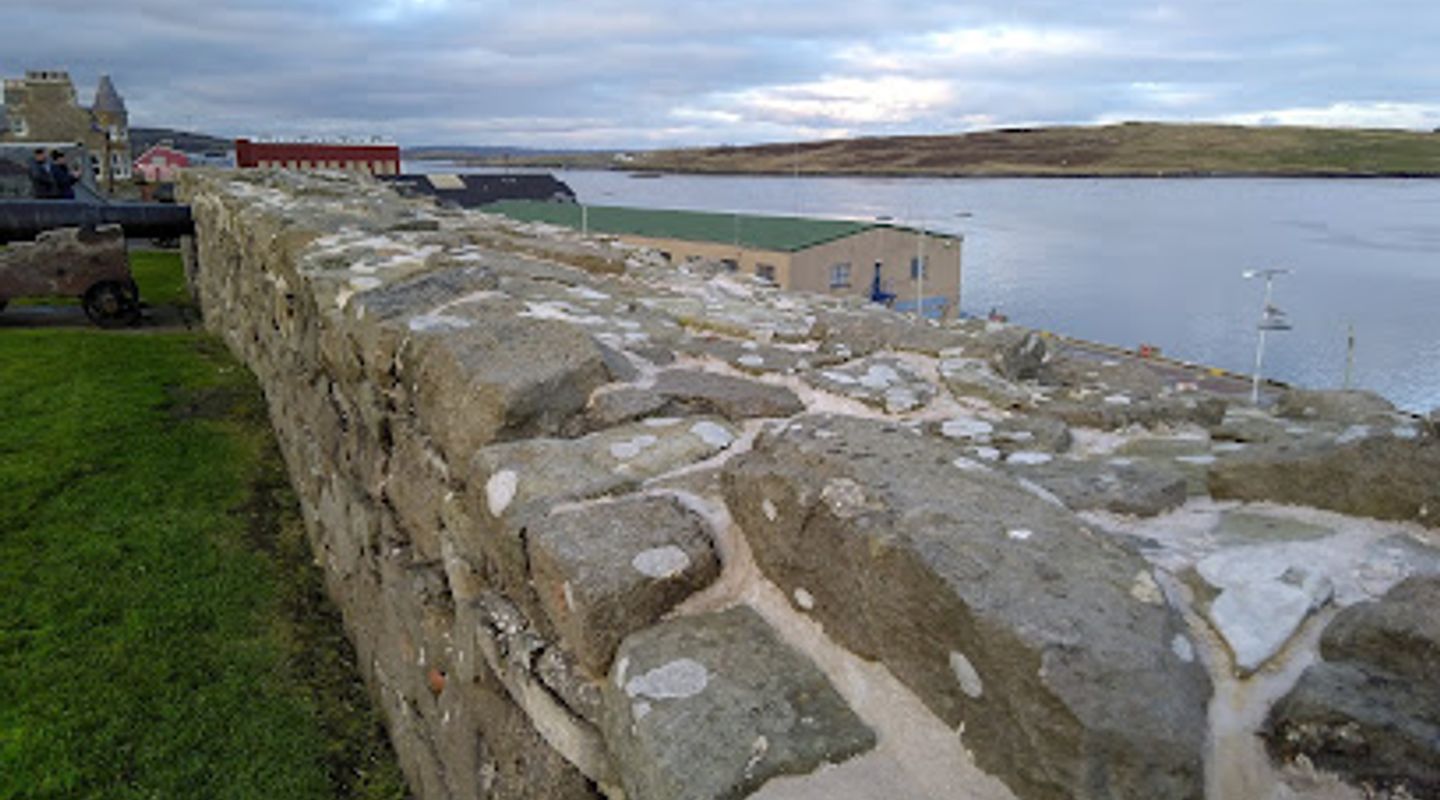
Perched above Lerwick’s harbour, Fort Charlotte is an 18th-century artillery fort built to defend Bressay Sound from Dutch and French warships. Though it never saw battle, its ramparts and barracks offer sweeping views over the town and across to Bressay. Managed by Historic Environment Scotland, the site is free to explore and remains an active Territorial Army base, blending military history with community use during events like Up Helly Aa. Its stone walls, coastal position, and layered past make it a compelling stop in Shetland’s capital.
On-site amenities
 Restrooms
 Drinking water
 Seating areas
 Information boards
Opening hours
- Every day10 am–4 pm
Opening hours as listed on the venue’s Google Business Profile. Hours can change for services and special events, so check with the venue before you go.
- Address
- 179 Commercial St, Lerwick, Shetland ZE1 0HX
- Website
Getting there
On foot from Lerwick town centre
By local bus
By car
From Lerwick ferry terminal
Discover more about Fort Charlotte
Guardian of Bressay Sound
Fort Charlotte stands on high ground overlooking Lerwick’s harbour and the narrow Bressay Sound, the strategic waterway between Mainland Shetland and the island of Bressay. Originally built in the 1660s as an earth-and-timber fortification to protect English naval interests from Dutch warships, the site was later rebuilt in stone between 1781 and 1783 during the American War of Independence. Named after Queen Charlotte, wife of King George III, this five-sided artillery fort was designed to command the sound with cannon fire, though it never actually saw combat. Its massive ramparts, barracks, powder magazine, and guardroom survive today, presenting much as they would have in the late 18th century.
Layers of Military History
The fort’s story spans centuries of shifting threats and uses. After the earlier 17th-century fort was destroyed by a Dutch raiding party in the Third Anglo-Dutch War, the site lay in ruins for about a hundred years. In the 1780s, renewed fears of invasion prompted the construction of the stone fort that visitors see today. It housed a garrison through the Napoleonic Wars and later served as a drill station for the Royal Naval Reserve, whose sailors trained with live 32-pounder guns until islanders on Bressay complained about the noise. In the 20th century, it became a Territorial Army base and remains one today, making it one of Scotland’s few 18th-century military sites still in active military use.
Views and Visitor Experience
Today, Fort Charlotte is a free-to-enter historic site managed by Historic Environment Scotland. Visitors can walk the ramparts, explore the stone barracks and ancillary buildings, and enjoy panoramic views over Lerwick, its busy harbour, and the open waters of Bressay Sound. The elevated position offers a clear sense of why this spot was chosen for defence: it commands the approaches to the town and provides sweeping vistas of the surrounding coastline. Information panels explain the fort’s construction, military role, and later uses, while the open layout allows for a relaxed, self-guided exploration. The site is compact enough for a short visit but rich enough in history and atmosphere to reward a more thoughtful look.
Living Heritage and Community Role
Beyond its military past, Fort Charlotte continues to play a role in Lerwick’s community life. The West Barracks are used as a hall on Up Helly Aa night, Shetland’s famous fire festival, linking the fort to one of the islands’ most vibrant cultural traditions. As an active TA base, the site balances public access with ongoing military function, giving it a distinctive character compared to many purely historic forts. This blend of preserved history and contemporary use makes Fort Charlotte not just a relic of past conflicts, but a living part of Lerwick’s townscape and identity.
Evendo Review Centre
 Google
Guest reviews
Best time to go
Quietest: Jan, Feb & Nov · before 9am or from 7pm
Busy times are Evendo estimates for a typical year, to help you plan. Actual crowds vary with events, school holidays and the weather.
Explore Fort Charlotte on the map
A handpicked selection of must-see spots near Fort Charlotte, mapped for you.
Get your free copy of our complete guide to Fort Charlotte, delivered straight to you.
Everything on this page, from opening hours and how to get there to Eve’s tips and the best time to go, in one PDF you can read offline, print or share.
Already have an account? Sign in
Your Fort Charlotte guide is ready.
We'll send it to · Not you? Sign out

Getting your guide ready…
We are putting together a fresh copy of the Fort Charlotte guide. This can take up to a minute.
This can take a few moments. If your browser asks, choose Allow so the download can start. You'll find the guide in your Downloads folder.
Nothing happened? Download it again
Sorry, the guide is taking longer than usual. Please try again in a minute, or get it by email instead.
Unlock the best of Fort Charlotte
Skip-the-line tickets, guided tours with entry, and walking tours of the area, booked in a few clicks.

Other nearby places you may find interesting
The closest places of the same kind, if this one is not quite what you had in mind.
-
-
-
-
-


Swipe for more places
More to explore near Fort Charlotte

 Best experiences near Fort Charlotte
 Best hotels near Fort Charlotte
 Best landmarks near Fort Charlotte
 Best attractions near Fort Charlotte
 Best shops near Fort Charlotte
 Best restaurants near Fort Charlotte
 Best bars near Fort Charlotte
Do you manage this location?
Take control to get all the benefits, like improved information, better appearance, and stronger visibility across AI-powered discovery.
Explore more
Explore more of Shetland
Explore Shetland: A captivating blend of rugged landscapes, rich wildlife, and a unique cultural heritage between Scotland and Scandinavia.
Explore Shetland
Explore more of United Kingdom
Discover the United Kingdom: A blend of rich history, stunning landscapes, and vibrant cities, offering a unique travel experience for every visitor.
Explore United Kingdom
