

St Lawrence Jewry, Surrey Travel Guide
Discover St Lawrence Jewry, a stunning Wren-designed church blending rich history, exquisite architecture, and serene sanctuary in the heart of London’s City.
St Lawrence Jewry, located in Guildhall Yard, London, is a Church of England guild church rebuilt by Sir Christopher Wren after the Great Fire of 1666. Known as the official church of the City of London Corporation and the Lord Mayor, it features exquisite white and gold interiors, a magnificent organ, and rich historical connections dating back to the 12th century. The church stands as a tranquil sanctuary amidst the bustling city, embodying centuries of religious, civic, and architectural heritage.
A brief summary to St Lawrence Jewry
- Guildhall Yard, London, EC2V 5AA, GB
- Click to display
- Click to display
- Duration: 0.5 to 1.5 hours
- Free
-
 Indoor
- Mobile reception: 5 out of 5
- Monday 10 am-5 pm
- Tuesday 10 am-5 pm
- Wednesday 10 am-5 pm
- Thursday 10 am-5 pm
- Friday 10 am-5 pm

Know before you go
Hi, I'm Eve. Here are a few practical things to know before exploring St Lawrence Jewry.
- Visit on weekdays between 10am and 5pm to enjoy quieter moments and appreciate the intricate interior details.
- Attend Sunday bell ringing sessions to experience traditional change ringing in this historic church.
- Look for the gridiron weather vane atop the tower, symbolizing St Lawrence’s martyrdom.
- Explore nearby Guildhall Art Gallery to see the remains of the Roman amphitheatre beneath, linked to the church’s unusual alignment.
Do you manage this location?
Take control to get all the benefits, like improved information, better appearance, and stronger visibility across AI-powered discovery. Learn more about listing your business on Evendo
Activate your presenceOther nearby places you may find interesting
The closest places of the same kind, if this one is not quite what you had in mind.


Explore St Lawrence Jewry on the Map
A handpicked selection of must-see spots near St Lawrence Jewry, mapped for you.
Unlock the Best of St Lawrence Jewry
Buy tickets
-
No tickets available
Book tours with entry


Getting There
-
London Underground
Take the Central Line to Bank station or the Northern Line to Moorgate station; both are approximately a 7-10 minute walk to St Lawrence Jewry. Stations are well connected and accessible, with frequent service. No additional fare beyond standard London Underground charges.
-
Bus
Several London bus routes, including numbers 21, 43, and 141, stop near Guildhall Yard. Buses run frequently during the day with fares payable via contactless or Oyster card. Walking from the nearest stop takes about 5 minutes on mostly flat terrain.
-
Taxi or Rideshare
Taxis and rideshare services can drop you off directly at Guildhall Yard. Travel times vary depending on traffic but typically range from 10 to 20 minutes from central London locations. Expect fares starting around £8-£15.
For the on-the-go comforts that matter to you
-
 Restrooms
-
 Drink Options
-
 Food Options
-
 Seating Areas
-
 Information Boards
Discover more about St Lawrence Jewry
Origins and Medieval Foundations
St Lawrence Jewry’s origins trace back to around 1136, initially built near the western edge of the medieval Jewish trading area known as Old Jewry. Its dedication honors St Lawrence, a 3rd-century Christian martyr famed for his role as one of the Church’s first deacons and treasurers. The church’s name distinguishes it from other St Lawrence dedications, reflecting its proximity to the Jewish community that thrived here until their expulsion in 1290. The medieval church was a significant religious site where notable figures such as Sir Thomas More preached, and it was closely linked with Balliol College, Oxford, which held its advowson from 1280.Rebirth Through Fire and Wren’s Vision
The Great Fire of London in 1666 destroyed the original building, prompting a grand reconstruction led by Sir Christopher Wren between 1670 and 1677. This project was Wren’s most expensive City church commission, reflecting its civic importance as the official church of the City of London Corporation and the Lord Mayor. The church’s architecture features a striking east façade with four Corinthian columns supporting a pediment, symbolizing classical purity. Inside, the design avoids right angles, creating a unique, sumptuous barn-like space adorned in white and gold, enhanced by mid-20th-century stained glass windows depicting Wren, master carver Grinling Gibbons, and master mason Edward Strong.War Damage and Restoration
During the Blitz on 29 December 1940, St Lawrence Jewry suffered extensive damage from incendiary bombs but was not completely destroyed. Worship continued in a small 'Tower Chapel' built within the tower’s base throughout the war. Restoration efforts, completed in 1957 by architect Cecil Brown, faithfully revived Wren’s original design. The church’s bell ring, cast by Whitechapel Bell Foundry in 1957, continues the tradition of change ringing. Recent conservation works concluded in 2023, ensuring the preservation of this Grade I listed building for future generations.Architectural and Artistic Highlights
The church’s interior is renowned for its glowing white and gold décor, creating a serene and uplifting atmosphere. The magnificent organ, crafted by Johannes Klais Orgelbau, is regarded as one of the finest in the world, complementing the church’s role as a place of worship and music. The weather vane shaped like a gridiron symbolizes St Lawrence’s martyrdom and is a recurring motif throughout the building. Several preserved monuments and gravestones, including those of Archbishop John Tillotson and merchant Francis Levett, connect visitors to the church’s rich historical narrative.Civic Role and Spiritual Sanctuary
St Lawrence Jewry remains the Civic Church of the City of London Corporation and the official church of the Lord Mayor of London. It serves as a peaceful sanctuary amid the City’s vibrant financial district, offering a place of reflection and respite. The church hosts organ music, guided tours, talks, and bell ringing on Sundays, inviting visitors to engage with its spiritual and cultural heritage. Its location next to the historic Guildhall situates it at the heart of London’s civic life, blending religious tradition with municipal identity.Legacy and Continuing Significance
Beyond its architectural grandeur, St Lawrence Jewry embodies centuries of London’s layered history—from its medieval Jewish roots through the transformative Great Fire and wartime resilience to its ongoing role in civic and religious life. It stands as a testament to the enduring legacy of Sir Christopher Wren’s vision and the City’s commitment to preserving its heritage. Visitors experience not only a remarkable building but also a living symbol of faith, community, and history in the heart of London.












Your all‑in‑one travel companion app
Explore expert travel guides, compare and book tours, experiences, hotels, and more—all from the palm of your hand. Download now for seamless trip planning wherever your wanderlust takes you.


Explore More of Surrey
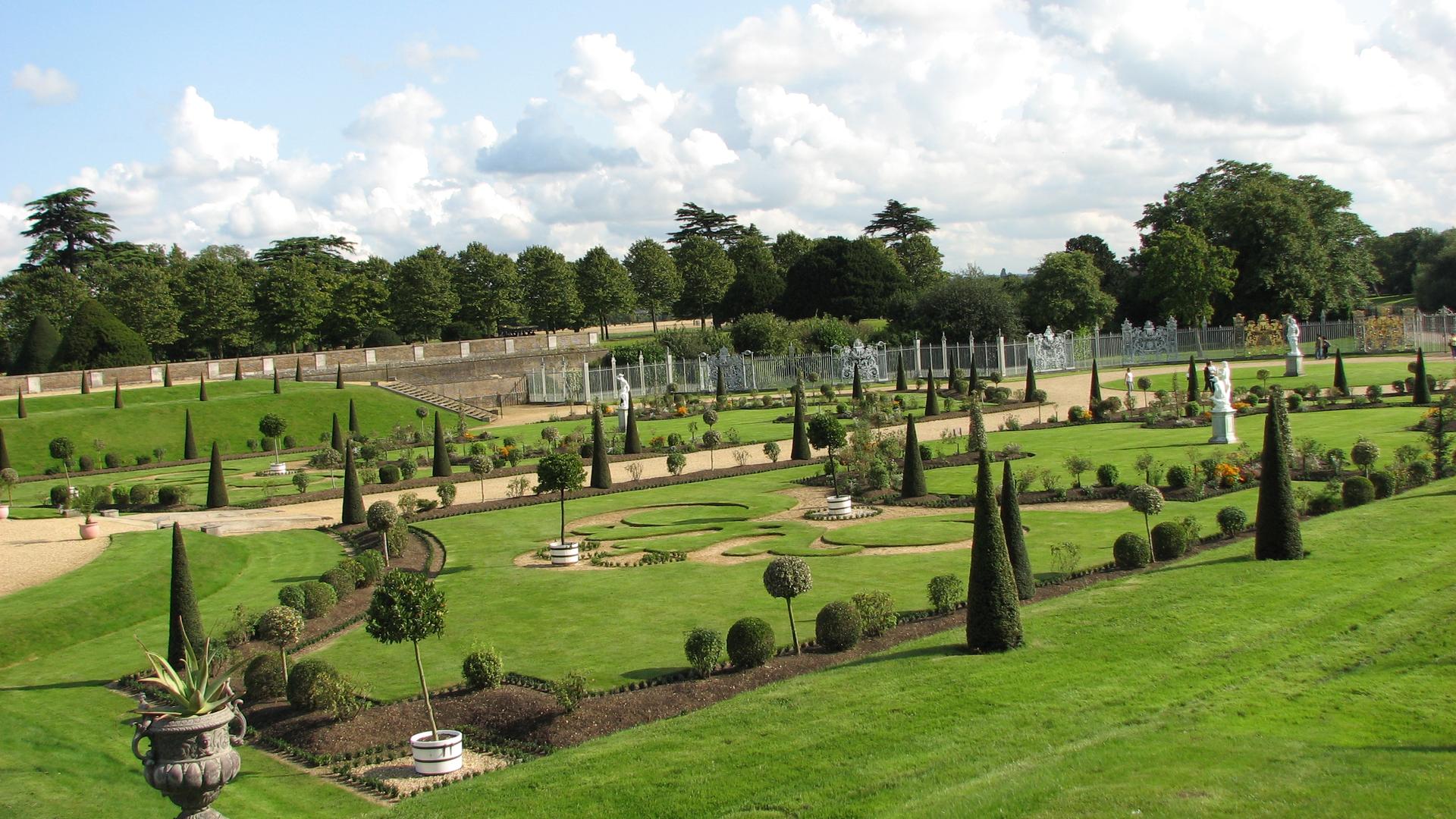
Looking beyond St Lawrence Jewry? Discover Surrey for broader travel guides, local hot-spots, and regional highlights.
Explore Surrey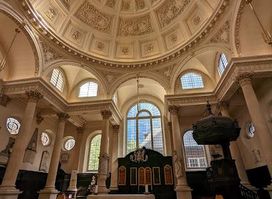
A Wren church in the City of London, known for its dome, Henry Moore altar and quiet interior just steps from Bank and Mansion House.

A masterpiece by Sir Christopher Wren, St Lawrence Jewry stands as the City of London’s historic guild church, rich in heritage and architectural splendor.
