
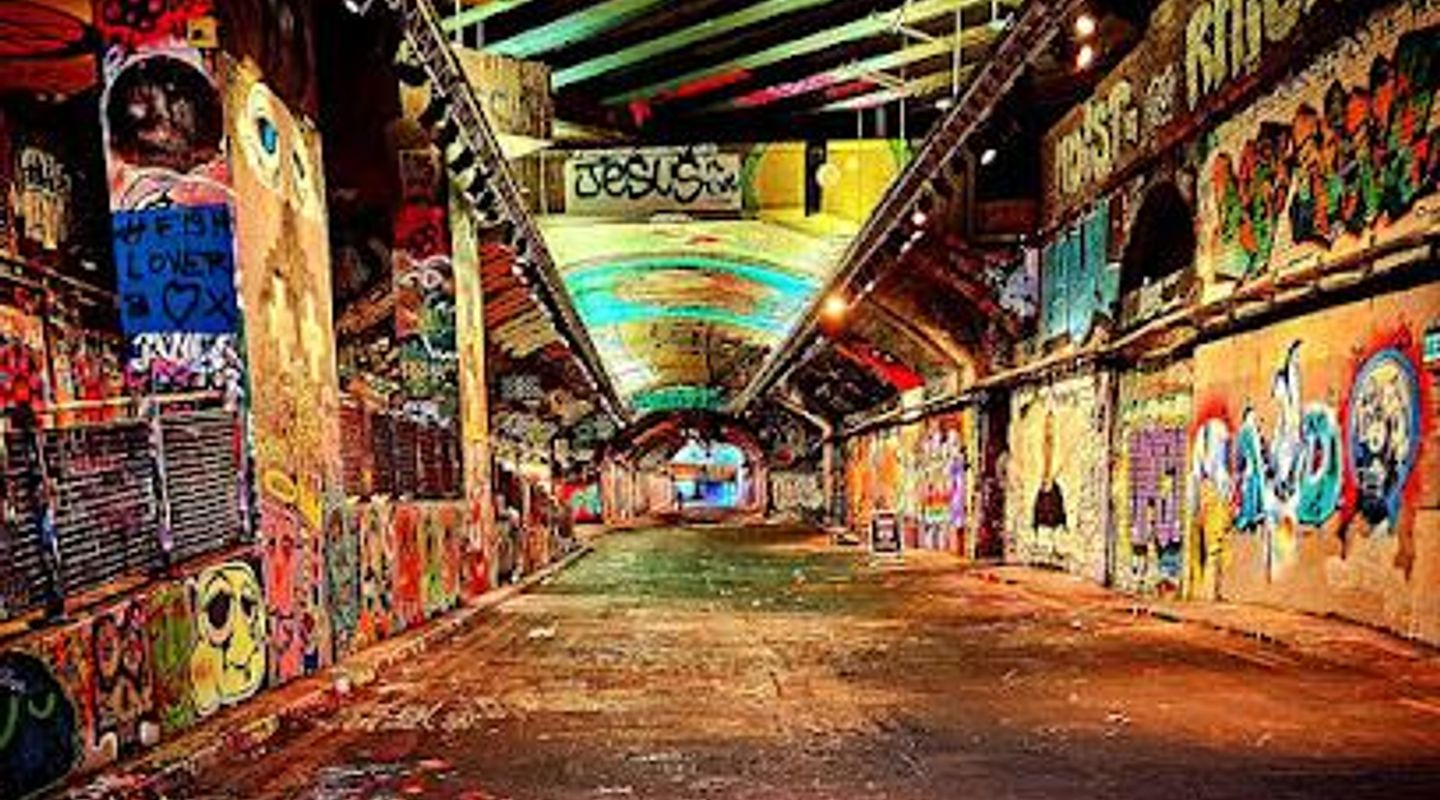
The Graffiti Tunnel, Surrey Travel Guide
Discover London’s largest legal graffiti gallery, a vibrant and ever-changing urban art tunnel beneath Waterloo Station.
Nestled beneath Waterloo Station, the Leake Street Graffiti Tunnel is a vibrant 300-meter-long urban art gallery renowned as London’s largest legal graffiti wall. Transformed from a disused railway tunnel into a dynamic canvas, it showcases ever-changing street art by local and international artists, including works inspired by Banksy’s 2008 Cans Festival. This colorful subterranean passage offers visitors a unique glimpse into London’s alternative creative scene, where every visit reveals new murals and expressions.
A brief summary to The Graffiti Tunnel
- Leake St, London, SE1 7NN, GB
- Click to display
- Duration: 0.5 to 2 hours
- Free
-
 Outdoor
- Mobile reception: 4 out of 5

Know before you go
Hi, I'm Eve. Here are a few practical things to know before exploring The Graffiti Tunnel.
- Visit during daylight hours to fully appreciate the vibrant colors and details of the street art.
- Bring a camera to capture the constantly evolving murals and unique urban atmosphere.
- Be respectful of artists at work and the ephemeral nature of the artworks—new creations often paint over older ones.
- Explore the nearby Leake Street Arches for independent dining and entertainment options that complement the artistic vibe.
Do you manage this location?
Take control to get all the benefits, like improved information, better appearance, and stronger visibility across AI-powered discovery. Learn more about listing your business on Evendo
Activate your presenceOther nearby places you may find interesting
The closest places of the same kind, if this one is not quite what you had in mind.
Explore The Graffiti Tunnel on the Map
A handpicked selection of must-see spots near The Graffiti Tunnel, mapped for you.
Getting There
-
Public Transport
From central London, take the Underground to Waterloo Station, served by the Jubilee, Northern, Bakerloo, and Waterloo & City lines. The tunnel is a short walk from the station’s main concourse. Travel time varies from 10 to 30 minutes depending on your starting point. No additional cost beyond standard Tube fare.
-
Bus
Several London bus routes stop near Waterloo Station, including routes 59, 68, 171, and 172. Buses run frequently throughout the day. Walking from the bus stop to Leake Street Tunnel takes about 5 to 10 minutes on flat, paved streets.
-
Taxi or Ride-Hailing
Taxis and ride-hailing services can drop you off near Waterloo Station. Depending on traffic, travel times from central London range from 15 to 40 minutes. Be aware that parking is not available at the tunnel and traffic congestion is common in the area.
-
Walking
If you are nearby on the South Bank or at the London Eye, walking to Leake Street Tunnel takes about 10 to 15 minutes via flat, accessible paths. The route is well-lit and suitable for wheelchair users.
For the on-the-go comforts that matter to you
-
 Restrooms
-
 Drink Options
-
 Food Options
-
 Seating Areas
-
 Trash Bins
-
 Information Boards
Discover more about The Graffiti Tunnel
An Unexpected Urban Canvas Beneath Waterloo
The Graffiti Tunnel, officially known as Leake Street Tunnel, is a 300-meter-long passageway running beneath the railway lines of Waterloo Station in central London. Once a neglected, dimly lit underpass and part of the old Eurostar terminal access, it was transformed in 2008 by the renowned street artist Banksy. His Cans Festival invited artists from around the world to paint the tunnel, turning it from a forgotten space into a vibrant, legal graffiti gallery. Since then, the tunnel has become a living, breathing canvas where street art flourishes in a constantly evolving display.A Living Gallery of Street Art
What makes the Graffiti Tunnel truly unique is its ever-changing nature. Artists are free to paint over existing works, creating a dynamic and fluid art environment where no two visits are the same. The walls and ceilings are covered in a kaleidoscope of colors, styles, and messages, ranging from intricate murals to bold tags and political statements. This openness makes the tunnel a democratic space for both emerging and established street artists, fostering creativity without censorship or permits.History and Legacy Behind the Name
Leake Street itself is named after Dr John Leake, an 18th-century physician and midwifery pioneer who founded the Westminster Lying-In Hospital nearby. The tunnel’s transformation into a street art hub contrasts with its historical roots, blending London’s rich past with its vibrant contemporary culture. The nearby Leake Street Arches have also been revitalized, hosting independent restaurants, bars, and entertainment venues that celebrate urban culture and complement the artistic atmosphere of the tunnel.Experiencing the Tunnel Today
Visitors to the Graffiti Tunnel can expect a lively and colorful environment filled with creative expression. The tunnel is open daily and accessible at all hours, though daytime visits are recommended to fully appreciate the vivid artwork. The space attracts a diverse crowd including artists at work, photographers, and urban explorers. The tunnel also serves as a backdrop for fashion shoots, video projects, and cultural gatherings, making it a hub of creative energy beneath the city.Community and Cultural Significance
Beyond being an art gallery, the tunnel is a social space where artists and visitors interact, share ideas, and celebrate street art culture. It stands as a testament to the positive impact graffiti can have when embraced as a legitimate art form. The Graffiti Tunnel challenges traditional notions of public art and urban space, offering a raw, unfiltered glimpse into London’s alternative artistic soul.Continuing Evolution and Preservation
The tunnel’s artwork is ephemeral by nature; pieces may be painted over within days or weeks, reflecting the transient spirit of street art. Projects like “100 Days of Leake Street” document these changes, highlighting the cultural importance of preserving this visual history. The Graffiti Tunnel remains a vital creative playground and a symbol of urban regeneration, continually inviting new generations of artists to leave their mark.












Your all‑in‑one travel companion app
Explore expert travel guides, compare and book tours, experiences, hotels, and more—all from the palm of your hand. Download now for seamless trip planning wherever your wanderlust takes you.


Explore More of Surrey
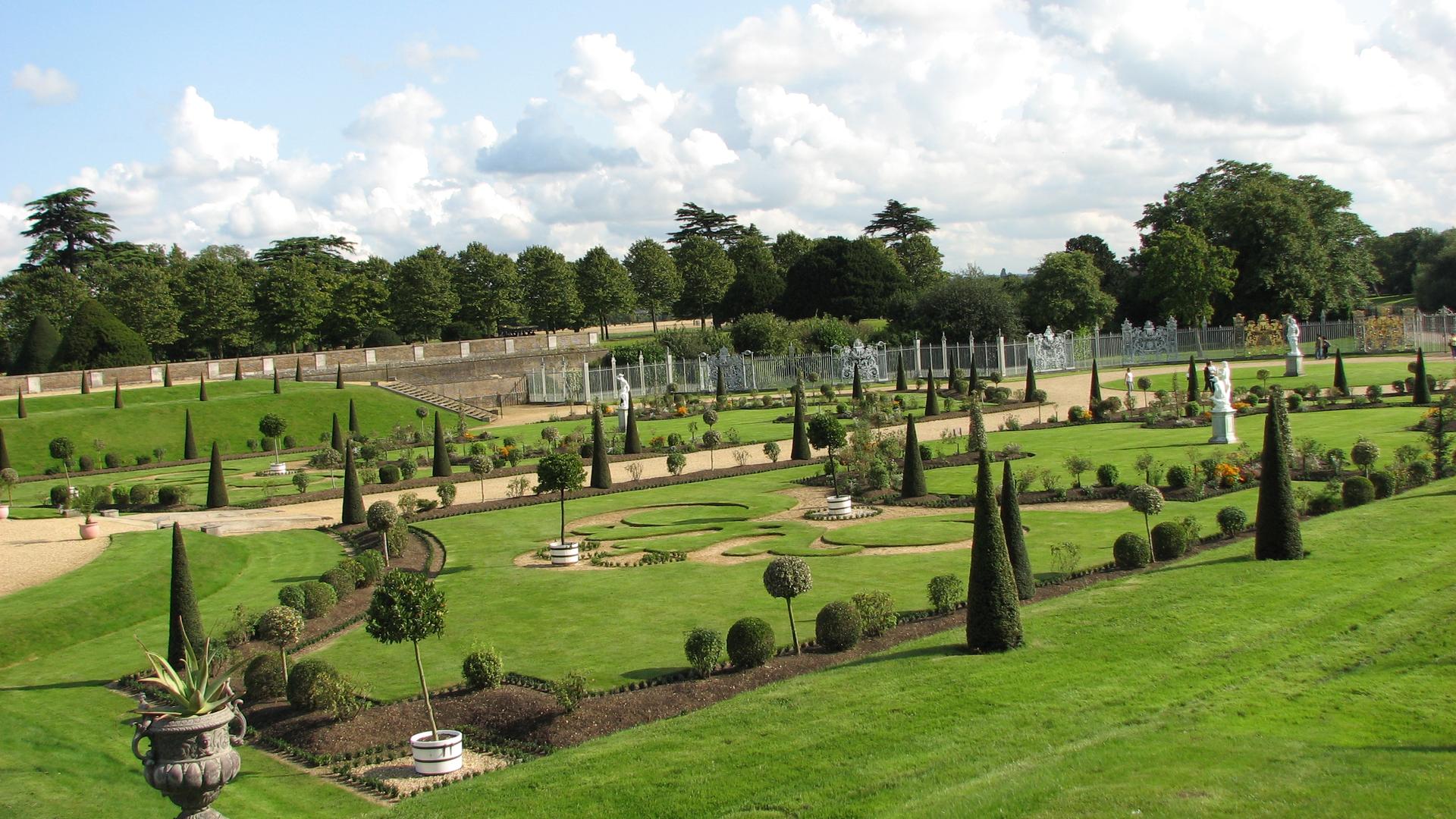
Looking beyond The Graffiti Tunnel? Discover Surrey for broader travel guides, local hot-spots, and regional highlights.
Explore Surrey

