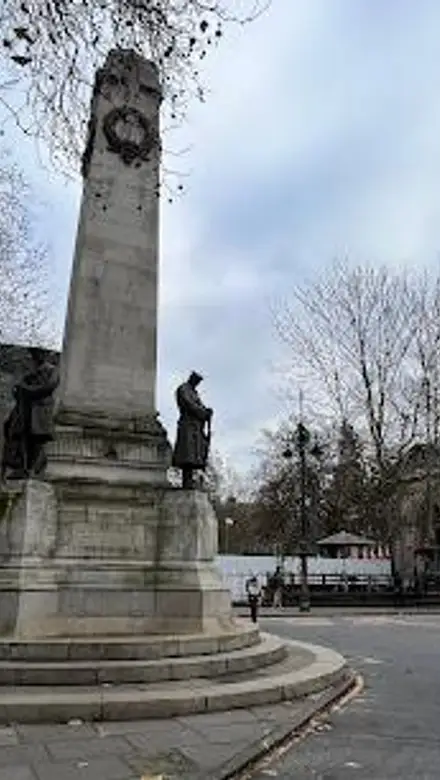
Euston War Memorial Travel Guide
Free Guide: A dignified World War I memorial honoring London and North Western Railway employees who sacrificed their lives, set amidst the bustle of Euston Road.


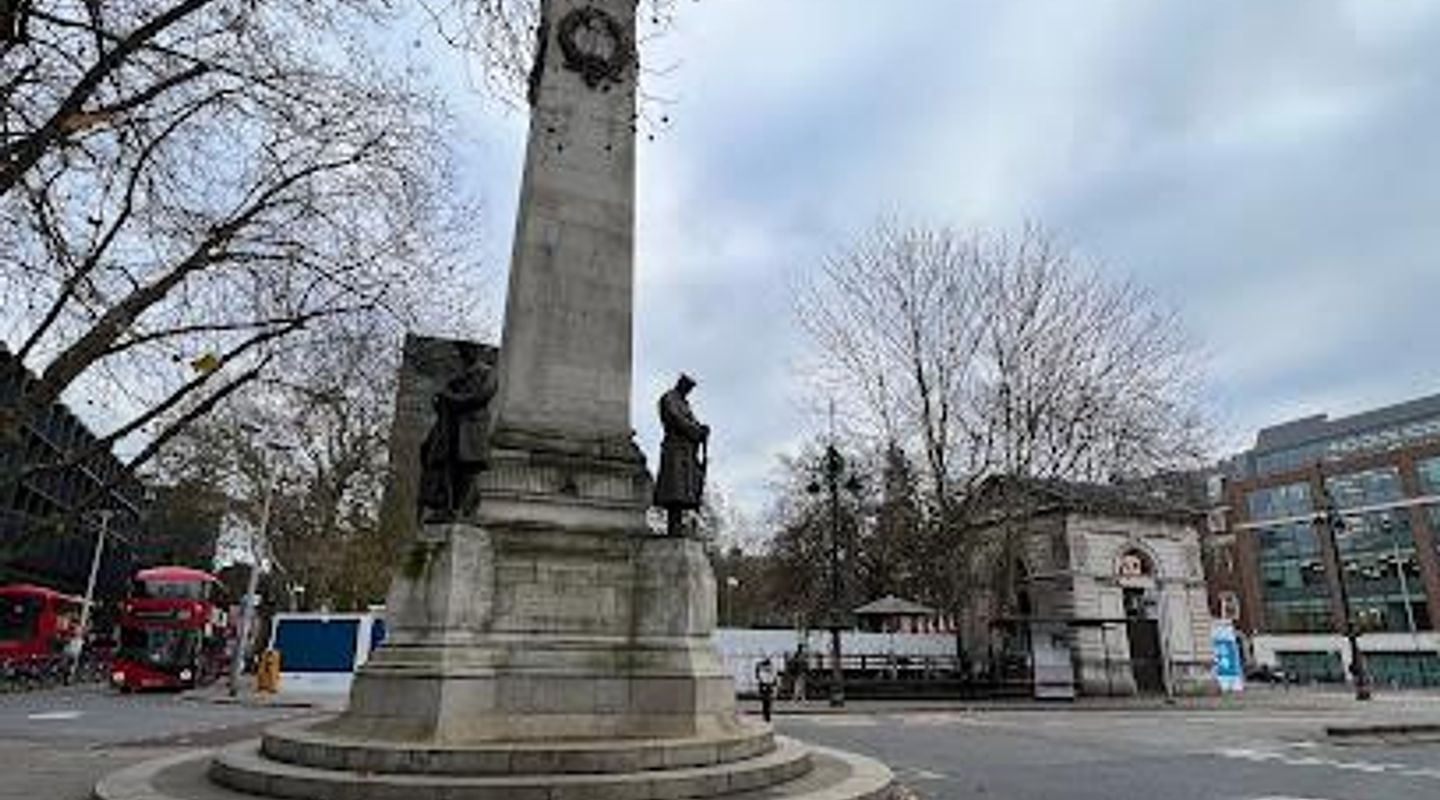
A brief summary of Euston War Memorial
A dignified World War I memorial honoring London and North Western Railway employees who sacrificed their lives, set amidst the bustle of Euston Road.
The Euston War Memorial, located at 190 Euston Road in London, stands as a poignant tribute to the 3,719 employees of the London and North Western Railway who lost their lives during World War I. Featuring a 13-meter Portland stone obelisk surrounded by four bronze statues representing different military branches, it offers visitors a solemn place for reflection amidst the bustle of the city.
On-site amenities
 Seating areas
 Information boards
Opening hours
- Every dayOpen 24 hours
Opening hours as listed on the venue’s Google Business Profile. Hours can change for services and special events, so check with the venue before you go.
- Address
- 190 Euston Rd., London NW1 2EF
Getting there
London Underground
Bus
Taxi or Ride-Hailing
Discover more about Euston War Memorial
Commemorating Railway Heroes of World War I
The Euston War Memorial is dedicated to the memory of 3,719 men employed by the London and North Western Railway (LNWR) who served and died in the Great War between 1914 and 1919. Unveiled on 21 October 1921, the memorial was designed by Reginald Wynn Owen, the LNWR's architect, as a simple yet grand tribute to honor the fallen rather than celebrate victory. The memorial’s inscriptions solemnly acknowledge the sacrifices made by these railway workers, many of whom left their civilian roles to serve in the armed forces.
Architectural Significance and Design Details
The memorial features a towering 13-meter (43-foot) obelisk crafted from Portland stone, resting on a tall pedestal and circular grey granite base. Near its top on each side are bronze wreaths and stone crosses in relief, symbolizing remembrance and faith. At the base stand four life-sized bronze statues representing an artilleryman, infantryman, sailor, and airman — a rare inclusion of an airman for the period. This ensemble highlights the diverse roles undertaken by LNWR employees during the war. The memorial’s design is noted for its dignified simplicity and powerful presence, marking it as a Grade II* listed structure of considerable historic and architectural value.
Historical Context and Location Evolution
Originally positioned in the center of Euston Square aligned with the grand Euston Arch, the memorial was part of a ceremonial entrance to the original station complex. The 1960s redevelopment of Euston Station led to the demolition of the old station and the Arch, drastically altering the memorial’s surroundings. Today, it stands near the bus station roundabout at 190 Euston Road, partially obscured by a 1970s office building. Despite these changes, the memorial remains one of the few surviving elements of the original station precinct, alongside two historic entrance lodges.
Symbolism and Community Memory
The memorial serves as a powerful symbol of collective sacrifice and remembrance for the LNWR community and the nation. The inscriptions, including "In Memory of Our Glorious Dead" and specific dedications to both World Wars, invite visitors to pause and reflect on the human cost of conflict. The presence of the four bronze servicemen statues evokes a solemn atmosphere, offering a tangible connection to those who served. The site continues to be maintained by Network Rail, ensuring its preservation as a historic landmark and place of remembrance.
Visiting Experience and Surroundings
Situated in a busy urban environment, the memorial provides a quiet contrast to the hustle of London’s transport hub. Visitors can appreciate the craftsmanship of the statues and obelisk while contemplating the stories behind the names inscribed. The memorial’s location near Euston Station makes it accessible for those interested in London’s wartime history and railway heritage. Nearby historical sites and green spaces offer opportunities for extended exploration and reflection.
Legacy and Preservation
The Euston War Memorial stands as a testament to the enduring respect for those who sacrificed their lives in service. Its Grade II* listing protects it from alteration or removal, underscoring its cultural and historical importance. The memorial’s survival through decades of urban redevelopment highlights the value placed on preserving heritage amidst change. It remains a vital educational and commemorative site, connecting present and future generations to the legacy of the LNWR and the broader history of World War I.
Evendo Review Centre
 Google
Guest reviews
Best time to go
Quietest: Jan, Feb & Dec · before 6am or at 10pm
Busy times are Evendo estimates for a typical year, to help you plan. Actual crowds vary with events, school holidays and the weather.
Explore Euston War Memorial on the map
A handpicked selection of must-see spots near Euston War Memorial, mapped for you.
Get your free copy of our complete guide to Euston War Memorial, delivered straight to you.
Everything on this page, from opening hours and how to get there to Eve’s tips and the best time to go, in one PDF you can read offline, print or share.
Already have an account? Sign in
Your Euston War Memorial guide is ready.
We'll send it to · Not you? Sign out

Getting your guide ready…
We are putting together a fresh copy of the Euston War Memorial guide. This can take up to a minute.
This can take a few moments. If your browser asks, choose Allow so the download can start. You'll find the guide in your Downloads folder.
Nothing happened? Download it again
Sorry, the guide is taking longer than usual. Please try again in a minute, or get it by email instead.
Unlock the best of Euston War Memorial
Skip-the-line tickets, guided tours with entry, and walking tours of the area, booked in a few clicks.


Other nearby places you may find interesting
The closest places of the same kind, if this one is not quite what you had in mind.
-
-
-
-
-


Swipe for more places
More to explore near Euston War Memorial

 Best experiences near Euston War Memorial
 Best hotels near Euston War Memorial
 Best landmarks near Euston War Memorial
 Best attractions near Euston War Memorial
 Best shops near Euston War Memorial
 Best restaurants near Euston War Memorial
 Best bars near Euston War Memorial
Do you manage this location?
Take control to get all the benefits, like improved information, better appearance, and stronger visibility across AI-powered discovery.
Explore more
Explore more of Surrey
Explore the picturesque landscapes, historic landmarks, and charming villages of Surrey, a quintessential English countryside retreat just a stone's throw from London.
Explore Surrey
Explore more of United Kingdom
Discover the United Kingdom: A blend of rich history, stunning landscapes, and vibrant cities, offering a unique travel experience for every visitor.
Explore United Kingdom