Broadway Tower Travel Guide
Free Guide: A romantic 18th-century folly on the Cotswold escarpment, once a beacon, a printer’s retreat, and a Pre-Raphaelite escape, now a museum with panoramic views across 16 counties.


A brief summary of Broadway Tower
A romantic 18th-century folly on the Cotswold escarpment, once a beacon, a printer’s retreat, and a Pre-Raphaelite escape, now a museum with panoramic views across 16 counties.
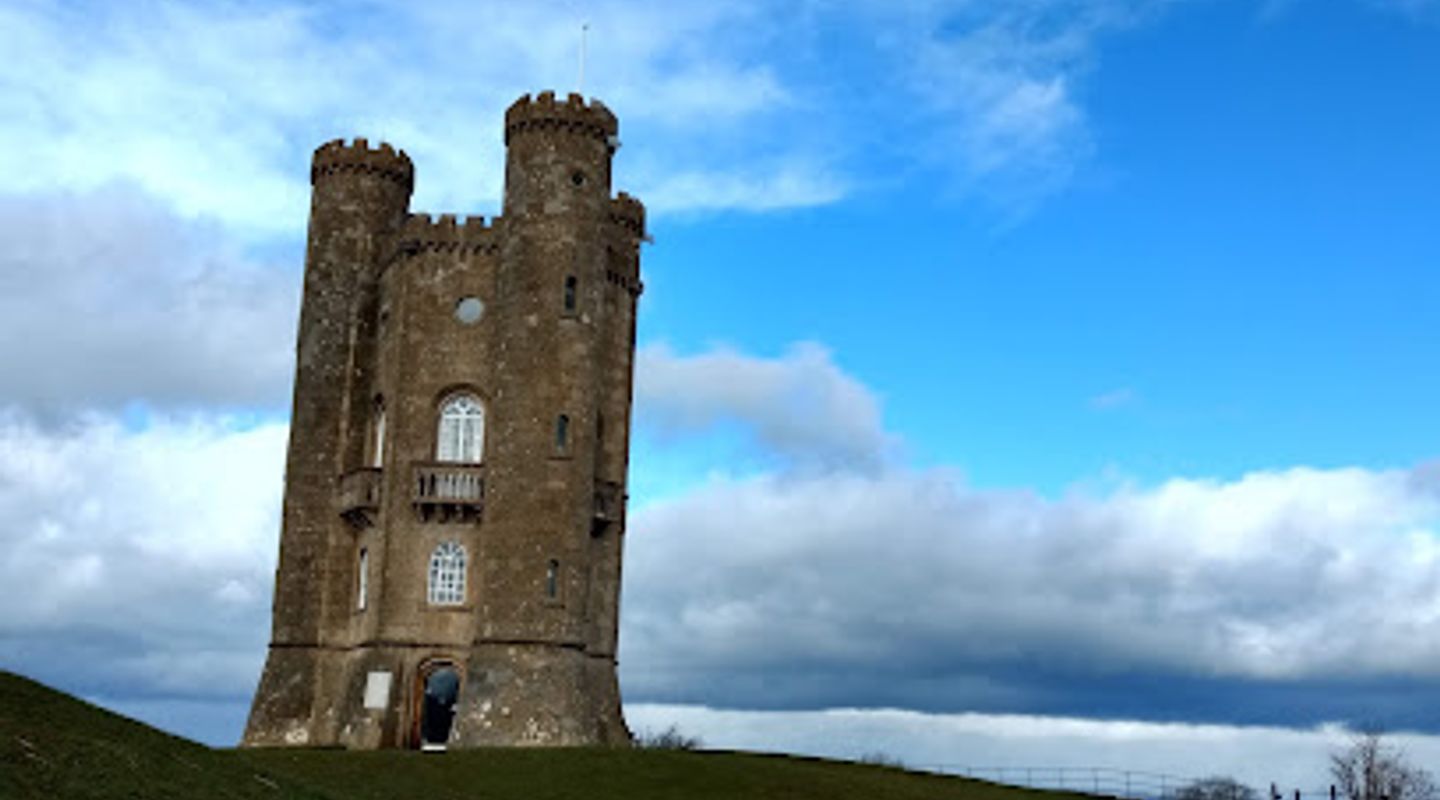
Perched on the second-highest point of the Cotswolds, Broadway Tower is an 18th-century Gothic folly with a romantic origin story and a rich cultural past. Designed by James Wyatt for the 6th Earl of Coventry, this six-sided stone tower served as a beacon hill, a private printing press, and a retreat for Pre-Raphaelite artists like William Morris. Today, it houses a museum across three floors and offers panoramic views across up to 16 counties. Visitors explore its battlements, turrets, and gargoyle-adorned architecture, wander the surrounding country park, and discover layers of history from Georgian aristocracy to the Arts and Crafts movement.
On-site amenities
 Restrooms
 Drink options
 Drinking water
 Food options
 Seating areas
 Sheltered areas
 Picnic areas
 Trash bins
 Information boards
 Visitor centre
Opening hours
- Every day10 am–5 pm
Opening hours as listed on the venue’s Google Business Profile. Hours can change for services and special events, so check with the venue before you go.
- Address
- Middle Hill, Broadway WR12 7LB
- Phone
- Website
Getting there
On foot from Broadway village
By car
By local bus
By taxi
Discover more about Broadway Tower
A Folly with a View
Rising 65 feet above Broadway Hill, Broadway Tower is a striking Gothic-style folly built in 1798 as a romantic gesture from the 6th Earl of Coventry to his wife, Barbara. Designed by architect James Wyatt under the landscape vision of Capability Brown, the tower was never meant as a fortress but as a picturesque landmark to enhance the Cotswold skyline. Its hexagonal form, battlements, turrets, and gargoyles give it the appearance of a miniature castle, standing at 1,024 feet above sea level – the second-highest point in the Cotswolds. From this vantage, the tower was originally intended to be visible from the Earl’s estate at Croome Court, serving both as a beacon and a symbol of enduring affection.
From Beacon to Bibliophile’s Lair
The hill itself had long been a beacon site, used to send signals across the landscape, including warnings of the Spanish Armada in 1588. In the 19th century, the tower took on a new life as the home of Sir Thomas Phillipps, one of history’s greatest manuscript collectors. He established the Middle Hill Press within its walls, turning the folly into a scholarly hub known as the ‘Lighthouse of Wisdom’. Over decades, the tower housed printing operations and attracted intellectuals, later becoming a seasonal retreat for figures of the Arts and Crafts movement, including William Morris, Edward Burne-Jones, and Dante Gabriel Rossetti, who found inspiration in its windswept isolation.
Arts and Crafts Retreat
In the 1870s and 1880s, Broadway Tower became a beloved country escape for Morris and his circle. They used it as a pastoral retreat, far from the industrial cities, where they could immerse themselves in the English countryside. Morris’s time here influenced his philosophy on craftsmanship and heritage, and he later founded the Society for the Protection of Ancient Buildings. The tower’s simple, almost rustic conditions – with stories of bathing on the roof and hauling supplies up narrow staircases – added to its charm as a place of creative renewal and escape from Victorian modernity.
A Tower for the Public
By the early 20th century, the tower had been converted into a farmhouse, serving as a home for tenant farmers. In the 1970s, it was restored and opened to the public as part of a country park, preserving its history while making it accessible to visitors. Today, the tower functions as a museum across three floors, with exhibits on its construction, the Phillipps press, and the Pre-Raphaelite connection. The rooftop viewing platform offers sweeping views across the Vale of Evesham and, on clear days, up to 16 counties, making it a favourite spot for photographers and walkers alike.
Layers of 20th-Century History
Beyond its Georgian and Victorian past, the site carries Cold War echoes in the form of a nearby Royal Observer Corps monitoring post, now restored and open to visitors. This underground facility, once a closely guarded secret, adds another dimension to the tower’s story, linking the ancient beacon hill with modern surveillance. A memorial to the crew of a Whitley bomber that crashed here in 1943 further underscores the site’s layered significance, where centuries of history – from Saxon beacons to wartime service – converge on this elevated Cotswold ridge.
Evendo Review Centre
 Google
Guest reviews
Best time to go
Quietest: Jan, Feb & Dec · before 10am or from 7pm
Busy times are Evendo estimates for a typical year, to help you plan. Actual crowds vary with events, school holidays and the weather.
Explore Broadway Tower on the map
A handpicked selection of must-see spots near Broadway Tower, mapped for you.
Get your free copy of our complete guide to Broadway Tower, delivered straight to you.
Everything on this page, from opening hours and how to get there to Eve’s tips and the best time to go, in one PDF you can read offline, print or share.
Already have an account? Sign in
Your Broadway Tower guide is ready.
We'll send it to · Not you? Sign out

Getting your guide ready…
We are putting together a fresh copy of the Broadway Tower guide. This can take up to a minute.
This can take a few moments. If your browser asks, choose Allow so the download can start. You'll find the guide in your Downloads folder.
Nothing happened? Download it again
Sorry, the guide is taking longer than usual. Please try again in a minute, or get it by email instead.
Unlock the best of Broadway Tower
Skip-the-line tickets, guided tours with entry, and walking tours of the area, booked in a few clicks.
 Tour with entry
From London: 7 Unmissable Cotswolds Stops Small Group Tour
from $87.68 Tour with entry
From London: Shakespeare's Stratford & Cotswolds Small-Group Tour
from $100.21 Tour with entry
Cotswolds Walking Tour from Stratford-on-Avon or Moreton-in-Marsh
from $113.87 Tour with entry
Explore the Cotswolds by Car with Pub Lunch
from $212.53


Other nearby places you may find interesting
The closest places of the same kind, if this one is not quite what you had in mind.
-
-
-
-
-


Swipe for more places
More to explore near Broadway Tower

 Best experiences near Broadway Tower
 Best hotels near Broadway Tower
 Best landmarks near Broadway Tower
 Best attractions near Broadway Tower
 Best shops near Broadway Tower
 Best restaurants near Broadway Tower
 Best bars near Broadway Tower
Do you manage this location?
Take control to get all the benefits, like improved information, better appearance, and stronger visibility across AI-powered discovery.
Explore more

Explore more of The Cotswolds
Explore the enchanting Cotswolds, a quintessential English region with charming villages, historic landmarks, and scenic landscapes perfect for a tranquil getaway.
Explore The Cotswolds
Explore more of United Kingdom
Discover the United Kingdom: A blend of rich history, stunning landscapes, and vibrant cities, offering a unique travel experience for every visitor.
Explore United Kingdom