

Teshik-Kul Lake Travel Guide - Free Web & App
Your ultimate guide to Teshik-Kul Lake. Discover top landmarks, proposed trips, and local tips. Free on the web or via the Evendo companion app.


Teshik-Kul Lake in Uzbekistan offers a remote Tian Shan escape with high-altitude scenery, mountain walks, clear air and limited visitor facilities.
Mountain Landscape
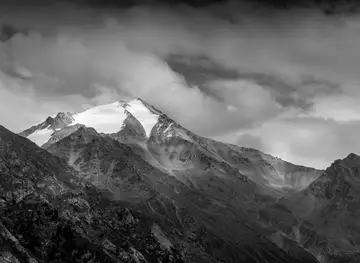
Teshik-Kul Lake is a remote alpine lake in Uzbekistan’s western Tian Shan, reached through the mountain landscapes of the Tashkent Region rather than through an established lakeside resort. The lake’s name is commonly translated from Uzbek as “holed lake”, and its appeal lies in the combination of high-elevation water, open mountain slopes, rocky ridges and the sense of distance from Uzbekistan’s major cities. It is best understood as a wilderness destination requiring careful planning, suitable transport and, in many cases, local knowledge of routes and access conditions.Read more about Teshik-Kul Lake
Access and Atmosphere
Outdoor Character
When is the best time to visit Teshik-Kul Lake?
Best: May–June, August · 23–28°C| Month | High (°C) | Rainfall (mm) |
|---|---|---|
| January | 1 | 11 |
| February | 3 | 11 |
| March | 8 | 10 |
| April | 16 | 8 |
| May (best) | 23 | 6 |
| June (best) | 27 | 4 |
| July | 29 | 3 |
| August (best) | 28 | 4 |
| September | 21 | 5 |
| October | 13 | 8 |
| November | 6 | 10 |
| December | 3 | 11 |
Getting to and around Teshik-Kul Lake
How to get there
Transportation
Best attractions in Teshik-Kul Lake
-
Tourist attraction
Shah-i-Zinda
Explore the mesmerizing Shah-i-Zinda, a UNESCO World Heritage site in Samarkand, showcasing exquisite architecture and rich Timurid history.
-
Tourist attraction
Ozero Aydarkul'
Explore the tranquil oasis of Ozero Aydarkul' in Uzbekistan's Jizzakh Region, where nature's beauty meets serene landscapes.

Explore Teshik-Kul Lake on the map
Plan your trip on one map. See where the top attractions, landmarks, restaurants and hotels are, and book hotels and experiences in a few clicks.
Best hotels in Teshik-Kul Lake
Get your free copy of our complete guide to Teshik-Kul Lake, delivered straight to you.
Everything on this page, from attractions and restaurants to essentials and local phrases, in one PDF you can read offline, print or share.
Already have an account? Sign in
Your Teshik-Kul Lake guide is ready.
We'll send it to · Not you? Sign out

Getting your guide ready…
We are putting together a fresh copy of the Teshik-Kul Lake guide. This can take up to a minute.
This can take a few moments. If your browser asks, choose Allow so the download can start. You'll find the guide in your Downloads folder.
Nothing happened? Download it again
Sorry, the guide is taking longer than usual. Please try again in a minute, or get it by email instead.
Teshik-Kul Lake essentials
Currency and Payment
Safety
Emergency Situations
Do's and Don'ts
Local Tips
From Eve
Local phrases worth knowing
You don't need to get them perfect. A few words go a long way, and locals appreciate the effort.
Basics
| English | Local | Say it |
|---|---|---|
| Hello | Salom | [sah-lom] |
| Goodbye | Xayr | [khayr] |
| Yes | Ha | [hah] |
| No | Yo'q | [yoq] |
| Please/You're welcome | Marhamat | [mar-ha-mat] |
| Thank you | Rahmat | [rah-mat] |
| Excuse me/Sorry | Kechirasiz | [keh-chee-rah-siz] |
| How are you? | Qalaysiz? | [kah-lay-siz] |
| Fine. And you? | Yaxshi. Sizni? | [yahk-shee. seez-nee] |
| Do you speak English? | Inglizcha gapirasizmi? | [ing-leez-cha gah-pee-rah-siz-mee] |
| I don't understand | Tushunmadim | [too-shoon-mah-deem] |
Eating & Drinking
| English | Local | Say it |
|---|---|---|
| I'd like to see the menu, please | Menyuni ko'rishni istar edim, marhamat | [men-yoo-nee koh-reesh-nee ees-tar eh-deem, mar-ha-mat] |
| I don't eat meat | Men go'sht yemayman | [men goh-sht ye-mai-man] |
| Cheers! | Salomatliklar! | [sah-loh-mat-lik-lar] |
| I would like to pay, please | To'lashni istar edim, marhamat | [toh-lash-nee ees-tar eh-deem, mar-ha-mat] |
Emergencies
| English | Local | Say it |
|---|---|---|
| Help! | Yordam! | [yor-dam] |
| Go away! | Uzoqqa ket! | [oo-zohk-kah ket] |
| Call the Police! | Politsiyani chaqiring! | [poh-lee-tsee-ya-nee chah-keer-eeng] |
| Call a doctor! | Doktorni chaqiring! | [dok-tor-nee chah-keer-eeng] |
| I'm lost | Men yo'l bilan chetlashtim | [men yol bi-lan chet-lash-teem] |
| I'm ill | Men kasalman | [men kah-sal-man] |
Shopping
| English | Local | Say it |
|---|---|---|
| I'd like to buy... | Xarid qilmoqchiman... | [kha-reeed keel-moq-chee-man] |
| I'm just looking | Men faqat ko'rishmoqchiman | [men fah-kat koh-reesh-moq-chee-man] |
| How much is it? | Bu qancha? | [boo khan-cha] |
| That's too expensive | Bu juda qimmat | [boo joo-da keem-mat] |
| Can you lower the price? | Narxni pastga olib berasizmi? | [nar-khnee pahst-gah oh-leeb be-rah-siz-mee] |
Time & Numbers
| English | Local | Say it |
|---|---|---|
| What time is it? | Soat necha bo'ldi? | [so-at ne-cha bol-dee] |
| It's one o'clock | Bir soat | [beer so-at] |
| Half past (10) | O'n yarim | [on ya-reem] |
| Morning | Ertalab | [er-ta-lab] |
| Afternoon | Kun chog'i | [koon choh-gee] |
| Evening | Kecha | [keh-cha] |
| Yesterday | Kecha | [keh-cha] |
| Today | Bugun | [boo-goon] |
| Tomorrow | Ertaga | [er-ta-ga] |
| 1 | Bir | [beer] |
| 2 | Ikki | [eek-kee] |
| 3 | Uch | [ooch] |
| 4 | To'rt | [tohrt] |
| 5 | Besh | [besh] |
| 6 | Olti | [ol-tee] |
| 7 | Yetti | [yet-tee] |
| 8 | Sakkiz | [sak-kiz] |
| 9 | To'qqiz | [toh-q-qiz] |
| 10 | O'n | [on] |
Transport & Directions
| English | Local | Say it |
|---|---|---|
| Where's a/the...? | ...qayerda? | [khai-er-da] |
| What's the address? | Manzil qayerda? | [man-zeel kai-er-da] |
| Can you show me (on the map)? | (Xaritada) ko'rsatingizmi? | [(kha-ree-ta-da) kohr-sat-ing-iz-mi] |
| When's the next (bus)? | Keyingisi qachon? | [key-in-gee-see ka-chohn] |
| A ticket (to ....) | Bilet (.... ga) | [bee-let (ga)] |
History of Teshik-Kul Lake
Formation in the Western Tian Shan
Teshik-Kul belongs to the mountainous landscape of the western Tian Shan, a region shaped over long geological timescales by tectonic uplift, erosion and the action of snow and water. The lake’s setting is more important historically as part of this high mountain system than as a built monument: its surrounding ridges, valleys and seasonal watercourses reflect the continuing interaction between geology, climate and altitude. Conditions around the lake should not be interpreted through a single simplified origin story, because the precise local formation and hydrology require specialist geological documentation.
Pastoral Landscapes and Mountain Routes
The mountains around Teshik-Kul have historically formed part of a wider cultural landscape used by communities moving between settled valleys and high summer pastures. Across the western Tian Shan, seasonal grazing, mountain tracks and the passage between valleys connected rural communities with upland resources. The lake itself is not known for a large permanent settlement or monumental architecture; its significance lies in the continuing relationship between people, pasture, water and difficult terrain. Local place names preserve something of this mountain geography, while access remains shaped by terrain and season.
Soviet-Era Mountain Development
During the Soviet period, the mountains north-east of Tashkent were increasingly connected with scientific activity, forestry, protected landscapes, mountaineering and recreation. Roads and settlements in the wider Bostanliq and Charvak area later made selected valleys more accessible to visitors, although remote alpine lakes such as Teshik-Kul remained outside the pattern of mass resort development. The construction of the Charvak reservoir transformed an adjacent part of the regional landscape, creating a major recreational and water-management centre without turning every high mountain basin into an urbanised destination.
Conservation and Contemporary Visits
Modern journeys to Teshik-Kul take place within a broader setting of mountain conservation, protected landscapes and increasing interest in outdoor tourism in Uzbekistan. The western Tian Shan contains sensitive alpine habitats, pasturelands and waterways whose condition depends on responsible access and careful management. Visitor infrastructure at the lake remains limited, so contemporary travel is closer to a guided mountain excursion than a developed attraction. Weather, seasonal routes, local land use and any applicable protected-area rules should be checked before departure.
Neighbouring destination travel guides
The closest destinations to Teshik-Kul Lake, if you have time for more than one.
-

-
-

-

-


Swipe for more destinations
Explore more
Explore more of Uzbekistan
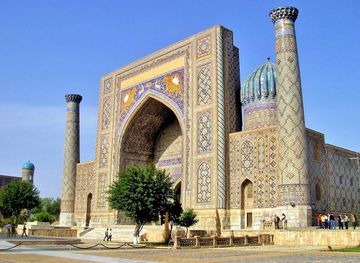
Discover Uzbekistan: A land of ancient cities, vibrant culture, and breathtaking landscapes, where history comes alive along the legendary Silk Road.
Explore Uzbekistan