

Free Middlebury Travel Guide & Mobile App
Plan your Middlebury trip with Evendo. Get free guides to top attractions, restaurants, hotels, and bars. Web access or download the mobile app.


Middlebury, Vermont blends Otter Creek scenery, college-town culture, historic streets, museums, local food and Green Mountain adventures in the Champlain Valley.
Otter Creek and the Champlain Valley
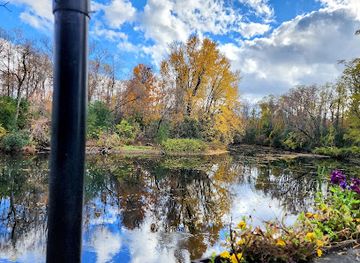
Middlebury lies in west-central Vermont, between the Green Mountains and Lake Champlain’s eastern shore. Otter Creek runs through the town centre, dropping over a broad set of falls that helped establish Middlebury as a milling and manufacturing community. Today, the waterway, tree-lined streets and surrounding farmland give the town a measured, walkable character, while the distant mountains provide a changing backdrop through every season.Read more about Middlebury
Heritage and Learning
Small-Town Vermont Life
When is the best time to visit Middlebury?
Best: June–August · 24–27°C| Month | High (°C) | Rainfall (mm) |
|---|---|---|
| January | -1 | 50 |
| February | 1 | 40 |
| March | 6 | 50 |
| April | 13 | 60 |
| May | 20 | 70 |
| June (best) | 24 | 80 |
| July (best) | 27 | 90 |
| August (best) | 25 | 90 |
| September | 20 | 80 |
| October | 14 | 70 |
| November | 7 | 60 |
| December | 1 | 50 |
Getting to and around Middlebury
How to get there
Transportation
Best attractions in Middlebury
Middlebury’s principal attractions are concentrated within and around its compact centre. Otter Creek falls provide the town’s defining natural scene, where the waterway passes historic buildings and former mill sites before continuing through the Champlain Valley. The Henry Sheldon Museum of Vermont History offers a detailed view of Addison County life through local objects, art and archives, while the Middlebury College Museum of Art brings a broader range of works and cultures to the community. The college campus itself rewards a leisurely walk through its historic buildings and landscaped grounds. Town Hall Theater presents a changing programme of film, music, theatre and dance in a restored civic setting. Independent shops, cafés and seasonal farmers’ markets add everyday interest, while Battell Park provides open space close to downtown. Beyond town, rural roads lead towards farms, covered bridges, Lake Champlain and the Green Mountains.
-
Cider mill
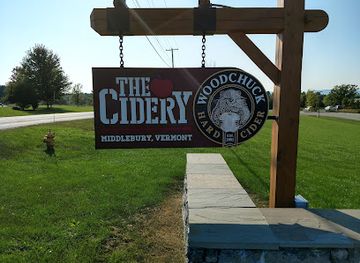
Woodchuck Cider
Experience the art of craft cider making at Woodchuck Cider in Middlebury, Vermont—a must-visit for cider lovers and adventurers alike.
16 min drive · 5.3 km from city centre
-
Vineyard
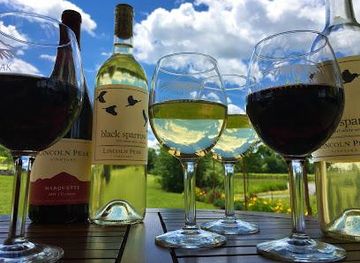
Lincoln Peak Vineyard
Explore Lincoln Peak Vineyard, a picturesque winery in Vermont offering exquisite wines, live music, and breathtaking views for a memorable experience.
21 min drive · 7.0 km from city centre
-
Tourist attraction
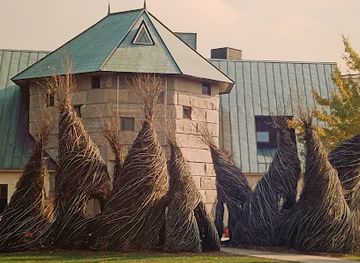
Middlebury College Museum of Art
Discover the artistic treasures of Middlebury College Museum of Art, a cultural haven showcasing diverse collections from around the globe.
14 min drive · 4.6 km from city centre
-
Tourist attraction
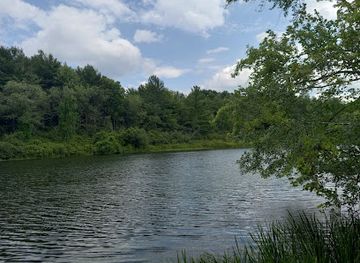
Otter View Park
Experience the tranquility and natural beauty of Otter View Park in Middlebury, Vermont, a perfect getaway for nature lovers and families seeking adventure.
16 min drive · 5.2 km from city centre

Best landmarks in Middlebury
Middlebury’s most significant landmarks express the town’s relationship with education, commerce and Otter Creek. The falls are the original geographic anchor of the settlement and explain the location of the mills that supported early industry. Middlebury College’s historic campus, including Old Chapel and the surrounding academic buildings, represents the institution founded in 1800 and its long influence on the town. In the centre, Middlebury Town Hall is a prominent civic building and a continuing venue for public life and performance. The Henry Sheldon Museum occupies a notable historic setting and preserves the material history of Vermont and Addison County. Downtown’s brick commercial blocks and nearby nineteenth-century homes complete the architectural picture, showing how a river-powered market town developed into a regional service centre and college community.
-
Steak
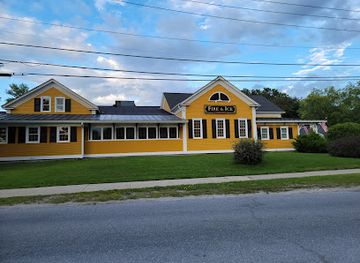
Fire & Ice
Experience the best of Middlebury dining with exquisite steaks, craft cocktails, and a vibrant atmosphere at Fire & Ice.
13 min drive · 4.3 km from city centre
-
Grill
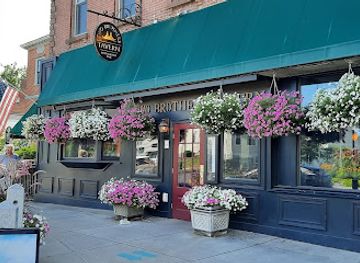
Two Brothers Tavern
Experience the flavors of Vermont at Two Brothers Tavern, a lively grill and pub offering delicious food and a welcoming atmosphere in Middlebury.
13 min drive · 4.2 km from city centre
-
Grill
Mister Up's Restaurant and Pub
Discover the flavors of Middlebury at Mister Up's Restaurant and Pub, where great food and local brews come together in a cozy setting.
12 min drive · 4.1 km from city centre
-
Cider mill
Woodchuck Cider
Discover the rich flavors and craftsmanship of Woodchuck Cider in Middlebury, Vermont - a must-visit destination for cider lovers and tourists alike.
16 min drive · 5.3 km from city centre
Explore Middlebury on the map
Plan your Middlebury trip on one map. See where the top attractions, landmarks, restaurants, bars and hotels are, find what's near where you're staying, and book hotels and experiences in a few clicks.
Best hotels in Middlebury
Best restaurants in Middlebury
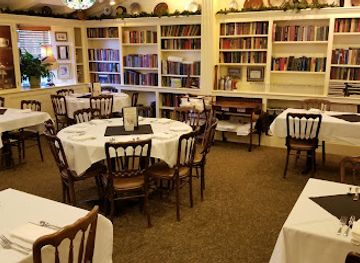
Middlebury’s dining scene reflects its position between Vermont farmland and a cosmopolitan college community. Restaurants and cafés in and around the centre draw on local dairy, apples, maple, seasonal vegetables, craft beverages and the region’s strong farm-to-table tradition, while international influences reflect the college’s students, faculty and language programmes. Downtown is the most convenient area for casual breakfasts, bakery stops, coffee, pub-style meals and more formal evening dining, with seasonal produce appearing prominently at the farmers’ market and in changing menus. Vermont specialities such as cheddar, maple products and cider are easy to encounter, although local cooking is not limited to traditional New England fare. Reservations can be useful when college events or foliage weekends bring additional visitors, and opening patterns may be more limited outside the main travel seasons.
-
Steak
Fire & Ice
Experience exceptional steaks and lively ambiance at Fire & Ice in Middlebury – where culinary artistry meets local charm.
13 min drive · 4.3 km from city centre
-
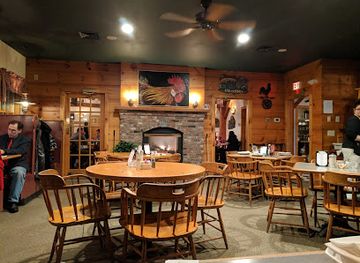
American
Rosie's Restaurant
Experience the heart of American cuisine at Rosie's Restaurant in Middlebury, Vermont—where every meal is crafted with love and local flavors.
7 min drive · 2.2 km from city centre
-
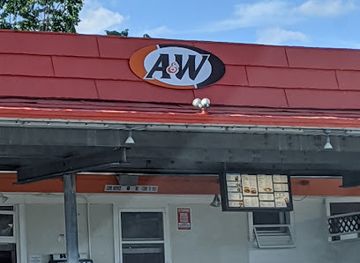
Fast Food
A&W Restaurant
Experience classic American fast food at A&W Restaurant in Middlebury – home to delicious burgers and refreshing root beer floats.
6 min drive · 2.0 km from city centre
-
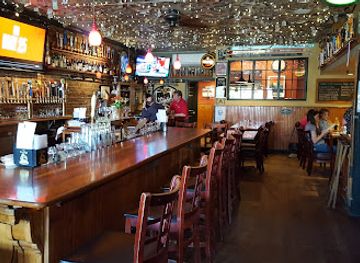
Grill
Two Brothers Tavern
Discover the heart of Middlebury at Two Brothers Tavern - A cozy grill and pub offering delicious food, craft beers, and warm hospitality.
13 min drive · 4.2 km from city centre
Best bars in Middlebury
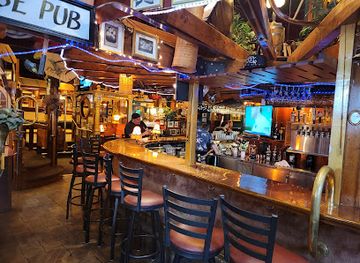
Middlebury’s evening scene is social and relatively restrained rather than club-focused. Downtown taverns, restaurants and cafés provide places for conversation, local beer, cider, wine and informal meals, while the college contributes lectures, concerts, student performances and visiting speakers to the cultural calendar. Town Hall Theater is the principal setting for organised evening entertainment, with programmes that may include film, music, theatre and dance. Some nights are busiest during the academic year, while summer and holiday periods can feel quieter. Visitors should not expect a large nightclub district; the appeal lies in a walkable centre, community events and small-scale cultural activity. Vermont’s drink-driving laws are strict, so anyone travelling beyond the centre should plan transport rather than drive after drinking.
-
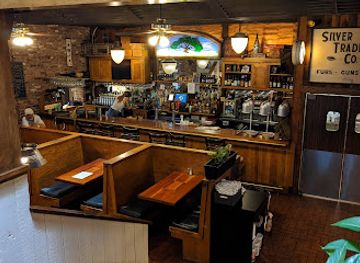
Bar
Fire & Ice
Discover Fire & Ice in Middlebury, Vermont – where a vibrant atmosphere meets delicious, locally-sourced cuisine to create an unforgettable dining experience.
13 min drive · 4.3 km from city centre
-
American
Rosie's Restaurant
Experience the heart of American cuisine at Rosie's Restaurant, a beloved spot in Middlebury, Vermont, known for its delicious breakfasts and inviting atmosphere.
7 min drive · 2.2 km from city centre
-
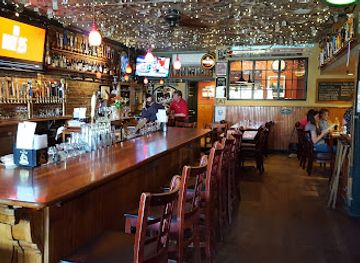
Grill
Two Brothers Tavern
Experience the rich flavors and warm hospitality of Two Brothers Tavern, a gem in Middlebury, Vermont, perfect for grill enthusiasts and casual diners.
13 min drive · 4.2 km from city centre
-
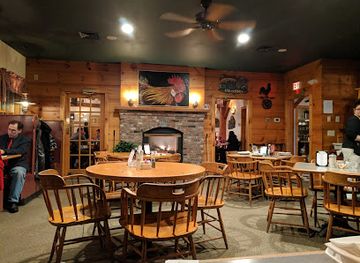
Grill
Mister Up's Restaurant and Pub
Discover the best of Vermont's grill cuisine and craft brews at Mister Up's Restaurant and Pub in Middlebury.
12 min drive · 4.1 km from city centre
Best nightclubs in Middlebury
Middlebury’s evening scene is social and relatively restrained rather than club-focused. Downtown taverns, restaurants and cafés provide places for conversation, local beer, cider, wine and informal meals, while the college contributes lectures, concerts, student performances and visiting speakers to the cultural calendar. Town Hall Theater is the principal setting for organised evening entertainment, with programmes that may include film, music, theatre and dance. Some nights are busiest during the academic year, while summer and holiday periods can feel quieter. Visitors should not expect a large nightclub district; the appeal lies in a walkable centre, community events and small-scale cultural activity. Vermont’s drink-driving laws are strict, so anyone travelling beyond the centre should plan transport rather than drive after drinking.
-
Bar
Fire & Ice
Experience the culinary delights of Fire & Ice in Middlebury, a vibrant bar and restaurant offering steakhouse classics and innovative gastropub fare.
13 min drive · 4.3 km from city centre
-
Grill
Two Brothers Tavern
Discover Two Brothers Tavern in Middlebury, a perfect blend of grill delights and vibrant pub atmosphere, ideal for food enthusiasts and social gatherings.
13 min drive · 4.2 km from city centre
-
Grill
Mister Up's Restaurant and Pub
Experience the best of Vermont's culinary delights at Mister Up's Restaurant and Pub, where local flavors and craft brews come together.
12 min drive · 4.1 km from city centre
-
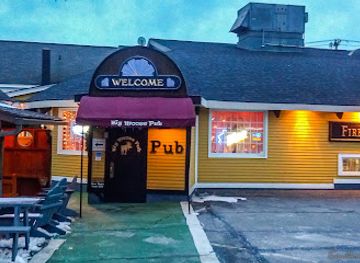
American
Jessica's Restaurant at the Swift House Inn
Experience the charm of fine dining at Jessica's Restaurant, where American cuisine meets exquisite wines in a cozy atmosphere.
12 min drive · 4.1 km from city centre
Best shops in Middlebury
Shopping in Middlebury is centred on the walkable downtown, where independent retailers, bookshops, galleries, clothing stores, cafés and specialist businesses occupy historic commercial buildings. The town is a useful place to look for Vermont-made foods and gifts, including maple products, regional cheeses, preserves, cider-related goods, pottery, woodwork and locally designed crafts, though stock changes with the season. The farmers’ market adds a direct connection with Addison County farms when operating, offering produce, baked goods and handmade items rather than a permanent indoor market experience. Middlebury’s retail character is small-scale and locally oriented, with practical services existing alongside businesses shaped by the college population. Visitors heading into the countryside may also find farm stands and producer shops, but these are seasonal and often have different opening patterns from downtown stores.
-
Grocery store
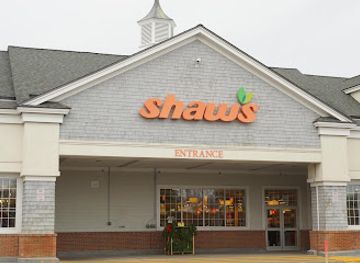
Shaw's
Discover Shaw's in Middlebury: A Local Grocery Store Offering Fresh Produce, Bakery Delights, and Quality Meats for Tourists.
11 min drive · 3.8 km from city centre
-
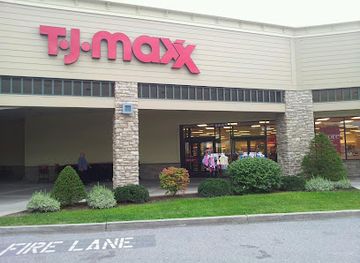
Department store
T.J. Maxx
Explore a world of fashion and home goods at T.J. Maxx, where quality meets unbeatable prices in Middlebury, Vermont.
9 min drive · 2.9 km from city centre
-
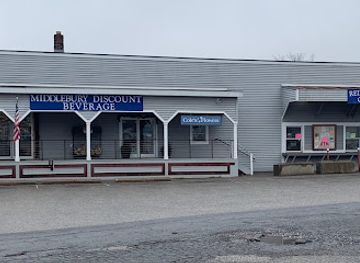
Beer store
Middlebury Discount Beverage & Redemption Center
Explore a diverse selection of local and international beverages at Middlebury Discount Beverage & Redemption Center in Vermont.
13 min drive · 4.5 km from city centre
-
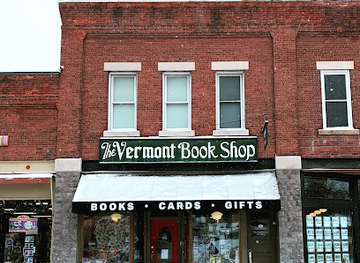
Book store
The Vermont Book Shop
Discover literary treasures at The Vermont Book Shop, a charming bookstore in Middlebury offering a cozy atmosphere and unique local finds.
13 min drive · 4.2 km from city centre
Get your free copy of our complete guide to Middlebury, delivered straight to you.
Everything on this page, from attractions and restaurants to essentials and local phrases, in one PDF you can read offline, print or share.
Already have an account? Sign in
Your Middlebury guide is ready.
We'll send it to · Not you? Sign out

Getting your guide ready…
We are putting together a fresh copy of the Middlebury guide. This can take up to a minute.
This can take a few moments. If your browser asks, choose Allow so the download can start. You'll find the guide in your Downloads folder.
Nothing happened? Download it again
Sorry, the guide is taking longer than usual. Please try again in a minute, or get it by email instead.
Middlebury essentials
Currency and Payment
Safety
Emergency Situations
Do's and Don'ts
Local Tips
From Eve
Local phrases worth knowing
You don't need to get them perfect. A few words go a long way, and locals appreciate the effort.
Basics
| English | Local | Say it |
|---|---|---|
| Hello | Howdy | [haw-dee] |
| Goodbye | See ya | [see yah] |
| Yes | Yup | [yuhp] |
| No | Nah | [nuh] |
| Please/You're welcome | Please/No problem | [pleez/no problem] |
| Thank you | Thanks | [thanks] |
| Excuse me/Sorry | Pardon me/My bad | [par-dun me/my bad] |
| How are you? | How ya doin'? | [how yuh doo-in?] |
| Fine. And you? | Good. And you? | [good. and yuh?] |
| Do you speak English? | Ya speak English? | [yah speak ing-lish?] |
| I don't understand | I don't get it | [eye dun get it] |
Eating & Drinking
| English | Local | Say it |
|---|---|---|
| I'd like to see the menu, please | Can I check out the menu? | [kan eye chek out the menu?] |
| I don't eat meat | I don't do meat | [eye dun doo meat] |
| Cheers! | Cheers! | [cheers!] |
| I would like to pay, please | I'll settle up, please | [eye-ul set-ul up, please] |
Emergencies
| English | Local | Say it |
|---|---|---|
| Help! | Help! | [help!] |
| Go away! | Get lost! | [get lost!] |
| Call the Police! | Call the cops! | [call the cops!] |
| Call a doctor! | Get a doc! | [get a doc!] |
| I'm lost | I'm turned around | [eye-m turnd a-round] |
| I'm ill | I'm under the weather | [eye-m un-der thuh weath-er] |
Shopping
| English | Local | Say it |
|---|---|---|
| I'd like to buy... | I wanna pick up... | [eye wanna pick up...] |
| I'm just looking | Just browsin' | [just brow-sin'] |
| How much is it? | What's the damage? | [wuts the dam-ij?] |
| That's too expensive | That's steep | [thats steep] |
| Can you lower the price? | Can ya knock it down? | [kan yuh nok it down?] |
Time & Numbers
| English | Local | Say it |
|---|---|---|
| What time is it? | What's the time? | [wuts thuh time?] |
| It's one o'clock | It's one | [its one] |
| Half past (10) | Ten-thirty | [ten-thur-tee] |
| Morning | Mornin' | [morn-in'] |
| Afternoon | Afternoon | [after-noon] |
| Evening | Evenin' | [even-in'] |
| Yesterday | Yest'day | [yest-day] |
| Today | Today | [today] |
| Tomorrow | Tomorrah | [tomor-rah] |
| 1 | One | [wun] |
| 2 | Two | [too] |
| 3 | Three | [three] |
| 4 | Four | [four] |
| 5 | Five | [five] |
| 6 | Six | [six] |
| 7 | Seven | [seven] |
| 8 | Eight | [ate] |
| 9 | Nine | [nine] |
| 10 | Ten | [ten] |
Transport & Directions
| English | Local | Say it |
|---|---|---|
| Where's a/the...? | Where's the...? | [wheres thuh...?] |
| What's the address? | What's the addy? | [wuts thuh addy?] |
| Can you show me (on the map)? | Can ya point it out (on the map)? | [kan yuh point it out (on thuh map)?] |
| When's the next (bus)? | When's the next (bus)? | [whens thuh next (bus)?] |
| A ticket (to ....) | A pass (to ....) | [uh pass (to ....)] |
History of Middlebury
Abenaki Country and Early Settlement
The Champlain Valley, including the Otter Creek watershed, has long been connected with the homeland and travel routes of the Western Abenaki. European settlement expanded in the eighteenth century as land grants encouraged colonial development in what became Vermont. Middlebury’s town charter was issued in 1761, and the settlement grew around the creek, fertile valley land and routes linking the interior with Lake Champlain. Early communities depended on farming, timber and river transport, although growth was interrupted by the wider instability and frontier conflict of the period. The town’s later history is therefore rooted in both Indigenous presence and the colonial transformation of the valley, a context still reflected in the region’s geography and place names.
Mills beside Otter Creek
Otter Creek shaped Middlebury’s economic development. Its falls supplied water power for mills, and the emerging settlement became a local centre for processing grain, timber and other agricultural products. Roads and later rail connections strengthened Middlebury’s links with farms across Addison County and with markets beyond the valley. Commercial buildings gathered around the town centre as merchants, tradespeople and professional services followed the industrial activity. Much of the architectural character visible downtown derives from this nineteenth-century period, when brick blocks and civic structures replaced or supplemented the earliest wooden buildings. The creek’s falls remain a reminder that Middlebury’s compact town centre developed around practical geography rather than planned monumental design.
The Founding of Middlebury College
Middlebury College was chartered in 1800, making it one of the earliest degree-granting colleges in the United States. Its creation changed the town’s intellectual and social life, attracting students, faculty and visitors to a community that had previously been shaped principally by agriculture and commerce. The college’s campus developed over time through successive buildings, landscapes and academic institutions, while its language schools later gave Middlebury an international reputation. The relationship between town and college has never been entirely separate: education, performance, employment and seasonal population changes all influence local life. Middlebury’s identity as a college town is consequently a nineteenth- and twentieth-century development grounded in the institution’s early national importance.
Industry, Railways and Civic Growth
During the nineteenth and early twentieth centuries, Middlebury expanded as a market and service centre for Addison County. Railways improved the movement of people and goods, reinforcing the importance of the town’s mills, shops, agricultural trade and professional institutions. Civic buildings, churches and commercial blocks appeared alongside older homes, creating the layered streetscape that remains characteristic of central Middlebury. The town also participated in Vermont’s wider transitions from water-powered industry towards modern manufacturing, transport and service-based employment. While some industrial uses declined or changed, Otter Creek continued to define the town’s physical form. The survival of historic buildings in the centre reflects both the town’s commercial prosperity and the continuing importance of its small-scale civic core.
A Modern Centre of Arts and Learning
In the twentieth century, Middlebury’s economy and public identity increasingly rested on education, healthcare, retail, culture and regional services as well as traditional agriculture. Middlebury College broadened its academic and international programmes, while local institutions such as the Henry Sheldon Museum and Town Hall Theater helped preserve and present the area’s cultural life. Historic preservation and investment in the town centre supported independent businesses and public events, even as shopping and employment patterns changed. The result is a community where a historic Vermont streetscape functions alongside a globally connected college, contemporary arts programming and the practical institutions of Addison County. Middlebury’s present character is therefore the product of continuity rather than a single reinvention.
Middlebury in Photos
Browse through our photo collection highlighting the charm and character of the destination.
Cities near Middlebury
The closest cities to Middlebury, if you have time for more than one stop.
-
-

-

-

-


Swipe for more cities
Explore more

Explore more of Vermont
Discover Vermont: A year-round haven of natural beauty, charming towns, and rich heritage in the Green Mountain State.
Explore Vermont