

Free Livingstone Travel Guide & Mobile App
Plan your Livingstone trip with Evendo. Get free guides to top attractions, restaurants, hotels, and bars. Web access or download the mobile app.


Livingstone, Zambia, pairs Victoria Falls with Zambian history, wildlife, river adventures, museums and a relaxed gateway to the Zambezi and beyond.
A Zambezi City
Livingstone stands in southern Zambia close to the Zambezi River, its identity shaped by water, wildlife and the enduring presence of Victoria Falls. Known locally as Mosi-oa-Tunya, or ‘the Smoke That Thunders’, the falls lie roughly 10 kilometres from the city centre and form the natural focus of most visits. Spray rises above the gorge in the high-water season, while later months reveal more of the basalt cliffs, cataracts and sculpted channels.Read more about Livingstone
History and Living Heritage
Exploring the City
When is the best time to visit Livingstone?
Best: May–July · 29–31°C| Month | High (°C) | Rainfall (mm) |
|---|---|---|
| January | 30 | 170 |
| February | 31 | 180 |
| March | 31 | 130 |
| April | 32 | 60 |
| May (best) | 31 | 10 |
| June (best) | 29 | 0 |
| July (best) | 30 | 0 |
| August | 33 | 0 |
| September | 37 | 0 |
| October | 39 | 30 |
| November | 39 | 120 |
| December | 35 | 160 |
Getting to and around Livingstone
How to get there
Transportation
Best attractions in Livingstone
Victoria Falls is Livingstone’s defining attraction, with viewpoints along the Zambian side revealing the Zambezi plunging into a basalt gorge and changing dramatically between high- and low-water seasons. The Livingstone Museum provides a broader cultural and historical perspective through archaeology, ethnography and material connected with David Livingstone, while the Railway Museum preserves locomotives and transport history in the city’s development. Mosi-oa-Tunya National Park offers guided wildlife viewing close to the river, with opportunities to encounter elephants and other species in a protected landscape. Mukuni Park Curio Market adds a more local dimension through carved wood, baskets, textiles and souvenirs, while the town’s historic streets and colonial-era buildings reward slower exploration. On the river, sunset cruises and other organised excursions reveal the Zambezi beyond the falls, although activities should be undertaken with established guides and operators.
-
Tourist attraction
Victoria Falls
Experience the breathtaking beauty and adventure of Victoria Falls, a UNESCO World Heritage site that captivates with its stunning natural landscapes.
28 min drive · 9.3 km from city centre
-
National park
Victoria Falls National Park
Experience the breathtaking beauty and adventure of Victoria Falls National Park, a UNESCO World Heritage site, and a must-visit for every traveler.
23 min drive · 7.6 km from city centre
-
National park
Mosi-oa-Tunya National Park
Explore the majestic Victoria Falls and rich wildlife of Mosi-oa-Tunya National Park in Livingstone, Zambia, a nature lover's paradise.
17 min drive · 5.6 km from city centre
-
Museum
Livingstone Museum
Explore the Livingstone Museum and uncover the vibrant history and culture of Zambia through fascinating exhibits and artifacts.
9 min walk · 0.7 km from city centre


Best landmarks in Livingstone
The Victoria Falls Bridge, completed in 1905, is one of the region’s most recognisable engineering landmarks, spanning the Zambezi gorge between Zambia and Zimbabwe and reflecting the railway expansion that transformed Livingstone. In the city, the David Livingstone statue commemorates the explorer whose published accounts brought European attention to the falls, while the Livingstone Museum anchors the national story in archaeology, local cultures and Zambian history rather than exploration alone. The Railway Museum’s locomotives and colonial transport buildings preserve another layer of the town’s past. Mosi-oa-Tunya itself is the natural landmark that gives Livingstone its international identity: a series of cataracts and channels cut through dark basalt, with water levels altering the character of the views through the year. Historic civic and commercial buildings add texture to the central streets.
-
National park
Mosi-oa-Tunya National Park
Discover the breathtaking landscapes and diverse wildlife of Mosi-oa-Tunya National Park, home to Victoria Falls and rich in natural beauty.
17 min drive · 5.6 km from city centre
-
Museum
Livingstone Museum
Explore the Livingstone Museum, Zambia's largest museum, celebrating the legacy of David Livingstone and the rich heritage of Zambian culture.
9 min walk · 0.7 km from city centre
-
 Lodge
The David Livingstone Safari Lodge & Spa
Experience luxurious tranquility at The David Livingstone Safari Lodge & Spa, where stunning views and unforgettable adventures await in Livingstone, Zambia.
16 min drive · 5.2 km from city centre
-
Lodging
Victoria Falls Waterfront
Discover the beauty and adventure of Victoria Falls Waterfront, the perfect blend of luxury lodging and breathtaking views in Livingstone, Zambia.
16 min drive · 5.2 km from city centre


Explore Livingstone on the map
Plan your Livingstone trip on one map. See where the top attractions, landmarks, restaurants, bars and hotels are, find what's near where you're staying, and book hotels and experiences in a few clicks.
Best hotels in Livingstone
Best restaurants in Livingstone
Livingstone’s dining scene combines Zambian staples with the international menus expected in a major Victoria Falls gateway. Local meals may include nshima, the maize-based staple served with vegetables, beans, fish or meat, along with dishes influenced by the wider southern African region. Zambezi fish appears on menus where supply and season allow, while casual eateries and cafés provide simpler meals for residents, guides and travellers. Lodges and hotels often offer a broader range of African and international cooking, from grilled meat and vegetarian dishes to bakery items and fresh produce. Mukuni Park and other market areas are useful for browsing local food culture, though visitors should choose busy, well-run stalls and drink treated or bottled water when uncertain. Dining is concentrated around central Livingstone and visitor accommodation areas, with atmosphere ranging from informal cafés to polished riverside or lodge restaurants.
-
African
Cafe Zambezi
Discover authentic African flavors at Cafe Zambezi in Livingstone – where tradition meets modern taste in a vibrant setting.
19 min walk · 1.5 km from city centre
-
Restaurant
Flavours Pub & Grill
Experience delicious local and international cuisine at Flavours Pub & Grill in Livingstone - a must-visit culinary destination!
10 min walk · 0.8 km from city centre
-
Restaurant
Zest Bar And Restaurant Livingstone
Experience the best of local and international cuisine at Zest Bar And Restaurant in Livingstone - a vibrant dining oasis perfect for every traveler.
6 min drive · 2.0 km from city centre
-
Italian
Olga's - The Italian Corner
Discover authentic Italian flavors at Olga's - The Italian Corner in Livingstone; where delightful cuisine meets warm hospitality.
16 min walk · 1.3 km from city centre


Best bars in Livingstone
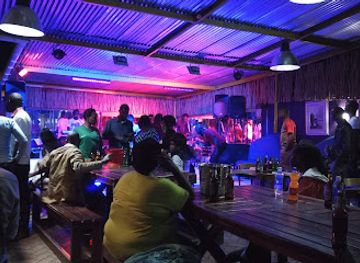
Evenings in Livingstone tend to centre on hotel and lodge bars, relaxed restaurants, local social venues and organised entertainment rather than a large nightclub circuit. Central establishments may offer Zambian beers, soft drinks and simple cocktails, while accommodation properties often host dinners, live music or cultural performances for guests. Traditional music and dance displays can provide a more locally rooted evening than a conventional bar, although programmes vary and should not be assumed to run every night. Sunset cruises on the Zambezi create another established evening activity, with views of changing light over the river rather than a club atmosphere. Visitors should arrange transport after dark, remain aware of their surroundings and remember that nightlife outside the main tourism areas is generally modest and locally oriented.
-
Bar
Limpo's PUB & Grill
Discover Limpo's PUB & Grill in Livingstone: A lively hub for delicious cuisine and vibrant nightlife, perfect for all travelers.
13 min walk · 1.0 km from city centre
-
Restaurant
Zest Bar And Restaurant Livingstone
Experience the vibrant culinary scene at Zest Bar and Restaurant, Livingstone's prime destination for delicious local and international cuisine.
6 min drive · 2.0 km from city centre
-
Grill
The B'Hive Bar & Grill
Experience vibrant dining at The B'Hive Bar & Grill in Livingstone, where local flavors meet a lively atmosphere for an unforgettable meal.
8 min drive · 2.7 km from city centre
-
Sports bar
Vix Falls Sports Bar and Restaurant
Experience the perfect blend of vibrant nightlife and breathtaking nature at Vix Falls Sports Bar in Livingstone's Mosi-oa-Tunya National Park.
5 min drive · 1.5 km from city centre


Best nightclubs in Livingstone
Evenings in Livingstone tend to centre on hotel and lodge bars, relaxed restaurants, local social venues and organised entertainment rather than a large nightclub circuit. Central establishments may offer Zambian beers, soft drinks and simple cocktails, while accommodation properties often host dinners, live music or cultural performances for guests. Traditional music and dance displays can provide a more locally rooted evening than a conventional bar, although programmes vary and should not be assumed to run every night. Sunset cruises on the Zambezi create another established evening activity, with views of changing light over the river rather than a club atmosphere. Visitors should arrange transport after dark, remain aware of their surroundings and remember that nightlife outside the main tourism areas is generally modest and locally oriented.
-
Bar
Limpo's PUB & Grill
Discover the lively nightlife of Livingstone at Limpo's PUB & Grill, where delicious food meets vibrant entertainment.
13 min walk · 1.0 km from city centre
-
Sports bar
Vix Falls Sports Bar and Restaurant
Experience the vibrant nightlife at Vix Falls Sports Bar and Restaurant, where delicious food and refreshing drinks meet the spirit of Livingstone.
5 min drive · 1.5 km from city centre
-
Disco club
Roadside Night Clubs
Discover the electrifying nightlife of Livingstone in its vibrant roadside night clubs, where music, culture, and fun collide.
7 min drive · 2.2 km from city centre
-
Night club
Bharat Sports Club
Experience vibrant nightlife at Bharat Sports Club, Livingstone's premier destination for music, dancing, and unforgettable memories.
6 min drive · 1.9 km from city centre


Best shops in Livingstone
Shopping in Livingstone ranges from craft markets and small independent stalls to hotel boutiques and shops aimed at visitors heading to Victoria Falls. Mukuni Park Curio Market is the best-known central stop for carved wooden figures, baskets, masks, paintings, textiles and other souvenirs, with prices often negotiated politely. The selection reflects craft traditions from Zambia and the wider region, so buyers should ask about materials and provenance rather than assuming every item is locally made. Shops and market stalls may also sell woven goods, jewellery and packaged foods, while central grocery stores provide practical supplies. Do not buy ivory, animal skins or other wildlife products unless their legality and documentation are completely clear, since protected-species rules apply across borders. Browsing respectfully and carrying smaller notes can make informal purchases easier.
-
Supermarket
Shoprite Livingstone
Experience the heart of Livingstone at Shoprite – your go-to supermarket for local groceries and fresh baked goods.
9 min walk · 0.7 km from city centre
-
Grocery store
Shoprite Mosi o Tunya
Explore local flavors at Shoprite Mosi o Tunya, your go-to grocery store in Livingstone, Zambia, for fresh produce and authentic Zambian products.
18 min walk · 1.4 km from city centre
-
Park
MUKUNI PARK CURIO MARKET
Explore Mukuni Park Curio Market for unique Zambian crafts, vibrant culture, and a memorable shopping experience in Livingstone.
7 min walk · 0.6 km from city centre
-
Grocery store
Spar
Discover a wide array of local and international products at Spar in Livingstone, your convenient grocery shopping destination.
9 min walk · 0.7 km from city centre


Get your free copy of our complete guide to Livingstone, delivered straight to you.
Everything on this page, from attractions and restaurants to essentials and local phrases, in one PDF you can read offline, print or share.
Already have an account? Sign in
Your Livingstone guide is ready.
We'll send it to · Not you? Sign out

Getting your guide ready…
We are putting together a fresh copy of the Livingstone guide. This can take up to a minute.
This can take a few moments. If your browser asks, choose Allow so the download can start. You'll find the guide in your Downloads folder.
Nothing happened? Download it again
Sorry, the guide is taking longer than usual. Please try again in a minute, or get it by email instead.
Livingstone essentials
Currency and Payment
Safety
Emergency Situations
Do's and Don'ts
Local Tips
From Eve
Local phrases worth knowing
You don't need to get them perfect. A few words go a long way, and locals appreciate the effort.
Basics
| English | Local | Say it |
|---|---|---|
| Hello | Muli bwanji | [moo-lee bwan-jee] |
| Goodbye | Kwaheri | [kwa-hay-ree] |
| Yes | Ee | [ay] |
| No | Ayiyi | [ah-yee-yee] |
| Please/You're welcome | Tafadhali | [ta-fa-dah-lee] |
| Thank you | Zikomo | [zee-koh-moh] |
| Excuse me/Sorry | Pepani | [peh-pah-nee] |
| How are you? | Muli bwanji? | [moo-lee bwan-jee] |
| Fine. And you? | Nili bwino. Inu? | [nee-lee bwee-noh. ee-noo] |
| Do you speak English? | Mukufuna kuti mukhale ndi chilankhulo cha Chingerezi? | [moo-koo-foo-nah koo-tee moo-kha-lay ndee chee-lahn-koo-loh chah ching-geh-reh-zee] |
| I don't understand | Sindikudziwa | [seen-dee-koo-zee-wah] |
Eating & Drinking
| English | Local | Say it |
|---|---|---|
| I'd like to see the menu, please | Ndikufuna kuyang'ana menu, chonde | [ndee-koo-foo-nah koo-yahn-gah-nah meh-noo, chon-deh] |
| I don't eat meat | Sindingafuna nyama | [seen-deen-gah-foo-nah nyah-mah] |
| Cheers! | Zikomo! | [zee-koh-moh] |
| I would like to pay, please | Ndikufuna kuyesesa, chonde | [ndee-koo-foo-nah koo-yeh-seh-sah, chon-deh] |
Emergencies
| English | Local | Say it |
|---|---|---|
| Help! | Chonde! | [chon-deh] |
| Go away! | Lesa! | [leh-sah] |
| Call the Police! | Pangani khopolo! | [pahn-gah-nee koh-poh-loh] |
| Call a doctor! | Pangani daktali! | [pahn-gah-nee dahk-tah-lee] |
| I'm lost | Ndili pakati | [ndee-lee pah-kah-tee] |
| I'm ill | Ndakhala wochita | [ndah-kah-lah woh-chee-tah] |
Shopping
| English | Local | Say it |
|---|---|---|
| I'd like to buy... | Ndikufuna kudalira... | [ndee-koo-foo-nah koo-dah-lee-rah] |
| I'm just looking | Ndikufuna kudziwa | [ndee-koo-foo-nah koo-dzee-wah] |
| How much is it? | Ndalira bwanji? | [ndah-lee-rah bwan-jee] |
| That's too expensive | Leroli ndinakonda kwambiri | [leh-roh-lee ndee-nah-kohn-dah kwahm-bee-ree] |
| Can you lower the price? | Mukufuna kusowa mphamvu? | [moo-koo-foo-nah koo-soh-wah mphahm-voo] |
Time & Numbers
| English | Local | Say it |
|---|---|---|
| What time is it? | Izani nthawi? | [ee-zah-nee n-tah-wee] |
| It's one o'clock | Ndi nthawi yachisanu | [ndee n-tah-wee yah-chee-sah-noo] |
| Half past (10) | Makolo akale | [mah-koh-loh ah-kah-leh] |
| Morning | Usiku | [oo-see-koo] |
| Afternoon | Musana | [moo-sah-nah] |
| Evening | Usiku | [oo-see-koo] |
| Yesterday | Chitsiku chakudetsa | [chee-tsee-koo chah-koo-deh-tsah] |
| Today | Lero | [leh-roh] |
| Tomorrow | Mawa | [mah-wah] |
| 1 | Moja | [moh-jah] |
| 2 | Zawiri | [zah-wee-ree] |
| 3 | Tatu | [tah-too] |
| 4 | Nai | [nah-ee] |
| 5 | Nuwulu | [noo-woo-loo] |
| 6 | Njichi | [n-jee-chee] |
| 7 | Nkhonde | [n-khon-deh] |
| 8 | Nthalika | [n-thah-lee-kah] |
| 9 | Ninthangu | [neen-thah-ngoo] |
| 10 | Nthawi | [n-tah-wee] |
Transport & Directions
| English | Local | Say it |
|---|---|---|
| Where's a/the...? | Kuti kulibe... | [koo-tee koo-lee-beh] |
| What's the address? | Anu ndi adilesi? | [ah-noo ndee ah-dee-leh-see] |
| Can you show me (on the map)? | Mukufuna kundiwonetsa (pa nyengo)? | [moo-koo-foo-nah koon-dee-woh-neh-tsah pah nee-ehn-goh] |
| When's the next (bus)? | Nthawi yoti iliyo yatsopano? | [n-tah-wee yoh-tee ee-lee-yoh yah-tsoh-pah-noh] |
| A ticket (to ....) | Nthikiti (kuti ....) | [n-thee-kee-tee koo-tee] |
History of Livingstone
Early Communities of the Upper Zambezi
The Livingstone area belongs to a long-inhabited Upper Zambezi landscape shaped by farming, fishing, hunting and trade. Lozi political influence became especially important in the wider Barotse and Upper Zambezi world, while Tonga and other communities also maintained connections across the river and surrounding plains. The falls were not an empty wilderness awaiting outside discovery: Mosi-oa-Tunya had a place in local knowledge, movement and belief before European maps recorded it. Archaeological collections now displayed in the Livingstone Museum help place the town within this deeper human history, extending well beyond the colonial name and tourism economy that later came to define it.
David Livingstone and Mosi-oa-Tunya
Scottish missionary and explorer David Livingstone reached the Zambezi in the mid-nineteenth century and is generally recorded as having seen the falls on 16 November 1855. He used the name Victoria Falls in honour of Queen Victoria, while Mosi-oa-Tunya remained the local name and is now widely used alongside it. Livingstone’s accounts helped attract European geographical and missionary interest, but they represent only one perspective on a landscape already known to its inhabitants. The falls later became central to the city’s public identity, commemorated by the David Livingstone statue and interpreted through museums, monuments and tourism.
Railway and Colonial Development
Livingstone expanded significantly in the early twentieth century as the railway reached the Victoria Falls area in 1904 and the bridge across the Zambezi was completed in 1905. The railway connected the settlement to wider commercial and administrative networks, encouraging new stores, workshops and public buildings. The town became an important colonial centre in Northern Rhodesia, the territory that later became Zambia, although development brought sharply unequal systems of land, labour and political power. The railway and colonial-era architecture still shape parts of the city, while the Railway Museum preserves locomotives and artefacts from this period of transport-led growth.
A Capital of Northern Rhodesia
Livingstone served as the capital of Northern Rhodesia from 1911 until 1935, when the administrative capital moved north to Lusaka. Its earlier prominence left a substantial civic and commercial legacy, and the town remained an important transport and tourism centre after losing political primacy. The riverside location, proximity to Victoria Falls and railway connection continued to attract visitors and investment. During this period, colonial institutions developed alongside African communities whose labour and cultural life sustained the town, a social history explored more fully through the Livingstone Museum’s ethnographic and historical collections.
Independence and Contemporary Livingstone
Zambia became independent in 1964, and Livingstone’s identity subsequently developed within a national tourism economy centred on Victoria Falls, the Zambezi and nearby wildlife areas. The city’s museums, railway heritage and public monuments preserve evidence of earlier eras, while local markets, craft businesses, lodges and guiding services reflect contemporary livelihoods. Cross-border links with Victoria Falls town in Zimbabwe remain part of the wider regional tourism landscape, although each side of the river offers different viewpoints and facilities. Today Livingstone is both a historic Zambian city and a base for exploring one of southern Africa’s most powerful natural landmarks.
Livingstone in Photos
Browse through our photo collection highlighting the charm and character of the destination.
Cities near Livingstone
The closest cities to Livingstone, if you have time for more than one stop.
-

-

-
-

-


Swipe for more cities
Explore more

Explore more of Zambia
Discover Zambia: A Safari Haven with Stunning Waterfalls, Rich Culture, and Unforgettable Wildlife Encounters.
Explore Zambia